


 Óleo sobre telaArte de ParedeHigh Renaissance
 1520Renascimento
 76.0 x 57.0 cm
 Scottish National Gallery of Modern Art
Adquira uma imagem digital de alta resolução e aprimorada, muito superior à prévia online.
Cada arquivo é meticulosamente preparado por nossos especialistas internos, utilizando ferramentas avançadas e retoques manuais de alta precisão. Garantimos que cada imagem apresente clareza excepcional, fidelidade de cores e detalhes minuciosos.
O arquivo final é entregue por e-mail em até 72 horas, otimizado para uso imediato em ambientes profissionais, editoriais e de impressão. Esta é a mesma qualidade utilizada por estúdios de design de alto nível, editoras e galerias.
Baixe um arquivo de alta resolução para exibição pessoal, impressão e projetos criativos. ( Comprar impressão Comprar pintura feita à mão)
Ao escolher o WahooArt.com, você não está apenas adquirindo uma imagem — você está recebendo uma obra de arte digital profissionalmente aprimorada, elaborada com precisão e com garantia de satisfação. Aqui está tudo o que acompanha seu pedido, automaticamente:

O seu arquivo de imagem digital em alta resolução será enviado por e-mail em até 72 horas após o pedido — pronto para uso imediato.

Sua obra de arte é otimizada profissionalmente por meio de ferramentas avançadas de IA e edição manual, garantindo o máximo de detalhes, clareza e precisão de cores.

Apagou ou perdeu o seu ficheiro acidentalmente? Não se preocupe – nós reenviamos para si a qualquer momento, gratuitamente.

Desfrute da sua obra de arte instantaneamente, sem taxas alfandegárias, impostos ou custos de entrega — downloads digitais são sempre isentos de taxas.

Garantimos que sua imagem digital reflita as cores originais com a maior fidelidade possível, utilizando ferramentas profissionais e gerenciamento de cores.

Se você não estiver satisfeito com sua imagem digital, nós a revisaremos ou reembolsaremos 100% dentro de 100 dias — sem perguntas.

Não está satisfeito? Receba o reembolso total em até 100 dias após o recebimento do seu arquivo digital — sem perguntas.

Compre 3 imagens, economize 10% - Compre 5, economize 15% - Compre 10+, economize 20%. Ideal para projetos criativos, galerias e agências.
The painting "Venus Anadyomene," created by Titian Ramsay Peale II around 1520, is more than a mere depiction of the goddess; it's a carefully constructed dialogue between classical ideals and burgeoning American identity. Peale, deeply influenced by the artistic legacy of Venice and his father’s prominent role in early American portraiture, crafted this oil on canvas masterpiece not simply as a beautiful image, but as a testament to his own skill and a reflection of the era's fascination with antiquity. The work, currently residing at the Scottish National Gallery of Modern Art in Edinburgh, offers a captivating glimpse into a world where Renaissance principles were being reinterpreted through a distinctly American lens.
At its core, “Venus Anadyomene” embodies the classical narrative of Venus emerging from the sea – a potent symbol of rebirth, beauty, and fertility. Peale masterfully captures this moment, depicting the goddess in a dynamic pose, her long hair cascading down her body as she appears to either gaze at it with contemplation or playfully scratch her head. This seemingly simple gesture—a subtle shift in focus—injects an unexpected intimacy into the scene, drawing the viewer into a private, almost vulnerable moment. The background, subtly rendered with mountainous forms and a serene blue sky, provides depth and context without overwhelming the central figure. The careful use of light and shadow enhances the three-dimensionality of the painting, creating a sense of realism that was highly valued during the High Renaissance.
Peale’s technical skill is immediately evident in the meticulous detail with which he renders every element of the composition. The texture of Venus's hair, the folds of her drapery, and even the subtle reflections on the water are all rendered with remarkable precision. He employs a technique known as *sfumato*, blurring the edges and creating soft transitions between colors, contributing to the painting’s ethereal quality. Noticeably, the composition is balanced, drawing the eye naturally from the goddess's face to her flowing hair and then back to the serene background. The strategic placement of the seashell at the base of the scene subtly reinforces the mythological narrative, grounding the image in its classical origins.
Beyond the immediate depiction of Venus rising from the sea, “Venus Anadyomene” is rich with symbolic meaning. The goddess herself represents not only beauty but also love, desire, and prosperity – qualities highly valued in Renaissance society. The act of scratching her head can be interpreted as a gesture of self-awareness or even vulnerability, suggesting that even the divine are subject to earthly concerns. Furthermore, Peale’s decision to depict Venus in this particular pose—a departure from earlier depictions—reflects the evolving artistic tastes of the era. The painting aligns with the broader trend of portraying female figures with greater psychological depth and emotional complexity.
Crucially, “Venus Anadyomene” emerged during a period of significant cultural change in America. Peale’s work reflects his deep connection to both European artistic traditions and the nascent American identity. He was part of a generation that sought to establish a distinctively American art scene, one rooted in classical ideals but informed by the unique experiences and perspectives of the New World. His father, Charles Willson Peale, played a pivotal role in establishing America’s first museum, demonstrating a commitment to both artistic expression and scientific inquiry – values that are powerfully embodied in “Venus Anadyomene.”
Today, "Venus Anadyomene" stands as a testament to Titian Ramsay Peale II’s artistry and his place within the broader history of American art. The Scottish National Gallery of Modern Art provides an exceptional setting for this masterpiece, allowing visitors to appreciate its beauty and significance in a contemporary context. For those seeking to experience the allure of this iconic painting firsthand, WahooArt.com offers meticulously crafted oil painting reproductions that faithfully capture the original’s detail and atmosphere. These handmade reproductions provide a tangible connection to a remarkable work of art, ensuring that the legacy of “Venus Anadyomene” continues to inspire and captivate for generations to come.
Explore exquisite oil painting reproductions of "Venus Anadyomene" at WahooArt.com
Experience the beauty of “Venus Anadyomene” with a handmade oil painting reproduction from WahooArt.com.
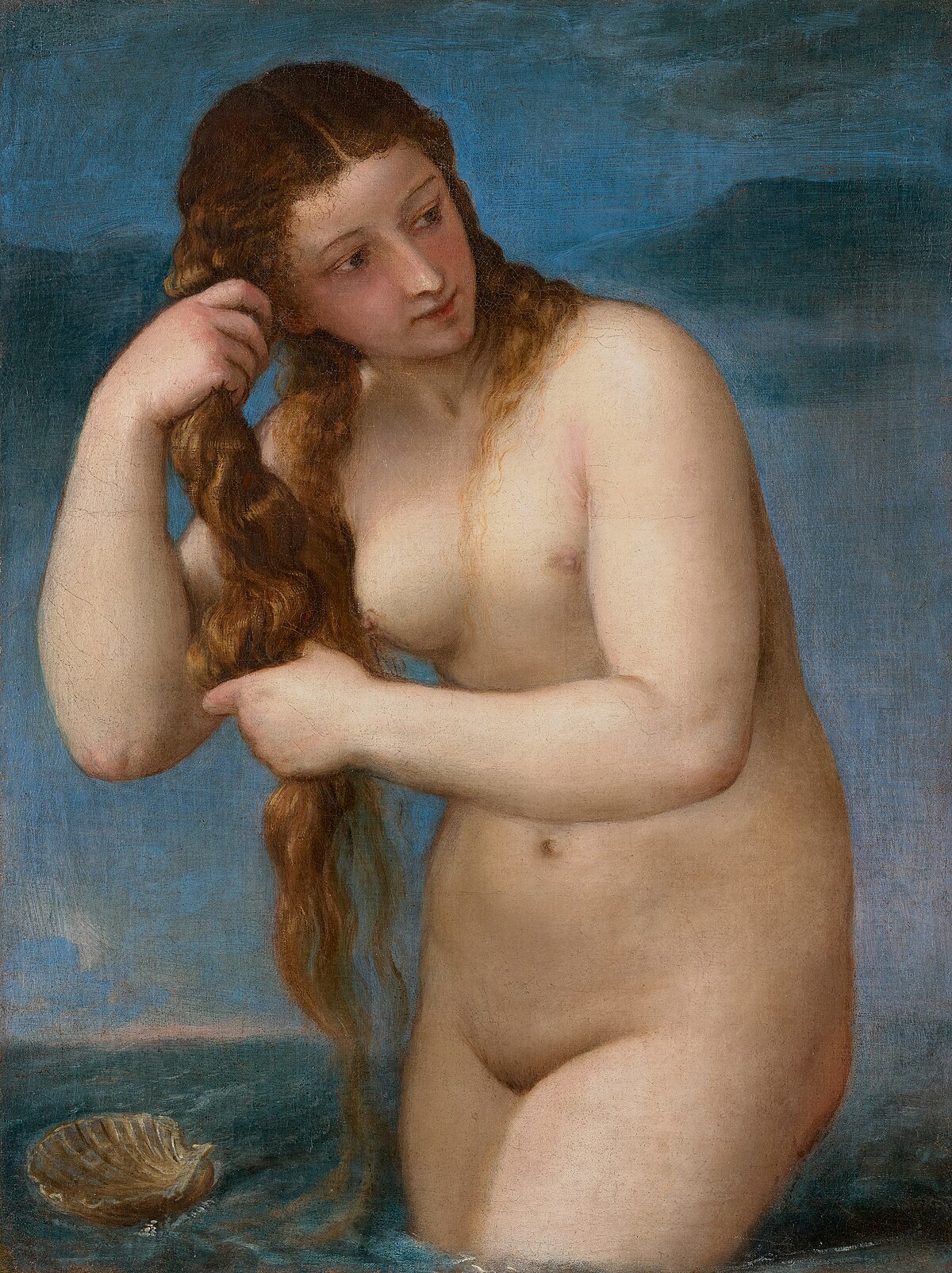
Photo Description: The painting is a portrait of a woman with long hair, possibly Venus Anadyomene. She appears to be looking at her hair or scratching her head. The woman's hair is in a braid that extends down the right side of her body. In the background, there are mountains visible, adding depth and context to the scene. The painting is set against a blue sky, which further enhances the overall atmosphere of the image.
Size: 76 x 57 cm
Date: 1520


1799 - 1885 , Estados Unidos da América

 Visualizar na parede
 Compartilhar
 Compartilhar
 Detalhes

 Baixar imagem
 Semelhantes
 Raio X
 Slideshow
 Ler mais


