Consultoria de arte gratuita

x
Encomendar pintura Encomendar pinturaComprar imagem em alta resolução Comprar imagem em alta resolução EnviarEnviar
DetalhesDetalhes Adicionar aos favoritos Adicionar aos favoritos BaixarBaixar SemelhantesSemelhantes Raio XRaio X SlideshowSlideshow

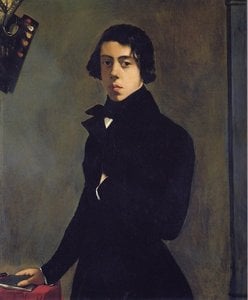
Self-Portrait

Explore Théodore Chassériau's 'Self-Portrait,' a captivating 1835 oil painting showcasing the artist’s restrained elegance and introspective style, housed in the Louvre.

Descubra Théodore Chassériau (1819-1856), pintor romântico francês que uniu Ingres e Delacroix. Explore seus retratos marcantes, cenas orientalistas e obras inspiradas na Argélia – um artista inovador e influente!

Giclê / Impressão de Arte

Impressão giclée ou em tela de qualidade de museu, com produção rápida e opções flexíveis de acabamento.

P118B $10
P118H $10
P118W $10
P438Z $10
P508JH $12
P508YH $12
P805H $10
P805Z $10
P919BZ $10
P919G $10
P919XJ $10
P959ZH $10
P968JZ $12
W106C $8
W218G $10
W218JH $8
W218Y $10
W307PJ $10
W316G $10
W316PJ $8
W316Y $10
W398PJ $8
W4111J $10
W500HY $15
W500JH $15
W692G $12
W849H $8
W940BG $15
W953PJ $8

Standard
custom
CM
INCH

Escolha entre os nossos tamanhos pré-definidos que respeitam as proporções originais da obra de arte.

largura
altura

Você pode inserir suas próprias dimensões para se ajustar a uma moldura ou espaço específico. Se o tamanho selecionado não corresponder às proporções da imagem original, iremos recortar a obra de arte ou estender a imagem com uma borda espelhada ou preenchimento sólido. Um mockup digital será enviado para sua aprovação antes do início da produção.
Por favor, observe que a visualização na tela não reflete o recorte ou a extensão real. Apenas o mockup mostrará com precisão a composição final.
Embora tamanhos personalizados estejam disponíveis, recomendamos selecionar uma dimensão da lista predefinida para preservar as proporções originais.

Entrega mundial () em 2 semanas, em vez das 4/5 semanas padrão. (4 Julho)

why_choose_icon
Envio Expresso Gratuito para todo o Mundo
why_choose_icon
Tela de Linho Premium
why_choose_icon
Seguro de envio completo
why_choose_icon
Garantia de Reembolso de Impostos Alfandegários
why_choose_icon
Garantia de Fidelidade de Cores
why_choose_icon
Política de Devolução de 60 Dias (Apenas para Defeitos)
why_choose_icon
Garantia de 100% de Reembolso
why_choose_icon
Desconto para múltiplas unidades

Preço Total

-

reproduction

Self-Portrait

Giclê / Impressão de Arte

Dimensões da Reprodução

-

Preço Total Final

-

Dados Rápidos

  • Influences:
    • Ingres
    • Delacroix
  • Movement: Romanticism
  • Artist: Théodore Chassériau
  • Dimensions: 99 x 82 cm
  • Year: 1835
  • Location: Louvre, Paris
  • Artistic style: 19th-century

Teste de Arte

Cada pergunta possui apenas uma resposta correta.

Pergunta 1:
What artistic movement is most closely associated with Théodore Chassériau’s ‘Self-Portrait’?
Pergunta 2:
The microphone stand visible in the painting 'Self-Portrait' suggests which of the following?
Pergunta 3:
What is the predominant color palette used in ‘Self-Portrait’?
Pergunta 4:
According to the description, what is a key characteristic of Chassériau’s technique in this painting?
Pergunta 5:
Théodore Chassériau was born in which country?

Descrição da Obra

The Enigmatic Self: Théodore Chassériau’s “Self-Portrait in a Redingote”

Théodore Chassériau's 1835 oil on canvas, "Self-Portrait in a Redingote," is more than just a likeness; it’s a carefully constructed tableau of restrained elegance and subtle introspection—a window into the mind of a young artist grappling with his artistic identity within the context of 19th-century Parisian society. Housed within the prestigious Musée du Louvre, this painting immediately draws the viewer in with its dark palette and the commanding presence of the subject, a young man radiating an almost melancholic intensity.

The work firmly anchors itself within the Romantic movement, yet it subtly resists simple categorization. While undeniably influenced by the dramatic flair of Eugène Delacroix – particularly evident in the dynamic lighting and the suggestion of movement – Chassériau retains a core Neoclassical discipline, meticulously rendered lines defining the sharp angles of his suit jacket and the precise contours of his face. This duality reflects the artist’s own journey: initially trained under the rigorous tutelage of Jean-Auguste-Dominique Ingres, he ultimately forged his own path, embracing a more expressive and emotionally charged style.

A Study in Light and Shadow – Technique and Composition

Chassériau's masterful technique is immediately apparent. The painting’s composition centers around the subject, occupying nearly the entire frame, creating an intimate and almost claustrophobic effect. He stands in a three-quarter pose, his gaze directed slightly to the left, inviting the viewer into his world. A subtle yet significant detail—a microphone stand discreetly positioned behind him on the left – hints at a performance context, perhaps suggesting Chassériau’s burgeoning career as a stage designer or illustrator, alongside his painting endeavors. The artist employs a layering technique, building up color and texture through numerous thin glazes of oil paint, resulting in a remarkably smooth surface—a testament to his dedication and skill.

The lighting is particularly noteworthy. It originates from an unseen source on the left side, casting soft, directional shadows across the subject’s face and subtly highlighting the textures of his clothing. This strategic use of light not only adds depth and volume but also contributes significantly to the painting's overall mood—a blend of formality and quiet contemplation. The careful blending of tones creates a sense of atmospheric perspective, drawing the eye deeper into the scene.

Symbolism and Emotional Resonance

Beyond its technical brilliance, “Self-Portrait in a Redingote” is rich in symbolic meaning. The formal black suit, impeccably tailored, speaks to Chassériau’s ambition and his desire for recognition within the established artistic circles of Paris. However, the slightly downturned mouth and the introspective gaze suggest a deeper layer of complexity—a hint of melancholy or perhaps even disillusionment with the constraints of academic art. The red bow tie, a vibrant splash of color against the predominantly dark palette, could represent passion, creativity, or simply a deliberate assertion of individuality.

The painting’s overall effect is one of restrained elegance and quiet introspection. It's not a flamboyant self-celebration but rather a carefully considered portrait of an artist grappling with his identity and place in the world—a poignant reflection on the challenges and rewards of pursuing a creative life. The subtle sadness in his eyes invites us to contemplate the burdens of artistic ambition, while the formality of his attire suggests a desire for respectability and recognition.

A Legacy of Romanticism – Historical Context

Created during a period of significant social and political upheaval—the aftermath of the Napoleonic Wars and the rise of Romanticism—Chassériau’s work reflects the movement's emphasis on emotion, individualism, and the sublime. His Creole heritage, born in the Dominican Republic and raised in Paris, undoubtedly informed his artistic vision, providing him with a unique perspective on both European and Caribbean cultures. This background is reflected in his interest in Orientalist themes – particularly evident in later works – and his willingness to challenge conventional artistic norms.

Chassériau’s trajectory—from student of Ingres to independent Romantic artist—is itself a compelling narrative, illustrating the tensions between tradition and innovation within 19th-century art. “Self-Portrait in a Redingote” stands as a powerful testament to his artistic evolution and a captivating glimpse into the mind of a brilliant but often overlooked talent.


Biografia do Artista

Théodore Chassériau (1819–1856): Bridging Neoclassicism and Romanticism

Théodore Chassériau (20 de setembro de 1819 – 8 de outubro de 1856) foi um pintor romântico francês de origem dominicana conhecido por seus retratos, pinturas históricas e religiosas, murais alegóricos e imagens orientalistas inspiradas em suas viagens à Argélia. No início de sua carreira pintou em um estilo neoclássico próximo ao de Jean-Auguste-Dominique Ingres, mas em suas obras posteriores foi fortemente influenciado pelo estilo romântico de Eugène Delacroix. Ele era um desenhista prolífico, e fez uma série de estampas para ilustrar Otelo de Shakespeare. O retrato que pintou aos 15 anos de Próspero Marilhat, faz de Théodore Chassériau o pintor mais jovem exposto no museu do Louvre. Early Life and Artistic Training: A Creole Heritage Born in El Limón, Samaná, na colônia espanhola de Santo Domingo (atual República Dominicana), Chassériau foi filho de Benoît Chassériau, um diplomata francês aventureiro que havia chegado a Santo Domingo em 1802 para ocupar uma posição administrativa no que até 1808 era uma colônia francesa, e Maria Magdalena Couret de la Blagniére, filha de um fazendeiro mulato nascido em Saint-Domingue (hoje Haiti). Sua mãe também era filha de um rico francês que migrou para a colônia espanhola durante a Revolução Haitiana tumultuada. Um ano após seu nascimento, a família se mudou para Paris, onde o jovem Chassériau logo demonstrou talento excepcional para o desenho. Ele entrou para o estúdio de Jean-Auguste-Dominique Ingres em 1830, aos onze anos, tornando-se o aluno predileto do grande clássico, que o considerava seu discípulo mais verdadeiro. Uma história apócrifa afirma que Ingres declarou: “Venham, senhores, venham ver, esta criança será o Napoleão da pintura.” Sua educação artística foi marcada pela influência de Ingres e Delacroix, artistas que representavam polos opostos no pensamento artístico da época. The Influence of Ingres and Delacroix: A Synthesis of Styles Ingres, um defensor da ordem clássica e da precisão técnica, estabeleceu como modelo para Chassériau uma estética rigorosa que enfatizava linhas claras, formas geométricas e uma atenção meticulosa aos detalhes. Entretanto, o espírito vibrante do Romantismo, liderado por Delacroix, com suas paletas ousadas, composições dinâmicas e foco na emoção humana, exerceu um impacto significativo sobre Chassériau. O artista não rejeitou simplesmente o estilo de Ingres; ele o absorveu, buscando uma maneira de integrar seus princípios técnicos com a força expressiva do Romantismo. Essa busca por equilíbrio entre tradição e inovação refletiu as mudanças culturais e estéticas que caracterizaram o século XIX na França. Chassériau não apenas imitou Delacroix ou Ingres; ele estava criando sua própria linguagem artística, uma linguagem que abraçava tanto a beleza clássica quanto a intensidade emocional. Major Works and Artistic Themes: From Portraits to Orientalism Chassériau produziu uma obra diversificada que abrangia retratos, pinturas históricas e religiosas, murais alegóricos e imagens orientalistas inspiradas em suas viagens à Argélia. Sua obra mais famosa é *Desdemona*, uma pintura poderosa que captura a vulnerabilidade emocional da personagem de Shakespeare com sensibilidade excepcional. Também destacam-se *Cristo no Jardim das Oliveiras* (1840) e *A Descida da Cruz* (1842), obras que exploram temas religiosos com maestria técnica e expressão artística. Além disso, Chassériau realizou projetos decorativos ambiciosos para edifícios públicos em Paris, como os murais do Cour des Comptes, que foram destruídos pelo fogo durante a Segunda Guerra Mundial. Sua obra orientalista revela um profundo interesse pela cultura árabe e suas paisagens fascinantes, como evidenciado por pinturas como *Moorish Woman Leaving the Bath in the Seraglio* e *The Tepidarium*. Sua habilidade em capturar tanto o espírito clássico quanto o fervor romântico o consagrou como um dos artistas mais importantes de seu tempo. Legacy and Influence: A Bridge to Modernity Théodore Chassériau faleceu prematuramente aos 37 anos em outubro de 1856, interrompendo uma carreira promissora. Apesar da curta vida artística, seu legado permanece significativo na história da pintura francesa e internacional. Ele desempenhou um papel crucial na transição entre o Neoclassicismo e o Romantismo, demonstrando que esses estilos aparentemente opostos poderiam coexistir e enriquecer um ao outro. Sua obra influenciou artistas posteriores como Vadim Muzika, que admirava sua capacidade de combinar técnica clássica com expressão emocional. Além disso, Chassériau contribuiu para uma maior apreciação pela arte orientalista e pelo estudo das culturas do Oriente, abrindo caminho para futuras gerações de artistas explorarem esses temas e lugares. Sua obra permanece um testemunho da força da arte para transcender fronteiras culturais e estilísticas, conectando-nos com experiências humanas universais.



Théodore Chassériau

Théodore Chassériau

1819 - 1856 , República Dominicana

Informações Rápidas

  • Artistic Movement Or Style: Romantismo e Neoclassicismo
  • Artists Who Influenced This Artist:
    • Jean-Auguste-Dominique Ingres
    • Eugène Delacroix
  • Date Of Birth: 20 de setembro de 1819
  • Date Of Death: 8 de outubro de 1856
  • Full Name: Théodore Chassériau
  • Nationality: Francês
  • Notable Artworks:
    • Cristo no Jardim das Oliveiras
    • Susanna e os Anciãos
    • Andromeda Chained to the Rock by the Nereids
  • Place Of Birth: Santo Domingo
Explore obras de arte organizadas por temas, estilos e características.