Obtenha um arquivo pronto para impressão que vai muito além da visualização na web. Cada imagem digital que vendemos provém de um arquivo mestre de alta resolução em nosso banco de dados — geralmente entre 5.000 e 15.000 pixels de largura — para que você possa imprimir em grandes formatos, realizar cortes precisos ou reproduzir detalhes minuciosos com total confiança.
Nenhum arquivo sai do nosso estúdio sem passar por um cuidadoso processo de revisão. Um especialista digital verifica as cores em relação à pintura original e as corrige se necessário, aumentando então a clareza e o detalhe com ferramentas profissionais de retoque — sempre mantendo a fidelidade às pinceladas e ao estilo do artista. O resultado é uma imagem que se assemelha à pintura, e não a um scan com filtros.
Aprovação antes da finalização: nosso especialista enviará a imagem por e-mail em até 72 horas para sua revisão. Não ficou satisfeito? Solicite melhorias ou correções, ou peça o reembolso caso a qualidade não atenda às suas expectativas.
Esta é a qualidade em que confiam editoras, estúdios de design, galerias e gráficas.
Baixe um arquivo de alta resolução para exibição pessoal, impressão e projetos criativos. ( Alternar para Impressão Comprar pintura feita à mão)
Ao escolher o WahooArt.com, você não está apenas adquirindo uma imagem — você está recebendo uma obra de arte digital profissionalmente aprimorada, elaborada com precisão e com garantia de satisfação. Aqui está tudo o que acompanha seu pedido, automaticamente:
O seu arquivo de imagem digital em alta resolução será enviado por e-mail em até 72 horas após o pedido — pronto para uso imediato.
Sua obra de arte é otimizada profissionalmente por meio de ferramentas avançadas de IA e edição manual, garantindo o máximo de detalhes, clareza e precisão de cores.
Apagou ou perdeu o seu ficheiro acidentalmente? Não se preocupe – nós reenviamos para si a qualquer momento, gratuitamente.
Desfrute da sua obra de arte instantaneamente, sem taxas alfandegárias, impostos ou custos de entrega — downloads digitais são sempre isentos de taxas.
Garantimos que sua imagem digital reflita as cores originais com a maior fidelidade possível, utilizando ferramentas profissionais e gerenciamento de cores.
Se não estiver satisfeito com a sua imagem digital, nós a revisaremos ou reembolsaremos 100% dentro de 100 dias — sem perguntas.
Não está satisfeito? Receba o reembolso total em até 100 dias após o recebimento do seu arquivo digital — sem perguntas.
Compre 3 imagens, economize 10% - Compre 5, economize 15% - Compre 10+, economize 20%. Ideal para projetos criativos, galerias e agências.
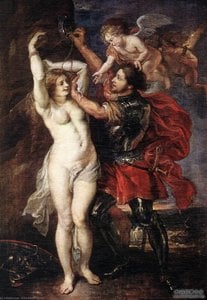
Sir John Everett Millais's “The Knight Errant,” completed in 1870, is a profoundly evocative work that immediately transports the viewer to the heart of Romanticism. Measuring 136 x 184 cm, this oil on canvas isn’t merely a depiction of a knight and a woman; it’s an intensely felt exploration of vulnerability, protection, and the enduring power of nature – themes central to the Pre-Raphaelite movement.
The scene depicts a knight, clad in gleaming armor, standing beside a naked woman. This juxtaposition is deliberately unsettling, radiating both chivalric duty and profound exposure. The woman’s expression, often interpreted as one of distress or discomfort, adds another layer to the painting's complex narrative. Millais masterfully utilizes light and shadow, creating a palpable sense of tension that draws the eye across the canvas, focusing on the stark contrast between the knight’s rigid form and the woman’s delicate vulnerability.
Millais was a pivotal figure in the Pre-Raphaelite movement, a group fiercely dedicated to rejecting the idealized forms and artificiality that had come to dominate academic art. Inspired by the clarity, detail, and emotional honesty of early Italian masters – notably Giotto and Duccio – Millais sought to return to a more direct engagement with reality. “The Knight Errant” exemplifies this approach perfectly. The artist’s meticulous technique is immediately apparent in the rendering of the knight's armor—each plate painstakingly detailed, reflecting light with a remarkable realism that suggests a sculptor’s eye. Similarly, the woman’s skin tones are rendered with an almost photographic precision, capturing subtle variations and textures that contribute to her palpable vulnerability.
The central figures—the knight and the woman—represent opposing forces, embodying themes of protection versus vulnerability, strength against weakness. The setting – a tree-lined area – serves to heighten the drama, contrasting the human conflict with the enduring power of nature. Some scholars interpret the scene as an allegory for the loss of innocence or the corruption of ideals. The knight’s armor, while representing order and defense, also suggests confinement and restriction, mirroring the woman's state of vulnerability.
Painted in 1870, “The Knight Errant” reflects a period of significant social and artistic change. The Victorian era was marked by both rapid industrialization and a renewed interest in medieval chivalry and romantic ideals. Millais’s work aligns with this cultural fascination while simultaneously challenging conventional representations of heroism and beauty. His dedication to meticulous detail and emotional honesty cemented his legacy as one of the most important artists of the Pre-Raphaelite movement, influencing generations of painters who followed.
O diaporama de "The Knight Errant" pode ser visualizado na página Apresentação de imagens da obra.
"The Knight Errant", de Sir John Everett Millais é datada de 1870 e pertence ao Pre-Raphaelite Brotherhood.
A página de Pré-visualização de "The Knight Errant" permite visualizar a obra de arte antes de fazer o pedido.


1829 - 1896 , Reino Unido
 Visualizar na parede
 Compartilhar
 Compartilhar
 Detalhes
 Guia
Guia

 Baixar imagem
 Semelhantes
 Raio X
 Ver diaporama
 Perguntas e Respostas
 Estatísticas

 Ler mais