Acrylic On CanvasWallArtBaroque French Painting
 1630
1630 131.0 x 104.0 cm
 Museu de Arte de Cleveland
Adquira uma imagem digital de alta resolução e aprimorada, muito superior à prévia online.
Cada arquivo é meticulosamente preparado por nossos especialistas internos, utilizando ferramentas avançadas e retoques manuais de alta precisão. Garantimos que cada imagem apresente clareza excepcional, fidelidade de cores e detalhes minuciosos.
O arquivo final é entregue por e-mail em até 72 horas, otimizado para uso imediato em ambientes profissionais, editoriais e de impressão. Esta é a mesma qualidade utilizada por estúdios de design de alto nível, editoras e galerias.
Baixe um arquivo de alta resolução para exibição pessoal, impressão e projetos criativos. ( Comprar impressão Comprar pintura feita à mão)
Ao escolher o WahooArt.com, você não está apenas adquirindo uma imagem — você está recebendo uma obra de arte digital profissionalmente aprimorada, elaborada com precisão e com garantia de satisfação. Aqui está tudo o que acompanha seu pedido, automaticamente:

O seu arquivo de imagem digital em alta resolução será enviado por e-mail em até 72 horas após o pedido — pronto para uso imediato.

Sua obra de arte é otimizada profissionalmente por meio de ferramentas avançadas de IA e edição manual, garantindo o máximo de detalhes, clareza e precisão de cores.

Apagou ou perdeu o seu ficheiro acidentalmente? Não se preocupe – nós reenviamos para si a qualquer momento, gratuitamente.

Desfrute da sua obra de arte instantaneamente, sem taxas alfandegárias, impostos ou custos de entrega — downloads digitais são sempre isentos de taxas.

Garantimos que sua imagem digital reflita as cores originais com a maior fidelidade possível, utilizando ferramentas profissionais e gerenciamento de cores.

Se você não estiver satisfeito com sua imagem digital, nós a revisaremos ou reembolsaremos 100% dentro de 100 dias — sem perguntas.

Não está satisfeito? Receba o reembolso total em até 100 dias após o recebimento do seu arquivo digital — sem perguntas.

Compre 3 imagens, economize 10% - Compre 5, economize 15% - Compre 10+, economize 20%. Ideal para projetos criativos, galerias e agências.
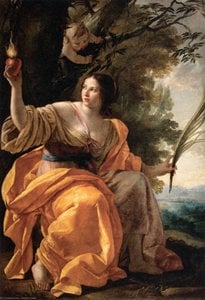
Simon Vouet’s “The Penitent Magdalen,” painted around 1630, is more than just a portrait; it's a profound meditation on faith, repentance, and the enduring power of sorrow. Executed during a pivotal moment in French art history – the transition from Mannerism to the burgeoning Baroque style – this work encapsulates Vouet’s innovative approach, blending Italian influences with a distinctly French sensibility. The painting immediately draws the viewer into a scene of quiet contemplation, dominated by the figure of Mary Magdalene, rendered with an almost sculptural quality that speaks to both her physical presence and her spiritual weight.
Vouet, having spent formative years in Rome absorbing the dramatic lighting and emotional intensity of Caravaggio’s work, brought this Italian dynamism back to France. However, he didn't simply replicate these techniques; instead, he skillfully adapted them to suit the tastes of his royal patrons. Notice how the subdued palette – dominated by rich reds, deep blues, and earthy browns – creates a sense of solemnity and introspection. The lighting is carefully controlled, highlighting Magdalene’s face and hands while casting her figure in shadow, reinforcing the theme of penance and hidden suffering.
The composition itself is laden with symbolic meaning. Magdalene's posture – head bowed, hand resting on a book – immediately evokes images of prayer and devotion. The open book, often interpreted as representing scripture, suggests her ongoing journey toward redemption. Crucially, the presence of two birds—one perched on the left shoulder, the other near the upper right corner—adds layers of interpretation. Birds are frequently associated with freedom, hope, and the soul’s ascent to heaven; their inclusion here hints at Magdalene's potential for spiritual liberation through her remorse and piety.
The jar of ointment, a recurring motif in depictions of Magdalene, symbolizes her past sins—specifically, her betrayal of Christ. However, it also represents a willingness to offer amends and demonstrate genuine repentance. The careful rendering of the ointment’s texture and the subtle play of light on its surface further emphasize this duality – beauty born from sorrow.
Vouet’s mastery lies in his ability to seamlessly blend Italian realism with French elegance. He employs a technique known as “clai-obscure,” or chiaroscuro, which dramatically contrasts light and shadow to create depth and volume. This is particularly evident in Magdalene's face – the delicate modeling of her features, the subtle shading around her eyes, all contribute to an incredibly lifelike portrayal. Unlike the stark contrasts of Caravaggio, Vouet’s use of light is more diffused, lending a sense of grace and refinement to the scene.
Furthermore, Vouet's attention to detail—the folds of Magdalene’s dress, the texture of her hair, even the subtle imperfections in her hands—demonstrates his meticulous approach. This commitment to realism was highly valued by the French court, who sought artists capable of producing works that were both aesthetically pleasing and historically accurate.
"The Penitent Magdalen" is not merely a depiction of a biblical figure; it’s an exploration of human emotion—the pain of regret, the yearning for forgiveness, and the possibility of spiritual renewal. Vouet masterfully captures Magdalene's inner turmoil, inviting viewers to contemplate their own struggles with faith and redemption. The painting’s enduring appeal lies in its ability to resonate across centuries, offering a timeless meditation on the complexities of the human condition.
Reproductions of this powerful work offer an exceptional opportunity to bring this evocative scene into any space. Its rich colors, dramatic lighting, and profound symbolism create a focal point that speaks volumes about faith, sorrow, and ultimately, hope.

Simon Vouet emerge como uma figura crucial na transição da pintura francesa do Maneirismo para o vibrante estilo Barroco. Nascido em Paris, em 1590, numa família já dedicada às artes – seu pai, Laurent, era pintor e seu irmão, Aubin, também trilhou esse caminho artístico – Vouet recebeu uma formação inicial sólida que lançou as bases para sua futura ascensão. A continuidade da tradição familiar seria assegurada por seu neto, Ludovico Dorigny, perpetuando o legado artístico da família.
A carreira de Vouet floresceu inicialmente através do retrato, demonstrando um talento precoce para capturar a essência dos seus modelos. Aos meros 14 anos, já se aventurava por terras estrangeiras, viajando para a Inglaterra a convite para pintar um retrato encomendado, sinalizando o reconhecimento crescente de seu nome. Em 1611, acompanhou o Barão de Sancy, embaixador francês no Império Otomano, numa jornada que o levou através de Constantinopla e, posteriormente, à encantadora Veneza em 1612. Roma, contudo, provou ser um ponto de inflexão transformador em sua trajetória artística. Durante os treze anos que passou na cidade, imergiu-se no fervilhante cenário artístico do período Barroco nascente.
Sua estadia italiana foi uma verdadeira imersão em diversas influências artísticas. Vouet estudou avidamente as técnicas inovadoras de iluminação dramática de Caravaggio, abraçou elementos do Maneirismo italiano e analisou meticulosamente as paletas de cores e a perspectiva di sotto in su (perspectiva caputexta) magistralmente utilizada por Paolo Veronese. A inspiração também veio das obras dos irmãos Carracci, Guercino, Lanfranco e Guido Reni, sintetizando essas diversas influências num estilo único e pessoal.
O reconhecimento de Vouet em Roma culminou com sua eleição como presidente da prestigiosa Accademia di San Luca em 1624, uma prova incontestável de sua habilidade e prestígio no mundo da arte italiana. Seu estilo se caracterizava pela capacidade singular de absorver e refinar diversas influências artísticas, não apenas copiando, mas integrando-as numa estética Barroca distintamente italianizante. Ao retornar à França em 1627, desempenhou um papel crucial na introdução do estilo Barroco italiano à pintura francesa, impactando profundamente a paisagem artística do país.
A nomeação como Premier peintre du Roi (Primeiro Pintor do Rei) coroou sua carreira, conferindo-lhe prestígio e influência consideráveis. Vouet manteve um ateliê vasto e ativo, formando inúmeros artistas que moldariam a geração seguinte de pintores franceses. Entre seus alunos mais influentes destacam-se Charles Le Brun (que posteriormente organizou toda a pintura decorativa em Versalhes), Valentin de Boulogne, Charles Alphonse du Fresnoy, Pierre Mignard, Eustache Le Sueur e Claude Mellan. Sua influência se estende além de suas próprias obras; seus alunos disseminaram seu estilo e técnicas por toda a França, estabelecendo uma escola de pintura barroca distintamente francesa. A marca de Vouet é particularmente evidente nos grandiosos esquemas decorativos encomendados por Luís XIV.
O legado de Simon Vouet reside em seu papel fundamental como ponte entre a arte italiana e a francesa. Ele conseguiu importar com sucesso o dinamismo e a grandiosidade do Barroco italiano, transformando-o num estilo que ressoava com os gostos da corte e da aristocracia francesas. Sua influência é inegável no desenvolvimento da pintura francesa durante o século XVII, e suas contribuições continuam sendo reconhecidas por historiadores de arte até hoje.

1590 - 1649 , França

 Visualizar na parede
 Compartilhar
 Compartilhar
 Detalhes

 Baixar imagem
 Semelhantes
 Raio X
 Slideshow
 Ler mais