

A obra de arte exibida nesta página é protegida por leis de direitos autorais, o que significa que não podemos criar ou vender legalmente uma reprodução idêntica. Esta proteção é aplicada por meio de acordos internacionais, tais como a Convenção de Berna e pelas leis nacionais, incluindo as estabelecidas por Lei de Direitos Autorais dos EUA - Título 17.
Este método cumpre plenamente as regulamentações de direitos autorais, pois não envolve a cópia ou duplicação da obra protegida. Em vez disso, trata-se de uma reinterpretação criativa — uma nova pintura que é influenciada pela original, mas não idêntica a ela.
Impressão giclée ou em tela de qualidade de museu, com produção rápida e opções flexíveis de acabamento. ( Comprar pintura feita à mão Alternar para Imagem Digital)
Escolha entre os nossos tamanhos pré-definidos que respeitam as proporções originais da obra de arte.

Insira a largura e a altura desejadas para se ajustarem à sua moldura ou parede. Uma impressão pode ser apenas cortada, nunca ampliada além da imagem original; portanto, um tamanho com proporções diferentes resultará na perda de parte da imagem. Enviamos uma maquete digital para sua aprovação antes de realizarmos a impressão. A imagem exibida nesta página não mostra o corte real — apenas a maquete o faz.
Entrega mundial () em 2 semanas, em vez das 4/5 semanas padrão. (8 Novembro)
Dogia
Tamanho da Reprodução
To gaze upon this exquisite depiction of Salvatore Ferragamo's 1949 "Dogia" is to step directly into the vibrant, sophisticated heart of post-war Italian design. This piece transcends mere footwear; it is a wearable sculpture, a testament to the intersection where meticulous craftsmanship meets ephemeral beauty. The shoe itself, rendered in lustrous black satin, immediately commands attention, its material sheen suggesting an almost liquid elegance. It speaks of an era when fashion was not merely dressing, but a profound statement of identity and aspiration. The composition, captured with the precision of high-end product photography, isolates this single object against a stark white void, forcing the viewer into an intimate dialogue with its form.
What elevates this piece beyond simple documentation is the breathtaking artistry woven across its surface. The floral embroidery—a riot of carefully placed pinks, creamy whites, sunny yellows, soft blues, and verdant greens—transforms the structured satin base into a delicate garden blooming upon the foot. This technique requires an almost unbelievable level of dexterity; each petal, every leaf, is individually stitched, creating a rich, tactile contrast against the smooth, dark background. The interplay between the cool sheen of the satin and the raised, textured quality of the embroidery floss is what gives the piece its visual depth. It suggests hours of patient labor, the focused devotion of an artisan whose skill was matched only by his vision.
Understanding the context of Salvatore Ferragamo enriches our appreciation immeasurably. Born into a tradition of skilled making, Ferragamo’s career was one of relentless innovation, forever pushing the boundaries of what shoes could be. This 1949 design is a perfect artifact of that genius—a marriage of structural integrity with decorative exuberance. The shoe embodies the glamour associated with Hollywood's golden age, yet it retains an underlying sense of artisanal honesty. For the collector or designer, this piece offers a tangible connection to a pivotal moment in fashion history, representing Italian mastery before the modern deluge of mass production.
Emotionally, the "Dogia" whispers tales of springtime renewal and confident femininity. The flowers are universal symbols of beauty and transience, while the shoe itself speaks to empowerment—the ability to move through the world with grace and undeniable style. Owning or reproducing such a piece is not just acquiring an object; it is curating a mood. It infuses any space, be it a gallery wall or a sophisticated dressing room vignette, with an aura of romantic nostalgia and timeless sophistication. It invites contemplation on the enduring power of beauty crafted by human hands.
Um tom Green to Violet Spectrum percorre "Dogia", de Salvatore Ferragamo.
"Dogia" retrata shoes, fashion, art deco, embroidery, femininity, luxury, salvatoreferragamo, enquanto os temas recorrentes de Salvatore Ferragamo são hollywood glamour, italian design, luxury, craftsmanship, elegance, art deco, geometric patterns, celebrity style. A comparação entre ambos revela como a obra se relaciona com os temas habituais do artista.
A obra original "Dogia", de Salvatore Ferragamo encontra-se no Museo Salvatore Ferragamo, Florença, Itália. Uma reprodução permite que a obra seja exibida em sua casa.


1898 - 1960 , Itália

Discover the unparalleled elegance of Art Deco through the lens of Erté. Explore a masterclass in linear precision, theatrical costume design, and high-fashion illustration that continues to define modern luxury and sophisticated interior aesthetics.

Discover the exquisite world of fashion illustration art. From Art Deco elegance to bespoke oil reproductions, explore how timeless sartorial beauty transforms luxury interiors through masterfully crafted canvas works and curated historical masterpieces.
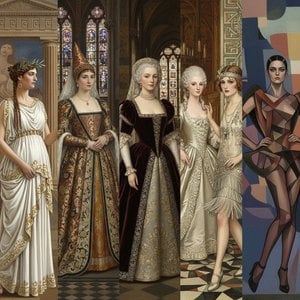
Explore the breathtaking intersection of fine art and high fashion. Discover how iconic masterpieces from Art Deco to Impressionism have shaped the world of luxury couture and timeless design in this curated visual journey.

Embark on a visual journey through the evolution of fashion photography. Discover how masters like Gianfranco Ferré blended geometry, surrealism, and texture to redefine high-fashion art for collectors and connoisseurs of luxury imagery.
 Compartilhar
 Compartilhar
 Detalhes
 Guia
Guia

 Baixar imagem
 Semelhantes
 Ver diaporama
 Perguntas e Respostas
 Estatísticas


 Ler mais






































 A opção de vidro está disponível apenas para tamanhos inferiores a 110 cm


