Venda sua arte
x
Visualizar em escalaVisualizar em escala Visualizar em RAVisualizar em RA Ver impressão do pedido Ver impressão do pedidoBaixar imagem em alta resolução Baixar imagem em alta resolução EnviarEnviar
Ver detalhesVer detalhes Adicionar aos favoritos Adicionar aos favoritos BaixarBaixar SemelhantesSemelhantes Raio XRaio X Apresentação de slidesApresentação de slides

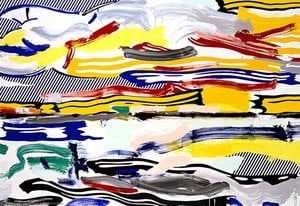
Silver Frame

The image showcases Roy Lichtenstein's "Silver Frame," a vibrant collage blending red squares and yellow/blue rectangles against a textured backdrop, embodying Lichtenstein’s signature Pop Art style.

Roy Lichtenstein (1923-1997): Pioneiro da Pop Art, famoso por pontos Ben-Day, inspiração em quadrinhos e crítica à cultura de consumo. Explore 'Whaam!' & mais.

Reprodução em Óleo Feita à Mão

Óleo sobre tela pintado à mão no seu tamanho e moldura, feito sob encomenda pelos nossos artistas. (Ver impressão do pedido Ver impressão do pedidoBaixar imagem em alta resolução Baixar imagem em alta resolução)

P118B $10
P118H $10
P118W $10
P438Z $10
P508JH $12
P508YH $12
P805H $10
P805Z $10
P919BZ $10
P919G $10
P919XJ $10
P959ZH $10
P968JZ $12
W106C $8
W218G $10
W218JH $8
W218Y $10
W307PJ $10
W316G $10
W316PJ $8
W316Y $10
W398PJ $8
W4111J $10
W500HY $15
W500JH $15
W692G $12
W849H $8
W940BG $15
W953PJ $8

Standard
custom
CM
INCH

Escolha entre os nossos tamanhos pré-definidos que respeitam as proporções originais da obra de arte.

largura
altura

Pode inserir as suas próprias dimensões para se adequar a uma moldura ou espaço específico. Se o tamanho selecionado não corresponder às proporções da imagem original, iremos cortar a obra de arte ou estender a pintura com elementos adicionais pintados à mão. Um esboço digital será enviado para sua aprovação antes do início da produção.
Tenha em atenção que a pré-visualização no ecrã não reflete o corte ou extensão real. Apenas o esboço mostrará com precisão a composição final.
Embora tamanhos personalizados estejam disponíveis, recomendamos selecionar uma dimensão da lista predefinida para preservar as proporções originais.

Exemplos do que pode ser personalizado: Substituir o rosto pela foto do cliente; Adicionar um animal de estimação (ex: substituir gato por cão); Incluir uma mensagem oculta no fundo; Alterar a paisagem ou elementos do fundo.
Após o pedido, a equipa WahooArt.com enviará um e-mail ao cliente para solicitar instruções e fornecer uma prévia do esboço.

Entrega mundial () em 3 a 4 semanas, em vez das 5 semanas padrão. (10 Agosto). Sem comprometer a qualidade.

why_choose_icon
Envio Expresso Gratuito para todo o Mundo
why_choose_icon
Tela de Linho Premium
why_choose_icon
Seguro de transporte total
why_choose_icon
Garantia de Reembolso de Impostos Alfandegários
why_choose_icon
Garantia de Fidelidade de Cor
why_choose_icon
Política de Devolução de 60 Dias (Apenas para Defeitos)
why_choose_icon
Garantia de reembolso de 100%
why_choose_icon
Desconto para múltiplas unidades

Preço Total

$ 272

reproduction

Silver Frame

Técnica de Reprodução

Dimensões da Reprodução

-

Preço Total

$ 272

Detalhes Rápidos

  • Title: Silver Frame
  • Year: 1984
  • Notable elements or techniques: Ben-Day printing, Color Field Painting
  • Artist: Roy Lichtenstein
  • Artistic style: Geometric abstraction
  • Location: Private Collection
  • Influences:
    • Jasper Johns
    • Andy Warhol

Teste de Conhecimentos Artísticos

Cada pergunta possui apenas uma resposta correta.

Questão 1:
What artistic movement is Roy Lichtenstein primarily associated with?
Questão 2:
The painting prominently features a large red square. What stylistic technique does Lichtenstein employ to achieve this effect?
Questão 3:
In what year was Roy Lichtenstein's "Silver Frame" created?
Questão 4:
What is a key characteristic of Lichtenstein's visual style that distinguishes it from traditional painting?
Questão 5:
The image description highlights the artwork as a collage or montage. Why is this technique significant in Pop Art?

Descrição da Obra

A Symphony of Pop: The Vibrant World of Silver Frame

In the mid-1980s, the art world found itself captivated by a resurgence of energy that looked backward to move forward, and at the heart of this movement stood Roy Lichtenstein. His 1984 masterpiece, "Silver Frame," serves as a monumental testament to this era of creative revitalization. Measuring an imposing 60 x 72 inches, the canvas is far more than a mere arrangement of shapes; it is a profound exploration of how modern life, through the lens of mass media and commercial aesthetics, can be elevated to the status of high art. To gaze upon "Silver Frame" is to enter a world where the boundaries between fine art and popular culture dissolve, replaced by a rhythmic dance of color and form that continues to pulse with contemporary relevance.

The brilliance of this work lies in its deceptive simplicity. At first glance, the viewer is met with a striking composition of primary colors—bold reds, sunny yellows, and deep blues—interspersed with unexpected greens and earthy browns. A large, commanding red square anchors the center of the piece, acting as a visual heartbeat that draws the eye inward. Yet, as one lingers, the "frame" of the title reveals itself to be an illusion of depth and layering. Lichtenstein utilizes a sophisticated collage-inspired technique, where the painting mimics the look of a printed montage. This creates a fascinating tension between the flat surface of the canvas and the perceived depth of the overlapping geometric elements, making it a captivating centerpiece for any sophisticated interior.

The Mastery of the Dot: Technique and Texture

To understand the emotional resonance of "Silver Frame," one must appreciate the meticulous technical precision Lichtenstein employed. He famously mastered the halftone printing process, a method borrowed from the world of commercial illustration and comic books. By utilizing dots of varying sizes to simulate shading and tonal transitions, he achieved a mottled, textured appearance that feels both mechanical and deeply organic. This technique allows the artist to bridge the gap between the industrial and the hand-painted; while the patterns suggest the cold precision of a printing press, the careful layering of colors and the deliberate placement of rectangles and squares reveal the soulful touch of a master painter.

This interplay of texture provides an incredible sensory experience for the viewer. For collectors and interior designers, this piece offers a unique versatility. The way the light interacts with the perceived "printed" patterns creates a dynamic visual field that changes depending on the room's lighting. It is not a static image but a living composition. The inclusion of smaller, scattered rectangles adds a layer of complexity that rewards repeated viewing, ensuring that the artwork remains a focal point of conversation and inspiration within a gallery, a studio, or a luxury residential space.

A Legacy of Bold Expression

Beyond its aesthetic splendor, "Silver Frame" carries the weight of art history. Born in Manhattan and trained at the Art Students League, Lichtenstein spent his career interrogating the icons of his time. In this work, he challenges the traditional notion that art must be a window into a realistic world; instead, he proposes that art can be a construction of symbols, colors, and cultural fragments. The piece embodies the Pop Art philosophy—the idea that beauty can be found in the most commonplace elements of our visual landscape.

For those seeking to bring a piece of this historical revolution into their own collections, a high-quality reproduction of "Silver Frame" offers an unparalleled opportunity. It brings with it the bold spirit of 1984 and the enduring legacy of a man who redefined the visual language of the twentieth century. Whether placed in a minimalist modern setting to provide a burst of chromatic energy or used to anchor a more eclectic, maximalist room, this artwork stands as a timeless symbol of creativity, innovation, and the eternal power of color.


Biografia do Artista

The Genesis of a Pop Visionary

Roy Fox Lichtenstein, born in the vibrant metropolis of New York City on October 27, 1923, indelibly altered the landscape of twentieth-century art. Emerging as a pivotal figure within the Pop Art movement, Lichtenstein didn’t simply reflect his era; he actively interrogated it, transforming commonplace imagery into compelling artistic statements. His upbringing in an upper-middle-class Jewish family fostered both a cultural awareness and an early artistic inclination. Childhood exposure to museums and concerts, coupled with a deep appreciation for jazz music, laid the groundwork for a creative spirit that would challenge conventional notions of fine art. Though initially drawn to realistic drawing and painting during his formative years, Lichtenstein’s formal training commenced at the Art Students League in 1939 under Reginald Marsh, followed by studies at Ohio State University – interrupted briefly by wartime service in the Army. These experiences provided a robust technical foundation that would later be brilliantly re-contextualized through the lens of mass culture and commercial aesthetics. The seeds of his signature style weren’t sown within the hallowed halls of artistic tradition but rather in the often-overlooked world of everyday imagery, particularly comic books and advertising.

From Abstraction to Appropriation: A Pivotal Shift

Lichtenstein's early work demonstrated a clear engagement with Abstract Expressionism, mirroring the dominant aesthetic trends of the post-war period. However, this phase proved transitional, a stepping stone towards his revolutionary style. A crucial moment arrived during his tenure at Rutgers University where he encountered Allan Kaprow, whose influence reignited Lichtenstein’s interest in proto-pop imagery. This encounter sparked a critical shift in his artistic trajectory, leading him to question the established boundaries between “high” and “low” art. He began looking beyond the subjective expression of Abstract Expressionism towards the objective language of popular culture – specifically, comic books and advertising. The year 1961 marked a turning point with *Look Mickey*, a work that boldly appropriated characters from Disney comics, signaling the beginning of his signature style. This wasn’t mere imitation; it was an act of artistic re-evaluation, elevating commonplace imagery to the status of fine art. He didn't simply copy comic strips; he meticulously recreated them using techniques mimicking commercial printing processes, a deliberate blurring of the lines between original artwork and mass production. This appropriation wasn’t about celebrating consumerism uncritically but rather examining its pervasive influence on American society and challenging traditional artistic hierarchies.

The Language of Ben-Day Dots and Bold Lines

Lichtenstein's artistic vocabulary is instantly recognizable: bold, primary colors, thick black outlines, and most famously, Ben-Day dots – a technique borrowed directly from the mechanical reproduction of comic books. These dots weren’t merely decorative; they were integral to his conceptual framework, representing the very process of mass production and challenging the traditional emphasis on the artist's hand. His paintings often enlarged details from comic strips to monumental scale, forcing viewers to confront the aesthetic qualities of an art form typically dismissed as trivial. Works like *Whaam!* (1963), *Drowning Girl* (1963), and *Oh, Jeff…I Love You, Too…But…* (1964) became iconic representations of Pop Art, capturing the anxieties and desires of a rapidly changing consumer culture. These weren’t simply depictions of comic book scenes; they were commentaries on themes of war, romance, and societal expectations, filtered through the visual language of mass media. He aimed to strip away any pretense of artistic subjectivity, presenting his work as objective reflections of American society – a mirror held up to its own manufactured reality. The deliberate flatness and lack of painterly gesture further emphasized this detachment, mimicking the impersonal nature of commercial printing.

Major Achievements and Lasting Impact

Roy Lichtenstein’s influence extends far beyond the realm of painting. His innovative use of commercial techniques and appropriation paved the way for new generations of artists exploring themes of consumerism, media saturation, and cultural identity. The sale of *Masterpiece* in 2017 for $165 million solidified his position as one of the most commercially successful American artists of all time, but his legacy is not solely defined by monetary value. He challenged traditional notions of artistic authorship and originality, forcing a re-evaluation of what constitutes “art” itself. His work continues to inspire graphic designers, illustrators, and visual artists across various disciplines.
  • Major Achievements: Pioneered Pop Art style; achieved international recognition with groundbreaking exhibitions.
  • Notable Works: *Whaam!*, *Drowning Girl*, *Oh, Jeff…I Love You, Too…But…*, *Masterpiece*.
  • Teaching Career: Influenced aspiring artists at SUNY Oswego and Rutgers University.
Lichtenstein passed away on September 29, 1997, leaving behind a body of work that remains as relevant and provocative today as it was during the height of the Pop Art movement. His art serves as a powerful reminder of the pervasive influence of mass media and its ability to shape our perceptions of reality. He didn’t just reflect his time; he actively interrogated it, leaving an indelible mark on the history of 20th-century art and continuing to inspire critical dialogue about the relationship between art, culture, and commerce.
Roy Lichtenstein

Roy Lichtenstein

1923 - 1997 , Estados Unidos da América

Informações Rápidas

  • Artistic Movement Or Style: Pop Art
  • Artists Or Movements Influenced By This Artist:
    • Designers
    • Ilustradores
  • Artists Who Influenced This Artist:
    • Reginald Marsh
    • Allan Kaprow
  • Date Of Birth: 27 de outubro de 1923
  • Date Of Death: 29 de setembro de 1997
  • Full Name: Roy Fox Lichtenstein
  • Nationality: Americano
  • Notable Artworks:
    • Whaam!
    • Drowning Girl
    • Masterpiece
  • Place Of Birth: Nova Iorque, EUA
Explore obras de arte organizadas por temas, estilos e características.