Visualizar na parede Visualizar em RA Alternar para Impressão Alternar para Imagem Digital Compartilhar
Detalhes Guia Adicionar aos favoritos Baixar imagem Semelhantes Raio X Ver diaporama Estatísticas

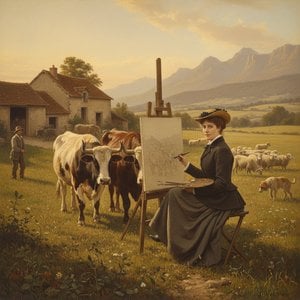
Highland Raid

Rosa Bonheur Experience the raw beauty of Rosa Bonheur’s ‘Highland Raid,’ a captivating depiction of shepherds guiding cattle through a stormy mountain landscape—a masterpiece of Realist art and animal observation.

Rosa Bonheur foi uma pintora francesa revolucionária, famosa por suas obras realistas de animais, como "The Horse Fair". Uma pioneira na arte, desafiou convenções e inspirou gerações com sua paixão pela natureza e talento excepcional.

Reprodução em Óleo Feita à Mão

Óleo sobre tela pintado à mão no tamanho e moldura de sua escolha, feito sob encomenda pelos nossos artistas. ( Alternar para Impressão Alternar para Imagem Digital)

Corner sample of the P118B picture frame: poliestireno moldado, 5 cm wide and 3 cm thick
P118B €10
Corner sample of the P118H picture frame: poliestireno moldado, 5 cm wide and 3 cm thick
P118H €10
Corner sample of the P118W picture frame: poliestireno moldado, 5 cm wide and 3 cm thick
P118W €10
Corner sample of the P438Z picture frame: poliestireno moldado, 5.5 cm wide and 3.5 cm thick
P438Z €10
Corner sample of the P508JH picture frame: poliestireno moldado, 7 cm wide and 3.5 cm thick
P508JH €12
Corner sample of the P508YH picture frame: poliestireno moldado, 7 cm wide and 3.5 cm thick
P508YH €12
Corner sample of the P805H picture frame: poliestireno moldado, 5 cm wide and 3.5 cm thick
P805H €10
Corner sample of the P805Z picture frame: poliestireno moldado, 5 cm wide and 3.5 cm thick
P805Z €10
Corner sample of the P919BZ picture frame: poliestireno moldado, 7 cm wide and 3.5 cm thick
P919BZ €10
Corner sample of the P919G picture frame: poliestireno moldado, 7 cm wide and 3.5 cm thick
P919G €10
Corner sample of the P919XJ picture frame: poliestireno moldado, 7 cm wide and 3.5 cm thick
P919XJ €10
Corner sample of the P959ZH picture frame: poliestireno moldado, 5 cm wide and 3 cm thick
P959ZH €10
Corner sample of the P968JZ picture frame: poliestireno moldado, 6 cm wide and 4 cm thick
P968JZ €12
Corner sample of the W106C picture frame: madeira maciça, 5 cm wide and 3 cm thick
W106C €8
Corner sample of the W218G picture frame: madeira maciça, 5 cm wide and 3 cm thick
W218G €10
Corner sample of the W218JH picture frame: madeira maciça, 5 cm wide and 3 cm thick
W218JH €8
Corner sample of the W218Y picture frame: madeira maciça, 5 cm wide and 3 cm thick
W218Y €10
Corner sample of the W307PJ picture frame: madeira maciça, 6 cm wide and 3 cm thick
W307PJ €10
Corner sample of the W316G picture frame: madeira maciça, 6 cm wide and 3 cm thick
W316G €10
Corner sample of the W316PJ picture frame: madeira maciça, 6 cm wide and 3 cm thick
W316PJ €8
Corner sample of the W316Y picture frame: madeira maciça, 6 cm wide and 3 cm thick
W316Y €10
Corner sample of the W398PJ picture frame: madeira maciça, 5 cm wide and 3 cm thick
W398PJ €8
Corner sample of the W4111J picture frame: madeira maciça, 6.5 cm wide and 3.5 cm thick
W4111J €10
Corner sample of the W500HY picture frame: madeira maciça, 7 cm wide and 5 cm thick
W500HY €15
Corner sample of the W500JH picture frame: madeira maciça, 7 cm wide and 5 cm thick
W500JH €15
Corner sample of the W692G picture frame: madeira maciça, 8 cm wide and 4 cm thick
W692G €12
Corner sample of the W849H picture frame: madeira maciça, 5 cm wide and 3 cm thick
W849H €8
Corner sample of the W940BG picture frame: madeira maciça, 7.5 cm wide and 4.5 cm thick
W940BG €15
Corner sample of the W953PJ picture frame: madeira maciça, 6 cm wide and 3.5 cm thick
W953PJ €8

Tamanho padrão
personalizado
CM
INCH

Escolha entre os nossos tamanhos pré-definidos que respeitam as proporções originais da obra de arte.

largura
altura

Insira a largura e a altura desejadas para se ajustarem à sua moldura ou parede. Como esta obra é pintada à mão, para um tamanho com proporções diferentes, o artista poderá pintar um pouco mais ao redor da imagem ou reduzir ligeiramente a composição — você escolhe. Enviamos uma maquete digital para sua aprovação antes de iniciar a pintura. A imagem exibida nesta página não representa o resultado real — apenas a maquete mostra o resultado final.

Exemplos do que pode ser personalizado: Substituir o rosto pela foto do cliente; Adicionar um animal de estimação (ex: substituir gato por cão); Incluir uma mensagem oculta no fundo; Alterar a paisagem ou elementos do fundo.
Após o pedido, a equipa WahooArt.com enviará um e-mail ao cliente para solicitar instruções e fornecer uma prévia do esboço.

Entrega mundial () em 3 a 4 semanas, em vez das 5 semanas padrão. (26 Outubro). Sem comprometer a qualidade.

Envio expresso gratuito para todo o mundo
Tela de Linho de Alta Qualidade
Seguro de transporte completo
Garantia de Reembolso de Impostos Alfandegários
Garantia de Fidelidade Cromática
Política de Devolução em 100 Dias (Apenas para Defeitos)
Garantia de reembolso de 100%
Oferta de desconto por quantidade

Preço Total

€ 239

Highland Raid

Técnica de Reprodução

Tamanho da Reprodução

-

Preço Total

€ 239

Informações Rápidas

  • Title: Highland Raid
  • Location: Private Collection
  • Artistic style: Realistic depiction
  • Movement: Realism
  • Influences: Saint Simonian Philosophy

Quiz de Arte

Cada pergunta possui apenas uma resposta correta.

Pergunta 1:
What is the primary subject matter of ‘Highland Raid’?
Pergunta 2:
Rosa Bonheur’s fascination with animals stemmed from her dedication to:
Pergunta 3:
The artist’s depiction of the sky suggests that the shepherds are attempting to:
Pergunta 4:
What artistic movement is ‘Highland Raid’ associated with?
Pergunta 5:
The title 'Highland Raid' refers to a Scottish idiom signifying:

A Symphony of Motion and Highland Majesty

In the vast, sweeping expanse of the Scottish Highlands, where the mist clings to rugged peaks and the air carries the scent of damp earth, Rosa Bonheur captures a moment of profound kinetic energy. Highland Raid is not merely a painting of livestock; it is a visceral experience of movement, a masterclass in the art of animalier realism. The canvas unfolds with a dramatic herd of cattle, their heavy forms navigating the undulating terrain of the mountains. At the heart of this pastoral drama, a lone rider on horseback guides the procession, acting as the steadying force amidst the swirling energy of the herd. The composition is expertly balanced, drawing the eye from the foreground figures through the rhythmic placement of cows that stretch deep into the atmospheric distance, creating an immense sense of scale and topographical grandeur.

Bonheur’s technical prowess is on full display through her sophisticated use of light and texture. To witness this work is to feel the palpable tension of impending weather; the sky seems heavy with the promise of rain, casting a soft, diffused light that illuminates the muscular anatomy of the cattle with breathtaking precision. The artist employed impasto techniques—applying paint in thick, deliberate layers—to imbant the scene with physical substance. This tactile approach allows the viewer to perceive the ruggedness of the landscape and the coarse texture of the animals' coats, bridging the gap between the two-dimensional surface and the three-dimensional reality of the natural world.

The Spirit of Realism and Artistic Audacity

To understand the emotional depth of Highland Raid, one must look to the revolutionary spirit of Rosa Bonheur herself. Emerging from a nineteenth-century era where female artists were often relegated to delicate portraiture or still lifes, Bonheur broke through societal barriers with an uncompromising dedication to scientific accuracy and anatomical truth. Her upbringing, influenced by the egalitarian ideals of Saint-Simonianism, nurtured a fierce independence that is reflected in her choice of subject matter. She did not seek to idealize the rural life; instead, she sought to document its raw, unvarnished essence. This commitment to Realism—a movement that rejected the polished escapism of Romanticism—allows the painting to resonate with a sense of truth that is both grounding and deeply moving.

For the discerning collector or interior designer, this piece offers more than just aesthetic beauty; it provides a window into a bygone era of rugged pastoralism. The painting serves as a powerful focal point in any sophisticated space, bringing an element of the wild, untamed outdoors into the refined atmosphere of a home or gallery. Its ability to evoke both the tranquility of nature and the underlying tension of survival makes it a timeless addition to a curated collection. Whether placed in a sunlit study or a grand salon, Highland Raid commands attention, inviting viewers to lose themselves in the rhythmic dance of the herd and the enduring legacy of one of history's most courageous artistic pioneers.

Perguntas e Respostas

Qual é a intensidade das cores em "Highland Raid", de Rosa Bonheur?

"Highland Raid", de Rosa Bonheur apresenta uma intensidade de cor Monochromatic.

Qual paleta e cor predominante definem "Highland Raid"?

A identidade cromática de "Highland Raid", de Rosa Bonheur: uma paleta Earthy, dominada por Gray (#7d746a).

A que época pertence "Highland Raid"?

"Highland Raid", de Rosa Bonheur data do período 19th Century. Este período fornece o contexto histórico da obra.


Biografia do Artista

A Life Immersed in the Animal World

Rosa Bonheur, born Marie-Rosalie Bonheur in 1822 Bordeaux, France, wasn’t simply a painter of animals; she was an interpreter of their very essence. Her name resonates through art history as a beacon of realism and a testament to female artistic ambition in a period dominated by male figures. Born into a family steeped in artistic tradition – her father, Oscar-Raymond Bonheur, was a landscape and portrait painter – young Rosalie’s path wasn't predetermined but nurtured. The family’s embrace of Saint-Simonianism, a progressive socialist philosophy advocating for equal education for both sexes, proved particularly formative, instilling in Rosa a sense of independence and intellectual curiosity that would define her life and work. Tragedy struck early with the loss of her mother at age eleven, yet the Bonheur household remained a haven for creativity and unconventional thinking. This unique upbringing laid the foundation for an artist who would challenge societal norms as boldly as she captured the raw beauty of the natural world.

From Humble Beginnings to Salon Success

The family’s relocation to Paris in 1828 marked a turning point, providing Rosa with access to formal artistic training. Initially, her studies followed conventional lines – copying from drawings and sketching plaster models. However, it was the animals surrounding Paris that truly captured her imagination. Horses, cattle, sheep, goats—she observed them relentlessly, not merely as subjects for art but as living beings deserving of meticulous study. This dedication to direct observation became the cornerstone of her artistic style. Her father actively encouraged this passion, even bringing live animals into their studio for Rosa to dissect and analyze. This hands-on approach, combined with visits to Parisian abattoirs to understand animal anatomy, set her apart from many contemporaries who relied on second-hand depictions. Her breakthrough arrived in 1849 with *Ploughing in the Nivernais*, a work that garnered immediate attention at the Paris Salon and signaled the arrival of a significant new talent. But it was *The Horse Fair* (Le marché aux chevaux), completed between 1853 and 1855, that cemented her international fame. This monumental canvas, depicting the chaotic yet captivating spectacle of a bustling horse market, pulsated with energy and anatomical precision, capturing the essence of a vibrant Parisian scene. It became one of the most reproduced works of the era, demonstrating Bonheur’s mastery of composition and her ability to convey movement and emotion.

A Style Rooted in Realism and Observation

Rosa Bonheur's artistic style wasn’t about romanticizing animals; it was about portraying them with unwavering honesty and detail. She eschewed sentimentality, opting instead for a scientific approach to her subjects. Her paintings are characterized by their anatomical accuracy, dynamic compositions, and an ability to capture the unique personality of each creature. This commitment to realism extended beyond mere physical representation. Bonheur sought to understand the animals’ movements, behaviors, and even their emotional states. She often worked *en plein air*, directly observing her subjects in their natural environments, a practice that further enhanced the authenticity of her work. Her technique involved careful layering of paint and a masterful use of light and shadow to create depth and texture, bringing each animal vividly to life on canvas. The influence of artists like Nicolas Poussin and Peter Paul Rubens is evident in her compositions, but she developed a distinctly modern approach, prioritizing direct observation over idealized representation.

A Pioneer for Women in Art

Rosa Bonheur’s legacy extends far beyond her artistic achievements; she became an icon for women striving for recognition in the male-dominated art world. She defied convention not only through her professional success but also through her personal choices. Famously, she often wore men's clothing while working with animals, citing practicality and freedom of movement – a bold statement that challenged societal expectations. She secured commissions from governments and private collectors alike, proving that female artists could achieve the same level of acclaim as their male counterparts. Her success paved the way for future generations of women artists, inspiring them to pursue their passions without compromise. Bonheur’s life story serves as a powerful example of artistic independence and determination. Her paintings continue to be celebrated in major museums worldwide, serving as a reminder of her enduring contribution to art history and her unwavering commitment to portraying the beauty and dignity of the animal kingdom.

Enduring Influence and Lasting Legacy

The impact of Rosa Bonheur’s work continues to resonate today. Her dedication to realism influenced countless artists, and her paintings remain admired for their technical skill and emotional depth. She demonstrated that art could be both scientifically accurate and profoundly moving, bridging the gap between observation and interpretation. Beyond her artistic contributions, Bonheur's life story serves as a powerful example of female empowerment and artistic independence. She challenged societal norms, defied expectations, and ultimately achieved lasting recognition on her own terms. Her legacy is not merely one of beautiful paintings but also of courage, determination, and a unwavering commitment to her craft. Her work continues to inspire artists and art lovers alike, reminding us of the power of observation, the beauty of the natural world, and the importance of pursuing one’s passions with conviction.

Rosa Bonheur

Rosa Bonheur

1822 - 1899 , França

Dados Rápidos

  • Artistic Movement Or Style: Realismo, Animalière
  • Artists Or Movements Influenced By This Artist: ['Saint-Simonianismo']
  • Artists Who Influenced This Artist:
    • Poussin
    • Rubens
  • Date Of Birth: 16 Mar 1822
  • Date Of Death: 25 May 1899
  • Full Name: Marie-Rosalie Bonheur
  • Nationality: Francesa
  • Notable Artworks:
    • Ploughing Nivernais
    • Horse Fair
  • Place Of Birth: Bordeaux, França