Biografia do Artista
Early Life and Artistic Foundations
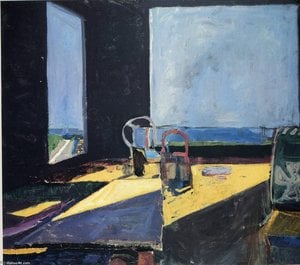
Richard Diebenkorn, nascido em Portland, Oregon, em 1922, embarcou numa jornada que estabeleceria-o como um dos pintores americanos mais significativos da era pós-guerra. A mudança da família para São Francisco quando ele tinha apenas dois anos foi formativa, impregnando a sua sensibilidade artística com a luz e a atmosfera da Califórnia – uma paisagem que se tornaria inextricavelmente ligada ao seu trabalho. Mesmo na infância, uma profunda inclinação para o desenho manifestou-se, sinalizando uma dedicação precoce à expressão visual. Esta paixão inata levou-o à Universidade de Stanford em 1940, onde encontrou mentores cruciais como Victor Arnautoff, que lhe inculcou uma disciplina clássica rigorosa com óleo, e Daniel Mendelowitz, que partilhava a sua admiração pelo realismo evocativo de Edward Hopper. A influência de Hopper é evidente nas primeiras pinturas de Diebenkorn, caracterizadas por uma introspecção silenciosa e um domínio magistral da luz e da sombra. Estes anos formativos lançaram as bases para uma carreira definida tanto pela habilidade técnica como pela profundidade emocional.
Navigating Abstraction and Figuration
O cenário da arte americana passou por uma mudança dramática após a Segunda Guerra Mundial, com o centro da inovação artística a deslocar-se de Paris para Nova Iorque. Diebenkorn sentiu profundamente esta mudança, matriculando-se na California School of Fine Arts (agora San Francisco Art Institute) e abraçando o expressionismo abstrato como o seu principal modo de autoexpressão. Encontrou inspiração no trabalho de artistas como Clyfford Still, Arshile Gorky, Hassel Smith e Willem de Kooning, absorvendo a sua experimentação ousada com forma e cor. No entanto, Diebenkorn não estava contente em simplesmente seguir as tendências estabelecidas. Ao lado de Elmer Bischoff, Henry Villierme, David Park e James Weeks, tornou-se uma figura de liderança no Movimento Figurativo da Baía – um retorno consciente à pintura representacional após a dominação do expressionismo abstrato. Esta transição não foi abrupta; foi um processo gradual de introdução de formas reconhecíveis no seu trabalho, combinando a intensidade emocional do abstracionismo com o potencial narrativo da figuratividade. Procurava unir a experiência interior e a realidade exterior, criando pinturas que eram tanto profundamente pessoais como universalmente ressonantes.
The Bay Area Figurative Movement and Early Influences
A influência de artistas europeus, como Matisse e Bonnard, desempenhou um papel fundamental na formação do estilo de Diebenkorn. A sua exposição precoce a estas obras, particularmente durante os anos 40, moldou a sua visão da cor, composição e o uso da luz. Além disso, a visita ao Museu de Arte Moderna em Nova Iorque e à Coleção Phillips em Washington, D.C., durante o seu serviço militar, expôs-o a uma vasta gama de movimentos artísticos e estilos, enriquecendo ainda mais o seu repertório. A sua ligação com artistas como David Park, um professor na California School of Fine Arts, foi particularmente significativa, influenciando-o através da partilha de ideias e técnicas. A atmosfera artística vibrante da Baía de São Francisco, com a sua comunidade de artistas inovadores, forneceu um ambiente estimulante para o seu desenvolvimento criativo.
The Ocean Park Series: A Defining Achievement
Em 1967, Diebenkorn embarcou numa série de pinturas que definiria a sua carreira – a *Ocean Park* series. Nomeada em homenagem ao bairro de Santa Monica onde vivia e trabalhava, estas pinturas abstratas geométricas e líricas representam uma culminação das suas explorações artísticas. Ao contrário da espontaneidade gestual do expressionismo abstrato ou da representação direta do trabalho figurativo da Baía, as *Ocean Park* paintings são caracterizadas por uma composição cuidadosamente considerada, paletas de cores sutis e um senso de ordem serena. Estes não eram retratos de Ocean Park em si, mas sim destilações da sua luz, espaço e atmosfera – evocações de lugar através da forma abstrata. Explorou a gravura ao lado da pintura, começando com drypoint em 1961 na UCLA, e estabeleceu uma colaboração duradoura com Kathan Brown na Crown Point Press de 1965 a 1992, produzindo numerosas gravuras que expandiram ainda mais o seu vocabulário artístico. A *Ocean Park* series ganhou aclamação crítica generalizada, consolidando Diebenkorn como uma força importante no mundo da arte contemporânea.
Legacy and Lasting Influence
A influência de Richard Diebenkorn na arte americana pós-guerra é inegável. A sua capacidade de sintetizar o expressionismo abstrato, a abstração lírica e a pintura figurativa criou uma voz artística única que ressoou com artistas por gerações. Uma retrospectiva no Museu de Arte da Califórnia em Pasadena em 1960 – posteriormente exibida na Galeria Legion of Honor em São Francisco – consolidou a sua reputação como uma figura de liderança no mundo da arte. Ele não se aderiu a um único dogma, mas sim forjou o seu próprio caminho ao abraçar a experimentação e seguir a sua intuição artística. A sua obra continua a inspirar artistas e colecionadores, celebrada pela sua beleza, complexidade e profundidade emocional. O falecimento de Diebenkorn em 1993 marcou o fim de uma carreira notável, mas o seu legado vive através do poder duradouro das suas pinturas – um testemunho da sua visão artística inovadora e do seu compromisso inabalável com a visão artística. *A sua obra serve como um lembrete pungente do potencial transformador da arte.*



 Visualizar em escala
 Encomendar reprodução pintada à mão
 Enviar
 Compartilhar
 Ver detalhes
 Guia
Guia

 Baixar imagem
 Semelhantes
 Raio X
 Apresentação de slides
 Estatísticas
 Ver mais






































 A opção de vidro está disponível apenas para tamanhos inferiores a 110 cm