Visualizar na parede Visualizar em RA Comprar pintura feita à mão Alternar para Imagem Digital Compartilhar
Detalhes Guia Adicionar aos favoritos Baixar imagem Semelhantes Raio X Ver diaporama Estatísticas

Modern

A mysterious woman in white navigates a fragmented urban landscape in René Magritte's 1923 Cubist masterpiece Modern, an evocative exploration of perception that invites you to bring surreal beauty into your home.

René Magritte (1898-1967): Explore o surrealismo de um mestre belga! Descubra obras icônicas como 'Os Amantes', desafiando a realidade e a percepção. #Magritte #Surrealismo

A obra de arte exibida nesta página é protegida por leis de direitos autorais, o que significa que não podemos criar ou vender legalmente uma reprodução idêntica. Esta proteção é aplicada por meio de acordos internacionais, tais como a Convenção de Berna e pelas leis nacionais, incluindo as estabelecidas por Lei de Direitos Autorais dos EUA - Título 17.

Este método cumpre plenamente as regulamentações de direitos autorais, pois não envolve a cópia ou duplicação da obra protegida. Em vez disso, trata-se de uma reinterpretação criativa — uma nova pintura que é influenciada pela original, mas não idêntica a ela.

Giclée / Impressão de Arte

Impressão giclée ou em tela de qualidade de museu, com produção rápida e opções flexíveis de acabamento. ( Comprar pintura feita à mão Alternar para Imagem Digital)

Corner sample of the P118B picture frame: poliestireno moldado, 5 cm wide and 3 cm thick
P118B €10
Corner sample of the P118H picture frame: poliestireno moldado, 5 cm wide and 3 cm thick
P118H €10
Corner sample of the P118W picture frame: poliestireno moldado, 5 cm wide and 3 cm thick
P118W €10
Corner sample of the P438Z picture frame: poliestireno moldado, 5.5 cm wide and 3.5 cm thick
P438Z €10
Corner sample of the P508JH picture frame: poliestireno moldado, 7 cm wide and 3.5 cm thick
P508JH €12
Corner sample of the P508YH picture frame: poliestireno moldado, 7 cm wide and 3.5 cm thick
P508YH €12
Corner sample of the P805H picture frame: poliestireno moldado, 5 cm wide and 3.5 cm thick
P805H €10
Corner sample of the P805Z picture frame: poliestireno moldado, 5 cm wide and 3.5 cm thick
P805Z €10
Corner sample of the P919BZ picture frame: poliestireno moldado, 7 cm wide and 3.5 cm thick
P919BZ €10
Corner sample of the P919G picture frame: poliestireno moldado, 7 cm wide and 3.5 cm thick
P919G €10
Corner sample of the P919XJ picture frame: poliestireno moldado, 7 cm wide and 3.5 cm thick
P919XJ €10
Corner sample of the P959ZH picture frame: poliestireno moldado, 5 cm wide and 3 cm thick
P959ZH €10
Corner sample of the P968JZ picture frame: poliestireno moldado, 6 cm wide and 4 cm thick
P968JZ €12
Corner sample of the W106C picture frame: madeira maciça, 5 cm wide and 3 cm thick
W106C €8
Corner sample of the W218G picture frame: madeira maciça, 5 cm wide and 3 cm thick
W218G €10
Corner sample of the W218JH picture frame: madeira maciça, 5 cm wide and 3 cm thick
W218JH €8
Corner sample of the W218Y picture frame: madeira maciça, 5 cm wide and 3 cm thick
W218Y €10
Corner sample of the W307PJ picture frame: madeira maciça, 6 cm wide and 3 cm thick
W307PJ €10
Corner sample of the W316G picture frame: madeira maciça, 6 cm wide and 3 cm thick
W316G €10
Corner sample of the W316PJ picture frame: madeira maciça, 6 cm wide and 3 cm thick
W316PJ €8
Corner sample of the W316Y picture frame: madeira maciça, 6 cm wide and 3 cm thick
W316Y €10
Corner sample of the W398PJ picture frame: madeira maciça, 5 cm wide and 3 cm thick
W398PJ €8
Corner sample of the W4111J picture frame: madeira maciça, 6.5 cm wide and 3.5 cm thick
W4111J €10
Corner sample of the W500HY picture frame: madeira maciça, 7 cm wide and 5 cm thick
W500HY €15
Corner sample of the W500JH picture frame: madeira maciça, 7 cm wide and 5 cm thick
W500JH €15
Corner sample of the W692G picture frame: madeira maciça, 8 cm wide and 4 cm thick
W692G €12
Corner sample of the W849H picture frame: madeira maciça, 5 cm wide and 3 cm thick
W849H €8
Corner sample of the W940BG picture frame: madeira maciça, 7.5 cm wide and 4.5 cm thick
W940BG €15
Corner sample of the W953PJ picture frame: madeira maciça, 6 cm wide and 3.5 cm thick
W953PJ €8

Tamanho padrão
personalizado
CM
INCH

Escolha entre os nossos tamanhos pré-definidos que respeitam as proporções originais da obra de arte.

largura
altura

Insira a largura e a altura desejadas para se ajustarem à sua moldura ou parede. Uma impressão pode ser apenas cortada, nunca ampliada além da imagem original; portanto, um tamanho com proporções diferentes resultará na perda de parte da imagem. Enviamos uma maquete digital para sua aprovação antes de realizarmos a impressão. A imagem exibida nesta página não mostra o corte real — apenas a maquete o faz.

Entrega mundial () em 2 semanas, em vez das 4/5 semanas padrão. (27 Outubro)

Envio expresso gratuito para todo o mundo
Tela de Linho de Alta Qualidade
Seguro de transporte completo
Garantia de Reembolso de Impostos Alfandegários
Garantia de Fidelidade Cromática
Política de Devolução em 100 Dias (Apenas para Defeitos)
Garantia de reembolso de 100%
Oferta de desconto por quantidade

Preço Total

€ 60

Modern

Giclée / Impressão de Arte

Tamanho da Reprodução

-

Preço Total

€ 60

Informações Rápidas

  • Artistic style: Surrealist
  • Year: 1923
  • Medium: Oil on canvas
  • Title: Modern
  • Movement: Cubism

Quiz de Arte

Cada pergunta possui apenas uma resposta correta.

Pergunta 1:
What artistic style is ‘Modern’ primarily associated with?
Pergunta 2:
The painting depicts a woman walking down the street. What prominent element contributes to the overall atmosphere of the scene?
Pergunta 3:
What is notable about René Magritte’s approach to portraying his subject?
Pergunta 4:
Considering Magritte’s biographical context – specifically his mother’s death – how might this experience influence his artistic sensibilities?
Pergunta 5:
What visual element is present in ‘Georgette’ that exemplifies Magritte's blending of Art Deco and Surrealism?

A Silent Journey Through Urban Reality

René Magritte's "Modern," painted in 1923, is far more than a mere depiction of a woman navigating a city street; it serves as a profound invitation to contemplate the elusive and often deceptive nature of perception itself. In this striking canvas, we encounter a figure dressed in white, her back turned toward the viewer as she moves through a bustling cityscape. The scene is anchored by the presence of automobiles and the diffused, atmospheric glow of a traffic light, creating a sense of motion frozen in time. An umbrella held by the woman provides a subtle, delicate counterpoint to the rigid, geometric architecture of the urban backdrop, hinting at a quiet vulnerability amidst the relentless dynamism of modern life.

The painting captures a moment of profound solitude within a crowded environment. As the subject walks away from us, she becomes a vessel for the viewer's own reflections, embodying the detachment one often feels when lost in the rhythmic pulse of a metropolis. For collectors and interior designers alike, this piece offers a sophisticated layer of psychological depth, making it an ideal centerpiece for spaces that value intellectual stimulation and contemplative atmosphere.

The Fusion of Cubist Structure and Surrealist Mystery

Technically, "Modern" represents a fascinating stylistic crossroads in Magritte’s formative years. The artist masterfully employs Cubist principles—specifically fragmentation and the use of multiple viewpoints—to transform an everyday street scene into something unsettling and dreamlike. Rather than relying on vibrant, distracting colors, Magritte utilizes a muted palette dominated by earthy tones. This deliberate choice priorits tonal variation over brilliance, heightening the painting's atmosphere of quiet, somber contemplation.

The brushstrokes are intentionally imprecise, lending the work a textured, almost tactile quality that reinforces its surrealist character. This technique allows the boundaries between reality and illusion to blur, much like the way memory softens the edges of a lived experience. By eschewing photographic accuracy, Magritte forces the eye to engage with the essence of the scene rather than just its surface, creating a visual language that is both intellectually demanding and aesthetically haunting.

Historical Echoes and Symbolic Depths

To understand "Modern," one must look to the era of its creation. Emerging from the intellectual ferment of post-war Europe, Magritte was working at a time when Dada nihilism and new psychoanalytic theories were challenging every accepted truth. The painting mirrors the broader societal anxieties regarding rapid industrialization and the perceived erosion of traditional values. The very title, "Modern," carries a weight of irony and observation, capturing the tension between human identity and the encroating machine age.

The most potent symbol within the composition is arguably the woman’s obscured face. By denying the viewer eye contact, Magritte explores the hidden aspects of consciousness and the fundamental impossibility of fully grasping another person's reality. This theme of the "unseen" was deeply personal to the artist, often linked to the early traumas of his youth. For those seeking to adorn a home or gallery with art that speaks to the complexities of the human condition, this reproduction offers an enduring exploration of mystery, loss, and the beautiful, terrifying unknown.

Perguntas e Respostas

De que forma o estilo de "Modern" se relaciona com a época de seu criador?

"Modern", de René Magritte insere-se no movimento Cubist Surrealism, dentro da era Era Moderna de seu criador.

Qual era a idade de René Magritte quando "Modern" foi criada?

René Magritte criou "Modern" aos 25 anos. O artista nasceu em 1898 e a obra data de 1923.

Quem é o artista por trás de "Modern"?

"Modern" foi criado por René Magritte. As informações nesta página descrevem a obra original de René Magritte.


Biografia do Artista

Early Life and the Seeds of Surrealism

René Magritte, nascido René François Ghislain Magritte em 21 de novembro de 1898, em Lessines, Bélgica, emergiu em um mundo que moldaria profundamente sua visão artística enigmática. Seus primeiros anos foram marcados por um evento perturbador – o suicídio de sua mãe quando ele tinha apenas treze anos. A imagem do corpo dela sendo recuperado do Rio Sambre, com seu vestido obscurecendo o rosto, tornou-se um motivo assombrador que permeiairia sutilmente suas obras posteriores, manifestando-se em figuras disfarçadas e uma exploração persistente de realidades ocultas. Esse trauma precoce instilou nele uma fascinação por mistério, perda e o poder inquietante do que permanece invisível. Embora os detalhes de sua infância permaneçam um tanto elusivos, fica claro que essa experiência formativa lançou as bases para sua investigação contínua da percepção e representação. Ele começou a estudar desenho aos dez anos, revelando uma inclinação natural para a expressão visual, mas inicialmente explorou o Impressionismo antes de trilhar um caminho que o levaria a se tornar uma das figuras mais significativas do Surrealismo.

Artistic Development and Influences

A jornada artística de Magritte não foi imediata nem direta. Ele estudou na Academia Royale des Beaux-Arts em Bruxelas, mas encontrou seus métodos tradicionais sufocantes. Seu trabalho inicial experimentou com Futurismo e Cubismo, absorvendo elementos desses movimentos vanguardistas, mas acabou rejeitando suas preocupações puramente formais. Não foi até encontrar a pintura *The Song of Love* (1914) de Giorgio de Chirico em 1922 que Magritte descobriu uma ressonância que alteraria irreversivelmente seu curso artístico. A paisagem onírica de De Chirico e suas justaposições perturbadoras desbloquearam para Magritte uma nova maneira de ver – um mundo onde o familiar poderia ser representado de forma estranha, e o ordinário imbuído de mistério profundo. Esse encontro desencadeou seu compromisso com o Surrealismo, embora ele frequentemente mantivesse uma distância única de suas abordagens mais psicológicas ou automáticas. Ele preferiu uma precisão meticulosa, quase clínica, em sua pintura, usando técnicas realistas para representar cenários ilógicos.

The Heart of Surrealism: Challenging Reality

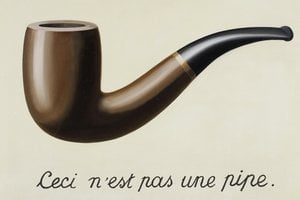
Em 1926, Magritte havia abraçado plenamente os princípios do Surrealismo, produzindo *Le Jockey Perdu (The Lost Jockey)*, amplamente considerado sua primeira obra surrealista genuína. No entanto, seu tipo de Surrealismo era distinto. Ele não estava interessado em explorar o inconsciente por meio da livre associação ou imagens de sonho como alguns de seus contemporâneos. Em vez disso, Magritte procurou desafiar a percepção dos espectadores sobre a realidade ao apresentar objetos cotidianos em contextos inesperados, forçando-os a questionar suas suposições sobre o mundo ao seu redor. Obras icônicas como *The Treachery of Images (This is not a pipe)* (1929) desconstroem brilhantemente a relação entre imagem e objeto, lembrando-nos que uma representação nunca é a coisa em si. *Les Amants (The Lovers)* (1927-1928), com suas figuras envoltas, ecoam o trauma da morte de sua mãe enquanto exploram simultaneamente temas de ocultamento e intimidade. *Time Transfixed* (1938) apresenta um trem atravessando uma parede de tijolos, interrompendo nossa sensação de espaço e tempo. E *The Human Condition* (1933), uma tela dentro de uma tela, borra os limites entre representação e realidade, nos convidando a considerar como percebemos e interpretamos o mundo.

Later Life, Recognition, and Enduring Legacy

Apesar das dificuldades iniciais para receber reconhecimento, o trabalho de Magritte ganhou gradualmente destaque, particularmente nos Estados Unidos com exposições em 1936 e posteriormente exposições retrospectivas no Museu de Arte Moderna (1965) e no Metropolitan Museum of Art (1992). Ele permaneceu politicamente engajado ao longo de sua vida, defendendo a autonomia artística. Ele continuou a refinar seu estilo característico, explorando temas de repetição, ilusão e o poder da linguagem em pinturas que são tanto intelectualmente estimulantes quanto visualmente impressionantes. Magritte morreu em 15 de agosto de 1967, deixando para trás um corpo de trabalho que continua a cativar e desafiar os públicos mundialmente. Sua influência se estende muito além do reino da pintura, impactando o Pop Art, o Minimalismo e o Conceitualismo, e até mesmo a publicidade e o cinema. Hoje, suas pinturas são mantidas em importantes coleções de museus ao redor do mundo, incluindo os Musées royaux des beaux-arts de Belgique em Bruxelas, que abrigam o Magritte Museum – dedicado inteiramente à sua obra e possuindo a maior coleção de suas criações.

  • Coleções de Museus: Musées royaux des beaux-arts de Belgique, Bruxelas; Magritte Museum.

Magritte's enduring legacy lies in his ability to make us see the familiar anew, to question our assumptions about reality, and to appreciate the power of art to provoke thought and inspire wonder. He wasn’t simply painting images; he was crafting visual paradoxes that continue to resonate with viewers decades after their creation, solidifying his position as a true master of Surrealism and a pivotal figure in 20th-century art.

René Magritte

René Magritte

1898 - 1967 , Bélgica

Dados Rápidos

  • Artistic Movement Or Style: Surrealismo
  • Artists Or Movements Influenced By This Artist:
    • Pop Art
    • Minimalismo
  • Artists Who Influenced This Artist: ['Giorgio de Chirico']
  • Date Of Birth: 21 de novembro de 1898
  • Date Of Death: 15 de agosto de 1967
  • Full Name: René François Ghislain Magritte
  • Nationality: Belga
  • Notable Artworks:
    • Les Amants
    • A Queda
    • O Jogador Perdido
  • Place Of Birth: Lessines, Bélgica
Explore obras de arte organizadas por temas, estilos e características.