Visualizar em escala Visualizar em RA Alternar para Impressão Ver Imagem Digital Enviar
Ver detalhes Guia de Obras do Aluno Adicionar aos favoritos Baixar imagem Semelhantes Raio X Apresentação de slides Estatísticas

Landscape

René Magritte’s surreal "Landscape" presents a haunting vision of a naked woman intertwined with tree roots against an ocean vista, embodying the artist's signature style and exploring themes of mystery and hidden realities. Discover this iconic piece and bring its captivating dreamscape into your home.

René Magritte (1898-1967): Explore o surrealismo de um mestre belga! Descubra obras icônicas como 'Os Amantes', desafiando a realidade e a percepção. #Magritte #Surrealismo

A obra de arte exibida nesta página é protegida por leis de direitos autorais, o que significa que não podemos criar ou vender legalmente uma reprodução idêntica. Esta proteção é aplicada por meio de acordos internacionais, tais como a Convenção de Berna e pelas leis nacionais, incluindo as estabelecidas por Lei de Direitos Autorais dos EUA - Título 17.

Como uma alternativa respeitosa e legal, oferecemos obras de arte personalizadas e pintadas à mão, inspiradas na obra original. Nossos artistas profissionais e experientes estudam cuidadosamente o estilo, a atmosfera e a essência artística da obra original para criar uma peça nova e única que evoque a mesma sensação — permanecendo como uma criação original por direito próprio.

Este método cumpre plenamente as regulamentações de direitos autorais, pois não envolve a cópia ou duplicação da obra protegida. Em vez disso, trata-se de uma reinterpretação criativa — uma nova pintura que é influenciada pela original, mas não idêntica a ela.

Reprodução em Óleo Feita à Mão

Óleo sobre tela pintado à mão no tamanho e moldura de sua escolha, feito sob encomenda pelos nossos artistas. ( Alternar para Impressão Ver Imagem Digital)

Corner sample of the P118B picture frame: poliestireno moldado, 5 cm wide and 3 cm thick
P118B €10
Corner sample of the P118H picture frame: poliestireno moldado, 5 cm wide and 3 cm thick
P118H €10
Corner sample of the P118W picture frame: poliestireno moldado, 5 cm wide and 3 cm thick
P118W €10
Corner sample of the P438Z picture frame: poliestireno moldado, 5.5 cm wide and 3.5 cm thick
P438Z €10
Corner sample of the P508JH picture frame: poliestireno moldado, 7 cm wide and 3.5 cm thick
P508JH €12
Corner sample of the P508YH picture frame: poliestireno moldado, 7 cm wide and 3.5 cm thick
P508YH €12
Corner sample of the P805H picture frame: poliestireno moldado, 5 cm wide and 3.5 cm thick
P805H €10
Corner sample of the P805Z picture frame: poliestireno moldado, 5 cm wide and 3.5 cm thick
P805Z €10
Corner sample of the P919BZ picture frame: poliestireno moldado, 7 cm wide and 3.5 cm thick
P919BZ €10
Corner sample of the P919G picture frame: poliestireno moldado, 7 cm wide and 3.5 cm thick
P919G €10
Corner sample of the P919XJ picture frame: poliestireno moldado, 7 cm wide and 3.5 cm thick
P919XJ €10
Corner sample of the P959ZH picture frame: poliestireno moldado, 5 cm wide and 3 cm thick
P959ZH €10
Corner sample of the P968JZ picture frame: poliestireno moldado, 6 cm wide and 4 cm thick
P968JZ €12
Corner sample of the W106C picture frame: madeira maciça, 5 cm wide and 3 cm thick
W106C €8
Corner sample of the W218G picture frame: madeira maciça, 5 cm wide and 3 cm thick
W218G €10
Corner sample of the W218JH picture frame: madeira maciça, 5 cm wide and 3 cm thick
W218JH €8
Corner sample of the W218Y picture frame: madeira maciça, 5 cm wide and 3 cm thick
W218Y €10
Corner sample of the W307PJ picture frame: madeira maciça, 6 cm wide and 3 cm thick
W307PJ €10
Corner sample of the W316G picture frame: madeira maciça, 6 cm wide and 3 cm thick
W316G €10
Corner sample of the W316PJ picture frame: madeira maciça, 6 cm wide and 3 cm thick
W316PJ €8
Corner sample of the W316Y picture frame: madeira maciça, 6 cm wide and 3 cm thick
W316Y €10
Corner sample of the W398PJ picture frame: madeira maciça, 5 cm wide and 3 cm thick
W398PJ €8
Corner sample of the W4111J picture frame: madeira maciça, 6.5 cm wide and 3.5 cm thick
W4111J €10
Corner sample of the W500HY picture frame: madeira maciça, 7 cm wide and 5 cm thick
W500HY €15
Corner sample of the W500JH picture frame: madeira maciça, 7 cm wide and 5 cm thick
W500JH €15
Corner sample of the W692G picture frame: madeira maciça, 8 cm wide and 4 cm thick
W692G €12
Corner sample of the W849H picture frame: madeira maciça, 5 cm wide and 3 cm thick
W849H €8
Corner sample of the W940BG picture frame: madeira maciça, 7.5 cm wide and 4.5 cm thick
W940BG €15
Corner sample of the W953PJ picture frame: madeira maciça, 6 cm wide and 3.5 cm thick
W953PJ €8

Padrão
sob medida
CM
INCH

Escolha entre os nossos tamanhos pré-definidos que respeitam as proporções originais da obra de arte.

largura
altura

Digite a largura e a altura de que necessita, para se ajustar à sua moldura ou à sua parede. Esta obra é pintada à mão, por isso, para um tamanho com uma proporção diferente, o artista pode pintar um pouco mais ao redor da imagem ou cortar um pouco — você escolhe. Enviamos-lhe uma maquete digital para aprovação antes de a pintura começar. A imagem exibida nesta página não mostra o resultado real — apenas a maquete mostra.

Exemplos do que pode ser personalizado: Substituir o rosto pela foto do cliente; Adicionar um animal de estimação (ex: substituir gato por cão); Incluir uma mensagem oculta no fundo; Alterar a paisagem ou elementos do fundo.
Após o pedido, a equipa WahooArt.com enviará um e-mail ao cliente para solicitar instruções e fornecer uma prévia do esboço.

Entrega mundial () em 3 a 4 semanas, em vez das 5 semanas padrão. (24 Outubro). Sem comprometer a qualidade.

Envio expresso gratuito para todo o mundo
Tela de Linho Premium
Seguro de transporte total
Garantia de Reembolso de Impostos Alfandegários
Garantia de Fidelidade de Cor
Política de Devolução em 100 Dias (Apenas para Defeitos)
Garantia de reembolso de 100%
Desconto para múltiplas unidades

Preço Total

€ 239

Landscape

Técnica de Reprodução

Dimensões da Reprodução

-

Preço Total

€ 239

Detalhes Rápidos

  • Title: Landscape
  • Artist: René Magritte
  • Influences:
    • Trauma
    • Loss
  • Year: 1926
  • Notable elements: Naked woman, roots

A Descent into the Unseen: René Magritte’s “Landscape”

René Magritte's "Landscape," painted in 1926, is not merely a depiction of a scene; it’s an immersion into the unsettling realm of the subconscious. This arresting work, emerging from the fertile ground of early Surrealism, immediately confronts the viewer with a profoundly disquieting image: a nude woman standing atop a precipice, her back intertwined with the gnarled roots of trees that seem to erupt directly from her form. The vast ocean and distant mountains provide a dramatic backdrop, yet it is the intimate, almost claustrophobic relationship between the figure and the landscape that commands our attention, demanding contemplation long after the initial visual impact has faded.

  • Surrealist Roots: Created at the dawn of Magritte’s career, “Landscape” exemplifies the movement's core tenets – a deliberate disruption of reality to expose hidden anxieties and challenge conventional perceptions. It aligns with the broader Surrealist interest in dreams, mythology, and the irrational, seeking to unlock the power of the unconscious mind.
  • Technical Mastery: Magritte’s meticulous technique is evident in the incredibly detailed rendering of both the woman's form and the surrounding natural elements. The smooth blending of colors, characteristic of his style, creates a sense of almost photographic realism that only amplifies the unsettling nature of the scene. He employed oil paints on canvas with careful attention to light and shadow, achieving a remarkable level of detail despite the surreal subject matter.

Symbolism and the Weight of Memory

The symbolism within “Landscape” is layered and profoundly personal, deeply rooted in Magritte’s own life experiences. The most potent element is undoubtedly the naked woman, a recurring motif in his work – a direct echo of his mother's death. Her exposed form, combined with the tree roots emerging from her back, evokes a sense of vulnerability, loss, and perhaps even a confrontation with mortality. The ocean, often associated with the unconscious, adds to this feeling of depth and mystery. The trees themselves can be interpreted as symbols of life, growth, and connection – yet here, they are inextricably linked to the woman’s body, blurring the boundaries between the natural world and the human psyche.

  • The Mother's Shadow: Art historians frequently link this image to Magritte’s childhood trauma. The depiction of his mother’s corpse in the River Sambre – her dress obscuring her face – became a powerful, haunting memory that informed his artistic vision throughout his career.
  • Juxtaposition and Discomfort: Magritte expertly utilizes juxtaposition to create discomfort and provoke thought. The seemingly natural setting is rendered utterly unnatural by the woman’s presence, forcing the viewer to question the stability of reality itself.

Historical Context and Artistic Influence

"Landscape" was created during a period of significant artistic experimentation in Europe. Magritte was influenced by the works of artists like Giorgio de Chirico, whose metaphysical paintings explored similar themes of illusion and disorientation. However, unlike de Chirico’s often more overtly theatrical style, Magritte favored a quieter, more restrained approach – one that prioritized psychological impact over overt narrative. The painting reflects the growing interest in psychoanalysis during the 1920s, which encouraged artists to explore the hidden depths of the human mind.

  • Early Surrealism: This work represents a crucial early example of Surrealist art, demonstrating Magritte’s commitment to challenging conventional artistic norms and exploring the realm of dreams and the unconscious.
  • Impact on Later Artists: “Landscape” has had a lasting influence on subsequent generations of artists, particularly those working in surrealism and conceptual art.

Emotional Resonance and Artistic Value

“Landscape” transcends mere visual representation; it’s an emotionally charged experience. The painting's unsettling beauty evokes feelings of unease, mystery, and perhaps even a sense of profound sadness. It invites the viewer to confront uncomfortable truths about mortality, identity, and the nature of reality. As a significant work from one of the 20th century’s most influential artists, “Landscape” holds considerable artistic value – a testament to Magritte's innovative vision and his ability to capture the complexities of the human condition. A hand-painted reproduction offers an unparalleled opportunity to bring this iconic image into your space, sparking conversation and contemplation for years to come.

Perguntas e Respostas

Como "Landscape" equilibra luz e sombra?

"Landscape" de René Magritte está registrado com balanced, apresentando uma luminância de Soft Shadow.

Onde posso encontrar estatísticas sobre "Landscape" de René Magritte?

Existe uma página de Estatísticas para "Landscape". Ela apresenta o gráfico de visitas mensais da obra e de outras obras do artista, com detalhamento por país e idioma.

Em que técnica foi executada a obra "Landscape" de René Magritte?

"Landscape" é executada em Acrylic On Canvas.


Biografia do Artista

Early Life and the Seeds of Surrealism

René Magritte, nascido René François Ghislain Magritte em 21 de novembro de 1898, em Lessines, Bélgica, emergiu em um mundo que moldaria profundamente sua visão artística enigmática. Seus primeiros anos foram marcados por um evento perturbador – o suicídio de sua mãe quando ele tinha apenas treze anos. A imagem do corpo dela sendo recuperado do Rio Sambre, com seu vestido obscurecendo o rosto, tornou-se um motivo assombrador que permeiairia sutilmente suas obras posteriores, manifestando-se em figuras disfarçadas e uma exploração persistente de realidades ocultas. Esse trauma precoce instilou nele uma fascinação por mistério, perda e o poder inquietante do que permanece invisível. Embora os detalhes de sua infância permaneçam um tanto elusivos, fica claro que essa experiência formativa lançou as bases para sua investigação contínua da percepção e representação. Ele começou a estudar desenho aos dez anos, revelando uma inclinação natural para a expressão visual, mas inicialmente explorou o Impressionismo antes de trilhar um caminho que o levaria a se tornar uma das figuras mais significativas do Surrealismo.

Artistic Development and Influences

A jornada artística de Magritte não foi imediata nem direta. Ele estudou na Academia Royale des Beaux-Arts em Bruxelas, mas encontrou seus métodos tradicionais sufocantes. Seu trabalho inicial experimentou com Futurismo e Cubismo, absorvendo elementos desses movimentos vanguardistas, mas acabou rejeitando suas preocupações puramente formais. Não foi até encontrar a pintura *The Song of Love* (1914) de Giorgio de Chirico em 1922 que Magritte descobriu uma ressonância que alteraria irreversivelmente seu curso artístico. A paisagem onírica de De Chirico e suas justaposições perturbadoras desbloquearam para Magritte uma nova maneira de ver – um mundo onde o familiar poderia ser representado de forma estranha, e o ordinário imbuído de mistério profundo. Esse encontro desencadeou seu compromisso com o Surrealismo, embora ele frequentemente mantivesse uma distância única de suas abordagens mais psicológicas ou automáticas. Ele preferiu uma precisão meticulosa, quase clínica, em sua pintura, usando técnicas realistas para representar cenários ilógicos.

The Heart of Surrealism: Challenging Reality

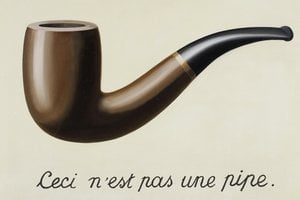
Em 1926, Magritte havia abraçado plenamente os princípios do Surrealismo, produzindo *Le Jockey Perdu (The Lost Jockey)*, amplamente considerado sua primeira obra surrealista genuína. No entanto, seu tipo de Surrealismo era distinto. Ele não estava interessado em explorar o inconsciente por meio da livre associação ou imagens de sonho como alguns de seus contemporâneos. Em vez disso, Magritte procurou desafiar a percepção dos espectadores sobre a realidade ao apresentar objetos cotidianos em contextos inesperados, forçando-os a questionar suas suposições sobre o mundo ao seu redor. Obras icônicas como *The Treachery of Images (This is not a pipe)* (1929) desconstroem brilhantemente a relação entre imagem e objeto, lembrando-nos que uma representação nunca é a coisa em si. *Les Amants (The Lovers)* (1927-1928), com suas figuras envoltas, ecoam o trauma da morte de sua mãe enquanto exploram simultaneamente temas de ocultamento e intimidade. *Time Transfixed* (1938) apresenta um trem atravessando uma parede de tijolos, interrompendo nossa sensação de espaço e tempo. E *The Human Condition* (1933), uma tela dentro de uma tela, borra os limites entre representação e realidade, nos convidando a considerar como percebemos e interpretamos o mundo.

Later Life, Recognition, and Enduring Legacy

Apesar das dificuldades iniciais para receber reconhecimento, o trabalho de Magritte ganhou gradualmente destaque, particularmente nos Estados Unidos com exposições em 1936 e posteriormente exposições retrospectivas no Museu de Arte Moderna (1965) e no Metropolitan Museum of Art (1992). Ele permaneceu politicamente engajado ao longo de sua vida, defendendo a autonomia artística. Ele continuou a refinar seu estilo característico, explorando temas de repetição, ilusão e o poder da linguagem em pinturas que são tanto intelectualmente estimulantes quanto visualmente impressionantes. Magritte morreu em 15 de agosto de 1967, deixando para trás um corpo de trabalho que continua a cativar e desafiar os públicos mundialmente. Sua influência se estende muito além do reino da pintura, impactando o Pop Art, o Minimalismo e o Conceitualismo, e até mesmo a publicidade e o cinema. Hoje, suas pinturas são mantidas em importantes coleções de museus ao redor do mundo, incluindo os Musées royaux des beaux-arts de Belgique em Bruxelas, que abrigam o Magritte Museum – dedicado inteiramente à sua obra e possuindo a maior coleção de suas criações.

  • Coleções de Museus: Musées royaux des beaux-arts de Belgique, Bruxelas; Magritte Museum.

Magritte's enduring legacy lies in his ability to make us see the familiar anew, to question our assumptions about reality, and to appreciate the power of art to provoke thought and inspire wonder. He wasn’t simply painting images; he was crafting visual paradoxes that continue to resonate with viewers decades after their creation, solidifying his position as a true master of Surrealism and a pivotal figure in 20th-century art.

René Magritte

René Magritte

1898 - 1967 , Bélgica

Informações Rápidas

  • Artistic Movement Or Style: Surrealismo
  • Artists Or Movements Influenced By This Artist:
    • Pop Art
    • Minimalismo
  • Artists Who Influenced This Artist: ['Giorgio de Chirico']
  • Date Of Birth: 21 de novembro de 1898
  • Date Of Death: 15 de agosto de 1967
  • Full Name: René François Ghislain Magritte
  • Nationality: Belga
  • Notable Artworks:
    • Les Amants
    • A Queda
    • O Jogador Perdido
  • Place Of Birth: Lessines, Bélgica
Explore obras de arte organizadas por temas, estilos e características.