Visualizar na paredeVisualizar na parede Ver em RAVer em RA Comprar pintura feita à mão Comprar pintura feita à mãoAlternar para Imagem Digital Alternar para Imagem Digital CompartilharCompartilhar
DetalhesDetalhes Adicionar aos favoritos Adicionar aos favoritos Baixar imagemBaixar imagem SemelhantesSemelhantes Raio XRaio X SlideshowSlideshow EstatísticasEstatísticas

Bather

René Magritte’s "Bather" (1925) captures a surreal lunar embrace with a nude woman and Art Deco precision. Explore this iconic Surrealist painting, a masterful depiction of hidden desires and introspection – discover your perfect piece.

René Magritte (1898-1967): Explore o surrealismo de um mestre belga! Descubra obras icônicas como 'Os Amantes', desafiando a realidade e a percepção. #Magritte #Surrealismo

Giclée / Impressão de Arte

Impressão giclée ou em tela de qualidade de museu, com produção rápida e opções flexíveis de acabamento. (Comprar pintura feita à mão Comprar pintura feita à mãoAlternar para Imagem Digital Alternar para Imagem Digital)

P118B $10
P118H $10
P118W $10
P438Z $10
P508JH $12
P508YH $12
P805H $10
P805Z $10
P919BZ $10
P919G $10
P919XJ $10
P959ZH $10
P968JZ $12
W106C $8
W218G $10
W218JH $8
W218Y $10
W307PJ $10
W316G $10
W316PJ $8
W316Y $10
W398PJ $8
W4111J $10
W500HY $15
W500JH $15
W692G $12
W849H $8
W940BG $15
W953PJ $8

Tamanho padrão
personalizado
CM
INCH

Escolha entre os nossos tamanhos pré-definidos que respeitam as proporções originais da obra de arte.

largura
altura

Você pode inserir suas próprias dimensões para se ajustar a uma moldura ou espaço específico. Se o tamanho selecionado não corresponder às proporções da imagem original, iremos recortar a obra de arte ou estender a imagem com uma borda espelhada ou preenchimento sólido. Um mockup digital será enviado para sua aprovação antes do início da produção.
Por favor, observe que a visualização na tela não reflete o recorte ou a extensão real. Apenas o mockup mostrará com precisão a composição final.
Embora tamanhos personalizados estejam disponíveis, recomendamos selecionar uma dimensão da lista predefinida para preservar as proporções originais.

Entrega mundial () em 2 semanas, em vez das 4/5 semanas padrão. (11 Setembro)

why_choose_icon
Envio expresso gratuito para todo o mundo
why_choose_icon
Tela de Linho de Alta Qualidade
why_choose_icon
Seguro de transporte completo
why_choose_icon
Garantia de Reembolso de Impostos Alfandegários
why_choose_icon
Garantia de Fidelidade Cromática
why_choose_icon
Política de Devolução de 100 Dias (Apenas Defeitos)
why_choose_icon
Garantia de reembolso de 100%
why_choose_icon
Oferta de desconto por quantidade

Preço Total

$ 68

reproduction

Bather

Giclée / Impressão de Arte

Tamanho da Reprodução

-

Preço Total

$ 68

Informações Rápidas

  • Title: Bather
  • Medium: Oil on canvas
  • Artist: René Magritte
  • Notable elements or techniques: Dreamlike atmosphere; Symbolic representation
  • Location: Private Collection
  • Year: 1925
  • Movement: Surrealism

Quiz de Arte

Cada pergunta possui apenas uma resposta correta.

Pergunta 1:
What artistic movement is René Magritte’s ‘Bather’ primarily associated with?
Pergunta 2:
The painting depicts a woman lying in bed under the gaze of what celestial body?
Pergunta 3:
What is notable about the depiction of the woman’s dress in ‘Bather’? It obscures her face, suggesting...
Pergunta 4:
The room setting in ‘Bather’ contributes to the artwork's atmosphere. What stylistic element characterizes this environment?
Pergunta 5:
René Magritte often employed surrealist techniques to challenge viewers’ perceptions of reality. How does ‘Bather’ exemplify this approach?

A Lunar Embrace: The Enigmatic Dreamscape of René Magritte’s Bather

In the quiet, shadowed corridors of Surrealism, few works capture the delicate tension between tranquility and unease as poignantly as René Magritte’s “Bather,” painted in 1925. This masterpiece does not merely depict a scene; it invites the viewer into a liminal space where the boundaries of reality dissolve into the soft glow of a nocturnal dream. At its heart, the painting presents a woman reclining in repose, her form bathed in a celestial light that feels both intimate and otherworldly. There is a profound stillness to the composition, yet beneath this surface of calm lies the unmistakable Magrittean signature: a subtle disruption of the familiar that compels us to question the very nature of what we see.

The technique employed in “Bather” reflects the artist's transition through various stylistic influences, blending the precision of Art Deco with the burgeoning psychological depth of the Surrealist movement. Magritte utilizes a muted, ethereal palette—dominated by creamy tones and pale, ghostly blues—to craft an atmosphere of nocturnal luminescence. His brushwork, while meticulous, possesses a textural quality that prevents the scene from becoming purely photographic. Instead, these subtle variations in surface create a dreamlike haze, mirroring the way memories or dreams often lack sharp edges, favoring instead a soft, evocative impression of truth.

Symbolism and the Subconscious Mind

To understand “Bather,” one must look beyond the physical subject to the profound psychological currents flowing beneath the canvas. Created during an era when the groundbreaking theories of Sigmund Freud were reshaping the intellectual landscape, the painting serves as a visual exploration of the subconscious. The moon, positioned above the reclining figure, acts as a potent symbol of introspection and the illumination of the hidden self. It is a light that does not reveal everything but rather casts long, mysterious shadows, much like the way psychoanalysis seeks to bring light to the repressed corners of the human psyche.

The subject's vulnerability—her nudity and her state of rest—functions as a metaphor for the exposure of one's true essence when the rational defenses of the waking world are set aside. Magritte masterfully plays with themes of concealment and revelation; even as the figure is visible, there is a sense that much remains veiled. This interplay between the seen and the unseen creates a captivating emotional resonance, making the piece an intellectual puzzle for the observer to solve, turning every viewing into a new discovery of hidden meaning.

An Essential Addition to the Discerning Collection

For the art collector or the interior designer, a high-quality reproduction of “Bather” offers more than just aesthetic beauty; it provides a focal point of profound conversation and intellectual depth. The painting’s unique ability to evoke both peace and mystery makes it an incredibly versatile piece for sophisticated environments. In a modern, minimalist setting, its soft palette can provide a calming, atmospheric warmth, while in a more classical or eclectic space, its Surrealist intrigue adds a layer of complex storytelling.

Owning a piece that captures the essence of Magritte’s genius allows one to bring a fragment of the 20th century's most significant artistic revolution into the home. It is an invitation to pause, to reflect, and to allow the imagination to wander through the moonlit landscapes of the mind. Whether used to anchor a gallery wall or to serve as a singular, evocative statement in a quiet study, “Bather” remains a timeless testament to the enduring power of the surreal.


Biografia do Artista

Early Life and the Seeds of Surrealism

René Magritte, nascido René François Ghislain Magritte em 21 de novembro de 1898, em Lessines, Bélgica, emergiu em um mundo que moldaria profundamente sua visão artística enigmática. Seus primeiros anos foram marcados por um evento perturbador – o suicídio de sua mãe quando ele tinha apenas treze anos. A imagem do corpo dela sendo recuperado do Rio Sambre, com seu vestido obscurecendo o rosto, tornou-se um motivo assombrador que permeiairia sutilmente suas obras posteriores, manifestando-se em figuras disfarçadas e uma exploração persistente de realidades ocultas. Esse trauma precoce instilou nele uma fascinação por mistério, perda e o poder inquietante do que permanece invisível. Embora os detalhes de sua infância permaneçam um tanto elusivos, fica claro que essa experiência formativa lançou as bases para sua investigação contínua da percepção e representação. Ele começou a estudar desenho aos dez anos, revelando uma inclinação natural para a expressão visual, mas inicialmente explorou o Impressionismo antes de trilhar um caminho que o levaria a se tornar uma das figuras mais significativas do Surrealismo.

Artistic Development and Influences

A jornada artística de Magritte não foi imediata nem direta. Ele estudou na Academia Royale des Beaux-Arts em Bruxelas, mas encontrou seus métodos tradicionais sufocantes. Seu trabalho inicial experimentou com Futurismo e Cubismo, absorvendo elementos desses movimentos vanguardistas, mas acabou rejeitando suas preocupações puramente formais. Não foi até encontrar a pintura *The Song of Love* (1914) de Giorgio de Chirico em 1922 que Magritte descobriu uma ressonância que alteraria irreversivelmente seu curso artístico. A paisagem onírica de De Chirico e suas justaposições perturbadoras desbloquearam para Magritte uma nova maneira de ver – um mundo onde o familiar poderia ser representado de forma estranha, e o ordinário imbuído de mistério profundo. Esse encontro desencadeou seu compromisso com o Surrealismo, embora ele frequentemente mantivesse uma distância única de suas abordagens mais psicológicas ou automáticas. Ele preferiu uma precisão meticulosa, quase clínica, em sua pintura, usando técnicas realistas para representar cenários ilógicos.

The Heart of Surrealism: Challenging Reality

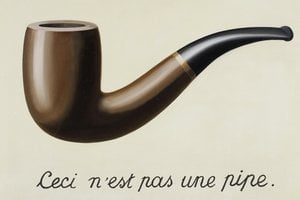
Em 1926, Magritte havia abraçado plenamente os princípios do Surrealismo, produzindo *Le Jockey Perdu (The Lost Jockey)*, amplamente considerado sua primeira obra surrealista genuína. No entanto, seu tipo de Surrealismo era distinto. Ele não estava interessado em explorar o inconsciente por meio da livre associação ou imagens de sonho como alguns de seus contemporâneos. Em vez disso, Magritte procurou desafiar a percepção dos espectadores sobre a realidade ao apresentar objetos cotidianos em contextos inesperados, forçando-os a questionar suas suposições sobre o mundo ao seu redor. Obras icônicas como *The Treachery of Images (This is not a pipe)* (1929) desconstroem brilhantemente a relação entre imagem e objeto, lembrando-nos que uma representação nunca é a coisa em si. *Les Amants (The Lovers)* (1927-1928), com suas figuras envoltas, ecoam o trauma da morte de sua mãe enquanto exploram simultaneamente temas de ocultamento e intimidade. *Time Transfixed* (1938) apresenta um trem atravessando uma parede de tijolos, interrompendo nossa sensação de espaço e tempo. E *The Human Condition* (1933), uma tela dentro de uma tela, borra os limites entre representação e realidade, nos convidando a considerar como percebemos e interpretamos o mundo.

Later Life, Recognition, and Enduring Legacy

Apesar das dificuldades iniciais para receber reconhecimento, o trabalho de Magritte ganhou gradualmente destaque, particularmente nos Estados Unidos com exposições em 1936 e posteriormente exposições retrospectivas no Museu de Arte Moderna (1965) e no Metropolitan Museum of Art (1992). Ele permaneceu politicamente engajado ao longo de sua vida, defendendo a autonomia artística. Ele continuou a refinar seu estilo característico, explorando temas de repetição, ilusão e o poder da linguagem em pinturas que são tanto intelectualmente estimulantes quanto visualmente impressionantes. Magritte morreu em 15 de agosto de 1967, deixando para trás um corpo de trabalho que continua a cativar e desafiar os públicos mundialmente. Sua influência se estende muito além do reino da pintura, impactando o Pop Art, o Minimalismo e o Conceitualismo, e até mesmo a publicidade e o cinema. Hoje, suas pinturas são mantidas em importantes coleções de museus ao redor do mundo, incluindo os Musées royaux des beaux-arts de Belgique em Bruxelas, que abrigam o Magritte Museum – dedicado inteiramente à sua obra e possuindo a maior coleção de suas criações.

  • Coleções de Museus: Musées royaux des beaux-arts de Belgique, Bruxelas; Magritte Museum.

Magritte's enduring legacy lies in his ability to make us see the familiar anew, to question our assumptions about reality, and to appreciate the power of art to provoke thought and inspire wonder. He wasn’t simply painting images; he was crafting visual paradoxes that continue to resonate with viewers decades after their creation, solidifying his position as a true master of Surrealism and a pivotal figure in 20th-century art.

René Magritte

René Magritte

1898 - 1967 , Bélgica

Dados Rápidos

  • Artistic Movement Or Style: Surrealismo
  • Artists Or Movements Influenced By This Artist:
    • Pop Art
    • Minimalismo
  • Artists Who Influenced This Artist: ['Giorgio de Chirico']
  • Date Of Birth: 21 de novembro de 1898
  • Date Of Death: 15 de agosto de 1967
  • Full Name: René François Ghislain Magritte
  • Nationality: Belga
  • Notable Artworks:
    • Les Amants
    • A Queda
    • O Jogador Perdido
  • Place Of Birth: Lessines, Bélgica
Explore obras de arte organizadas por temas, estilos e características.