Visualizar em escala Visualizar em RA Encomendar reprodução pintada à mão Ver Imagem Digital Enviar
Ver detalhes Guia Adicionar aos favoritos Baixar imagem Semelhantes Raio X Apresentação de slides Estatísticas

Adulation of space

Explore the captivating world of René Magritte! Delve into his surrealist masterpieces, challenging perceptions of reality & identity. Discover the philosophical depth and lasting influence of this Belgian master.

René Magritte (1898-1967): Explore o surrealismo de um mestre belga! Descubra obras icônicas como 'Os Amantes', desafiando a realidade e a percepção. #Magritte #Surrealismo

Giclée / Impressão de Arte

Impressão giclée ou em tela de qualidade de museu, com produção rápida e opções flexíveis de acabamento. ( Encomendar reprodução pintada à mão Ver Imagem Digital)

P118B $10
P118H $10
P118W $10
P438Z $10
P508JH $12
P508YH $12
P805H $10
P805Z $10
P919BZ $10
P919G $10
P919XJ $10
P959ZH $10
P968JZ $12
W106C $8
W218G $10
W218JH $8
W218Y $10
W307PJ $10
W316G $10
W316PJ $8
W316Y $10
W398PJ $8
W4111J $10
W500HY $15
W500JH $15
W692G $12
W849H $8
W940BG $15
W953PJ $8

Padrão
sob medida
CM
INCH

Escolha entre os nossos tamanhos pré-definidos que respeitam as proporções originais da obra de arte.

largura
altura

Você pode inserir suas próprias dimensões para se ajustar a uma moldura ou espaço específico. Se o tamanho selecionado não corresponder às proporções da imagem original, iremos recortar a obra de arte ou estender a imagem com uma borda espelhada ou preenchimento sólido. Um mockup digital será enviado para sua aprovação antes do início da produção.
Por favor, observe que a visualização na tela não reflete o recorte ou a extensão real. Apenas o mockup mostrará com precisão a composição final.
Embora tamanhos personalizados estejam disponíveis, recomendamos selecionar uma dimensão da lista predefinida para preservar as proporções originais.

Entrega mundial () em 2 semanas, em vez das 4/5 semanas padrão. (22 Setembro)

why_choose_icon
Envio expresso gratuito para todo o mundo
why_choose_icon
Tela de Linho Premium
why_choose_icon
Seguro de transporte total
why_choose_icon
Garantia de Reembolso de Impostos Alfandegários
why_choose_icon
Garantia de Fidelidade de Cor
why_choose_icon
Política de Devolução em 100 Dias (Apenas para Defeitos)
why_choose_icon
Garantia de reembolso de 100%
why_choose_icon
Desconto para múltiplas unidades

Preço Total

$ 68

reproduction

Adulation of space

Giclée / Impressão de Arte

Dimensões da Reprodução

-

Preço Total

$ 68

Detalhes Rápidos

  • Medium: Oil on canvas
  • Subject or theme: Space; Female figures
  • Artistic style: Rational Surrealism
  • Influences: Cubism
  • Year: 1928
  • Location: Private Collection
  • Movement: Surrealism

Teste de Conhecimentos Artísticos

Cada pergunta possui apenas uma resposta correta.

Questão 1:
What artistic movement is René Magritte primarily associated with?
Questão 2:
The image description mentions a 'trompe l'œil technique'. What does this term refer to in art?
Questão 3:
According to Paul Nougé's description, what is Magritte’s approach to Surrealism?
Questão 4:
What is the primary purpose of the grey structure surrounding the women depicted in 'The Adulation of Space'?
Questão 5:
In what year was 'The Adulation of Space' created?

A Surrealist Vision of Form and Void

In the annals of Surrealism, few works possess the unsettling, hypnotic allure of René Magritte’s “The Adulation of Space.” Completed around 1928, this oil on canvas is a masterclass in the art of the unexpected, inviting viewers into a realm where the boundaries of the human form and the vastness of the void begin to dissolve. At first glance, the composition presents a striking, almost rhythmic arrangement of five nude female figures. They are positioned in a pyramidal configuration, their bodies entwined at the waist in a way that defies conventional anatomy, creating an evocative visual pulse that draws the eye inward toward a central, mysterious core. Magritte does not merely depict bodies; he reconfigures them into a singular, sculptural entity that challenges our very perception of biological reality.

The technique employed here is a sophisticated use of trompe l'œil, a method designed to deceive the eye and manipulate the viewer's sense of depth. Magritte utilizes subtle gradations of light and shadow to grant these figures a startlingly tactile presence, yet he simultaneously uses scale and perspective to create an architectural distortion. The background is dominated by a grey, amorphous structure—a deliberate barrier that serves to isolate the figures within a vacuum of thought. This interplay between the tangible flesh of the women and the impenetrable, nebulous space behind them creates a tension that is both beautiful and deeply disquieting, making it a profound piece for those who appreciate art that demands active contemplation.

The Philosophy of the Unseen

To understand “The Adulation of Space,” one must look beyond the surface to the intellectual currents flowing through Paris in the late 1920s. Magritte, working alongside luminaries like André Breton and the poet Paul Nougé, was deeply engaged with the exploration of the subconscious. The title itself—suggested by his friend Nougé—is a profound philosophical provocation. It alludes to the ideas of thinkers like Edmund Husserl, suggesting that our consciousness does not merely inhabit space but actively constructs it. The painting serves as a visual metaphor for this construction; the way the bodies occupy and "adulate" the emptiness around them speaks to the overwhelming influence of the unseen on the human experience.

There is a haunting quality to the work that stems from Magritte’s personal history, specifically the early trauma of his mother's death. While much of his work avoids overt autobiography, the recurring themes of veiled identities and obscured realities find a powerful echo in this composition. The figures, though physically present, feel as though they are emerging from or receding into a dream state, embodying the Surrealist rejection of logic in favor of the liberated, often anxious, truths found in dreams. For the collector, this piece offers more than mere decoration; it provides a window into the fundamental mystery of existence.

An Essential Addition to the Sophisticated Interior

For the discerning art lover or interior designer, a high-quality reproduction of “The Adulation of Space” serves as a powerful focal point in any curated environment. Its muted palette of greys, flesh tones, and soft shadows allows it to integrate seamlessly into modern, minimalist, or even classical settings, providing a sophisticated layer of intellectual depth. The painting’s ability to evoke both awe and unease makes it an extraordinary conversational piece, perfect for spaces designed for reflection, such as private libraries, study halls, or avant-garde galleries.

Owning a reproduction of this Magritte masterpiece is an opportunity to bring the transformative power of Surrealism into the home. It is a work that rewards repeated viewing, revealing new layers of symbolic meaning and technical brilliance with every encounter. Whether you are drawn to its anatomical enigmas, its historical significance within the Surrealist movement, or its sheer aesthetic command, “The Adulation of Space” remains an eternal testament to the power of the imagination to reshape the world we think we know.


Biografia do Artista

Early Life and the Seeds of Surrealism

René Magritte, nascido René François Ghislain Magritte em 21 de novembro de 1898, em Lessines, Bélgica, emergiu em um mundo que moldaria profundamente sua visão artística enigmática. Seus primeiros anos foram marcados por um evento perturbador – o suicídio de sua mãe quando ele tinha apenas treze anos. A imagem do corpo dela sendo recuperado do Rio Sambre, com seu vestido obscurecendo o rosto, tornou-se um motivo assombrador que permeiairia sutilmente suas obras posteriores, manifestando-se em figuras disfarçadas e uma exploração persistente de realidades ocultas. Esse trauma precoce instilou nele uma fascinação por mistério, perda e o poder inquietante do que permanece invisível. Embora os detalhes de sua infância permaneçam um tanto elusivos, fica claro que essa experiência formativa lançou as bases para sua investigação contínua da percepção e representação. Ele começou a estudar desenho aos dez anos, revelando uma inclinação natural para a expressão visual, mas inicialmente explorou o Impressionismo antes de trilhar um caminho que o levaria a se tornar uma das figuras mais significativas do Surrealismo.

Artistic Development and Influences

A jornada artística de Magritte não foi imediata nem direta. Ele estudou na Academia Royale des Beaux-Arts em Bruxelas, mas encontrou seus métodos tradicionais sufocantes. Seu trabalho inicial experimentou com Futurismo e Cubismo, absorvendo elementos desses movimentos vanguardistas, mas acabou rejeitando suas preocupações puramente formais. Não foi até encontrar a pintura *The Song of Love* (1914) de Giorgio de Chirico em 1922 que Magritte descobriu uma ressonância que alteraria irreversivelmente seu curso artístico. A paisagem onírica de De Chirico e suas justaposições perturbadoras desbloquearam para Magritte uma nova maneira de ver – um mundo onde o familiar poderia ser representado de forma estranha, e o ordinário imbuído de mistério profundo. Esse encontro desencadeou seu compromisso com o Surrealismo, embora ele frequentemente mantivesse uma distância única de suas abordagens mais psicológicas ou automáticas. Ele preferiu uma precisão meticulosa, quase clínica, em sua pintura, usando técnicas realistas para representar cenários ilógicos.

The Heart of Surrealism: Challenging Reality

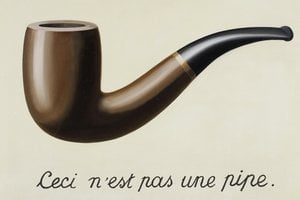
Em 1926, Magritte havia abraçado plenamente os princípios do Surrealismo, produzindo *Le Jockey Perdu (The Lost Jockey)*, amplamente considerado sua primeira obra surrealista genuína. No entanto, seu tipo de Surrealismo era distinto. Ele não estava interessado em explorar o inconsciente por meio da livre associação ou imagens de sonho como alguns de seus contemporâneos. Em vez disso, Magritte procurou desafiar a percepção dos espectadores sobre a realidade ao apresentar objetos cotidianos em contextos inesperados, forçando-os a questionar suas suposições sobre o mundo ao seu redor. Obras icônicas como *The Treachery of Images (This is not a pipe)* (1929) desconstroem brilhantemente a relação entre imagem e objeto, lembrando-nos que uma representação nunca é a coisa em si. *Les Amants (The Lovers)* (1927-1928), com suas figuras envoltas, ecoam o trauma da morte de sua mãe enquanto exploram simultaneamente temas de ocultamento e intimidade. *Time Transfixed* (1938) apresenta um trem atravessando uma parede de tijolos, interrompendo nossa sensação de espaço e tempo. E *The Human Condition* (1933), uma tela dentro de uma tela, borra os limites entre representação e realidade, nos convidando a considerar como percebemos e interpretamos o mundo.

Later Life, Recognition, and Enduring Legacy

Apesar das dificuldades iniciais para receber reconhecimento, o trabalho de Magritte ganhou gradualmente destaque, particularmente nos Estados Unidos com exposições em 1936 e posteriormente exposições retrospectivas no Museu de Arte Moderna (1965) e no Metropolitan Museum of Art (1992). Ele permaneceu politicamente engajado ao longo de sua vida, defendendo a autonomia artística. Ele continuou a refinar seu estilo característico, explorando temas de repetição, ilusão e o poder da linguagem em pinturas que são tanto intelectualmente estimulantes quanto visualmente impressionantes. Magritte morreu em 15 de agosto de 1967, deixando para trás um corpo de trabalho que continua a cativar e desafiar os públicos mundialmente. Sua influência se estende muito além do reino da pintura, impactando o Pop Art, o Minimalismo e o Conceitualismo, e até mesmo a publicidade e o cinema. Hoje, suas pinturas são mantidas em importantes coleções de museus ao redor do mundo, incluindo os Musées royaux des beaux-arts de Belgique em Bruxelas, que abrigam o Magritte Museum – dedicado inteiramente à sua obra e possuindo a maior coleção de suas criações.

  • Coleções de Museus: Musées royaux des beaux-arts de Belgique, Bruxelas; Magritte Museum.

Magritte's enduring legacy lies in his ability to make us see the familiar anew, to question our assumptions about reality, and to appreciate the power of art to provoke thought and inspire wonder. He wasn’t simply painting images; he was crafting visual paradoxes that continue to resonate with viewers decades after their creation, solidifying his position as a true master of Surrealism and a pivotal figure in 20th-century art.

René Magritte

René Magritte

1898 - 1967 , Bélgica

Informações Rápidas

  • Artistic Movement Or Style: Surrealismo
  • Artists Or Movements Influenced By This Artist:
    • Pop Art
    • Minimalismo
  • Artists Who Influenced This Artist: ['Giorgio de Chirico']
  • Date Of Birth: 21 de novembro de 1898
  • Date Of Death: 15 de agosto de 1967
  • Full Name: René François Ghislain Magritte
  • Nationality: Belga
  • Notable Artworks:
    • Les Amants
    • A Queda
    • O Jogador Perdido
  • Place Of Birth: Lessines, Bélgica
Explore obras de arte organizadas por temas, estilos e características.