Biografia do Artista
A Life Painted in Motion: The World of Red Grooms
Born Charles Rogers Grooms in Nashville, Tennessee, in 1937, the artist known as Red Grooms has spent a lifetime translating the vibrant energy and often chaotic beauty of modern life into a uniquely personal visual language. From his early days absorbing the sights and sounds of mid-century America to his groundbreaking experiments with multimedia installations, Grooms’ work is characterized by an irrepressible spirit of playfulness and a keen eye for social commentary. The nickname “Red,” bestowed upon him during his time as a dishwasher in Provincetown while studying with Hans Hofmann, stuck—a fitting moniker for an artist whose palette would forever be defined by bold, saturated hues. His father’s profession as a coppersmith may have subtly influenced Grooms' later inclination towards assemblage and construction, fostering an appreciation for the tactile qualities of materials and the art of building form from disparate parts.
From Happenings to ‘Sculpto-Pictoramas’: Forging a New Artistic Path
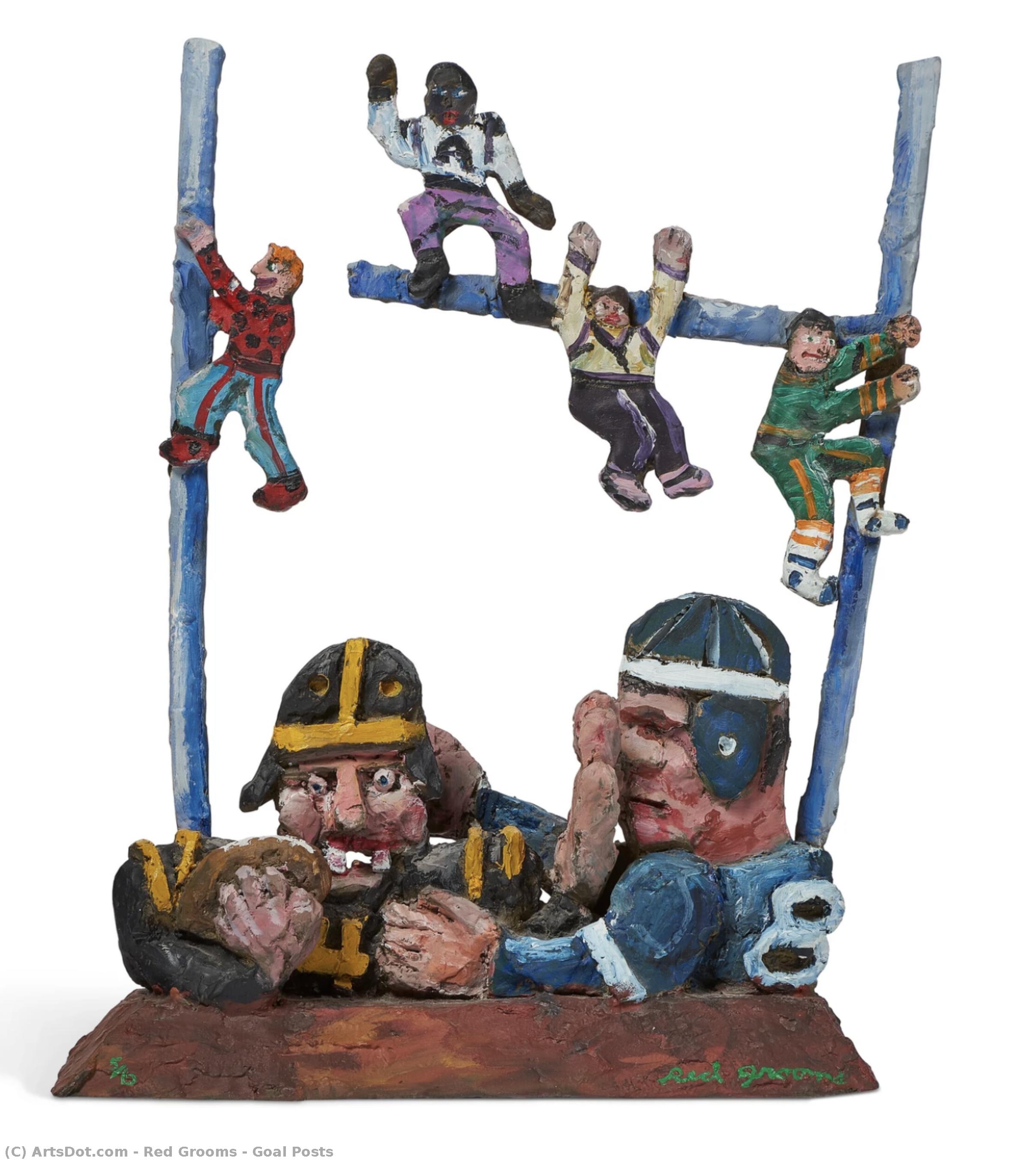
Grooms’ artistic journey was anything but conventional. After initial studies at the Art Institute of Chicago and Peabody College, he gravitated towards the burgeoning avant-garde scene in New York City, immersing himself in the experimental atmosphere of the New School for Social Research and the Hans Hofmann School. It was a period defined by collaboration and innovation—a rejection of traditional artistic boundaries. He quickly became involved with “happenings,” those ephemeral performance events that blurred the lines between art and life, working alongside figures like Allan Kaprow, Claes Oldenburg, and Jim Dine. These experiences were formative, instilling in Grooms a desire to create immersive artworks that actively engaged the viewer. This impulse led him to co-found City Gallery in New York, providing a platform for emerging artists pushing the boundaries of artistic expression. His early films, such as “Shoo” and “The Big Sneeze,” further demonstrated his willingness to experiment with different media and challenge conventional notions of artmaking. But it was the development of his signature ‘sculpto-pictoramas’ that truly cemented his reputation as a visionary artist. These large-scale, walk-through installations—like *City of Chicago* (1967) and *Ruckus Manhattan* (1975)—were not merely representations of urban environments; they were vibrant, chaotic recreations, teeming with life and brimming with satirical detail.
Influences and Artistic Kinships
While firmly rooted in the Pop Art movement of his time, Grooms’ artistic lineage extends far beyond Warhol and Lichtenstein. He openly acknowledges a debt to earlier masters of social satire—artists like William Hogarth and Honoré Daumier, whose works offered biting critiques of their respective societies through visual storytelling. He also admired Marcel Duchamp's willingness to challenge the very definition of art, embracing an openness that resonated with Grooms’ own experimental spirit. His work shares a comic sensibility with Bob and Ray, reflecting a shared ability to find humor in the mundane absurdities of everyday life. However, Grooms wasn’t simply mimicking these influences; he was synthesizing them into something entirely new—a distinctly American form of Pop Art that celebrated (and often gently mocked) the energy and contradictions of modern urban existence. He frequently incorporates stylistic nods to other artists as both homage and critique, demonstrating a deep understanding of art history and a playful disregard for artistic dogma.
A Legacy of Immersive Storytelling
Red Grooms’ impact on contemporary art is profound. He pioneered site-specific sculpture and installation art, creating immersive experiences that invited viewers to step inside his vibrant worlds. His work challenged the traditional passive role of the art spectator, fostering a sense of participation and encouraging audiences to actively engage with the artwork. Beyond the ‘sculpto-pictoramas,’ Grooms continued to explore diverse artistic avenues—from films and paintings to assemblages and carousel designs, such as the *Tennessee Fox Trot Carousel* commissioned for downtown Nashville in 1998. This commission exemplifies his ability to bring art into public spaces, making it accessible and engaging for a wider audience. His satirical commentary on consumerism, urban life, and societal conventions remains relevant today, offering a timeless reflection of the human condition. Red Grooms continues to live and work in New York City, constantly evolving his artistic practice and inspiring new generations of artists with his boundless creativity and unwavering commitment to pushing boundaries.
Early Years and Artistic Foundations
Born Charles Rogers Grooms in Nashville, Tennessee, during the middle of the Great Depression, Grooms’ early life was deeply shaped by the economic realities of the era. He studied at the Art Institute of Chicago, but left after a semester, before continuing his formal training at Nashville's Peabody College. A pivotal moment occurred in 1957 when he attended a summer session at the Hans Hofmann School of Fine Arts in Provincetown, Massachusetts. It was here that he met influential figures like Yvonne Andersen and honed his skills under the guidance of the renowned instructor, Hans Hofmann. The nickname “Red,” bestowed upon him during his time as a dishwasher in Provincetown while studying with Hofmann, became an enduring part of his artistic identity—a fitting descriptor for an artist whose palette would always be characterized by bold, vibrant colors. His father’s profession as a coppersmith may have subtly influenced Grooms' later inclination towards assemblage and construction, fostering an appreciation for the tactile qualities of materials and the art of building form from disparate parts.
Key Works and Notable Achievements
Throughout his career, Red Grooms has produced a vast body of work encompassing paintings, prints, films, sculptures, and immersive installations. Some of his most celebrated pieces include *City of Chicago* (1967), a sprawling, chaotic depiction of the Windy City; *Ruckus Manhattan* (1975), a similarly energetic portrayal of New York City; and *Hippodrome Hardware* (1972-73), a whimsical construction that reimagines a historic theater as a fantastical workshop. His films, such as *Shoo* and *The Big Sneeze*, are notable for their surreal humor and innovative techniques. Grooms’ work has been exhibited extensively in museums and galleries around the world, solidifying his position as one of the most important artists of his generation. He received numerous awards and accolades throughout his career, including a commission to design the *Tennessee Fox Trot Carousel* for downtown Nashville, demonstrating his commitment to public art and community engagement.



 Encomendar pintura
 Enviar
 Compartilhar
 Detalhes da obra

 Baixar
 Semelhantes
 Raio X
 Slideshow

 Ver mais






































 A opção de vidro está disponível apenas para tamanhos inferiores a 110 cm