Visualizar em escala Visualizar em RA Encomendar reprodução pintada à mão Ver Imagem Digital Enviar
Ver detalhes Guia de Obras do Aluno Adicionar aos favoritos Baixar imagem Semelhantes Raio X Apresentação de slides Estatísticas

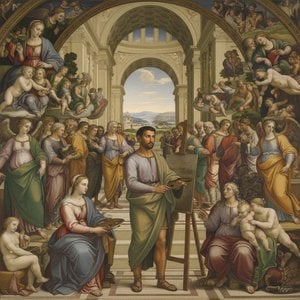
The sibyls (detail)

Delve into Raphael's 'The Sibyls (Detail)' – a captivating fresco showcasing prophetic visions within the Vatican’s Stanza della Segnatura. Witness masterful composition and vibrant color as Raphael captures timeless wisdom.

Rafael: Mestre da Renascença Italiana, conhecido por suas Madonas serenas e obras-primas como "A Escola de Atenas". Explore sua vida em Urbino e seu legado artístico inigualável.

Giclée / Impressão de Arte

Impressão giclée ou em tela de qualidade de museu, com produção rápida e opções flexíveis de acabamento. ( Encomendar reprodução pintada à mão Ver Imagem Digital)

Corner sample of the P118B picture frame: poliestireno moldado, 5 cm wide and 3 cm thick
P118B €10
Corner sample of the P118H picture frame: poliestireno moldado, 5 cm wide and 3 cm thick
P118H €10
Corner sample of the P118W picture frame: poliestireno moldado, 5 cm wide and 3 cm thick
P118W €10
Corner sample of the P438Z picture frame: poliestireno moldado, 5.5 cm wide and 3.5 cm thick
P438Z €10
Corner sample of the P508JH picture frame: poliestireno moldado, 7 cm wide and 3.5 cm thick
P508JH €12
Corner sample of the P508YH picture frame: poliestireno moldado, 7 cm wide and 3.5 cm thick
P508YH €12
Corner sample of the P805H picture frame: poliestireno moldado, 5 cm wide and 3.5 cm thick
P805H €10
Corner sample of the P805Z picture frame: poliestireno moldado, 5 cm wide and 3.5 cm thick
P805Z €10
Corner sample of the P919BZ picture frame: poliestireno moldado, 7 cm wide and 3.5 cm thick
P919BZ €10
Corner sample of the P919G picture frame: poliestireno moldado, 7 cm wide and 3.5 cm thick
P919G €10
Corner sample of the P919XJ picture frame: poliestireno moldado, 7 cm wide and 3.5 cm thick
P919XJ €10
Corner sample of the P959ZH picture frame: poliestireno moldado, 5 cm wide and 3 cm thick
P959ZH €10
Corner sample of the P968JZ picture frame: poliestireno moldado, 6 cm wide and 4 cm thick
P968JZ €12
Corner sample of the W106C picture frame: madeira maciça, 5 cm wide and 3 cm thick
W106C €8
Corner sample of the W218G picture frame: madeira maciça, 5 cm wide and 3 cm thick
W218G €10
Corner sample of the W218JH picture frame: madeira maciça, 5 cm wide and 3 cm thick
W218JH €8
Corner sample of the W218Y picture frame: madeira maciça, 5 cm wide and 3 cm thick
W218Y €10
Corner sample of the W307PJ picture frame: madeira maciça, 6 cm wide and 3 cm thick
W307PJ €10
Corner sample of the W316G picture frame: madeira maciça, 6 cm wide and 3 cm thick
W316G €10
Corner sample of the W316PJ picture frame: madeira maciça, 6 cm wide and 3 cm thick
W316PJ €8
Corner sample of the W316Y picture frame: madeira maciça, 6 cm wide and 3 cm thick
W316Y €10
Corner sample of the W398PJ picture frame: madeira maciça, 5 cm wide and 3 cm thick
W398PJ €8
Corner sample of the W4111J picture frame: madeira maciça, 6.5 cm wide and 3.5 cm thick
W4111J €10
Corner sample of the W500HY picture frame: madeira maciça, 7 cm wide and 5 cm thick
W500HY €15
Corner sample of the W500JH picture frame: madeira maciça, 7 cm wide and 5 cm thick
W500JH €15
Corner sample of the W692G picture frame: madeira maciça, 8 cm wide and 4 cm thick
W692G €12
Corner sample of the W849H picture frame: madeira maciça, 5 cm wide and 3 cm thick
W849H €8
Corner sample of the W940BG picture frame: madeira maciça, 7.5 cm wide and 4.5 cm thick
W940BG €15
Corner sample of the W953PJ picture frame: madeira maciça, 6 cm wide and 3.5 cm thick
W953PJ €8

Padrão
sob medida
CM
INCH

Escolha entre os nossos tamanhos pré-definidos que respeitam as proporções originais da obra de arte.

largura
altura

Digite a largura e a altura de que necessita, para se ajustar à sua moldura ou à sua parede. Uma impressão só pode ser cortada, nunca ampliada além da imagem original, pelo que um tamanho com uma proporção diferente perderá parte da imagem. Enviamos-lhe uma maquete digital para aprovação antes de imprimirmos qualquer coisa. A imagem apresentada nesta página não mostra o corte real — apenas a maquete o faz.

Entrega mundial () em 2 semanas, em vez das 4/5 semanas padrão. (23 Outubro)

Envio expresso gratuito para todo o mundo
Tela de Linho Premium
Seguro de transporte total
Garantia de Reembolso de Impostos Alfandegários
Garantia de Fidelidade de Cor
Política de Devolução em 100 Dias (Apenas para Defeitos)
Garantia de reembolso de 100%
Desconto para múltiplas unidades

Preço Total

€ 60

The sibyls (detail)

Giclée / Impressão de Arte

Dimensões da Reprodução

-

Preço Total

€ 60

Detalhes Rápidos

  • Movement: High Renaissance
  • Medium: Painting
  • Title: The Sibyls (detail)
  • Artist: Raphael
  • Influences:
    • Piero della Francesca
    • Leonardo

Teste de Conhecimentos Artísticos

Cada pergunta possui apenas uma resposta correta.

Questão 1:
The painting ‘The Sibyls (detail)’ primarily depicts which of the following?
Questão 2:
According to the provided text, what is the architectural context of ‘The Sibyls (detail)’?
Questão 3:
The text mentions that the figures in ‘The Sibyls (detail)’ are reminiscent of which other Raphael work?
Questão 4:
What is the significance of the angel holding a lighted torch in ‘The Sibyls (detail)’?
Questão 5:
Raffaello Sanzio was born in which city?

The Sibyls: A Glimpse of Prophecy in Raphael’s Roman Masterpiece

Raphael's "The Sibyls," a captivating detail from the larger fresco cycle adorning the chapel at Santa Maria della Pace in Rome, offers a profound meditation on prophecy, knowledge, and the human condition. Completed around 1514, this section of the work stands as a testament to Raphael’s mastery of composition, color, and his deep understanding of classical ideals – all rendered with an exquisite grace that belies the weighty themes it explores. The painting isn't merely a decorative element; it’s a carefully constructed visual narrative, inviting viewers into a world where ancient wisdom intersects with divine inspiration.

The scene depicts four Sibyls—figures from Greek mythology renowned for their prophetic abilities—each poised in a moment of intense contemplation. These women, originating from Cumae, Persia, Phrygia, and Tibute, were believed to have possessed the gift of foresight, delivering oracles to rulers and mortals alike. Raphael’s depiction transcends simple portraiture; he imbues these figures with an almost ethereal quality, their long hair cascading around them like liquid moonlight, their faces etched with a mixture of solemnity and intense concentration. The red dress worn by the central Sibyl immediately draws the eye, creating a focal point within the composition while simultaneously hinting at both passion and divine authority.

A Renaissance Synthesis: Style and Technique

Raphael’s approach to this subject matter is deeply rooted in the High Renaissance tradition, yet subtly departs from earlier Mannerist styles. He skillfully blends elements of classical sculpture—particularly the contrapposto stance evident in the figures' postures—with a heightened sense of realism and emotional depth. The use of *sfumato*, a technique perfected by Leonardo da Vinci, is particularly noticeable here; it softens the edges of the forms, creating an atmospheric haze that contributes to the overall sense of mystery and timelessness. The color palette is restrained yet luminous, dominated by rich reds, blues, and golds—colors associated with royalty, divinity, and wisdom.

Notably, Raphael’s workshop executed much of the fresco cycle, including these Sibyls, based on his original drawings. While some stylistic differences exist between Raphael's designs and the final execution, the core composition and thematic intent remain remarkably consistent. The architectural setting—a trabeated loggia reminiscent of Roman architecture—further reinforces the connection to classical antiquity, suggesting that the Sibyls’ prophecies are not merely divinely inspired but also rooted in a deep understanding of human history and fate.

Symbolism and Prophecy's Weight

The Sibyls themselves are potent symbols. Each represents a different region of the ancient world and, consequently, a distinct source of prophecy. Their presence within the chapel at Santa Maria della Pace—a space dedicated to prayer and contemplation—underscores the importance of seeking guidance from the divine. The angel holding a lighted torch above them is a crucial element, symbolizing the illumination that comes through prophetic insight – dispelling darkness and revealing the future. The Sibyls’ gazes, directed towards an unseen point beyond the frame, invite viewers to contemplate their own role in interpreting the signs of the times.

Furthermore, the Sibyls' connection to the *Stanza della Segnatura*, another fresco cycle within the Vatican Palace, reveals a deliberate thematic continuity. The figures here share similarities with the Virtues depicted in that room—each associated with a specific branch of knowledge and virtue. This reinforces the idea that prophecy is not simply about predicting the future but also about cultivating wisdom and understanding.

A Timeless Masterpiece: Reproduction Possibilities

WahooArt offers meticulously crafted, hand-painted reproductions of Raphael’s “The Sibyls,” capturing the essence of this iconic artwork with unparalleled detail and fidelity. Whether you seek a stunning addition to your personal collection or a sophisticated piece for interior design, our reproductions provide an authentic representation of Raphael's genius. Each reproduction is created using traditional techniques and archival-quality materials, ensuring its longevity and beauty for generations to come. Explore the available sizes and options on our website to bring this timeless masterpiece into your space.

Perguntas e Respostas

Como o movimento e a época se encontram em "The sibyls (detail)" de Rafael?

"The sibyls (detail)" pertence ao movimento High Renaissance, e seu criador trabalhou na era Renascimento.

Quão saturada é a paleta de "The sibyls (detail)"?

A paleta de "The sibyls (detail)" possui uma saturação Balanced Soft.

"The sibyls (detail)" de Rafael está em domínio público?

Quanto aos direitos autorais, "The sibyls (detail)" está em em domínio público - seus direitos autorais expiraram.


Biografia do Artista

O Renascimento Urbino: A Formação e Primeiros Anos de Rafael

Raffaello Sanzio da Urbino, mundialmente conhecido como Rafael, emergiu de um cenário cultural extraordinariamente fértil. Nascido em 1483 dentro das muralhas de Urbino, uma pequena mas intelectualmente vibrante cidade-estado no centro da Itália, seus primeiros anos foram imersos em uma atmosfera que prezava tanto a habilidade artística quanto o aprendizado humanista. Seu pai, Giovanni Santi, não era meramente um pintor empregado pelo Duque Federico da Montefeltro – ele era um homem profundamente engajado com as correntes do pensamento renascentista, um poeta que croniquou a vida do Duque e buscou ativamente ideias artísticas inovadoras de toda a Itália e além. Essa imersão em um ambiente cortesão, que valorizava o refinamento e o discurso intelectual, moldou profundamente a sensibilidade do jovem Rafael. A perda de seu pai aos onze anos impôs-lhe responsabilidades, mas também lhe proporcionou uma oportunidade de aprimorar suas habilidades na oficina familiar, absorvendo técnicas e tradições sob a orientação de artistas locais. Mesmo em seus primeiros trabalhos, uma graça gentil e atenção meticulosa aos detalhes – marcas de seu estilo maduro – começaram a emergir.

Da Úmbria a Florença: Absorvendo Novas Influências

A jornada artística de Rafael foi uma de contínua evolução, marcada por períodos de intenso estudo e assimilação. Seu treinamento inicial com Pietro Perugino em Perugia lançou uma base sólida no estilo umbro – caracterizado por sua modelagem suave, composições harmoniosas e cenas religiosas serenas. No entanto, Rafael possuía uma curiosidade insaciável que o impulsionava a buscar novos desafios e expandir seus horizontes artísticos. Em 1504, viajou para Florença, uma cidade então pulsante com a energia da inovação artística. Aqui, encontrou as obras-primas de Leonardo da Vinci e Michelangelo, artistas que estavam ultrapassando os limites da pintura de maneiras sem precedentes. Estudou meticulosamente suas técnicas – o sfumato de Leonardo, seus sutis gradientes de luz e sombra, e a poderosa precisão anatômica e composições dramáticas de Michelangelo. Este período florentino foi um cadinho para Rafael, forçando-o a confrontar novas possibilidades artísticas e sintetizá-las em sua própria visão única. A influência é visível no aumento do dinamismo e da profundidade psicológica de seus trabalhos desse tempo, particularmente em sua série de Madonas.

O Triunfo Romano: Encomendas e Obras-Primas

Em 1508, Rafael recebeu uma convocação que alteraria o curso de sua carreira – um convite do Papa Júlio II para ir a Roma. Este marcou o início de seu período mais prolífico e celebrado. A Cidade Eterna lhe ofereceu uma oportunidade sem paralelo de mostrar seus talentos em grande escala, adornando os apartamentos papais no Vaticano com afrescos deslumbrantes. A Escola de Atenas, talvez sua obra mais famosa, é um testemunho de seu domínio da composição, perspectiva e alegoria filosófica. Dentro de seu espaço majestoso, Rafael reuniu figuras da antiguidade clássica – Platão, Aristóteles, Pitágoras, Euclides – criando um vibrante tableau que celebrava a razão humana e a busca pelo conhecimento. Continuou trabalhando para papas subsequentes, incluindo Leão X, empreendendo projetos monumentais como a decoração das Stanze della Segnatura e da Stanza d'Eliodoro. Seus afrescos nessas salas não são meramente decorativos; são declarações profundas sobre o poder papal, crenças religiosas e os ideais do Renascimento.


Uma Síntese de Graça e Grandeza: O Estilo Artístico de Rafael

O estilo artístico de Rafael é frequentemente descrito como uma mistura harmoniosa de graça, clareza e beleza idealizada. Ele possuía uma habilidade extraordinária de sintetizar diversas influências – a tradição umbra, inovações florentinas, antiguidade clássica – em uma estética singularmente equilibrada. Suas composições são meticulosamente planejadas, exibindo um senso de ordem e proporção que reflete sua profunda compreensão dos princípios renascentistas. Suas figuras irradiam dignidade serena e expressividade emocional, incorporando o ideal humanista da perfeição humana. Ele também foi um mestre colorista, empregando tons ricos e luminosos para criar obras que são visualmente cativantes e intelectualmente estimulantes. Ao contrário do estilo frequentemente dramático e turbulento de Michelangelo, o trabalho de Rafael exala uma sensação de calma e harmonia – uma qualidade que o cativou por séculos.

Legado e Influência Duradoura

A morte prematura de Rafael em 1520, aos trinta e sete anos, interrompeu uma carreira repleta de potencial. No entanto, seu legado perdura como uma das figuras mais significativas da história da arte ocidental. Seu trabalho tornou-se uma pedra angular da estética do Alto Renascimento, servindo como um modelo para gerações de artistas. Embora a influência de Michelangelo tenha dominado posteriormente o discurso artístico, a ênfase de Rafael na clareza, harmonia e beleza idealizada experimentou um renascimento durante o período neoclássico, defendido por críticos como Johann Joachim Winckelmann. Hoje, suas pinturas continuam a inspirar admiração, cativando os espectadores com sua brilhante técnica, profundidade emocional e apelo duradouro. Sua influência pode ser vista em inúmeras obras de arte que se seguiram, solidificando seu lugar como um verdadeiro mestre do Renascimento – um pintor que capturou não apenas a semelhança física de seus sujeitos, mas também a própria essência da graça e dignidade humana.

Rafael

Rafael

1483 - 1520 , Itália

Informações Rápidas

  • Artistas Influenciados: ['Pintura Neoclássica']
  • Artistas Que Influenciaram:
    • Leonardo da Vinci
    • Michelangelo
  • Data Da Morte: 1520
  • Data De Nascimento: 1483
  • Local De Nascimento: Urbino, Itália
  • Movimento Artístico: Alto Renascimento
  • Nacionalidade: Italiano
  • Nome Completo: Raffaello Sanzio
  • Obras Notáveis: ['A Escola de Atenas']
Explore obras de arte organizadas por temas, estilos e características.