Visualizar na parede Visualizar em RA Comprar pintura feita à mão Alternar para Imagem Digital Compartilhar
Detalhes Guia Adicionar aos favoritos Baixar imagem Semelhantes Raio X Ver diaporama Estatísticas

St cecilia (detail)2

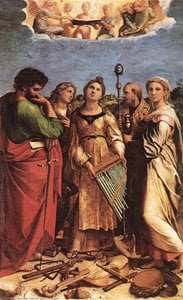
Raphael's 'St. Cecilia (detail)' showcases a vibrant musical scene with instruments and figures, reflecting the saint’s patronage of music. Explore this iconic Renaissance masterpiece and its rich symbolism.

Rafael: Mestre da Renascença Italiana, conhecido por suas Madonas serenas e obras-primas como "A Escola de Atenas". Explore sua vida em Urbino e seu legado artístico inigualável.

Giclée / Impressão de Arte

Impressão giclée ou em tela de qualidade de museu, com produção rápida e opções flexíveis de acabamento. ( Comprar pintura feita à mão Alternar para Imagem Digital)

Corner sample of the P118B picture frame: poliestireno moldado, 5 cm wide and 3 cm thick
P118B €10
Corner sample of the P118H picture frame: poliestireno moldado, 5 cm wide and 3 cm thick
P118H €10
Corner sample of the P118W picture frame: poliestireno moldado, 5 cm wide and 3 cm thick
P118W €10
Corner sample of the P438Z picture frame: poliestireno moldado, 5.5 cm wide and 3.5 cm thick
P438Z €10
Corner sample of the P508JH picture frame: poliestireno moldado, 7 cm wide and 3.5 cm thick
P508JH €12
Corner sample of the P508YH picture frame: poliestireno moldado, 7 cm wide and 3.5 cm thick
P508YH €12
Corner sample of the P805H picture frame: poliestireno moldado, 5 cm wide and 3.5 cm thick
P805H €10
Corner sample of the P805Z picture frame: poliestireno moldado, 5 cm wide and 3.5 cm thick
P805Z €10
Corner sample of the P919BZ picture frame: poliestireno moldado, 7 cm wide and 3.5 cm thick
P919BZ €10
Corner sample of the P919G picture frame: poliestireno moldado, 7 cm wide and 3.5 cm thick
P919G €10
Corner sample of the P919XJ picture frame: poliestireno moldado, 7 cm wide and 3.5 cm thick
P919XJ €10
Corner sample of the P959ZH picture frame: poliestireno moldado, 5 cm wide and 3 cm thick
P959ZH €10
Corner sample of the P968JZ picture frame: poliestireno moldado, 6 cm wide and 4 cm thick
P968JZ €12
Corner sample of the W106C picture frame: madeira maciça, 5 cm wide and 3 cm thick
W106C €8
Corner sample of the W218G picture frame: madeira maciça, 5 cm wide and 3 cm thick
W218G €10
Corner sample of the W218JH picture frame: madeira maciça, 5 cm wide and 3 cm thick
W218JH €8
Corner sample of the W218Y picture frame: madeira maciça, 5 cm wide and 3 cm thick
W218Y €10
Corner sample of the W307PJ picture frame: madeira maciça, 6 cm wide and 3 cm thick
W307PJ €10
Corner sample of the W316G picture frame: madeira maciça, 6 cm wide and 3 cm thick
W316G €10
Corner sample of the W316PJ picture frame: madeira maciça, 6 cm wide and 3 cm thick
W316PJ €8
Corner sample of the W316Y picture frame: madeira maciça, 6 cm wide and 3 cm thick
W316Y €10
Corner sample of the W398PJ picture frame: madeira maciça, 5 cm wide and 3 cm thick
W398PJ €8
Corner sample of the W4111J picture frame: madeira maciça, 6.5 cm wide and 3.5 cm thick
W4111J €10
Corner sample of the W500HY picture frame: madeira maciça, 7 cm wide and 5 cm thick
W500HY €15
Corner sample of the W500JH picture frame: madeira maciça, 7 cm wide and 5 cm thick
W500JH €15
Corner sample of the W692G picture frame: madeira maciça, 8 cm wide and 4 cm thick
W692G €12
Corner sample of the W849H picture frame: madeira maciça, 5 cm wide and 3 cm thick
W849H €8
Corner sample of the W940BG picture frame: madeira maciça, 7.5 cm wide and 4.5 cm thick
W940BG €15
Corner sample of the W953PJ picture frame: madeira maciça, 6 cm wide and 3.5 cm thick
W953PJ €8

Tamanho padrão
personalizado
CM
INCH

Escolha entre os nossos tamanhos pré-definidos que respeitam as proporções originais da obra de arte.

largura
altura

Insira a largura e a altura desejadas para se ajustarem à sua moldura ou parede. Uma impressão pode ser apenas cortada, nunca ampliada além da imagem original; portanto, um tamanho com proporções diferentes resultará na perda de parte da imagem. Enviamos uma maquete digital para sua aprovação antes de realizarmos a impressão. A imagem exibida nesta página não mostra o corte real — apenas a maquete o faz.

Entrega mundial () em 2 semanas, em vez das 4/5 semanas padrão. (26 Outubro)

Envio expresso gratuito para todo o mundo
Tela de Linho de Alta Qualidade
Seguro de transporte completo
Garantia de Reembolso de Impostos Alfandegários
Garantia de Fidelidade Cromática
Política de Devolução em 100 Dias (Apenas para Defeitos)
Garantia de reembolso de 100%
Oferta de desconto por quantidade

Preço Total

€ 60

St cecilia (detail)2

Giclée / Impressão de Arte

Tamanho da Reprodução

-

Preço Total

€ 60

Informações Rápidas

  • Subject or theme: Cecilia and musicians
  • Movement: High Renaissance
  • Notable elements or techniques: Musical instruments, sfumato
  • Title: St Cecilia (detail)
  • Medium: Fresco

Quiz de Arte

Cada pergunta possui apenas uma resposta correta.

Pergunta 1:
The painting ‘St Cecilia (detail)’ primarily depicts:
Pergunta 2:
Which instrument is prominently featured on the left side of the painting?
Pergunta 3:
The artist Raphael was primarily associated with which artistic movement?
Pergunta 4:
Based on the description, what is a key element of the composition’s overall theme?
Pergunta 5:
Considering Raphael’s biography, what significantly influenced his early artistic development?

The Enigmatic Beauty of St. Cecilia

Raphael’s “St. Cecilia (detail)” is more than just a portrait; it's a carefully constructed tableau brimming with symbolic resonance and the quiet elegance characteristic of the High Renaissance. This intimate study, likely part of a larger altarpiece, offers a glimpse into a world where music, faith, and artistic patronage intertwined seamlessly. The painting depicts St. Cecilia, the patron saint of musicians, not as a grand, imposing figure, but as a serene young woman absorbed in her devotion – a deliberate choice that speaks volumes about Raphael’s understanding of his subject and his audience.

St Cecilia (detail) by Raphael

The composition is remarkably balanced, drawing the eye to St. Cecilia at its center. She’s not actively performing or engaged in a dramatic gesture; instead, she sits with an almost meditative stillness, her gaze directed heavenward. Around her cluster instruments – violins, cellos, and a guitar – each rendered with meticulous detail, suggesting both her connection to the earthly realm of music and her spiritual elevation. Notice how these instruments aren’t merely decorative; they are integrated into the scene as if part of her very being, echoing the harmony she embodies.

A Symphony of Symbolism

Raphael masterfully employs symbolism throughout this work. The placement of the musical instruments is particularly significant. The three violins, one near the center, another towards the bottom-left corner and the third one is placed in the upper-right corner, create a visual triangle that draws attention to St. Cecilia. The cello at the top right and the one on the left side further reinforce this compositional balance. Beyond their decorative value, these instruments represent the diverse facets of musical expression – from the intimate solo violin to the rich resonance of the cello and the vibrant strumming of the guitar. The scattered books, each positioned with deliberate care, symbolize learning, wisdom, and the intellectual pursuits that underpinned Renaissance culture. The inclusion of St. John the Evangelist, St. Paul, and St. Augustine on either side of Cecilia reinforces her spiritual connection to the broader Christian community.

Furthermore, the scene’s overall atmosphere is one of quiet contemplation. The muted palette – dominated by earth tones and subtle blues – contributes to this sense of serenity. The use of *chiaroscuro*, with carefully rendered light and shadow, adds depth and drama to the figures while maintaining a harmonious balance. It's a testament to Raphael’s ability to capture not just physical likeness but also the inner life of his subjects.

Renaissance Context and Artistic Innovation

Created around 1514-1515 in Rome, “St. Cecilia (detail)” reflects the artistic trends of the High Renaissance – a period characterized by classical ideals, humanism, and a renewed interest in religious iconography. Raphael was deeply influenced by Leonardo da Vinci and Michelangelo, absorbing their innovative techniques and striving to achieve a harmonious balance between realism and idealism. As Vasari noted, this painting exemplifies Raphael’s ability to seamlessly blend the elegance of Florentine art with the grandeur of Roman tradition.

Interestingly, early accounts attributed the creation of this still-life to Raphael's assistant Giovanni da Udine, though later research confirmed that Raphael himself was responsible for all the instruments depicted. This highlights the collaborative nature of Renaissance artistic production and underscores Raphael’s mastery over his craft. The painting stands as a remarkable example of how art could simultaneously celebrate religious devotion, showcase technical skill, and engage with broader cultural values.

Bringing Raphael's Vision Home

WahooArt is proud to offer meticulously crafted hand-painted reproductions of “St. Cecilia (detail).” Our artists recreate the painting’s exquisite detail, vibrant colors, and profound symbolism with unparalleled skill, ensuring that you receive a stunning work of art that captures the essence of Raphael's masterpiece. Whether for your home, office, or collection, this reproduction offers an authentic connection to one of the Renaissance’s most celebrated figures and a timeless testament to the power of beauty and devotion.

Perguntas e Respostas

"St cecilia (detail)2" é uma obra famosa do Renaissance?

"St cecilia (detail)2", de Rafael é classificada como Iconic e pertence ao movimento Renaissance.

Qual é a cor predominante de "St cecilia (detail)2", de Rafael?

A cor que mais se destaca em "St cecilia (detail)2" é Phthalo Green (#271613). A cor dominante é útil ao combinar uma obra de arte com um ambiente interno.

"St cecilia (detail)2" possui uma prévia em realidade aumentada?

"St cecilia (detail)2" possui uma prévia em realidade aumentada: a página de Prévia em RA da obra permite visualizá-la no seu próprio espaço através de um dispositivo compatível.


Biografia do Artista

O Renascimento Urbino: A Formação e Primeiros Anos de Rafael

Raffaello Sanzio da Urbino, mundialmente conhecido como Rafael, emergiu de um cenário cultural extraordinariamente fértil. Nascido em 1483 dentro das muralhas de Urbino, uma pequena mas intelectualmente vibrante cidade-estado no centro da Itália, seus primeiros anos foram imersos em uma atmosfera que prezava tanto a habilidade artística quanto o aprendizado humanista. Seu pai, Giovanni Santi, não era meramente um pintor empregado pelo Duque Federico da Montefeltro – ele era um homem profundamente engajado com as correntes do pensamento renascentista, um poeta que croniquou a vida do Duque e buscou ativamente ideias artísticas inovadoras de toda a Itália e além. Essa imersão em um ambiente cortesão, que valorizava o refinamento e o discurso intelectual, moldou profundamente a sensibilidade do jovem Rafael. A perda de seu pai aos onze anos impôs-lhe responsabilidades, mas também lhe proporcionou uma oportunidade de aprimorar suas habilidades na oficina familiar, absorvendo técnicas e tradições sob a orientação de artistas locais. Mesmo em seus primeiros trabalhos, uma graça gentil e atenção meticulosa aos detalhes – marcas de seu estilo maduro – começaram a emergir.

Da Úmbria a Florença: Absorvendo Novas Influências

A jornada artística de Rafael foi uma de contínua evolução, marcada por períodos de intenso estudo e assimilação. Seu treinamento inicial com Pietro Perugino em Perugia lançou uma base sólida no estilo umbro – caracterizado por sua modelagem suave, composições harmoniosas e cenas religiosas serenas. No entanto, Rafael possuía uma curiosidade insaciável que o impulsionava a buscar novos desafios e expandir seus horizontes artísticos. Em 1504, viajou para Florença, uma cidade então pulsante com a energia da inovação artística. Aqui, encontrou as obras-primas de Leonardo da Vinci e Michelangelo, artistas que estavam ultrapassando os limites da pintura de maneiras sem precedentes. Estudou meticulosamente suas técnicas – o sfumato de Leonardo, seus sutis gradientes de luz e sombra, e a poderosa precisão anatômica e composições dramáticas de Michelangelo. Este período florentino foi um cadinho para Rafael, forçando-o a confrontar novas possibilidades artísticas e sintetizá-las em sua própria visão única. A influência é visível no aumento do dinamismo e da profundidade psicológica de seus trabalhos desse tempo, particularmente em sua série de Madonas.

O Triunfo Romano: Encomendas e Obras-Primas

Em 1508, Rafael recebeu uma convocação que alteraria o curso de sua carreira – um convite do Papa Júlio II para ir a Roma. Este marcou o início de seu período mais prolífico e celebrado. A Cidade Eterna lhe ofereceu uma oportunidade sem paralelo de mostrar seus talentos em grande escala, adornando os apartamentos papais no Vaticano com afrescos deslumbrantes. A Escola de Atenas, talvez sua obra mais famosa, é um testemunho de seu domínio da composição, perspectiva e alegoria filosófica. Dentro de seu espaço majestoso, Rafael reuniu figuras da antiguidade clássica – Platão, Aristóteles, Pitágoras, Euclides – criando um vibrante tableau que celebrava a razão humana e a busca pelo conhecimento. Continuou trabalhando para papas subsequentes, incluindo Leão X, empreendendo projetos monumentais como a decoração das Stanze della Segnatura e da Stanza d'Eliodoro. Seus afrescos nessas salas não são meramente decorativos; são declarações profundas sobre o poder papal, crenças religiosas e os ideais do Renascimento.


Uma Síntese de Graça e Grandeza: O Estilo Artístico de Rafael

O estilo artístico de Rafael é frequentemente descrito como uma mistura harmoniosa de graça, clareza e beleza idealizada. Ele possuía uma habilidade extraordinária de sintetizar diversas influências – a tradição umbra, inovações florentinas, antiguidade clássica – em uma estética singularmente equilibrada. Suas composições são meticulosamente planejadas, exibindo um senso de ordem e proporção que reflete sua profunda compreensão dos princípios renascentistas. Suas figuras irradiam dignidade serena e expressividade emocional, incorporando o ideal humanista da perfeição humana. Ele também foi um mestre colorista, empregando tons ricos e luminosos para criar obras que são visualmente cativantes e intelectualmente estimulantes. Ao contrário do estilo frequentemente dramático e turbulento de Michelangelo, o trabalho de Rafael exala uma sensação de calma e harmonia – uma qualidade que o cativou por séculos.

Legado e Influência Duradoura

A morte prematura de Rafael em 1520, aos trinta e sete anos, interrompeu uma carreira repleta de potencial. No entanto, seu legado perdura como uma das figuras mais significativas da história da arte ocidental. Seu trabalho tornou-se uma pedra angular da estética do Alto Renascimento, servindo como um modelo para gerações de artistas. Embora a influência de Michelangelo tenha dominado posteriormente o discurso artístico, a ênfase de Rafael na clareza, harmonia e beleza idealizada experimentou um renascimento durante o período neoclássico, defendido por críticos como Johann Joachim Winckelmann. Hoje, suas pinturas continuam a inspirar admiração, cativando os espectadores com sua brilhante técnica, profundidade emocional e apelo duradouro. Sua influência pode ser vista em inúmeras obras de arte que se seguiram, solidificando seu lugar como um verdadeiro mestre do Renascimento – um pintor que capturou não apenas a semelhança física de seus sujeitos, mas também a própria essência da graça e dignidade humana.

Rafael

Rafael

1483 - 1520 , Itália

Dados Rápidos

  • Artistas Influenciados: ['Pintura Neoclássica']
  • Artistas Que Influenciaram:
    • Leonardo da Vinci
    • Michelangelo
  • Data Da Morte: 1520
  • Data De Nascimento: 1483
  • Local De Nascimento: Urbino, Itália
  • Movimento Artístico: Alto Renascimento
  • Nacionalidade: Italiano
  • Nome Completo: Raffaello Sanzio
  • Obras Notáveis: ['A Escola de Atenas']
Explore obras de arte organizadas por temas, estilos e características.