


 Acrílico sobre telaArte de ParedePost-Impressionism
 1908Moderno
 72.0 x 47.0 cm
Óleo sobre tela pintado à mão no tamanho e moldura de sua escolha, feito sob encomenda pelos nossos artistas. ( Comprar impressão Comprar imagem)





























Escolha entre os nossos tamanhos pré-definidos que respeitam as proporções originais da obra de arte.

Pode inserir as suas próprias dimensões para se adequar a uma moldura ou espaço específico. Se o tamanho selecionado não corresponder às proporções da imagem original, iremos cortar a obra de arte ou estender a pintura com elementos adicionais pintados à mão. Um esboço digital será enviado para sua aprovação antes do início da produção.
Tenha em atenção que a pré-visualização no ecrã não reflete o corte ou extensão real. Apenas o esboço mostrará com precisão a composição final.
Embora tamanhos personalizados estejam disponíveis, recomendamos selecionar uma dimensão da lista predefinida para preservar as proporções originais.
Entrega mundial () em 3 a 4 semanas, em vez das 5 semanas padrão. (6 Setembro). Sem comprometer a qualidade.


Passion flower
Tamanho da Reprodução
Piet Mondrian, a foundational figure in modern abstract art, captivated audiences with his painting Passion flower. Dated 1908, this masterpiece exemplifies the Post-Impressionist movement’s daring departure from naturalistic representation.
Post-Impressionism arose as a reaction against Impressionists' preoccupation with capturing fleeting moments of light and color. Artists like Cézanne, Gauguin, and Van Gogh sought to express emotions and ideas through art—a conscious rejection of Impressionistic objectivity. Mondrian’s work during this period reflects his gradual shift from figurative painting towards pure abstraction, driven by a desire to distill the essence of visual experience.
The painting utilizes ink as its medium, allowing for precise lines and delicate detailing—a deliberate choice that underscores Mondrian’s commitment to geometric forms. Compositionally, it centers around a vase brimming with flowers, encircled by a serene woman adorned with floral embellishments in her hair. Two additional vases appear in the background, establishing depth and harmoniously balancing visual elements.
While color isn't explicitly prominent, Mondrian’s palette during this period favored muted tones that prioritized form over vibrant hues—a characteristic of De Stijl’s aesthetic principles. This understated approach contributes to the painting’s contemplative mood.
Pablo Picasso and Georges Braque spearheaded Cubism, profoundly influenced by Cézanne's exploration of multiple perspectives. Mondrian’s Passion flower subtly incorporates this technique—breaking down objects into geometric planes—albeit in a more restrained manner.
- Cubism: The representation of three-dimensional form in multiple viewpoints.
- Futurism: Embracing dynamism and portraying diverse perspectives simultaneously.
- Constructivism: Building sculptures from separate components—a conceptual approach that anticipates later developments in art.
Piet Mondrian’s Passion flower stands as a testament to his artistic evolution—a pivotal piece within Post-Impressionism and a cornerstone of modern abstraction.
Its serene composition embodies the spirit of De Stijl’s utopian vision. As we delve into art history, Mondrian's work illuminates how artists pushed boundaries and paved the way for groundbreaking movements that continue to inspire creativity today.
For more information on Piet Mondrian and his contributions to modern abstract art, visit Piet Mondrian at WahooArt. To explore the broader context of Post-Impressionism, refer to Post-Impressionism Art Movement Introduction.
To discover more captivating paintings influenced by Mondrian and Post-Impressionism, browse these exceptional artworks:
WahooArt offers meticulously crafted oil painting reproductions of these masterpieces and countless others. Explore WahooArt to immerse yourself in art history and acquire a timeless piece of artistic legacy.


1872 - 1944 , Países Baixos

Explore the profound elegance of De Stijl. Discover how Piet Mondrian and the masters of Neoplasticism utilized geometric harmony and primary colors to redefine modern abstraction. An authoritative guide for the discerning collector seeking timeless, structured beauty.
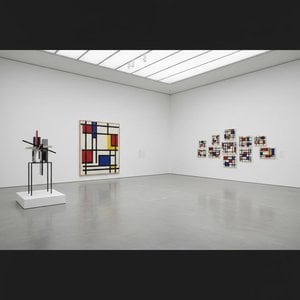
Explore the profound essence of Neoplasticism. Discover how Piet Mondrian and De Stijl masters used pure color and geometric form to redefine modern art. An essential guide for collectors seeking to understand the enduring power of abstract harmony and universal order.

Master the nuances of Impressionism vs. Post-Impressionism with our expert guide. Explore the revolutionary shift from Monet’s fleeting light to Van Gogh’s emotional depth. Discover how these iconic movements continue to inspire fine art collectors and modern interiors today.

 Visualizar na parede
 Compartilhar
 Compartilhar
 Detalhes

 Baixar imagem
 Semelhantes
 Raio X
 Slideshow
 Ler mais







 A opção de vidro está disponível apenas para tamanhos inferiores a 110 cm


