Uma Vida Revelada: A Jornada de Piet Mondrian
Nascido Pieter Cornelis Mondriaan em 1872, na tranquila cidade holandesa de Amersfoort, o percurso artístico de Piet Mondrian não foi uma revelação imediata, mas um desdobramento gradual. Sua juventude foi imersa na tradição; seu tio, Frits Mondriaan, já era um pintor estabelecido, e essa conexão familiar inicialmente o direcionou para a pintura paisagística. Essas primeiras obras, que lembram a Escola de Haia e o Impressionismo holandês – como *O Moinho Vermelho* – revelam um jovem artista estudando diligentemente a natureza, dominando a técnica, mas sutilmente buscando algo além da mera representação. Mesmo naquele período inicial, uma ânsia por simplificação parecia puxar seus traços de pincel. Ele não se contentava em simplesmente espelhar o mundo; ele queria destilar sua essência. Essa fase inicial foi marcada pela experimentação com Pontilhismo e Fauvismo, cada estilo oferecendo uma lente diferente para visualizar cor e forma, mas nenhum satisfazendo plenamente sua crescente visão artística. Foi um tempo de exploração, um prelúdio necessário à ruptura radical que definiria seu legado.
O Despertar em Paris e o Nascimento do Neoplasticismo
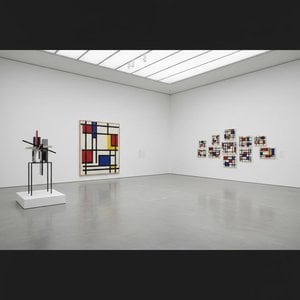
Um momento crucial chegou em 1912 com a mudança de Mondrian para Paris. A cidade pulsava com energia vanguardista, e ele se viu imerso no mundo revolucionário do Cubismo. Esse encontro provou ser transformador. Ele começou a decompor formas, dividindo objetos em seus componentes geométricos, afastando-se da representação do *que* via para explorar o *como* via. Mas Mondrian não estava apenas adotando um novo estilo; ele estava embarcando numa busca espiritual. Profundamente influenciado pela Teosofia – uma filosofia mística que enfatiza princípios universais subjacentes – ele acreditava que a arte poderia ser um veículo para expressar essas verdades ocultas. Essa crença alimentou sua incansável busca pela abstração, impulsionando-o a reduzir cor e forma aos seus elementos mais fundamentais. Por volta de 1917, essa jornada culminou na formulação do Neoplasticismo, frequentemente referido como “arte plástica pura”. Era uma estética radical baseada em formas essenciais – linhas retas, ângulos retos – e uma paleta limitada: cores primárias (vermelho, azul, amarelo), preto, branco e cinza. Para Mondrian, essa redução não era sobre vazio; era sobre revelar a harmonia subjacente do universo, uma manifestação visual da ordem espiritual. Ele co-fundou o movimento *De Stijl* com Theo van Doesburg para promover essas ideias, solidificando o Neoplasticismo como uma força definidora na arte moderna. Obras-primas como *Composição com Vermelho, Azul e Amarelo* e *Tableau no. 2 Composição no. V* são testemunhos desse período, representações icônicas de seu compromisso inabalável com a pureza geométrica.
Ritmos Novos: Um Florescimento Tardia em Nova York
O início da Segunda Guerra Mundial forçou Mondrian a fugir da Europa em 1940, encontrando refúgio na metrópole vibrante de Nova York. Essa mudança provou ser inesperadamente revigorante. A estrutura rígida da cidade – um contraste marcante com as paisagens mais orgânicas que ele conhecera – ressoava com seus princípios artísticos. Seus trabalhos posteriores, notavelmente *Broadway Boogie Woogie* (1943), refletem essa influência. Mantendo os princípios fundamentais do Neoplasticismo, a pintura introduz uma energia dinâmica, um ritmo vibrante inspirado na vida pulsante da cidade e no jazz. As linhas retas ainda estão presentes, mas agora dançam e se cruzam com maior liberdade, criando uma sensação de movimento e alegria. Era como se Mondrian tivesse encontrado uma nova linguagem dentro de seu vocabulário estabelecido, uma maneira de expressar as complexidades da existência urbana moderna através da simplicidade da abstração geométrica. Ele continuou refinando seu estilo até sua morte em 1944, deixando para trás um corpo de trabalho que continua a cativar e inspirar.
Um Legado Duradouro: A Influência Contínua de Mondrian
O impacto de Piet Mondrian no mundo da arte é imensurável. Ele não era apenas um artista; ele era um visionário que alterou fundamentalmente nossa compreensão da abstração e seu potencial para expressar verdades universais. Seu trabalho influenciou profundamente inúmeros artistas, movimentos e disciplinas. O Expressionismo Abstrato, o Minimalismo e a Pintura de Campo de Cor devem uma dívida ao seu espírito pioneiro. Mas sua influência se estende muito além da tela. Os princípios do Neoplasticismo – simplicidade, clareza, ordem geométrica – permearam a arquitetura, o design e a moda. De móveis e têxteis a fachadas de edifícios e layouts gráficos, a estética de Mondrian continua a moldar nosso mundo visual. Ele permanece uma figura icônica na arte moderna, um símbolo da busca incansável pela abstração e do poder duradouro da inovação artística. Como o historiador do design Stephen Bayley observou com precisão, Mondrian se tornou um “totem para tudo o que o Modernismo se propôs a ser”. Seu legado não é apenas de beleza estética, mas de rigor intelectual, profundidade espiritual e uma crença inabalável no potencial transformador da arte.
Influências e Obras Chave
- Influências Iniciais: A Escola de Haia, o Impressionismo holandês, o Pontilhismo e o Fauvismo forneceram a base para suas primeiras explorações artísticas.
- Influência Transformadora: O Cubismo em Paris foi crucial para sua mudança em direção à abstração e às formas geométricas.
- Fundamento Filosófico: A Teosofia informou profundamente sua crença de que a arte poderia expressar princípios espirituais universais.
- Obras Chave: *O Moinho Vermelho* (período naturalista inicial), *Composição com Vermelho, Azul e Amarelo* (Neoplasticismo quintessencial), *Tableau no. 2 Composição no. V* (demonstra a redução a formas essenciais), *Broadway Boogie Woogie* (dinamismo tardio influenciado pela cidade de Nova York).
- Impacto Duradouro: O trabalho de Mondrian continua a inspirar artistas, arquitetos e designers, moldando a estética moderna em várias disciplinas.
Seus princípios estéticos se estenderam além da pintura para influenciar a arquitetura, o design e a moda. Ele permanece uma figura icônica na arte moderna, representando a busca pela abstração e harmonia universal.



 Visualizar em escala
 Encomendar reprodução pintada à mão
 Enviar
 Compartilhar
 Ver detalhes
 Guia
Guia

 Baixar imagem
 Semelhantes
 Raio X
 Apresentação de slides
 Estatísticas
 Ver mais






































 A opção de vidro está disponível apenas para tamanhos inferiores a 110 cm