Alternar para Impressão Encomendar reprodução pintada à mão Enviar
Ver detalhes Guia Adicionar aos favoritos Baixar imagem Semelhantes Apresentação de slides Estatísticas

Charles Lenormant

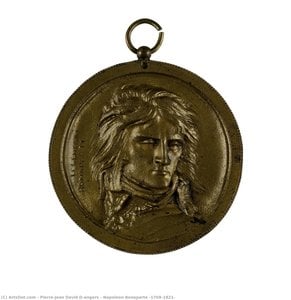
Admire Charles Lenormant's bronze medallion portrait by Pierre-Jean David d’Angers! This neoclassical masterpiece captures the French archaeologist, showcasing intricate detail and historical significance.

Descubra "Jean-Pierre Hoschede, chamado 'Bebe Jean'", uma obra-prima de Monet que captura a inocência e o amor em um retrato impressionista único. Uma janela para a vida familiar do artista.

Adquira uma imagem digital de alta resolução e aprimorada, muito superior à prévia online.

Cada arquivo é meticulosamente preparado por nossos especialistas internos, utilizando ferramentas avançadas e retoques manuais de alta precisão. Garantimos que cada imagem apresente clareza excepcional, fidelidade de cores e detalhes minuciosos.

O arquivo final é entregue por e-mail em até 72 horas, otimizado para uso imediato em ambientes profissionais, editoriais e de impressão. Esta é a mesma qualidade utilizada por estúdios de design de alto nível, editoras e galerias.

Imagem Digital

Baixe um arquivo de alta resolução para exibição pessoal, impressão e projetos criativos. ( Alternar para Impressão Encomendar reprodução pintada à mão)

Preço Total

$ 24,90

Incluído em cada pedido de imagem digital

Entrega Digital Especializada e Garantida

Ao escolher o WahooArt.com, você não está apenas adquirindo uma imagem — você está recebendo uma obra de arte digital profissionalmente aprimorada, elaborada com precisão e com garantia de satisfação. Aqui está tudo o que acompanha seu pedido, automaticamente:

shipping_icon
Entrega rápida por e-mail

O seu arquivo de imagem digital em alta resolução será enviado por e-mail em até 72 horas após o pedido — pronto para uso imediato.

canvas_icon
Arquivo Digital com IA Otimizado

Sua obra de arte é otimizada profissionalmente por meio de ferramentas avançadas de IA e edição manual, garantindo o máximo de detalhes, clareza e precisão de cores.

insurance_icon
Reenvio gratuito vitalício

Apagou ou perdeu o seu ficheiro acidentalmente? Não se preocupe – nós reenviamos para si a qualquer momento, gratuitamente.

tax_icon
Sem Taxas de Importação - Sempre

Desfrute da sua obra de arte instantaneamente, sem taxas alfandegárias, impostos ou custos de entrega — downloads digitais são sempre isentos de taxas.

color_icon
Garantia de Precisão de Cores

Garantimos que sua imagem digital reflita as cores originais com a maior fidelidade possível, utilizando ferramentas profissionais e gerenciamento de cores.

return_icon
Garantia de satisfação de 100 dias

Se não estiver satisfeito com a sua imagem digital, nós a revisaremos ou reembolsaremos 100% dentro de 100 dias — sem perguntas.

guarantee_icon
Garantia de Reembolso 100%

Não está satisfeito? Receba o reembolso total em até 100 dias após o recebimento do seu arquivo digital — sem perguntas.

discount_icon
Descontos para pedidos em lote

Compre 3 imagens, economize 10% - Compre 5, economize 15% - Compre 10+, economize 20%. Ideal para projetos criativos, galerias e agências.

Detalhes Rápidos

  • Influences:
    • Le Brun
    • David
  • Title: Charles Lenormant
  • Location: Walters Art Museum
  • Year: 1830
  • Subject or theme: Historical figure
  • Medium: Bronze medallion
  • Movement: Neoclassical

Teste de Conhecimentos Artísticos

Cada pergunta possui apenas uma resposta correta.

Questão 1:
What is Charles Lenormant primarily known for?
Questão 2:
According to the description, in what year was Charles Lenormant appointed inspector of fine arts?
Questão 3:
The image description highlights which aspect of the bronze medallion's surface?
Questão 4:
Who is the artist depicted in the medallion?
Questão 5:
What artistic style is most closely associated with the depiction of Charles Lenormant?

A Portrait of Scholarly Pursuit: Charles Lenormant by Pierre-Jean David d'Angers

The bronze medallion depicting Charles Lenormant offers more than just a likeness; it’s a window into the burgeoning field of archaeology in 19th-century France. Crafted by the esteemed sculptor Pierre-Jean David d’Angers, this remarkable piece captures not merely a man's features but also his intellectual fervor and dedication to uncovering the secrets of the past. Lenormant, a pivotal figure in French archaeology, was an inspector of fine arts who dedicated himself to exploring Egypt and Greece, contributing significantly to our understanding of ancient civilizations. The medallion serves as a tangible reminder of his pioneering work, embodying the spirit of scientific inquiry that defined the era.

A Neoclassical Masterpiece: Style, Technique, and Material

David d’Angers's style is firmly rooted in the neoclassical tradition, evident in the meticulously rendered profile of Lenormant. The work showcases a remarkable attention to detail – from the subtle lines etched into his face to the texture of his hair, each element speaks to the sculptor’s mastery. The bronze itself—a material prized for its durability and ability to capture fine details—is skillfully manipulated to create a sense of depth and realism. Notice how the artist employs *chiaroscuro*, using light and shadow to sculpt volume and define form, lending a dramatic quality to the portrait. The casting process, likely utilizing the lost-wax method, would have involved creating a wax model, then investing it in plaster before melting down the wax to create the final bronze form. This technique ensures a remarkable level of precision and surface finish.

Symbolism and Historical Context: A Reflection of an Age

Beyond its aesthetic qualities, the medallion is rich with symbolic meaning. Lenormant’s pose—a thoughtful gaze directed towards the viewer—suggests a man deeply engaged in contemplation and intellectual pursuit. The inclusion of the scroll or document (though details are difficult to discern without higher resolution) hints at his scholarly work and dedication to historical research. The period itself, the early 19th century, was one of immense change and discovery, fueled by the Enlightenment’s emphasis on reason and scientific inquiry. Archaeology was gaining prominence as a legitimate field of study, driven by figures like Champollion and inspired by Napoleon's campaigns in Egypt. This medallion stands as a testament to that intellectual excitement and the growing interest in understanding our shared human past.

Emotional Resonance: A Portrait of Dedication

Looking at this portrait, one is struck not only by its technical brilliance but also by the sense of quiet determination it conveys. Lenormant’s face—lined with experience and imbued with a thoughtful expression—suggests a man who has dedicated his life to unraveling the mysteries of antiquity. The bronze itself, with its patina of age and wear, adds to this feeling of historical weight and enduring legacy. It's a portrait that invites us to reflect on the importance of intellectual curiosity, perseverance, and the pursuit of knowledge—qualities that continue to resonate today. The piece evokes a sense of reverence for scholarship and the individuals who have shaped our understanding of history.


Biografia do Artista

A Legacy Forged in Stone: The Life and Art of Pierre-Jean David d’Angers

Born in Angers, France, in 1789, Pierre-Jean David embarked on his artistic journey imbued in the republican fervor that would define much of his life and oeuvre. Initially apprenticed to a local wood carver – his father – young David swiftly demonstrated an aptitude for sculpting that propelled him toward greater ambitions. He arrived in Paris in 1808, a city pulsating with both classical tradition and revolutionary spirit, seeking tutelage under Philippe-Laurent Roland at the École des Beaux-Arts. This formative period instilled within him neoclassical principles while simultaneously exposing him to the burgeoning Romantic movement—a duality that would profoundly shape his artistic vision. A pivotal moment arrived in 1809 when he entered the studio of Jacques-Louis David, adopting “David d’Angers” not merely as a professional designation but as a deliberate assertion of lineage and artistic aspiration – a distinction from his revered master. This adoption signaled a desire to forge his own path while acknowledging the monumental influence of the era's foremost painter. Early years in Paris were marked by financial struggles, yet David persevered with unwavering determination, garnering recognition for works like “Othryades” in 1810 and ultimately securing the prestigious Prix de Rome in 1811 for his sculpture "Epaminondas."

From Roman Reverie to Neoclassical Mastery

The five years David d’Angers spent in Rome, from 1811 to 1816, constituted a transformative crucible for his artistic maturation. Immersed in the world of classical antiquity and guided by masters such as Antonio Canova—whose idealized sculptures served as an exemplar—his creative sensibilities honed into a distinctly personal idiom. He absorbed the core tenets of Greek sculpture: its unwavering focus on idealized form, heroic narrative, and restrained emotional expression—principles he skillfully integrated into his own artistic practice. This period transcended mere academic study; it was also one of intellectual awakening. The restoration of the Bourbon monarchy in France cast a shadow over his return, prompting a brief sojourn in England where he encountered both admiration and scrutiny due to his association with Jacques-Louis David—a connection that reflected the complex political landscape of the time. Back in Paris, however, David’s talent swiftly gained acclaim. He became renowned for his portrait medallions – exquisitely detailed representations capturing not only physical likeness but also psychological nuance—as well as monumental sculptures celebrating civic virtue and national heroes. His commissions for the Arc de Triomphe and the Louvre showcased an early mastery of large-scale projects, establishing him as a sculptor capable of tackling ambitious undertakings.

A Sculptor of Heroes and Ideals

David’s artistic output was remarkably diverse, encompassing statues, bas-reliefs, tombs, and, most notably, portrait medallions. He possessed an extraordinary ability to convey emotion—a skill evident in masterpieces like “Wounded Philopoemen,” housed in the Louvre, which powerfully portrays the tragic fate of the Greek general—and "La Douleur," demonstrating his mastery of expressive sculpture. Yet it was his monumental commissions that truly cemented his reputation. The pediment sculpture for the Pantheon in Paris stands as perhaps his most significant achievement—a sweeping allegorical depiction embodying French patriotism and intellectual heritage. Other notable works include the Gutenberg monument in Strasbourg and the equestrian statue of General Gobert in Père Lachaise Cemetery, both testament to his skill in conveying dynamism through sculpted form. He also created a bust of Goethe for the poet’s library at Weimar—a gesture reflecting his admiration for intellectual brilliance and artistic innovation.

A Sculptor Shaped by Republican Spirit

David d’Angers was more than simply a sculptor; he was a product of his era—a witness to revolution, empire, and restoration. His art reflects the political convictions that underpinned his life—his ardent embrace of republican ideals and his unwavering dedication to honoring figures who embodied courage, integrity, and civic responsibility. While firmly rooted in neoclassical tradition, his work foreshadowed the Romantic movement’s emphasis on emotional intensity and dramatic narrative—a stylistic fusion that distinguishes him from many of his contemporaries. His influence extended beyond sculpture itself, inspiring generations of artists and shaping the visual culture of France. Today, David’s works reside in prominent museums across Europe and North America—including The Walters Art Museum in Baltimore and The Metropolitan Museum of Art in New York—preserving his legacy for future scholars and admirers alike. David d’Angers remains a sculptor whose artistic vision transcended stylistic boundaries, securing his place as one of France's most enduring figures—a testament to the transformative power of art and its capacity to embody the spirit of an epoch.
Pierre-Jean David D’Angers

Pierre-Jean David D’Angers

1788 - 1856 , França

Informações Rápidas

  • Artistic Movement Or Style: Neoclassicismo
  • Artists Who Influenced This Artist:
    • Jacques Louis David
    • Philippe Laurent Roland
  • Date Of Birth: 1789
  • Date Of Death: 1856
  • Full Name: Pierre Jean David d’Angers
  • Nationality: Francês
  • Notable Artworks:
    • Wounded Philopoemen
    • La Douleur
    • Epaminondas
  • Place Of Birth: Angers, França