


Óleo sobre tela pintado à mão no tamanho e moldura de sua escolha, feito sob encomenda pelos nossos artistas. ( Comprar impressão Comprar imagem)





























Escolha entre os nossos tamanhos pré-definidos que respeitam as proporções originais da obra de arte.

Pode inserir as suas próprias dimensões para se adequar a uma moldura ou espaço específico. Se o tamanho selecionado não corresponder às proporções da imagem original, iremos cortar a obra de arte ou estender a pintura com elementos adicionais pintados à mão. Um esboço digital será enviado para sua aprovação antes do início da produção.
Tenha em atenção que a pré-visualização no ecrã não reflete o corte ou extensão real. Apenas o esboço mostrará com precisão a composição final.
Embora tamanhos personalizados estejam disponíveis, recomendamos selecionar uma dimensão da lista predefinida para preservar as proporções originais.
Entrega mundial () em 3 a 4 semanas, em vez das 5 semanas padrão. (7 Setembro). Sem comprometer a qualidade.


Cros de Cagnes
Tamanho da Reprodução
Pierre-Auguste Renoir, arguably the quintessential Impressionist painter, gifted us with “Cros de Cagnes,” a breathtaking vista completed in 1905. More than just a depiction of scenery, this canvas embodies Renoir's artistic philosophy—a fervent pursuit of capturing fleeting moments and conveying emotion through luminous color palettes and delicate brushstrokes.
The painting transports viewers to the Provençal countryside. Renoir meticulously crafted a scene featuring a charming village nestled amongst rolling hills draped in verdant foliage. Dominating the composition is a prominent church tower, anchoring the eye and establishing a sense of grandeur against the expansive landscape. Scattered figures—walkers and residents—add life and dynamism to the tranquil tableau, subtly hinting at human presence within the natural world.
Renoir’s masterful Impressionist technique is immediately apparent. He eschewed traditional blending methods, opting instead for “broken color”—applying small, separate strokes of pigment that blend optically when viewed from a distance. This innovative approach allowed Renoir to recreate the shimmering effects of sunlight filtering through leaves and illuminating the buildings. The resulting texture contributes significantly to the painting’s atmospheric depth, immersing the viewer in the serene ambiance of Cagnes-sur-Mer.
“Cros de Cagnes” shares thematic similarities with Claude Monet's “The Road to Giverny,” both exploring landscapes bathed in natural light. However, unlike Monet’s focus on capturing the precise impression of a single location—the meandering path leading to Monet’s garden—Renoir prioritizes conveying an overall mood of peace and beauty. In contrast, Renoir’s “Treboul” presents a more intimate portrayal of a solitary building enveloped by nature, emphasizing textural nuances and subtle tonal variations.
“Cros de Cagnes” resides in the Museum Art Association of Richmond's collection, demonstrating its enduring appeal to art enthusiasts. Its evocative depiction of rural France continues to inspire admiration for Renoir’s artistic prowess and his ability to translate visual experience into emotionally resonant artwork. This painting stands as a testament to Impressionism’s legacy—a movement dedicated to capturing the ephemeral beauty of everyday life.

1841 - 1919 , França
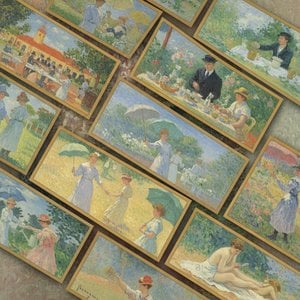
Descubra as 25 obras-primas de Renoir, o mestre do Impressionismo! Explore a história, cores vibrantes e emoção por trás de quadros icônicos como 'Bal au moulin de la Galette'. Encontre reproduções de arte exclusivas para decorar sua casa com elegância em WahooArt.com.

Descubra as 25 obras-primas de Paul Cézanne, o mestre do pós-impressionismo! Explore a história, técnica e cores vibrantes por trás de quadros icônicos como 'Les Baigneurs' e 'Mont Sainte-Victoire'. Encontre reproduções de arte exclusivas para decorar sua casa com elegância em WahooArt.com.

Descubra os 10 quadros impressionistas que revolucionaram a arte! Explore Monet, Renoir e outros mestres da paisagem francesa. Encontre reproduções de alta qualidade para decorar sua casa com beleza e história em WahooArt.com.
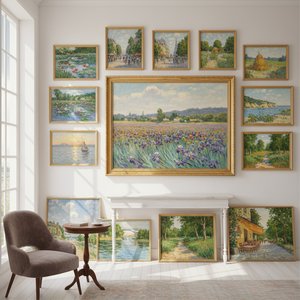
Descubra as 10 obras impressionistas que revolucionaram a arte! Explore Monet, Renoir e outros mestres da paisagem. Encontre reproduções de alta qualidade para decorar sua casa com a beleza do Impressionismo em WahooArt.com.

Descubra os 10 quadros impressionistas que revolucionaram a arte! Explore Monet, Renoir e outros mestres do Impressionismo. Encontre reproduções de alta qualidade para decorar sua casa com beleza e história em WahooArt.com.

 Visualizar na parede
 Compartilhar
 Compartilhar
 Detalhes

 Baixar imagem
 Semelhantes
 Raio X
 Slideshow

 Ler mais







 A opção de vidro está disponível apenas para tamanhos inferiores a 110 cm


