Visualizar na parede Visualizar em RA Alternar para Impressão Alternar para Imagem Digital Compartilhar
Detalhes Guia Adicionar aos favoritos Baixar imagem Semelhantes Raio X Ver diaporama Q&A Estatísticas

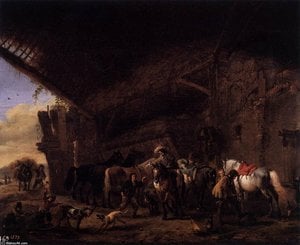
Huntsmen Setting Out Hand-painted oil painting reproduction

Philips Wouwerman's 'Huntsmen Setting Out' captures a vibrant Dutch Golden Age scene of aristocratic hunters preparing for their pursuit, showcasing masterful detail and dramatic light.

Philips Wouwerman (1619-1668): Mestre da pintura holandesa do Século de Ouro, conhecido por cenas de caça, paisagens e batalhas com destaque para a maestria na representação equina e a riqueza de detalhes em seus quadros.

Reprodução em Óleo Feita à Mão

Óleo sobre tela pintado à mão no tamanho e moldura de sua escolha, feito sob encomenda pelos nossos artistas. ( Alternar para Impressão Alternar para Imagem Digital)

Corner sample of the P118B picture frame: poliestireno moldado, 5 cm wide and 3 cm thick
P118B €10
Corner sample of the P118H picture frame: poliestireno moldado, 5 cm wide and 3 cm thick
P118H €10
Corner sample of the P118W picture frame: poliestireno moldado, 5 cm wide and 3 cm thick
P118W €10
Corner sample of the P438Z picture frame: poliestireno moldado, 5.5 cm wide and 3.5 cm thick
P438Z €10
Corner sample of the P508JH picture frame: poliestireno moldado, 7 cm wide and 3.5 cm thick
P508JH €12
Corner sample of the P508YH picture frame: poliestireno moldado, 7 cm wide and 3.5 cm thick
P508YH €12
Corner sample of the P805H picture frame: poliestireno moldado, 5 cm wide and 3.5 cm thick
P805H €10
Corner sample of the P805Z picture frame: poliestireno moldado, 5 cm wide and 3.5 cm thick
P805Z €10
Corner sample of the P919BZ picture frame: poliestireno moldado, 7 cm wide and 3.5 cm thick
P919BZ €10
Corner sample of the P919G picture frame: poliestireno moldado, 7 cm wide and 3.5 cm thick
P919G €10
Corner sample of the P919XJ picture frame: poliestireno moldado, 7 cm wide and 3.5 cm thick
P919XJ €10
Corner sample of the P959ZH picture frame: poliestireno moldado, 5 cm wide and 3 cm thick
P959ZH €10
Corner sample of the P968JZ picture frame: poliestireno moldado, 6 cm wide and 4 cm thick
P968JZ €12
Corner sample of the W106C picture frame: madeira maciça, 5 cm wide and 3 cm thick
W106C €8
Corner sample of the W218G picture frame: madeira maciça, 5 cm wide and 3 cm thick
W218G €10
Corner sample of the W218JH picture frame: madeira maciça, 5 cm wide and 3 cm thick
W218JH €8
Corner sample of the W218Y picture frame: madeira maciça, 5 cm wide and 3 cm thick
W218Y €10
Corner sample of the W307PJ picture frame: madeira maciça, 6 cm wide and 3 cm thick
W307PJ €10
Corner sample of the W316G picture frame: madeira maciça, 6 cm wide and 3 cm thick
W316G €10
Corner sample of the W316PJ picture frame: madeira maciça, 6 cm wide and 3 cm thick
W316PJ €8
Corner sample of the W316Y picture frame: madeira maciça, 6 cm wide and 3 cm thick
W316Y €10
Corner sample of the W398PJ picture frame: madeira maciça, 5 cm wide and 3 cm thick
W398PJ €8
Corner sample of the W4111J picture frame: madeira maciça, 6.5 cm wide and 3.5 cm thick
W4111J €10
Corner sample of the W500HY picture frame: madeira maciça, 7 cm wide and 5 cm thick
W500HY €15
Corner sample of the W500JH picture frame: madeira maciça, 7 cm wide and 5 cm thick
W500JH €15
Corner sample of the W692G picture frame: madeira maciça, 8 cm wide and 4 cm thick
W692G €12
Corner sample of the W849H picture frame: madeira maciça, 5 cm wide and 3 cm thick
W849H €8
Corner sample of the W940BG picture frame: madeira maciça, 7.5 cm wide and 4.5 cm thick
W940BG €15
Corner sample of the W953PJ picture frame: madeira maciça, 6 cm wide and 3.5 cm thick
W953PJ €8

Tamanho padrão
personalizado
CM
INCH

Escolha entre os nossos tamanhos pré-definidos que respeitam as proporções originais da obra de arte.

largura
altura

Insira a largura e a altura desejadas para se ajustarem à sua moldura ou parede. Como esta obra é pintada à mão, para um tamanho com proporções diferentes, o artista poderá pintar um pouco mais ao redor da imagem ou reduzir ligeiramente a composição — você escolhe. Enviamos uma maquete digital para sua aprovação antes de iniciar a pintura. A imagem exibida nesta página não representa o resultado real — apenas a maquete mostra o resultado final.

Exemplos do que pode ser personalizado: Substituir o rosto pela foto do cliente; Adicionar um animal de estimação (ex: substituir gato por cão); Incluir uma mensagem oculta no fundo; Alterar a paisagem ou elementos do fundo.
Após o pedido, a equipa WahooArt.com enviará um e-mail ao cliente para solicitar instruções e fornecer uma prévia do esboço.

Entrega mundial () em 3 a 4 semanas, em vez das 5 semanas padrão. (30 Outubro). Sem comprometer a qualidade.

Envio expresso gratuito para todo o mundo
Tela de Linho de Alta Qualidade
Seguro de transporte completo
Garantia de Reembolso de Impostos Alfandegários
Garantia de Fidelidade Cromática
Política de Devolução em 100 Dias (Apenas para Defeitos)
Garantia de reembolso de 100%
Oferta de desconto por quantidade

Preço Total

€ 241

Huntsmen Setting Out

Técnica de Reprodução

Tamanho da Reprodução

-

Preço Total

€ 241

Informações Rápidas

  • Notable elements: Dramatic light, detail
  • Dimensions: 55 x 80 cm
  • Subject or theme: Hunting scene
  • Movement: Dutch Golden Age
  • Location: Hermitage Museum, St. Petersburg

Quiz de Arte

Cada pergunta possui apenas uma resposta correta.

Pergunta 1:
What is the primary subject matter of Philips Wouwerman’s ‘Huntsmen Setting Out’?
Pergunta 2:
The painting ‘Huntsmen Setting Out’ is primarily associated with which artistic movement?
Pergunta 3:
Where is ‘Huntsmen Setting Out’ currently housed?
Pergunta 4:
What is a key characteristic of Philips Wouwerman’s technique as demonstrated in ‘Huntsmen Setting Out’?
Pergunta 5:
Which of the following best describes the historical context of this painting?

Philips Wouwerman’s “Huntsmen Setting Out”: A Dutch Golden Age Masterpiece

“Huntsmen Setting Out,” painted by Philips Wouwerman around 1665, is more than just a hunting scene; it's a meticulously crafted tableau of aristocratic leisure and the vibrant energy of the Dutch Golden Age. This oil on canvas, currently residing in the Hermitage Museum in St. Petersburg, Russia – a testament to its enduring appeal – offers a captivating glimpse into the lives of the wealthy elite and their elaborate pursuits. Wouwerman, a prolific artist known for his dynamic depictions of hunting, landscapes, and battle scenes, masterfully captures a fleeting moment of preparation before the chase, imbuing it with a sense of movement, drama, and subtle social commentary.

A Symphony of Light and Movement

Wouwerman’s technique is immediately striking. The painting pulsates with life through his masterful use of light and shadow – a hallmark of Baroque art that he expertly employs to create depth and drama. Notice how the sunlight, seemingly originating from an unseen source, illuminates the hunters' attire, highlighting the rich textures of their coats and the gleam of their weapons. Conversely, areas in shadow suggest the cool air and impending darkness of the forest. The composition itself is a carefully orchestrated dance of movement; horses gallop forward with powerful strides, hounds strain at their leashes, and riders gesture excitedly, all contributing to an overwhelming sense of kinetic energy. The artist’s attention to detail is remarkable – from the individual strands of hair on the hunters' heads to the intricate patterns on their clothing, every element feels deliberately placed.

Symbolism and Social Commentary

Beyond its technical brilliance, “Huntsmen Setting Out” carries layers of symbolic meaning. The scene depicts a hunt, a pastime deeply intertwined with aristocratic status in 17th-century Holland. The lavish attire of the hunters – their elaborate coats, feathered hats, and finely crafted weapons – clearly signal their wealth and privilege. However, Wouwerman subtly introduces an element of social critique through the inclusion of a beggar at the bottom left corner of the painting. This figure, starkly contrasting with the opulent setting, serves as a poignant reminder of the vast disparity between the wealthy elite and the less fortunate. The hermit on the hillside further emphasizes this contrast, representing a moral counterpoint to the aristocratic pursuit of pleasure.

Historical Context: The Dutch Golden Age

To fully appreciate “Huntsmen Setting Out,” it’s crucial to understand the historical context in which it was created – the Dutch Golden Age. This period, spanning roughly from the mid-16th to the early 18th centuries, witnessed an unprecedented flourishing of art, science, and commerce in the Netherlands. Philips Wouwerman thrived during this era, becoming one of its most celebrated artists. His works reflect the values and sensibilities of the time – a fascination with realism, a celebration of human activity, and a keen awareness of social dynamics. The painting’s presence in the Hermitage Museum underscores its significance as a key example of Dutch Golden Age art, offering a window into the lives and aspirations of a remarkable era.

Bringing Wouwerman Home: High-Quality Reproductions

Experience the timeless beauty of “Huntsmen Setting Out” in stunning detail with our meticulously crafted oil painting reproductions. Each reproduction is hand-painted by skilled artists using archival-quality materials, ensuring that every brushstroke and color nuance faithfully captures the original’s artistry. Available in a range of sizes to suit your space and budget, these reproductions are an exquisite addition to any home or office – a vibrant reminder of the artistic brilliance of Philips Wouwerman and the captivating spirit of the Dutch Golden Age. Explore our collection at WahooArt.com and discover how you can bring this masterpiece into your life.

Perguntas e Respostas

Que humor e emoção se unem em "Huntsmen Setting Out"?

Em "Huntsmen Setting Out", um clima Dramatic acompanha uma emoção Nostalgic.

"Huntsmen Setting Out" é mais claro ou mais escuro no geral?

"Huntsmen Setting Out", de Philips Wouwermans apresenta um brilho de balanced, com uma luminância de Soft Shadow.

Com qual sentimento "Huntsmen Setting Out" está associada?

"Huntsmen Setting Out", de Philips Wouwermans transmite um tom emocional Nostalgic.


Biografia do Artista

Philips Wouwerman: Um Mestre da Dinâmica Holandesa

Philips Wouwerman, nascido em Haarlem em 1619 e falecido em 1668, personifica a vitalidade e o talento do período dourado dos Países Baixos. Mais do que um simples pintor, ele foi um observador atento da vida cotidiana, um mestre na representação equina e um narrador visual cuja obra continua a cativar espectadores séculos depois de sua criação. Sua trajetória artística é marcada por uma evolução notável, desde influências iniciais até o desenvolvimento de um estilo inconfundível que o consagrou como um dos artistas mais importantes da época.

Os Primeiros Passos e Influências

A vida de Wouwerman começou em um ambiente familiar ligado à arte. Seu pai, Pouwels Joostsz Wouwerman, também era pintor, embora sua obra não tenha alcançado a mesma fama. Embora os detalhes precisos sobre seu treinamento inicial sejam escassos, acredita-se que ele recebeu uma base sólida de conhecimento artístico estudando com Frans Hals (1581/85–1666), um dos mais renomados pintores de retrato da época. A influência de Hals pode ter sido sutil, mas a experiência certamente moldou sua técnica e sensibilidade para o detalhe.

Inicialmente, Wouwerman se dedicou a retratar cenas do cotidiano, uma tradição conhecida como *bamboccianti*, influenciado por artistas como Pieter van Laer. Essas pinturas capturavam a vida dos camponeses, soldados e trabalhadores, com um realismo que refletia a realidade da época. A temática social e a representação de figuras comuns estabeleceram as bases para sua futura versatilidade artística.

A Evolução do Estilo: Da Cotidianeidade à Dinâmica

No início da década de 1640, Wouwerman começou a desenvolver um estilo próprio, caracterizado por elementos composicionais marcantes. Uma das características mais distintivas de suas obras é a inclinação diagonal do terreno, frequentemente acompanhada por uma árvore que funciona como um repoussoir – um dispositivo utilizado para criar profundidade e perspectiva. As figuras, muitas vezes em movimento com seus cavalos, preenchem essas cenas dinâmicas, transmitindo uma sensação de ação e vitalidade.

A partir da década de 1650, Wouwerman expandiu significativamente seu repertório temático, pintando cenas de gênero, paisagens com viajantes, batalhas de cavalaria, acampamentos militares e festas populares. Sua habilidade em retratar cavalos de diversas raças em movimento é particularmente notável, demonstrada por observadores como Frederik J. Duparc, que o descreveu como “sem dúvida o pintor holandês mais talentoso e bem-sucedido do século XVII”. A precisão anatômica dos animais, combinada com a captura da energia e do ritmo do movimento, elevam suas obras a um patamar de excelência artística.

A Maestria Equina e o Legado Artístico

Wouwerman não foi apenas um pintor de paisagens ou cenas militares; ele se tornou sinônimo de cavalos. Sua capacidade de capturar a beleza, a força e a elegância dos animais em movimento é inigualável. Seus quadros são testemunhos da sua profunda compreensão da anatomia equina e do seu talento para transmitir a sensação de velocidade e dinamismo.

Apesar de ter vivido em uma época de grande prosperidade econômica, Wouwerman enfrentou dificuldades financeiras ao longo de sua vida. No entanto, sua obra foi amplamente apreciada durante sua vida e continuou a ser valorizada no século XVIII, quando suas pinturas se tornaram objetos de desejo para colecionadores aristocráticos europeus. A influência de seu estilo pode ser vista em diversos artistas que o seguiram, consolidando seu lugar como um dos pilares da pintura holandesa do século XVII.

Um Artista Multifacetado e Sua Contribuição à Cultura

Philips Wouwerman foi muito mais do que um pintor; ele foi um observador atento da sociedade de sua época, um retratista habilidoso e um mestre na representação da vida cotidiana. Suas obras oferecem um vislumbre fascinante da cultura holandesa do século XVII, capturando a beleza da natureza, a vitalidade das atividades humanas e a complexidade das relações sociais.

Sua contribuição para o cânone da pintura holandesa é inegável. Wouwerman não apenas documentou sua época, mas também a transformou em arte, criando obras que continuam a inspirar e encantar espectadores de todo o mundo.

Philips Wouwermans

Philips Wouwermans

1619 - 1668 , Países Baixos

Dados Rápidos

  • Artistic Movement Or Style: Século de Ouro
  • Artists Or Movements Influenced By This Artist: ['Jan van Huchtenburgh']
  • Artists Who Influenced This Artist:
    • Frans Hals
    • Pieter van Laer
  • Date Of Birth: 24 de maio de 1619
  • Date Of Death: 19 de maio de 1668
  • Full Name: Philips Wouwerman
  • Nationality: Holandês
  • Notable Artworks:
    • Duas Cavalos
    • Dois Cavaleiros em um Acampamento
    • Paisagem de Duna
  • Place Of Birth: Haarlem, Holanda
Explore obras de arte organizadas por temas, estilos e características.