Visualizar na parede Visualizar em RA Comprar pintura feita à mão Alternar para Imagem Digital Compartilhar
Detalhes Guia Adicionar aos favoritos Baixar imagem Semelhantes Raio X Ver diaporama Estatísticas

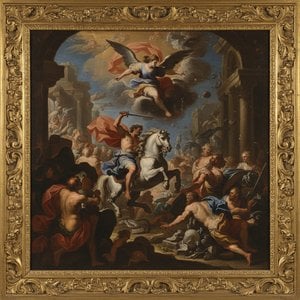
Entrada em Jerusalém

Pedro Orrente captura a chegada de Jesus em Jerusalém com maestria e detalhes impressionantes. Uma obra-prima do Barroco espanhol que evoca fé, esperança e o momento histórico da entrada triunfal.

Explore the Baroque paintings of Pedro Orrente, a Spanish artist known for animal & landscape scenes, historical works, & his influence on Valencian art.

Giclée / Impressão de Arte

Impressão giclée ou em tela de qualidade de museu, com produção rápida e opções flexíveis de acabamento. ( Comprar pintura feita à mão Alternar para Imagem Digital)

Corner sample of the P118B picture frame: poliestireno moldado, 5 cm wide and 3 cm thick
P118B €10
Corner sample of the P118H picture frame: poliestireno moldado, 5 cm wide and 3 cm thick
P118H €10
Corner sample of the P118W picture frame: poliestireno moldado, 5 cm wide and 3 cm thick
P118W €10
Corner sample of the P438Z picture frame: poliestireno moldado, 5.5 cm wide and 3.5 cm thick
P438Z €10
Corner sample of the P508JH picture frame: poliestireno moldado, 7 cm wide and 3.5 cm thick
P508JH €12
Corner sample of the P508YH picture frame: poliestireno moldado, 7 cm wide and 3.5 cm thick
P508YH €12
Corner sample of the P805H picture frame: poliestireno moldado, 5 cm wide and 3.5 cm thick
P805H €10
Corner sample of the P805Z picture frame: poliestireno moldado, 5 cm wide and 3.5 cm thick
P805Z €10
Corner sample of the P919BZ picture frame: poliestireno moldado, 7 cm wide and 3.5 cm thick
P919BZ €10
Corner sample of the P919G picture frame: poliestireno moldado, 7 cm wide and 3.5 cm thick
P919G €10
Corner sample of the P919XJ picture frame: poliestireno moldado, 7 cm wide and 3.5 cm thick
P919XJ €10
Corner sample of the P959ZH picture frame: poliestireno moldado, 5 cm wide and 3 cm thick
P959ZH €10
Corner sample of the P968JZ picture frame: poliestireno moldado, 6 cm wide and 4 cm thick
P968JZ €12
Corner sample of the W106C picture frame: madeira maciça, 5 cm wide and 3 cm thick
W106C €8
Corner sample of the W218G picture frame: madeira maciça, 5 cm wide and 3 cm thick
W218G €10
Corner sample of the W218JH picture frame: madeira maciça, 5 cm wide and 3 cm thick
W218JH €8
Corner sample of the W218Y picture frame: madeira maciça, 5 cm wide and 3 cm thick
W218Y €10
Corner sample of the W307PJ picture frame: madeira maciça, 6 cm wide and 3 cm thick
W307PJ €10
Corner sample of the W316G picture frame: madeira maciça, 6 cm wide and 3 cm thick
W316G €10
Corner sample of the W316PJ picture frame: madeira maciça, 6 cm wide and 3 cm thick
W316PJ €8
Corner sample of the W316Y picture frame: madeira maciça, 6 cm wide and 3 cm thick
W316Y €10
Corner sample of the W398PJ picture frame: madeira maciça, 5 cm wide and 3 cm thick
W398PJ €8
Corner sample of the W4111J picture frame: madeira maciça, 6.5 cm wide and 3.5 cm thick
W4111J €10
Corner sample of the W500HY picture frame: madeira maciça, 7 cm wide and 5 cm thick
W500HY €15
Corner sample of the W500JH picture frame: madeira maciça, 7 cm wide and 5 cm thick
W500JH €15
Corner sample of the W692G picture frame: madeira maciça, 8 cm wide and 4 cm thick
W692G €12
Corner sample of the W849H picture frame: madeira maciça, 5 cm wide and 3 cm thick
W849H €8
Corner sample of the W940BG picture frame: madeira maciça, 7.5 cm wide and 4.5 cm thick
W940BG €15
Corner sample of the W953PJ picture frame: madeira maciça, 6 cm wide and 3.5 cm thick
W953PJ €8

Tamanho padrão
personalizado
CM
INCH

Escolha entre os nossos tamanhos pré-definidos que respeitam as proporções originais da obra de arte.

largura
altura

Insira a largura e a altura desejadas para se ajustarem à sua moldura ou parede. Uma impressão pode ser apenas cortada, nunca ampliada além da imagem original; portanto, um tamanho com proporções diferentes resultará na perda de parte da imagem. Enviamos uma maquete digital para sua aprovação antes de realizarmos a impressão. A imagem exibida nesta página não mostra o corte real — apenas a maquete o faz.

Entrega mundial () em 2 semanas, em vez das 4/5 semanas padrão. (28 Outubro)

Envio expresso gratuito para todo o mundo
Tela de Linho de Alta Qualidade
Seguro de transporte completo
Garantia de Reembolso de Impostos Alfandegários
Garantia de Fidelidade Cromática
Política de Devolução em 100 Dias (Apenas para Defeitos)
Garantia de reembolso de 100%
Oferta de desconto por quantidade

Preço Total

€ 60

Entrada em Jerusalém

Giclée / Impressão de Arte

Tamanho da Reprodução

-

Preço Total

€ 60

Informações Rápidas

  • Subject or theme: Entrada de Jesus
  • Year: 1620
  • Title: Entrada em Jerusalém
  • Influences:
    • El Greco
    • Baroque
  • Artist: Pedro Orrente

Quiz de Arte

Cada pergunta possui apenas uma resposta correta.

Pergunta 1:
Qual o principal tema retratado na pintura "Entrada em Jerusalém" de Pedro Orrente?
Pergunta 2:
Em que ano foi pintada a obra "Entrada em Jerusalém"?
Pergunta 3:
Qual o estilo artístico predominante na obra de Pedro Orrente?
Pergunta 4:
Qual a importância do homem que segura uma cruz na pintura?
Pergunta 5:
Que elemento natural é visível na pintura, adicionando um contraste à cena religiosa?

A Jornada de Cristo: Pedro Orrente e a Expressão da Fé

“Entrada em Jerusalém” de Pedro Orrente, datado de 1620, é mais do que uma simples representação religiosa; é um portal para um momento crucial na história cristã. A obra, com suas dimensões modestas de 112 x 127 cm, concentra uma narrativa poderosa e repleta de simbolismo, capturando a reverência e o fervor da multidão diante de Jesus Cristo. Orrente, um artista que se destacou no final do período barroco espanhol, demonstra uma habilidade notável em combinar elementos naturalistas com a dramaticidade característica do estilo, criando uma imagem que transcende a mera ilustração bíblica.

A cena central é dominada pela figura de Jesus montado em um burrinho, um gesto intencionalmente humilde e simbólico. A escolha do animal, ao contrário da pompa e circunstância associadas à realeza, enfatiza o caráter messiânico de Cristo – um líder que se identifica com os mais humildes. Ao seu lado, um homem porta uma cruz, um lembrete constante do sacrifício iminente e da redenção que está por vir. A multidão, composta por indivíduos de diferentes idades e vestimentas, demonstra uma variedade de reações: alguns prostram-se em reverência, outros erguem os braços em sinal de louvor, enquanto outros simplesmente observam com admiração. Essa diversidade reflete a ampla gama de crenças e emoções presentes na comunidade da época.

  • Estilo Barroco Espanhol: A obra se encaixa perfeitamente no estilo barroco espanhol, caracterizado pela dramaticidade, realismo e uso intenso de cores. Orrente demonstra um domínio notável das técnicas de pintura a óleo, utilizando pinceladas expressivas para transmitir emoção e movimento.
  • Naturalismo: Ao contrário de alguns de seus contemporâneos, que se concentravam em efeitos decorativos e ornamentais, Orrente prioriza o realismo na representação dos personagens e da paisagem. A atenção aos detalhes, como as texturas das vestimentas e a expressão facial dos indivíduos, confere à obra uma sensação de autenticidade e vitalidade.
  • Simbolismo Religioso: Além do simbolismo evidente na figura de Jesus e na cruz, a obra está repleta de outros elementos simbólicos. Os pássaros no céu representam a esperança e a promessa de salvação, enquanto a multidão que acolhe Jesus simboliza a fé e a devoção da comunidade cristã.

Contexto Histórico e Artístico

Pedro Orrente viveu em um período de grande transformação na história da arte espanhola. No início do século XVII, o barroco estava em ascensão, desafiando as convenções renascentistas e buscando expressar a fé e a emoção através de formas dramáticas e exuberantes. Orrente se posicionou como um dos primeiros artistas espanhóis a abraçar o naturalismo dentro do contexto barroco, buscando uma representação mais fiel da realidade sem sacrificar a dramaticidade e a intensidade emocional. Sua trajetória artística, marcada por viagens para Itália e outros centros artísticos, refletiu as influências do seu tempo e moldou sua visão única.

A obra “Entrada em Jerusalém” foi criada em um momento de crescente fervor religioso na Espanha, após a Reforma Protestante e o estabelecimento da Companhia de Jesus (os Jesuitas). A Igreja Católica buscava reafirmar sua autoridade e atrair novos fiéis, e a arte desempenhava um papel fundamental nesse processo. As pinturas religiosas, como esta, eram frequentemente encomendadas para igrejas, capelas e mosteiros, com o objetivo de inspirar a devoção e fortalecer a fé dos fiéis.

A Técnica do Artista e a Reprodução em Óleo

Orrente demonstra um profundo conhecimento das técnicas de pintura a óleo, utilizando uma paleta de cores rica e vibrante para criar uma imagem luminosa e expressiva. A composição é cuidadosamente planejada, com o uso da perspectiva e do contraste de luz e sombra para dar profundidade e volume aos personagens e à paisagem. A atenção aos detalhes é evidente em cada pincelada, revelando a habilidade e o talento do artista.

WahooArt oferece reproduções meticulosas desta obra-prima, utilizando as mesmas técnicas e materiais que Orrente utilizou originalmente. Cada reprodução é pintada à mão por artistas qualificados, garantindo que a imagem final seja fiel ao original em termos de cor, textura e detalhe. A utilização de óleo sobre tela proporciona uma qualidade excepcional, capturando a riqueza e a profundidade da obra original. Ao adquirir uma reprodução WahooArt, você não apenas possui uma bela peça de arte, mas também um pedaço da história da arte espanhola.

Conclusão: Uma Celebração da Fé e da Arte

“Entrada em Jerusalém” de Pedro Orrente é uma obra-prima que celebra a fé, a esperança e a devoção. Através de sua representação dramática e naturalista, Orrente captura o momento crucial da chegada de Jesus à cidade santa, transmitindo a emoção e o fervor da multidão. Uma reprodução WahooArt desta obra permite que você leve para casa essa mensagem poderosa e apreciá-la em seu próprio espaço.

Perguntas e Respostas

De que forma o tema de "Entrada em Jerusalém" se relaciona com os temas habituais de Pedro Orrente?

"Entrada em Jerusalém" retrata jesus, jerusalem, entry, crowd, cross, birds, religious, baroque, enquanto os temas recorrentes de Pedro Orrente são religious narrative, baroque drama, spanish identity, spiritual devotion, artistic transition. A comparação entre ambos revela como a obra se relaciona com os temas habituais do artista.

A qual movimento artístico "Entrada em Jerusalém", de Pedro Orrente pertence?

"Entrada em Jerusalém" é uma obra do Spanish Baroque. O movimento indica a tradição artística da qual a obra faz parte.

Qual é a luminosidade de "Entrada em Jerusalém", de Pedro Orrente?

A luminância registrada para "Entrada em Jerusalém", de Pedro Orrente é Escura.


Biografia do Artista

The Spanish Bassano: The Life and Legacy of Pedro Orrente

In the vibrant tapestry of the Spanish Golden Age, few threads are as intricately woven yet subtly colored as those left by Pedro Orrente. Born in Murcia in 1580, Orrente emerged during a transformative era when the dramatic tensions of the Baroque were beginning to coalesce with a burgeoning interest in naturalism. While history often shines its brightest spotlight on more flamboyant figures like El Greco, Orrente carved out a profound niche by bridging these two worlds. His life was one of movement and adaptation, traveling from his native Murcia to the artistic hubs of Toledo and eventually settling in Valencia, where he would pass away in 1645. This nomadic existence allowed him to absorb the diverse artistic currents of Spain, creating a body of work that feels both deeply rooted in Spanish tradition and breathlessly connected to the broader European landscape.

The foundations of Orrente’s mastery were laid in his early years, likely under the tutelage of the Murcia painter Juan de Arizmendi. However, it was his time in Toledo around 1600 that truly ignited his professional ascent. It was here that he encountered Jorge Manuel Theotocóp_uli, the son of El Greco, a friendship that undoubtedly exposed him to the lingering echoes of Mannerism. Yet, Orrente’s true artistic soul found its resonance elsewhere. His travels took him to Venice, where the influence of the Bassano family became an indelible part of his visual vocabulary. Often referred to as "the Spanish Bassano," Orrente adopted their unique ability to transform biblical narratives into dynamic genre scenes. He learned to populate his canvases with lively figures set against lush, detailed landscapes, moving away from stiff, idealized compositions toward a more visceral, human experience of the divine.

A Mastery of Naturalism and Dramatic Light

Orrente’s technical prowess is most evident in his ability to manipulate light and shadow to evoke profound emotional responses. He was a pioneer of naturalism within the Spanish Baroque framework, prioritizing an accurate, almost tactile representation of the world around him. In masterpieces such as "The Sacrifice of Isaac" (1616), one can witness this tension between the sacred and the earthly. The composition is charged with an urgent, palpable anxiety, where the intervention of the angel provides a moment of divine grace amidst the raw, human terror of the scene. His use of chiaroscuro—the dramatic interplay of light and dark—serves not merely as a stylistic flourish but as a narrative tool to anchor the viewer’s eye to the most poignant emotional beats of his stories.

This skill is further illuminated in works like "Entry into Jerusalem" (c. 1620), where the biblical event is stripped of distant abstraction and rendered as a vibrant, crowded tableau. Through his brush, Jesus does not arrive merely as a theological icon but as a figure moving through a real, breathing world, surrounded by a diverse crowd of worshippers, skeptics, and onlookers. Orrente had a remarkable gift for detail; whether it was the texture of a donkey's coat, the fluttering of birds in a vast sky, or the subtle expressions of devotion on a disciple's face, his work invites a slow, meditative gaze that rewards the observer with endless layers of meaning.

Historical Significance and Artistic Triumph

The enduring significance of Pedro Orrente lies in his role as a transitional architect of Spanish art. He stood at the crossroads of eras, helping to steer the Spanish aesthetic away from the elongated, spiritualized forms of the late Renaissance toward the grounded, dramatic realism that would define much of the 17th century. His ability to synthesize the Venetian approach to landscape and genre with the intense religious fervor of Spain created a unique visual language that resonated across the regions where he worked.

Reflecting on his contributions, several key elements define his artistic triumph:

  • Pioneering Naturalism: He was among the first in his region to prioritize realistic, human-centric representations within religious subjects.
  • The Venetian Connection: His successful integration of the Bassano family's style allowed him to introduce a new sense of landscape and movement to Spanish altarpieces.
  • Emotional Depth: Through masterful use of light and composition, he transformed static biblical stories into living, breathing dramas.
  • Cultural Bridge: His work served as a vital link between the fading influence of El Greco's Mannerism and the rising tide of the Baroque.

Though his name may not always command the immediate recognition of the most famous masters, the impact of Pedro Orrente is felt in every shadow and every sun-drenched landscape of his canvases. He remains a vital figure for any student of art history, representing a moment of profound change where the divine was brought down to earth through the lens of breathtaking realism.

Pedro Orrente

Pedro Orrente

1580 - 1645 , Spain

Dados Rápidos

  • Full Name: Pedro de Orrente
  • Nationality: Spanish
  • Date Of Birth: 1580
  • Date Of Death: 1645
  • Place Of Birth: Murcia, Spain
  • Notable Artworks:
    • The Sacrifice of Isaac
    • El bateig de Crist
    • Saint Leocadia
  • Artistic Movement Or Style: Baroque
  • Artists Who Influenced This Artist: ['El Greco']
  • Artists Or Movements Influenced By This Artist:
    • Esteban March
    • Valencian art
Explore obras de arte organizadas por temas, estilos e características.