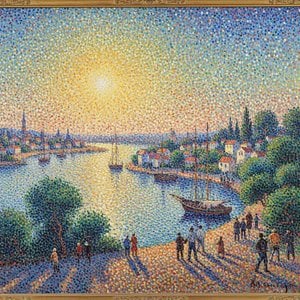
The Harmonious Vision of Paul Signac: *The Lighthouse, Groix*
Paul Signac’s *The Lighthouse, Groix*, painted in 1925, is more than just a depiction of a coastal scene; it's a meticulously constructed exploration of light, color, and the very nature of perception. This captivating work embodies the core tenets of Neo-Impressionism, offering a glimpse into the artist’s systematic approach to painting – a deliberate departure from the fleeting impressions of Impressionism in favor of a scientifically informed method. The canvas vibrates with an almost palpable energy, born not from brushstrokes alone but from the careful orchestration of tiny, distinct dots of pure color, a technique Signac championed alongside Georges Seurat as Pointillism.
The subject itself – the iconic lighthouse of Groix Island off the coast of Brittany – is rendered with remarkable detail and atmospheric depth. The island’s rugged coastline, punctuated by the stark verticality of the lighthouse, dominates the composition. However, Signac doesn't simply record this view; he transforms it into a study in color and light. The sea, a shifting expanse of blues ranging from deep indigo to shimmering turquoise, is built up layer upon layer with these minuscule dots, creating an illusion of movement and depth that transcends mere representation. The boats scattered across the water – varying in size and type – are not merely incidental elements but contribute to the overall sense of scale and maritime activity.
The Science of Color: Pointillism Unveiled
At the heart of *The Lighthouse, Groix* lies Signac’s revolutionary approach to color. He believed that the eye could actually blend colors optically when viewed from a distance, rather than mixing them on the palette. This principle – known as Divisionism or Pointillism – dictated his meticulous process. Each individual dot is painted with a pure hue, carefully chosen for its specific optical effect. The viewer’s eye then performs the work of blending these dots together, creating a richer, more vibrant image than could be achieved through traditional brushwork. Notice how Signac uses complementary colors—blues and oranges, greens and reds—strategically placed to intensify their visual impact and create a dynamic interplay of light and shadow.
Signac’s research into color theory was deeply influenced by scientific studies of optics and the physiology of vision. He meticulously documented his experiments with color mixing, believing that understanding how the eye perceived color was crucial to achieving his desired effect. This wasn't simply an aesthetic pursuit; it was a genuine attempt to codify painting as a systematic process, rooted in observable reality.
A Symbol of Guidance and Hope
The lighthouse itself is more than just a navigational aid; within the context of Signac’s work, it carries significant symbolic weight. Lighthouses have long represented guidance, safety, and hope – beacons cutting through darkness and uncertainty. In *The Lighthouse, Groix*, its prominent position in the composition suggests a reassuring presence amidst the vastness and potential dangers of the sea. The boats, navigating towards or away from the lighthouse, symbolize human endeavor and the pursuit of direction. Furthermore, Signac’s interest in anarchist philosophy – explored in detail through his writings and artwork – subtly infuses the scene with themes of liberation and a rejection of established order, mirroring the lighthouse's role as an independent guide.
Collecting a Masterpiece: Reproduction & Beyond
*The Lighthouse, Groix* is a testament to Paul Signac’s innovative approach to painting and his profound understanding of color. WahooArt offers meticulously crafted hand-painted reproductions that capture the essence of this iconic work, allowing you to experience its beauty and complexity in stunning detail. Whether for your home, office, or collection, our reproductions provide an authentic representation of Signac's artistic vision – a harmonious blend of scientific rigor and evocative imagery. Explore the full artwork details on our website: The Lighthouse, Groix.



 Visualizar na parede
 Alternar para Impressão
 Compartilhar
 Compartilhar
 Detalhes

 Baixar imagem
 Semelhantes
 Raio X
 Slideshow
 Estatísticas


 Ler mais






































 A opção de vidro está disponível apenas para tamanhos inferiores a 110 cm