Visualizar na paredeVisualizar na parede Ver em RAVer em RA Comprar pintura feita à mão Comprar pintura feita à mãoSwitch to Digital Image Switch to Digital Image CompartilharCompartilhar
DetalhesDetalhes Adicionar aos favoritos Adicionar aos favoritos Baixar imagemBaixar imagem SemelhantesSemelhantes Raio XRaio X SlideshowSlideshow StatsStats

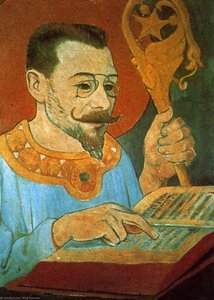
Avenue de Neuilly

Experience the vibrant Post-Impressionist energy of Paul Sérusier's Avenue de Neuilly, capturing a warm, bustling street scene with bold color and texture; discover this masterpiece today.

Paul Sérusier (1864-1927) foi um pintor francês pioneiro na abstração e influente no movimento Nabis. Conhecido por sua técnica Cloisonnism e obras como 'O Talismã', Sérusier revolucionou a arte com suas cores vibrantes e formas inovadoras.

Giclée / Impressão de Arte

Impressão giclée ou em tela de qualidade de museu, com produção rápida e opções flexíveis de acabamento. (Comprar pintura feita à mão Comprar pintura feita à mãoSwitch to Digital Image Switch to Digital Image)

P118B $10
P118H $10
P118W $10
P438Z $10
P508JH $12
P508YH $12
P805H $10
P805Z $10
P919BZ $10
P919G $10
P919XJ $10
P959ZH $10
P968JZ $12
W106C $8
W218G $10
W218JH $8
W218Y $10
W307PJ $10
W316G $10
W316PJ $8
W316Y $10
W398PJ $8
W4111J $10
W500HY $15
W500JH $15
W692G $12
W849H $8
W940BG $15
W953PJ $8

Tamanho padrão
personalizado
CM
INCH

Escolha entre os nossos tamanhos pré-definidos que respeitam as proporções originais da obra de arte.

largura
altura

Você pode inserir suas próprias dimensões para se ajustar a uma moldura ou espaço específico. Se o tamanho selecionado não corresponder às proporções da imagem original, iremos recortar a obra de arte ou estender a imagem com uma borda espelhada ou preenchimento sólido. Um mockup digital será enviado para sua aprovação antes do início da produção.
Por favor, observe que a visualização na tela não reflete o recorte ou a extensão real. Apenas o mockup mostrará com precisão a composição final.
Embora tamanhos personalizados estejam disponíveis, recomendamos selecionar uma dimensão da lista predefinida para preservar as proporções originais.

Entrega mundial () em 2 semanas, em vez das 4/5 semanas padrão. (8 Setembro)

why_choose_icon
Envio expresso gratuito para todo o mundo
why_choose_icon
Tela de Linho de Alta Qualidade
why_choose_icon
Seguro de transporte completo
why_choose_icon
Garantia de Reembolso de Impostos Alfandegários
why_choose_icon
Garantia de Fidelidade Cromática
why_choose_icon
Política de Devolução de 100 Dias (Apenas Defeitos)
why_choose_icon
Garantia de reembolso de 100%
why_choose_icon
Oferta de desconto por quantidade

Preço Total

$ 68

reproduction

Avenue de Neuilly

Giclée / Impressão de Arte

Tamanho da Reprodução

-

Preço Total

$ 68

Informações Rápidas

  • Artist: Paul Sérusier
  • Artistic style: Post-Impressionist
  • Movement: Post-Impressionism
  • Dimensions: 51 x 65 cm
  • Subject or theme: Vibrant street scene
  • Medium: Oil on panel

Quiz de Arte

Cada pergunta possui apenas uma resposta correta.

Pergunta 1:
What artistic movement is Paul Sérusier associated with, which influenced the 'Avenue de Neuilly'?
Pergunta 2:
Which famous artist influenced Paul Sérusier, particularly during his time in Pont-Aven?
Pergunta 3:
The painting 'Avenue de Neuilly' is described as featuring which characteristic of Post-Impressionist art?
Pergunta 4:
According to the description, what elements contribute to a sense of depth in the composition of 'Avenue de Neuilly'?
Pergunta 5:
What type of scene is depicted in 'Avenue de Neuilly', suggesting a vibrant urban setting?

A Luminous Journey Through Parisian Life

To gaze upon Paul Sérusier's Avenue de Neuilly is to step directly into a sun-drenched moment of late nineteenth-century Paris, filtered through the vibrant lens of Post-Impressionism. This painting is far more than a mere depiction of an avenue; it is an immersion into atmosphere, energy, and the burgeoning spirit of modern art. The scene unfolds with remarkable vitality, capturing the rhythm of daily life—the gentle passage of horse-drawn carriages mingling with the purposeful stride of pedestrians. From the warm wash of yellows and oranges that seem to emanate from the very cobblestones, one feels the palpable warmth of a low sun casting long shadows across the urban expanse.

The Brushwork of Modern Vision

Technically, the work is a masterclass in expressive application. Sérusier’s visible brushstrokes are not incidental; they are integral to the painting's narrative texture. They lend a palpable physicality to the scene, allowing the viewer to sense the impasto and the energy with which the paint was laid down. This textural quality is a hallmark of the Post-Impressionist movement, signaling a shift where the act of painting itself became as important as the subject matter. The foliage lining the avenue, rendered with spirited dabs of color, seems almost alive, vibrating with captured light and shadow.

Echoes of Symbolism and Influence

As a key member of the Nabi movement, Sérusier was deeply engaged in pushing art beyond mere imitation. While the subject is recognizably urban—the architecture suggesting a grand, established Parisian thoroughfare—the emotional resonance elevates it to something symbolic. The composition guides the eye deep into the vanishing point, creating a sense of journey or destiny along the avenue. Influenced by masters like Gauguin, Sérusier imbues the scene with an inner light, suggesting that the beauty captured here is not just topographical, but deeply felt and interpreted.

Bringing Parisian Vibrancy Home

For the collector or designer seeking to infuse a space with artistic depth and historical romance, this reproduction offers unparalleled character. The combination of bold color theory, dynamic composition, and palpable texture makes it an immediate focal point. Owning a piece inspired by Avenue de Neuilly is acquiring not just art, but a tangible connection to the revolutionary spirit of early modernism—a vibrant echo of Parisian life captured forever in oil on panel.


Biografia do Artista

Early Life and Artistic Foundations

Paul Sérusier, a pivotal figure in the evolution of modern art, was born on November 9th, 1864, in the heart of Paris. His early years were steeped in the cultural richness of the capital, yet his artistic journey began unexpectedly, far removed from the traditional avenues of formal training. Sérusier’s father, a successful businessman of Flemish descent involved in the perfume industry, envisioned a career for his son within the commercial world. However, young Paul harbored an undeniable passion for art, a desire that ultimately led him to abandon his family's expectations and pursue his artistic calling. He enrolled at the Lycée Condorcet, a prestigious secondary school renowned for its emphasis on philosophy and classical studies – an education that would subtly shape his later approach to art, imbuing it with intellectual depth and a nuanced understanding of form. It was during this period that he encountered Maurice Denis, a fellow student who would become a lifelong friend and collaborator, profoundly influencing Sérusier’s artistic development. The summer of 1888 marked a transformative moment in Sérusier's life: his journey to Pont-Aven, a small village nestled in the Breton countryside. This pilgrimage proved crucial, as it introduced him to a vibrant community of artists—Paul Gauguin, Emile Bernard, and others—who were challenging conventional artistic norms and experimenting with new ways of seeing and representing the world.

The Nabis Movement and Pioneering Techniques

Pont-Aven became the epicenter of a groundbreaking artistic movement known as the Nabis (meaning “prophets” in Hebrew). Under the guidance of Paul Gauguin, Sérusier began to shed his earlier academic training and embrace a radically new approach to painting. Gauguin encouraged him to move beyond mere imitation of nature, urging him instead to capture the essence of his impressions—the feeling, the color, the emotion—rather than meticulously replicating visual details. This shift was further solidified by conversations with Emile Bernard, who introduced Sérusier to the principles of cloisonnism, a technique characterized by bold outlines and flat areas of color applied in distinct compartments, reminiscent of stained glass windows. This innovative approach, combined with Gauguin’s emphasis on simplification and symbolic representation, culminated in Sérusier's iconic painting, “The Talisman” (1888). This work stands as a seminal example of cloisonnism, pushing the boundaries of abstraction and foreshadowing the developments of later avant-garde movements. The painting’s seemingly simple composition—a depiction of a Breton landscape—is in fact a complex exploration of color, form, and symbolism, reflecting Sérusier's evolving artistic vision.

Key Works and Artistic Evolution

Sérusier’s oeuvre is characterized by a remarkable fluidity and experimentation. Beyond “The Talisman,” he produced a series of paintings that demonstrate his ongoing exploration of color, line, and composition. "L'Averse" (1893) showcases his ability to capture the atmospheric effects of Breton weather, while "Portrait of Paul Ranson" (1890) reveals his interest in portraying human subjects with a sense of immediacy and psychological depth. “Melancholy” (1890), a hauntingly evocative work, exemplifies Sérusier’s capacity to convey complex emotions through subtle color harmonies and carefully constructed forms. Later in his career, Sérusier continued to refine his style, incorporating elements of synthetism—a technique that sought to reduce natural forms to their essential geometric components—and exploring the expressive potential of abstraction. His work during this period reflects a growing interest in spirituality and symbolism, drawing inspiration from Theosophical ideas and other esoteric traditions. Notably, Sérusier also served as an instructor at the École Ranson, founded by his fellow Nabi Paul Ranson, where he instilled his innovative approach to painting in a new generation of artists.

Legacy and Historical Significance

Paul Sérusier’s contribution to the development of modern art is profound and multifaceted. He was not merely a follower of Gauguin; rather, he played a crucial role in shaping the direction of the Nabis movement and, more broadly, in paving the way for subsequent avant-garde movements such as Fauvism and Cubism. His pioneering use of cloisonnism—a technique that emphasized simplified forms and bold outlines—demonstrated a radical departure from traditional artistic conventions and opened up new possibilities for abstract expression. Sérusier’s emphasis on capturing the essence of impressions, rather than simply replicating visual reality, profoundly influenced his contemporaries and successors. His legacy extends beyond his individual paintings; he is remembered as a key figure in the intellectual and aesthetic ferment that characterized late 19th-century Paris—a period marked by experimentation, innovation, and a profound questioning of established artistic norms. Paul Sérusier passed away on October 7, 1927, leaving behind a body of work that continues to inspire and challenge viewers today.

Paul Sérusier

Paul Sérusier

1864 - 1927 , França

Dados Rápidos

  • Artistic Movement Or Style: Pós-Impressionismo
  • Artists Or Movements Influenced By This Artist: ['Nabis']
  • Artists Who Influenced This Artist:
    • Paul Gauguin
    • Maurice Denis
  • Date Of Birth: 9 de novembro de 1864
  • Date Of Death: 7 de outubro de 1927
  • Full Name: Louis-Paul-Henri Sérusier
  • Nationality: Francês
  • Notable Artworks:
    • O Talismã
    • L'Averse
  • Place Of Birth: Paris, França
Explore obras de arte organizadas por temas, estilos e características.