Obtenha um arquivo pronto para impressão que vai muito além da visualização na web. Cada imagem digital que vendemos provém de um arquivo mestre de alta resolução em nosso banco de dados — geralmente entre 5.000 e 15.000 pixels de largura — para que você possa imprimir em grandes formatos, realizar cortes precisos ou reproduzir detalhes minuciosos com total confiança.
Nenhum arquivo sai do nosso estúdio sem passar por um cuidadoso processo de revisão. Um especialista digital verifica as cores em relação à pintura original e as corrige se necessário, aumentando então a clareza e o detalhe com ferramentas profissionais de retoque — sempre mantendo a fidelidade às pinceladas e ao estilo do artista. O resultado é uma imagem que se assemelha à pintura, e não a um scan com filtros.
Aprovação antes da finalização: nosso especialista enviará a imagem por e-mail em até 72 horas para sua revisão. Não ficou satisfeito? Solicite melhorias ou correções, ou peça o reembolso caso a qualidade não atenda às suas expectativas.
Esta é a qualidade em que confiam editoras, estúdios de design, galerias e gráficas.
Baixe um arquivo de alta resolução para exibição pessoal, impressão e projetos criativos. ( Alternar para Impressão Comprar pintura feita à mão)
Ao escolher o WahooArt.com, você não está apenas adquirindo uma imagem — você está recebendo uma obra de arte digital profissionalmente aprimorada, elaborada com precisão e com garantia de satisfação. Aqui está tudo o que acompanha seu pedido, automaticamente:
O seu arquivo de imagem digital em alta resolução será enviado por e-mail em até 72 horas após o pedido — pronto para uso imediato.
Sua obra de arte é otimizada profissionalmente por meio de ferramentas avançadas de IA e edição manual, garantindo o máximo de detalhes, clareza e precisão de cores.
Apagou ou perdeu o seu ficheiro acidentalmente? Não se preocupe – nós reenviamos para si a qualquer momento, gratuitamente.
Desfrute da sua obra de arte instantaneamente, sem taxas alfandegárias, impostos ou custos de entrega — downloads digitais são sempre isentos de taxas.
Garantimos que sua imagem digital reflita as cores originais com a maior fidelidade possível, utilizando ferramentas profissionais e gerenciamento de cores.
Se não estiver satisfeito com a sua imagem digital, nós a revisaremos ou reembolsaremos 100% dentro de 100 dias — sem perguntas.
Não está satisfeito? Receba o reembolso total em até 100 dias após o recebimento do seu arquivo digital — sem perguntas.
Compre 3 imagens, economize 10% - Compre 5, economize 15% - Compre 10+, economize 20%. Ideal para projetos criativos, galerias e agências.
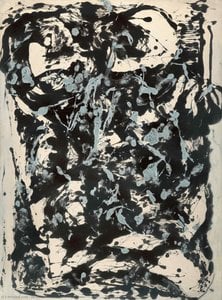
In the realm of Abstract Expressionism, few works capture the raw, unbridled tension of human struggle as poignantly as Paul Jackson Pollock’s “Untitled (Silkscreen I).” This striking black and white lithograph serves as a profound window into a mid-1950s psyche, presenting a scene that feels less like a static image and more like a captured moment of violent upheaval. The composition is densely packed, pulling the viewer into a claustrophobic arena where multiple figures appear locked in a desperate, fragmented encounter. There is no respite for the eye here; instead, one finds themselves navigating a labyrinth of overlapping forms and distorted human shapes that evoke a deep sense of unease and psychological distress.
The power of this piece lies in its ability to translate internal anxiety into external form. Through the use of aggressive, angular lines that dissect the paper, Pollock creates a visual language of disruption. The lack of traditional perspective flattens the space, forcing the struggle to the very surface of the work and amplifying the feeling of being trapped within the conflict. It is an evocative masterpiece for any collector or designer seeking to introduce a sense of dramatic intensity and intellectual depth into a curated space.
While Pollock is world-renowned for his revolutionary drip technique, “Untitled (Silkscreen I)” showcases his ability to translate energy through the meticulous medium of lithography. This process allowed for a remarkable range of tonal variations, where the interplay between deep, obsidian blacks and stark, piercing whites creates a dramatic chiaroscuro effect. The texture of the print is palpable; the varying densities of ink suggest a rhythmic, almost percussive application of material that mirrors the artist's physical engagement with his craft.
The technique employed here bridges the gap between spontaneous action and controlled printmaking. Each etched line and shaded area contributes to a sense of movement, as if the very ink were still settling upon the page. For those looking to adorn a sophisticated interior, this reproduction offers a sophisticated interplay of light and shadow, providing a focal point that is both visually arresting and texturally rich. It stands as a testament to how much emotion can be conveyed through the disciplined manipulation of a single color palette.
Beyond its formal qualities, “Untitled (Silkscreen I)” functions as a profound symbolic exploration of conflict and suffering. The distorted faces and fragmented limbs are not merely abstract shapes; they are emblems of a fractured existence. Influenced by the heavy emotional weight of Expressionist masters like Edvard Munch, Pollock utilizes this work to explore themes of vulnerability and the chaotic nature of human interaction. The piece does not seek to tell a literal story, but rather to evoke a visceral feeling—a resonance that lingers long after the initial viewing.
For the discerning art lover, this artwork offers more than mere decoration; it offers an experience. It invites contemplation on the nature of upheaval and the resilience of the human spirit amidst disorder. Whether placed in a modern gallery setting or as a bold statement piece in a contemporary living space, “Untitled (Silkscreen I)” brings with it an undeniable gravity and a timeless, haunting beauty that continues to fascinate and provoke.
"Untitled (Silkscreen I)", de Jackson Pollock apresenta uma saturação Muted e uma intensidade Monochromatic.
Dentro do movimento Expressionism, "Untitled (Silkscreen I)" possui um nível de popularidade Iconic.
A atmosfera de "Untitled (Silkscreen I)", de Jackson Pollock é Dramatic, e seu tom emocional é Tense.

Paul Jackson Pollock, born in Cody, Wyoming, in 1912, was a restless spirit from the outset. His early life was marked by frequent relocation as his father pursued work as a land surveyor across the vast landscapes of the American West. This itinerant existence instilled in young Pollock a deep connection to the natural world and an exposure to diverse cultures, particularly through encounters with Native American art during those surveying trips – impressions that would subtly permeate his artistic vision later in life. Though he never explicitly imitated Indigenous styles, the raw energy and spiritual resonance of these early experiences undoubtedly left their mark.
Pollock’s formal artistic training began at the Manual Arts High School in Los Angeles, followed by studies at the Art Students League of New York under the tutelage of Thomas Hart Benton. Benton, a prominent figure in the Regionalist movement, emphasized rhythmic composition and narrative themes rooted in American life. While Pollock initially absorbed these lessons, his inherent inclination leaned toward more abstract explorations. He was also profoundly impacted by Mexican muralists like José Clemente Orozco, whose powerful depictions of social struggle resonated deeply with him. These early influences laid a foundation, but it was the burgeoning world of Surrealism that truly unlocked Pollock’s artistic potential.
The 1930s saw Pollock experimenting with various techniques, seeking alternatives to traditional brushwork. He began pouring paint, exploring its fluidity and unpredictable nature. However, it was around 1947 that his artistic trajectory underwent a radical transformation. Abandoning the easel altogether, Pollock laid canvases directly on the floor, initiating what would become known as his “drip technique.” He then proceeded to drip, splash, and fling paint onto the canvas from above, orchestrating a dynamic dance between artist, medium, and surface.
This wasn’t merely about applying paint; it was about embodying the act of creation itself. Pollock's canvases became arenas for physical expression, capturing the immediacy of his gestures and emotions. The resulting paintings are characterized by their “all-over” composition – a lack of central focus that invites the viewer to explore the entire surface as a unified field of energy. Intricate networks of lines and colors intertwine, creating a visual complexity that is both captivating and challenging. He employed unconventional tools—sticks, knives, even syringes—to manipulate the paint in unpredictable ways, further emphasizing the spontaneous nature of his process.
This innovative approach positioned Pollock as a central figure in the burgeoning Abstract Expressionist movement, which emerged in post-World War II New York City. Abstract Expressionism prioritized spontaneous gesture, large scale, and non-representational imagery, reflecting a broader cultural shift away from traditional artistic conventions. His marriage to fellow artist Lee Krasner was also pivotal; she provided unwavering emotional support and actively encouraged his artistic development, recognizing the groundbreaking nature of his work.
Pollock’s most celebrated works—such as Number 1, 1950 (Lavender Mist), One: Number 31, 1950, Blue Poles: Number 11, 1952, and Convergence—are testaments to his revolutionary technique. These paintings are not simply images; they are records of a performance, imbued with the artist’s physical presence and emotional intensity. The dynamic energy that emanates from these canvases is palpable, drawing viewers into a world of pure abstraction.
His style transcends mere aesthetics; it's an exploration of process over product. Pollock sought to capture the immediacy of his actions and emotions on canvas, rejecting traditional notions of composition and representation. He delved into Jungian psychology, exploring archetypes and the subconscious in his art, seeking to tap into universal symbols and primal energies.
Pollock’s impact on the history of art is immeasurable. He fundamentally altered the way artists approached painting, breaking free from easel-based methods and embracing a more performative approach. His work helped solidify New York City's position as a global center for modern art, shifting the focus away from European dominance. His influence can be seen in the work of countless artists who followed, including those associated with Color Field painting and later forms of abstract expressionism.
Jackson Pollock’s life was marked by both artistic brilliance and personal struggles. He battled chronic alcoholism throughout much of his career, a condition that profoundly impacted his health and relationships. Despite these challenges, he remained fiercely dedicated to his art, constantly pushing the boundaries of creative expression. His reclusive nature and volatile personality often made him difficult to know personally, yet his work continues to resonate deeply with audiences around the world.
His legacy extends beyond the canvases themselves—it encompasses a revolutionary approach to painting that redefined artistic practice and forever altered the course of modern art. Pollock’s willingness to embrace spontaneity, challenge conventions, and explore the depths of human emotion cemented his place as one of the most important and influential artists of the 20th century.

1912 - 1956 , Estados Unidos da América
 Visualizar na parede
 Compartilhar
 Compartilhar
 Detalhes
 Guia
Guia

 Baixar imagem
 Semelhantes
 Raio X
 Ver diaporama
 Q&A
Q&A Estatísticas

 Ler mais