Visualizar na parede Visualizar em RA Comprar pintura feita à mão Alternar para Imagem Digital Compartilhar
Detalhes Guia Adicionar aos favoritos Baixar imagem Semelhantes Raio X Ver diaporama Estatísticas

untitled (6662)

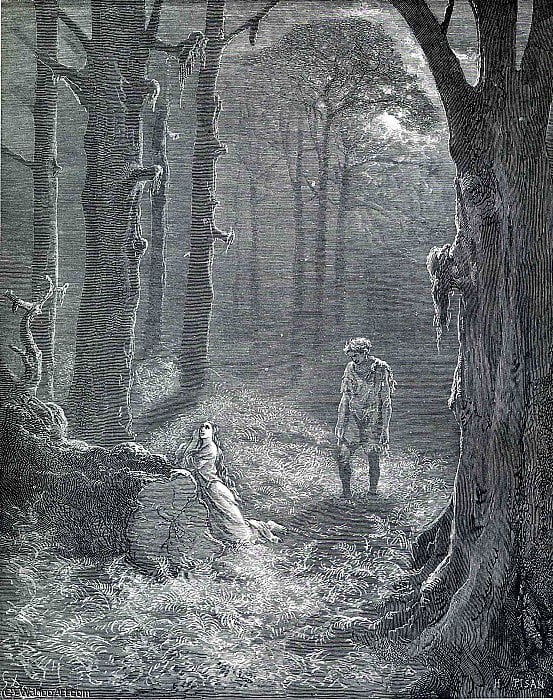
"Untitled (6662)" de Gustave Doré: Uma engravagem sombria que captura a beleza melancólica da floresta e reflete temas de isolamento e introspecção, exemplificando o estilo romântico do artista.

Explore as dramáticas gravuras e ilustrações de Gustave Doré (1832-1883). Mestre do Romantismo, famoso pelas cenas bíblicas, Inferno de Dante e obras literárias. Descubra sua arte influente!

Giclée / Impressão de Arte

Impressão giclée ou em tela de qualidade de museu, com produção rápida e opções flexíveis de acabamento. ( Comprar pintura feita à mão Alternar para Imagem Digital)

Corner sample of the P118B picture frame: poliestireno moldado, 5 cm wide and 3 cm thick
P118B €10
Corner sample of the P118H picture frame: poliestireno moldado, 5 cm wide and 3 cm thick
P118H €10
Corner sample of the P118W picture frame: poliestireno moldado, 5 cm wide and 3 cm thick
P118W €10
Corner sample of the P438Z picture frame: poliestireno moldado, 5.5 cm wide and 3.5 cm thick
P438Z €10
Corner sample of the P508JH picture frame: poliestireno moldado, 7 cm wide and 3.5 cm thick
P508JH €12
Corner sample of the P508YH picture frame: poliestireno moldado, 7 cm wide and 3.5 cm thick
P508YH €12
Corner sample of the P805H picture frame: poliestireno moldado, 5 cm wide and 3.5 cm thick
P805H €10
Corner sample of the P805Z picture frame: poliestireno moldado, 5 cm wide and 3.5 cm thick
P805Z €10
Corner sample of the P919BZ picture frame: poliestireno moldado, 7 cm wide and 3.5 cm thick
P919BZ €10
Corner sample of the P919G picture frame: poliestireno moldado, 7 cm wide and 3.5 cm thick
P919G €10
Corner sample of the P919XJ picture frame: poliestireno moldado, 7 cm wide and 3.5 cm thick
P919XJ €10
Corner sample of the P959ZH picture frame: poliestireno moldado, 5 cm wide and 3 cm thick
P959ZH €10
Corner sample of the P968JZ picture frame: poliestireno moldado, 6 cm wide and 4 cm thick
P968JZ €12
Corner sample of the W106C picture frame: madeira maciça, 5 cm wide and 3 cm thick
W106C €8
Corner sample of the W218G picture frame: madeira maciça, 5 cm wide and 3 cm thick
W218G €10
Corner sample of the W218JH picture frame: madeira maciça, 5 cm wide and 3 cm thick
W218JH €8
Corner sample of the W218Y picture frame: madeira maciça, 5 cm wide and 3 cm thick
W218Y €10
Corner sample of the W307PJ picture frame: madeira maciça, 6 cm wide and 3 cm thick
W307PJ €10
Corner sample of the W316G picture frame: madeira maciça, 6 cm wide and 3 cm thick
W316G €10
Corner sample of the W316PJ picture frame: madeira maciça, 6 cm wide and 3 cm thick
W316PJ €8
Corner sample of the W316Y picture frame: madeira maciça, 6 cm wide and 3 cm thick
W316Y €10
Corner sample of the W398PJ picture frame: madeira maciça, 5 cm wide and 3 cm thick
W398PJ €8
Corner sample of the W4111J picture frame: madeira maciça, 6.5 cm wide and 3.5 cm thick
W4111J €10
Corner sample of the W500HY picture frame: madeira maciça, 7 cm wide and 5 cm thick
W500HY €15
Corner sample of the W500JH picture frame: madeira maciça, 7 cm wide and 5 cm thick
W500JH €15
Corner sample of the W692G picture frame: madeira maciça, 8 cm wide and 4 cm thick
W692G €12
Corner sample of the W849H picture frame: madeira maciça, 5 cm wide and 3 cm thick
W849H €8
Corner sample of the W940BG picture frame: madeira maciça, 7.5 cm wide and 4.5 cm thick
W940BG €15
Corner sample of the W953PJ picture frame: madeira maciça, 6 cm wide and 3.5 cm thick
W953PJ €8

Tamanho padrão
personalizado
CM
INCH

Escolha entre os nossos tamanhos pré-definidos que respeitam as proporções originais da obra de arte.

largura
altura

Insira a largura e a altura desejadas para se ajustarem à sua moldura ou parede. Uma impressão pode ser apenas cortada, nunca ampliada além da imagem original; portanto, um tamanho com proporções diferentes resultará na perda de parte da imagem. Enviamos uma maquete digital para sua aprovação antes de realizarmos a impressão. A imagem exibida nesta página não mostra o corte real — apenas a maquete o faz.

Entrega mundial () em 2 semanas, em vez das 4/5 semanas padrão. (26 Outubro)

Envio expresso gratuito para todo o mundo
Tela de Linho de Alta Qualidade
Seguro de transporte completo
Garantia de Reembolso de Impostos Alfandegários
Garantia de Fidelidade Cromática
Política de Devolução em 100 Dias (Apenas para Defeitos)
Garantia de reembolso de 100%
Oferta de desconto por quantidade

Preço Total

€ 60

untitled (6662)

Giclée / Impressão de Arte

Tamanho da Reprodução

-

Preço Total

€ 60

Informações Rápidas

  • Movement: Romanticismo
  • Notable elements or techniques: Hachura e cruzamento de linhas
  • Artistic style: Ilustração Dramática
  • Title: untitled (6662)
  • Influences: Literatura

Quiz de Arte

Cada pergunta possui apenas uma resposta correta.

Pergunta 1:
¿Cuál es el estilo artístico predominante en la obra de Gustave Doré "Untitled (6662)"?
Pergunta 2:
¿Cómo contribuye el uso limitado del esquema tonal gris a la atmósfera emocional de la obra?
Pergunta 3:
¿Qué técnica emplea Doré para lograr efectos de profundidad y volumen en los árboles y las figuras?
Pergunta 4:
¿Qué simbolismo puede atribuirse al entorno forestal representado en el grabado?
Pergunta 5:
¿De qué obra artística posterior inspiró Gustave Doré "Untitled (6662)"?

Uma Floresta de Sombras: Explorando “Untitled (6662)” de Gustave Doré

Paul Gustave Doré’s “Untitled (6662)” não é apenas uma gravura; é uma condensação das sensações românticas em meticulosamente trabalhada monocromática. Criada por volta de 1870, esta obra artística captura a beleza austera de uma densa paisagem florestal – um eco visual narrativas literárias e míticas prevalecentes na época – convidando à contemplação sobre temas de isolamento, desespero e o fascínio inquietante da escuridão. A habilidade do artista em dominar a técnica da gravura eleva-a além de uma mera representação, transformando-a numa experiência sensorial para o observador.
  • Composição e Perspectiva: Doré emprega uma composição dramática piramidal, ancorando o olhar na figura central enquanto envolve os personagens em árvores imponentes que recuam para o fundo nebuloso. Linhas diagonais criadas pelos ramos e pelo caminho direcionam o olhar para fora, reforçando a sensação de profundidade e mergulhando o espectador na atmosfera opressiva da floresta.
  • Técnica e Textura: O poder da gravura reside na atenção meticulosa de Doré aos detalhes – especificamente em sua maestria no uso de hatching e cruzamento de linhas. Essas técnicas não são apenas sobre sombreamento; elas são instrumentos de narrativa, comunicando a textura áspera da casca das árvores, a umidade do musgo e o silêncio palpável do ambiente florestal. Cada linha contribui para uma experiência visual estratificada.
  • Paleta Cromática e Humor: Despojada de cor – uma escolha deliberada que reflete as preferências estilísticas de Doré – a gravura alcança uma ressonância emocional extraordinária através da gradação tonal. A predominância de tons de cinza amplifica o humor melancólico, refletindo o estado psicológico dos personagens retratados e evocando um sentimento profundo de tristeza.

Simbolismo e Ressonância Narrativa

A floresta em si funciona como um símbolo poderoso – um tropo clássico na arte romântica que representa selvageria, obscuridade e a mente inconsciente. A representação de Doré está perfeitamente alinhada com as ansiedades da sua época, refletindo preocupações relacionadas à mortalidade e à incerteza espiritual. Sua obra artística é uma homenagem à literatura e mitologia do século XIX. O artista utiliza técnicas inovadoras para transmitir emoções profundas. Contexto Histórico: Doré viveu durante um período de intensa transformação social e artística, quando o Romantismo ainda dominava o pensamento europeu, mas estava dando lugar a novas correntes como o Realismo e o Simbolismo. Essas influências são evidentes na escolha da composição e na atmosfera geral da gravura – uma tentativa de capturar o espírito da época em que Doré viveu. Impacto Emocional: “Untitled (6662)” não é apenas uma imagem estética; é um convite à reflexão sobre questões existenciais. O artista busca transmitir emoções profundas ao espectador, utilizando técnicas inovadoras para criar uma experiência sensorial que transcende o mero olhar visual. É uma obra que permanece relevante hoje em dia, inspirando artistas e amantes da arte por toda a história. Influência Artística: Doré é considerado um dos maiores representantes do Romantismo na gravura, estabelecendo-se como um mestre na criação de tonalidade e textura. Sua obra influenciou gerações de artistas que buscavam emular seu estilo expressivo – uma demonstração duradoura de sua importância como figura fundamental da arte europeia do século XIX.

Perguntas e Respostas

A que movimento e a que época pertence "untitled (6662)", de Gustave Doré?

"untitled (6662)", de Gustave Doré insere-se no movimento Romantic Illustration, dentro da era Século XIX de seu criador.

Existe um guia para "untitled (6662)", de Gustave Doré?

O guia para "untitled (6662)" é a página de Ficha informativa da obra — uma ficha informativa imprimível que apresenta a obra com sua legenda, autoria e tabela de identificação (artista, datas, técnica, tamanho original, coleção).

Onde posso baixar "untitled (6662)", de Gustave Doré?

Um download está disponível para "untitled (6662)": a página de Download da obra oferece download de imagem digital em alta resolução.


Biografia do Artista

A Life Etched in Shadow and Light: The World of Gustave Doré

Paul Gustave Louis Christophe Doré, known to the world as Gustave Doré, was a figure who straddled the worlds of illustration, painting, and sculpture with an astonishing virtuosity. Born in Strasbourg, France, on January 6th, 1832, his life unfolded during a period of immense social and artistic change, a time when Romanticism still held sway but was giving way to new currents of realism and symbolism. Even as a child, Doré displayed a precocious talent, not merely in drawing—which he began at an incredibly young age—but also in a personality that hinted at the dramatic flair which would come to define his work. Stories abound of youthful pranks demonstrating a maturity beyond his years, foreshadowing the complex and often melancholic themes that would permeate his art. He embarked on his professional career remarkably early, at just fifteen years old, as a caricaturist for the French journal *Le Journal pour rire*, honing his skills in observation and composition within the bustling world of Parisian satire.

From Caricature to Literary Giants: The Rise of an Illustrator

Doré’s early commissions laid the foundation for his future renown. Works like *Les Travaux d'Hercule* (1847), *Trois artistes incompris et mécontents* (1851), and *Les Dés-agréments d'un voyage d'agrément* (1851) showcased a burgeoning talent for dynamic composition and a masterful use of light and shadow, even in these relatively modest beginnings. He was deeply influenced by the illustrations of J.J. Grandville, whose fantastical imagery and satirical edge resonated with Doré’s own developing style. However, it was through his collaborations with literary giants that Doré truly ascended to prominence. In 1853, he received a commission to illustrate the works of Lord Byron, an undertaking which opened doors to further prestigious projects. The monumental task of illustrating the Bible followed, a project that would cement his reputation and bring his art before a vast international audience. His illustrations for Cervantes’ *Don Quixote* in the 1860s were particularly impactful, profoundly influencing subsequent interpretations of the characters and narrative. He wasn't merely illustrating these stories; he was reimagining them, imbuing them with a dramatic intensity that captured the imagination of readers worldwide. The oversized edition of Edgar Allan Poe’s “The Raven,” completed in 1883, earned him an impressive 30,000 francs from Harper & Brothers, demonstrating the commercial success alongside the artistic acclaim he had achieved. His collaboration with Blanchard Jerrold on *London: A Pilgrimage* (1872) was a particularly poignant and controversial work, depicting the stark realities of Victorian London’s poverty and sparking debate about social conditions.

A Master of Technique: Wood Engraving and Romantic Vision

Doré's artistic prowess lay not only in his imaginative vision but also in his technical mastery, particularly in wood engraving. He possessed an extraordinary ability to create incredibly detailed and dramatic images through this medium, a skill that allowed for the mass production and widespread dissemination of his work. His compositions are characterized by their dynamism, strong contrasts between light and shadow—a technique known as chiaroscuro—and a sense of grandeur that often evokes a feeling of awe or even terror. He frequently employed a large team of block-cutters to translate his designs into wood engravings, enabling the efficient production needed to meet the demands of publishers and readers alike. His style is firmly rooted in the Romantic tradition, emphasizing emotion, imagination, and the sublime—a fascination with the overwhelming power of nature and the human condition. He wasn’t merely recording scenes; he was interpreting them through a lens of heightened emotionality and dramatic flair. This approach, while celebrated by many, also drew criticism from some contemporaries who found his work overly theatrical or sensationalized.

Notable Works and Lasting Influence

Doré's prolific output spanned a vast range of subjects and styles. His illustrations for Dante’s *Inferno* remain perhaps his most iconic achievement, capturing the terrifying visions of hell with unparalleled intensity. Similarly, his interpretations of Milton’s *Paradise Lost* and Cervantes’ *Don Quixote* are celebrated for their grandeur and dramatic flair. Beyond these monumental projects, Doré produced countless illustrations for popular literature, including works by Balzac, Coleridge, and Poe. His depictions of London—particularly *London: A Pilgrimage*, which offered a stark portrayal of poverty and social injustice—left a lasting impact on the public’s perception of the city. Despite facing some criticism during his lifetime—some found his style overly dramatic or lacking in subtlety—Doré's work is now celebrated for its artistic merit and historical importance. His illustrations continue to shape our understanding of classic literature and Victorian society, offering a powerful visual interpretation of timeless stories and enduring themes. He died on January 23rd, 1883, leaving behind an immense body of work that continues to captivate and inspire. *His art remains a testament to the power of illustration to not only depict but also to interpret and transform the world around us.*

Key Characteristics

  • Dramatic Composition: Doré’s works are renowned for their dynamic arrangements, often featuring sweeping vistas and figures in dramatic poses.
  • Chiaroscuro: His masterful use of light and shadow creates a powerful sense of depth and atmosphere.
  • Romantic Intensity: Doré's illustrations are infused with emotion, imagination, and a fascination with the sublime.
  • Technical Skill: He was a highly skilled wood engraver, capable of producing incredibly detailed and intricate images.

Gustave Doré

Gustave Doré

1832 - 1883 , França

Dados Rápidos

  • Artistic Movement Or Style: Romantismo
  • Artists Or Movements Influenced By This Artist: ['Van Gogh']
  • Artists Who Influenced This Artist: ['Grandville']
  • Date Of Birth: 6 jan. 1832
  • Date Of Death: 23 jan. 1883
  • Full Name: Paul Gustave Doré
  • Nationality: Francês
  • Notable Artworks:
    • Don Quixote
    • Inferno
    • Paraíso
  • Place Of Birth: Estrasburgo, França
Explore obras de arte organizadas por temas, estilos e características.