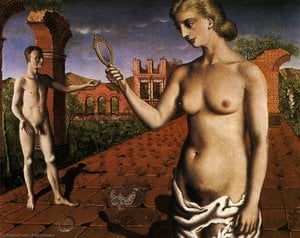
A Vida e a Visão Enigmática de Paul Delvaux
Paul Delvaux, um dos artistas mais marcantes do Surrealismo, nasceu em Wanze, uma pequena vila belga no coração da região da Flandres, em 23 de setembro de 1897. Sua infância foi marcada por contrastes: a disciplina rigorosa da educação clássica em grego e latim, lado a lado com os mundos fantásticos tecidos pelas obras de Jules Verne e a poesia épica de Homero. Essa dualidade – a ordem da razão e a liberdade da imaginação – seria o alicerce fundamental para sua visão artística única. Inicialmente, seus pais o direcionaram para uma carreira prática em arquitetura, mas Delvaux sentiu um chamado irresistível para a pintura, matriculando-se na Academia Royale des Beaux-Arts de Bruxelas. Embora lutasse com as exigências matemáticas da arquitetura, o treinamento lhe proporcionou domínio da perspectiva e da forma, habilidades que mais tarde se manifestariam na estranha realidade dos seus sonhos pintados. Suas primeiras obras refletiam essa base acadêmica, predominantemente paisagens em estilo pós-impressionista, mas já ali, vislumbrava-se a atmosfera peculiar que definiria seu trabalho maduro.
O Nascimento de uma Visão Surrealista
Um ponto crucial na trajetória artística de Delvaux foi o encontro com as obras de Giorgio de Chirico. As pinturas metafísicas do artista italiano – cenas sombrias e enigmáticas, povoadas por sombras e arquitetura clássica – ressoaram profundamente no artista belga, abrindo-lhe novos horizontes. Delvaux começou a povoar suas telas com figuras nuesas, frequentemente juxtapostas a estruturas arquitetônicas imponentes ou em paisagens vastas e desoladas. Essas figuras não eram meros retratos do corpo humano; eram explorações de desejo, alienação e da mente subconsciente. A influência dos expressionistas flamengos, como Constant Permeke e Gustave De Smet, também se manifesta nesse período, conferindo uma intensidade melancólica à sua paleta e ao seu traço. No entanto, Delvaux logo transcendeu essas influências, forjando um estilo próprio – uma combinação de precisão clássica e irracionalidade onírica. Suas pinturas começaram a evocar uma sensação de inquietação, uma sugestão de que algo oculto se escondia sob a superfície da realidade. Motivos recorrentes surgiram: trens, figuras esqueléticas e mulheres com rostos velados, todos contribuindo para a atmosfera perturbadora que define sua obra.
Símbolos e a Linguagem Artística
A linguagem artística de Delvaux é rica em simbolismo, embora ele tenha resistido consistentemente aos esforços de interpretação psicanalítica direta. A figura feminina nua, um elemento central em muitas de suas pinturas, frequentemente aparece como passiva ou melancólica, personificando tanto o desejo quanto a vulnerabilidade. Os trens e as estações ferroviárias aparecem com frequência como símbolos de transição, deslocamento e das ansiedades da modernidade. As esqueletos, longe de serem emblemas mórbidos da morte, representam uma presença fantasmagórica, um lembrete da mortalidade que permeia até mesmo os cenários mais idílicos. A arquitetura clássica fornece um pano de fundo de ordem e permanência, mas é frequentemente representada de forma estranhamente distorcida ou incompleta, sugerindo fragilidade sob a superfície. Esses elementos não são meros adornos; são integrais ao impacto emocional e psicológico de sua obra. Por exemplo, *A Noite Chegou* (1943) encapsula muitos desses temas – as figuras anônimas, a arquitetura imponente e a sensação de prenúncio de desgraça criam uma imagem poderosa e inesquecível. O próprio artista explicou que suas imagens derivavam de memórias pessoais e impressões profundas, em vez de tentativas conscientes de decodificar o inconsciente.
Influências e Legado
Ao longo de sua longa carreira, Paul Delvaux permaneceu uma figura singular no mundo da arte. Embora brevemente associado ao movimento Surrealista, ele manteve um grau de independência, resistindo à adesão estrita às suas diretrizes. Suas pinturas continuam a cativar o público com sua beleza enigmática e atmosfera perturbadora. Obras-primas como *O Verão*, *Cidade Cinzenta* e várias versões de *Vênus Adormecida* são exibidas em importantes museus ao redor do mundo, incluindo a Tate Gallery em Londres e o Museu de Arte de Toyama no Japão. A influência de Delvaux pode ser vista na obra de inúmeros artistas contemporâneos que exploram temas como memória, desejo e o inconsciente. Ele demonstrou que o Surrealismo podia existir além dos limites da escrita automática e da análise do sonho, abraçando em vez disso uma técnica meticulosa e uma visão pessoal profundamente enraizada. Seu legado perdura não apenas através de suas pinturas, mas também pelo poder duradouro de sua linguagem artística única – uma linguagem que continua a falar aos nossos medos e desejos mais profundos. O Museu Paul Delvaux em Saint-Idesbald, na Bélgica, serve como um testemunho de seu impacto duradouro, abrigando a maior coleção do mundo de suas obras e oferecendo aos visitantes um vislumbre do reino fascinante de sua imaginação.
Informações Adicionais
- Nascido em: 23 de setembro de 1897, Antheit, Liège, Bélgica
- Faleceu em: 20 de julho de 1994, Veurne, Bélgica
- Movimento artístico principal: Surrealismo (embora com uma abordagem singular)
- Influências notáveis: Giorgio de Chirico, René Magritte, Expressionistas Flamengos
- Obras-chave: *A Noite Chegou*, *Vênus Adormecida*, *Cidade Cinzenta*



 Visualizar na parede
 Comprar pintura feita à mão
 Compartilhar
 Compartilhar
 Detalhes

 Baixar imagem
 Semelhantes
 Raio X
 Slideshow
 Estatísticas


 Ler mais






































 A opção de vidro está disponível apenas para tamanhos inferiores a 110 cm