Visualizar na parede Visualizar em RA Comprar pintura feita à mão Alternar para Imagem Digital Compartilhar
Detalhes Guia Adicionar aos favoritos Baixar imagem Semelhantes Raio X Ver diaporama Estatísticas

Cupid

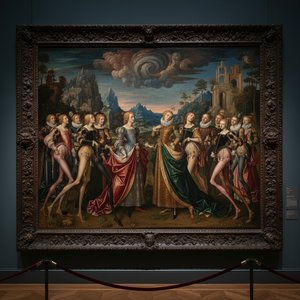
Admire Parmigianino's 'Cupid,' a captivating Renaissance masterpiece showcasing the god of love with exquisite detail and dynamic composition. A timeless work of art, now available as a stunning reproduction.

Descubra Parmigianino (1503-1540), mestre italiano do Maneirismo! Explore suas figuras alongadas, beleza refinada e obras icônicas como 'Madona de Pescoço Longo'. Influência renascentista.

Giclée / Impressão de Arte

Impressão giclée ou em tela de qualidade de museu, com produção rápida e opções flexíveis de acabamento. ( Comprar pintura feita à mão Alternar para Imagem Digital)

Corner sample of the P118B picture frame: poliestireno moldado, 5 cm wide and 3 cm thick
P118B €10
Corner sample of the P118H picture frame: poliestireno moldado, 5 cm wide and 3 cm thick
P118H €10
Corner sample of the P118W picture frame: poliestireno moldado, 5 cm wide and 3 cm thick
P118W €10
Corner sample of the P438Z picture frame: poliestireno moldado, 5.5 cm wide and 3.5 cm thick
P438Z €10
Corner sample of the P508JH picture frame: poliestireno moldado, 7 cm wide and 3.5 cm thick
P508JH €12
Corner sample of the P508YH picture frame: poliestireno moldado, 7 cm wide and 3.5 cm thick
P508YH €12
Corner sample of the P805H picture frame: poliestireno moldado, 5 cm wide and 3.5 cm thick
P805H €10
Corner sample of the P805Z picture frame: poliestireno moldado, 5 cm wide and 3.5 cm thick
P805Z €10
Corner sample of the P919BZ picture frame: poliestireno moldado, 7 cm wide and 3.5 cm thick
P919BZ €10
Corner sample of the P919G picture frame: poliestireno moldado, 7 cm wide and 3.5 cm thick
P919G €10
Corner sample of the P919XJ picture frame: poliestireno moldado, 7 cm wide and 3.5 cm thick
P919XJ €10
Corner sample of the P959ZH picture frame: poliestireno moldado, 5 cm wide and 3 cm thick
P959ZH €10
Corner sample of the P968JZ picture frame: poliestireno moldado, 6 cm wide and 4 cm thick
P968JZ €12
Corner sample of the W106C picture frame: madeira maciça, 5 cm wide and 3 cm thick
W106C €8
Corner sample of the W218G picture frame: madeira maciça, 5 cm wide and 3 cm thick
W218G €10
Corner sample of the W218JH picture frame: madeira maciça, 5 cm wide and 3 cm thick
W218JH €8
Corner sample of the W218Y picture frame: madeira maciça, 5 cm wide and 3 cm thick
W218Y €10
Corner sample of the W307PJ picture frame: madeira maciça, 6 cm wide and 3 cm thick
W307PJ €10
Corner sample of the W316G picture frame: madeira maciça, 6 cm wide and 3 cm thick
W316G €10
Corner sample of the W316PJ picture frame: madeira maciça, 6 cm wide and 3 cm thick
W316PJ €8
Corner sample of the W316Y picture frame: madeira maciça, 6 cm wide and 3 cm thick
W316Y €10
Corner sample of the W398PJ picture frame: madeira maciça, 5 cm wide and 3 cm thick
W398PJ €8
Corner sample of the W4111J picture frame: madeira maciça, 6.5 cm wide and 3.5 cm thick
W4111J €10
Corner sample of the W500HY picture frame: madeira maciça, 7 cm wide and 5 cm thick
W500HY €15
Corner sample of the W500JH picture frame: madeira maciça, 7 cm wide and 5 cm thick
W500JH €15
Corner sample of the W692G picture frame: madeira maciça, 8 cm wide and 4 cm thick
W692G €12
Corner sample of the W849H picture frame: madeira maciça, 5 cm wide and 3 cm thick
W849H €8
Corner sample of the W940BG picture frame: madeira maciça, 7.5 cm wide and 4.5 cm thick
W940BG €15
Corner sample of the W953PJ picture frame: madeira maciça, 6 cm wide and 3.5 cm thick
W953PJ €8

Tamanho padrão
personalizado
CM
INCH

Escolha entre os nossos tamanhos pré-definidos que respeitam as proporções originais da obra de arte.

largura
altura

Insira a largura e a altura desejadas para se ajustarem à sua moldura ou parede. Uma impressão pode ser apenas cortada, nunca ampliada além da imagem original; portanto, um tamanho com proporções diferentes resultará na perda de parte da imagem. Enviamos uma maquete digital para sua aprovação antes de realizarmos a impressão. A imagem exibida nesta página não mostra o corte real — apenas a maquete o faz.

Entrega mundial () em 2 semanas, em vez das 4/5 semanas padrão. (26 Outubro)

Envio expresso gratuito para todo o mundo
Tela de Linho de Alta Qualidade
Seguro de transporte completo
Garantia de Reembolso de Impostos Alfandegários
Garantia de Fidelidade Cromática
Política de Devolução em 100 Dias (Apenas para Defeitos)
Garantia de reembolso de 100%
Oferta de desconto por quantidade

Preço Total

€ 60

Cupid

Giclée / Impressão de Arte

Tamanho da Reprodução

-

Preço Total

€ 60

Informações Rápidas

  • Notable elements: Chiaroscuro, elongated figure
  • Year: 1523-24
  • Subject or theme: Love and desire
  • Location: Kunsthistorisches Museum, Vienna
  • Artistic style: Renaissance Mannerism
  • Movement: Mannerism

Quiz de Arte

Cada pergunta possui apenas uma resposta correta.

Pergunta 1:
What artistic movement is Parmigianino primarily associated with?
Pergunta 2:
In which museum is the painting 'Cupid' currently housed?
Pergunta 3:
What is a key characteristic of Parmigianino's style, evident in 'Cupid'?
Pergunta 4:
The painting 'Cupid' was created in which year?
Pergunta 5:
What does the 'zinale' garment worn by the woman in 'Antea' traditionally symbolize?

A Renaissance Reverie: Unveiling Parmigianino’s “Cupid”

The world of art rarely offers a glimpse into such profound tenderness as that presented by Parmigianino's "Cupid," painted in 1523. This exquisite work, now residing within the hallowed halls of the Kunsthistorisches Museum in Vienna, transcends mere representation; it’s an invitation to contemplate the very essence of love and desire, rendered with a masterful blend of classical grace and Mannerist sophistication. More than just a portrait, “Cupid” is a distillation of Renaissance ideals – a testament to human beauty, mythological narrative, and the artist's unparalleled ability to capture fleeting emotion.

At first glance, the painting presents a strikingly youthful Cupid, poised in an upright stance that exudes confidence and quiet contemplation. His pose, reminiscent of classical sculpture, is subtly elongated—a hallmark of Parmigianino’s Mannerist style—creating a sense of elegant distortion that elevates the figure beyond simple realism. The artist's keen eye for detail is immediately apparent: the delicate folds of his drapery, the subtle shading of his skin, and the precise rendering of his wings – all contribute to an overwhelming feeling of lifelike presence. The background, deliberately dark, serves not as a distraction but rather as a dramatic foil, intensifying the luminosity of Cupid’s form and drawing the viewer's attention directly to the central figure.

A Symphony of Light and Shadow: Technique and Style

Parmigianino’s genius lies in his masterful manipulation of light and shadow – a technique known as *chiaroscuro*. He employs this dramatic contrast with exceptional skill, sculpting volume and depth onto the canvas. The use of dark tones in the background creates an atmosphere of mystery and intimacy, while strategically placed highlights accentuate Cupid's features, emphasizing his youthful beauty and serene expression. The painting’s surface is rich with texture, achieved through meticulous layering of oil paint—a technique that allows for incredible detail and a remarkable sense of realism. The artist’s brushstrokes are visible yet controlled, contributing to the overall fluidity and dynamism of the composition.

Furthermore, “Cupid” embodies the core tenets of Mannerism, a style that emerged in Florence during the High Renaissance. Unlike the balanced compositions and naturalistic depictions favored by earlier artists, Mannerist works often prioritize elegance, refinement, and stylized forms. Parmigianino’s elongated figures, asymmetrical arrangements, and subtle distortions are all characteristic features of this movement. The painting is not simply a portrait; it's an exploration of beauty through a deliberately heightened lens.

Mythological Roots and Symbolic Resonance

Cupid, the Roman god of love, is instantly recognizable by his winged sandals and bow and arrow – symbols inextricably linked to passion, desire, and fertility. Parmigianino’s depiction of Cupid taps into this rich mythological heritage while simultaneously imbuing the figure with a sense of quiet introspection. The infant figures at his feet—often interpreted as representing Venus and Mars—add another layer of symbolic complexity, suggesting the origins of love itself. The scene subtly alludes to Ovid's *Metamorphoses*, where Cupid accidentally shoots his mother, Venus, with an arrow, triggering her passionate love for the mortal Adonis.

The positioning of the infants, reaching towards Cupid’s leg and gazing upwards, creates a poignant tableau of vulnerability and adoration. It speaks to the transformative power of love—a force capable of shaping destinies and altering the course of human existence. The painting invites viewers to contemplate not only the beauty of love but also its potential for both joy and sorrow.

A Timeless Masterpiece: Reproduction and Legacy

“Cupid” by Parmigianino stands as a testament to the enduring power of Renaissance art—a timeless masterpiece that continues to captivate audiences centuries after its creation. Today, WahooArt offers exquisite, hand-painted oil painting reproductions that faithfully capture the essence and beauty of this iconic work. Our skilled artists meticulously recreate every detail, from the subtle nuances of light and shadow to the delicate texture of Cupid’s drapery, ensuring a stunningly authentic representation.

Whether you are an art enthusiast, a collector seeking to enrich your collection, or an interior designer searching for a touch of Renaissance elegance, a reproduction of “Cupid” is sure to be a cherished addition to any space. Visit WahooArt.com today to bring this captivating masterpiece into your home.

Perguntas e Respostas

Onde deve ser pendurada uma reprodução de "Cupid", de Parmigianino?

O formato Tall de "Cupid", de Parmigianino é recomendado para um(a) Living Room. O formato e o espaço juntos orientam a disposição de uma reprodução.

Que humor e emoção se unem em "Cupid"?

A atmosfera de "Cupid", de Parmigianino é Elegant, e seu tom emocional é Romantic.

Como o contraste e a harmonia se combinam em "Cupid"?

A composição cromática de "Cupid", de Parmigianino combina um contraste Statement com uma harmonia Balanced Harmony.


Biografia do Artista

Girolamo Francesco Maria Mazzola, conhecido como Parmigianino: Um Elegante Visionário do Maneirismo

Parmigianino, cujo nome completo era Girolamo Francesco Maria Mazzola, emergiu no cenário artístico durante o Alto Renascimento, mas rapidamente se destacou como uma figura central do florescente estilo maneirista. Nascido em Parma, Itália, em 11 de janeiro de 1503, sua infância foi marcada pela perda precoce de seu pai, Filippo Mazzola, que faleceu quando Girolamo tinha apenas dois anos. Criado por seus tios, Michele e Pier Ilario, ambos artistas modestamente talentosos, o jovem Parmigianino recebeu sua formação artística inicial dentro desse círculo familiar. No entanto, essa base se revelou apenas um trampolim para um talento excepcional que logo superaria até mesmo seus mentores. Aos incríveis dezoito anos, já havia completado o Retábulo de Bardi, uma obra que demonstrava uma maturidade e sofisticação muito além de sua idade, sinalizando a chegada de um artista verdadeiramente notável.

De Florença a Roma: Moldando uma Visão Maneirista

A jornada artística de Parmigianino o levou a Florença por volta de 1524, onde absorveu as influências de mestres como Rafael e Leonardo da Vinci. Contudo, ele logo começou a trilhar seu próprio caminho distinto. Apresentou ao Papa Clemente VII três pinturas, incluindo um marcante autorretrato em um espelho côncavo – um testemunho de sua habilidade técnica e crescente autoconsciência. Este ato garantiu-lhe encomendas em Roma, mas o cenário artístico da cidade foi logo interrompido pelo tumultuoso Saque de 1527. Forçado a fugir, Parmigianino buscou refúgio em Bolonha, onde pintou uma de suas obras mais celebradas, a *Sagrada Família*. Foi durante este período que seu estilo característico realmente cristalizou: formas alongadas, poses graciosas e uma sensualidade refinada tornaram-se marcas registradas de sua arte. Ele não estava simplesmente retratando a realidade; ele a estava reimaginando através de uma lente de elegância e beleza idealizada. Essa ruptura com a ênfase do Alto Renascimento no naturalismo o marcou como um inovador fundamental do Maneirismo, um movimento artístico caracterizado por sua artificialidade, sofisticação e distorção deliberada das formas clássicas.

O Legado da Elegância: Obras-Primas de Alongamento e Graça

O legado de Parmigianino repousa sobre um corpo de trabalho relativamente pequeno, mas profundamente influente. A *Virgem com o Pescoço Longo* (1534) permanece talvez sua criação mais icônica. Sua composição perturbadora, porém cativante, apresentando figuras com pescoços e membros alongados, desafia as noções convencionais de beleza e proporção. Essa distorção deliberada não é meramente estilística; ela transmite uma sensação de anseio espiritual e graça etérea. Da mesma forma, *Visão de São Jerônimo* (1527), concluída durante seu tempo em Roma, demonstra sua maestria da anatomia e perspectiva, ao mesmo tempo que abraça a propensão maneirista para composições dramáticas e intensidade emocional. Além dessas pinturas celebradas, os desenhos de Parmigianino revelam um nível extraordinário de habilidade e sensibilidade. Seus estudos de figuras, drapeados e elementos arquitetônicos demonstram uma atenção meticulosa aos detalhes e uma profunda compreensão da forma. Mesmo suas obras menos conhecidas, como *Amor Entalhando Arco*, exibem a mesma sensibilidade refinada e virtuosismo técnico que definem sua obra.

Uma Carreira Interrompida: Os Últimos Anos de Parmigianino

Tragicamente, a promissora carreira de Parmigianino foi interrompida por sua morte prematura em Casalmaggiore em 1540, aos trinta e sete anos. As circunstâncias que cercam seu falecimento permanecem um tanto misteriosas; alguns relatos sugerem que ele sucumbiu à febre, enquanto outros insinuam complicações de uma queda. Apesar de sua breve vida, Parmigianino deixou uma marca indelével na arte do Renascimento italiano. Ele se destaca como um dos representantes mais importantes do Maneirismo, influenciando gerações de artistas com seu estilo elegante e abordagem inovadora da forma e composição. Sua obra continua a cativar os espectadores até hoje, oferecendo um vislumbre de um mundo onde a beleza não é meramente observada, mas ativamente criada – um testemunho do poder duradouro da visão artística. Os afrescos que deixou inacabados em Parma e Fontanellato servem como lembretes pungentes do que poderia ter sido, mas mesmo em seu estado incompleto, eles revelam a genialidade de um mestre cuja herança continua a ressoar através dos séculos.
Parmigianino

Parmigianino

1503 - 1540 , Itália

Dados Rápidos

  • Artistas Influenciados Por Este Artista: ['Arte renascentista italiana']
  • Artistas Que Influenciaram:
    • Rafael
    • Correggio
  • Data De Morte: 24 de agosto de 1540
  • Data De Nascimento: 11 de janeiro de 1503
  • Local De Nascimento: Parma, Itália
  • Movimento Artístico: Maneirismo
  • Nacionalidade: Italiana
  • Nome Completo: Girolamo Francesco Maria Mazzola
  • Obras Notáveis:
    • Madona de Pescoço Longo
    • Visão de São Jerônimo
    • Autorretrato no espelho
    • Santa Família
    • Circuncisão
    • Amor Entalhando Arco
Explore obras de arte organizadas por temas, estilos e características.