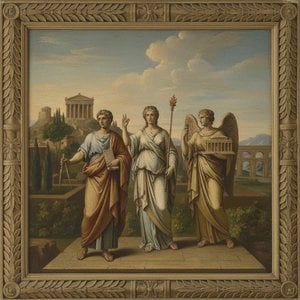
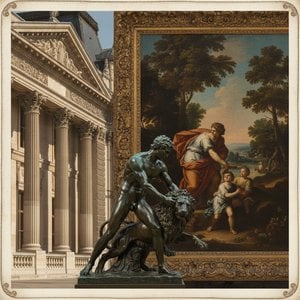
Nicolas Poussin – Um Ídolo da Serenidade Clássica
Nicolas Poussin, um nome que ressoa com a grandeza da pintura barroca francesa, foi, no entanto, uma alma profundamente ancorada na terra italiana por grande parte de sua vida artística. Nasceu em Les Andelys, Normandia, em junho de 1594, seus primeiros anos permanecem parcialmente envoltos em mistério, ainda que certamente estabelecessem as bases para uma carreira que se tornaria fundamental na formação da tradição clássica dentro da arte francesa. Embora tenha estudado brevemente em Paris durante os primeiros anos de 1610, absorvendo influências de artistas menos conhecidos da época, foi sua jornada para Roma em 1624 que realmente inflamou seu destino artístico. Não se tratava apenas de uma mudança geográfica; era uma imersão no coração da antiguidade, uma peregrinação à fonte mesma da inspiração que definiria sua visão estética. Os primeiros trabalhos de Poussin exibiam uma qualidade sensual reminiscente dos mestres venezianos como Titian, porém mesmo nessas obras iniciais, um senso latente de ordem e rigor intelectual começava a emergir—uma prenúncio do estilo que ele tão magistralmente refinaria.
Os Anos Romanos: Forjando um Ideal Clássico
Roma provou ser mais do que apenas um estúdio para Poussin; tornou-se seu crisol intelectual. Ele encontrava-se entre uma vibrante companhia de estudiosos, arqueólogos e artistas colegas, notavelmente Cassiano dal Pozzo, cuja profunda compreensão da antiguidade clássica influenciou profundamente a abordagem do artista. Dal Pozzo’s dedicação meticulosa à documentação de restos antigos inculcou em Poussin um profundo respeito pela precisão histórica e um desejo de impregnar suas pinturas com uma sensação de eternidade. Esta época viu Poussin afastar-se da exuberância flamboyante de alguns contemporâneos, abraçando um estilo caracterizado por clareza, equilíbrio e uma ênfase deliberada na composição linear. Ele estudava atentamente as obras de Rafael, absorvendo suas harmoniosas disposições e formas elegantes, enquanto simultaneamente buscava inspiração em esculturas antigas e fontes literárias como *As Metamorfoses* de Ovídio. Sua pintura começou a povoar com figuras retiradas da história antiga e mitologia, apresentadas não apenas como elementos decorativos, mas como expressões de virtudes morais e ideias filosóficas. Ele estudou profundamente os princípios da perspectiva e da anatomia humana, buscando replicar o rigor científico que caracterizava o Renascimento italiano.
Influências e Estilo: Uma Voz Única na Arte Barroca
Embora inicialmente influenciado pela estética veneziana, Poussin rapidamente desenvolveu um estilo próprio que se distinguiria dos demais artistas de sua época. Sua obra refletia uma profunda compreensão da filosofia clássica e uma habilidade excepcional em transmitir emoções sutis através da luz e sombra—uma característica marcante do barroco francês. Ele admirava profundamente o trabalho de Rafael Sanzio, buscando replicar suas composições equilibradas e suas formas suaves, mas também incorporou elementos da arte italiana renascentista, como o uso de cores vibrantes e detalhes minuciosos. Diferentemente dos artistas barrocos que buscavam impressionar o público com efeitos dramáticos e exagerados, Poussin procurava criar imagens que evocassem uma sensação de beleza serena e ordem intelectual—um objetivo que guiou toda sua produção artística. Sua maestria na composição linear e seu domínio da perspectiva são evidentes em obras como *O Ato Nobre de Scípio*, considerada uma das maiores conquistas da pintura barroca francesa.
Um Legado Duradouro: Moldando a Arte Francesa
Apesar de passar grande parte de sua vida fora da França, Nicolas Poussin deixou uma marca indelével na arte francesa. Ele retornou brevemente à cidade em 1640, sob o mandato do Cardeal Richelieu, nomeado Primeiro Pintor ao Rei, mas encontrou-se frustrado pelas demandas e intrigas da corte. Logo voltou para Roma, onde continuou a pintar até sua morte em 1665. Sua dedicação aos princípios clássicos ajudou estabelecer um padrão de treinamento artístico e prática dentro da França, influenciando gerações de artistas que o seguiram. Ele tornou-se uma figura central na Académie Royale de Peinture et de Sculpture, consolidando sua posição como um dos pilares do Classicismo francês. Artistas como Jacques-Louis David e Paul Cézanne reconheceram abertamente sua dívida com Poussin’s rigor intelectual e estilo único—uma homenagem àquele artista que buscava não apenas representar o mundo, mas elevá-lo através da lente da razão e da beleza. Sua obra permanece um testemunho da capacidade artística de capturar a essência da experiência humana e transmitir valores universais como ordem, equilíbrio e contemplação estética.
- Principais Obras: *O Ato Nobre de Scípio*, *Os Dez Mandamentos*, *A Criação do Mundo*, *O Nascimento de Venus*, *O Êxodo dos Hebreus*.
- Características Essenciais: Composição Linear, Uso Magistral da Luz e Sombra, Temas Mitológicos e Históricos Inspirados pela Antiguidade Clássica.



 Visualizar em escala
 Alternar para Impressão
 Enviar
 Compartilhar
 Ver detalhes
 Guia de Obras do Aluno

 Baixar imagem
 Semelhantes
 Raio X
 Apresentação de slides
 Estatísticas


 Ver mais






































 A opção de vidro está disponível apenas para tamanhos inferiores a 110 cm