


 OilWallArtBaroque
 Renaissance
 20.0 x 20.0 cm
 Kunsthistorisches Museum
Óleo sobre tela pintado à mão no tamanho e moldura de sua escolha, feito sob encomenda pelos nossos artistas. ( Comprar impressão Comprar imagem)





























Escolha entre os nossos tamanhos pré-definidos que respeitam as proporções originais da obra de arte.

Pode inserir as suas próprias dimensões para se adequar a uma moldura ou espaço específico. Se o tamanho selecionado não corresponder às proporções da imagem original, iremos cortar a obra de arte ou estender a pintura com elementos adicionais pintados à mão. Um esboço digital será enviado para sua aprovação antes do início da produção.
Tenha em atenção que a pré-visualização no ecrã não reflete o corte ou extensão real. Apenas o esboço mostrará com precisão a composição final.
Embora tamanhos personalizados estejam disponíveis, recomendamos selecionar uma dimensão da lista predefinida para preservar as proporções originais.
Entrega mundial () em 3 a 4 semanas, em vez das 5 semanas padrão. (7 Setembro). Sem comprometer a qualidade.


Emperor Maximilian II
Tamanho da Reprodução
In the quiet intensity of Nicolas Neufchatel’s Emperor Maximilian II, one does not merely encounter a portrait; one meets the weight of an empire. Painted around 1566, this masterful work serves as a profound window into the twilight of the Renaissance, a period where the rigid structures of the Middle Ages were yielding to the psychological complexities of humanism. The Emperor is captured in a moment of solemnity, his gaze fixed upon the viewer with a piercing clarity that suggests both the burden of his crown and the unwavering resolve of the Habsburg dynasty. Neuf chatel does not rely on the gaudy trappings of royalty to convey power; instead, he finds it in the subtle tension of a brow and the dignified stillness of a ruler acutely aware of his historical moment.
The technical brilliance of this piece lies in Neufchatel’s sophisticated command of chiaroscuro. By orchestrating a dramatic interplay between deep, velvety shadows and soft, directional light, the artist sculpts the Emperor’s features with an almost tactile three-dimensionality. The light catches the texture of his beard and the crisp edge of his collar, creating a luminous effect that breathes life into the canvas. Through the meticulous application of glazing—layering thin, translucent pigments—Neufchatel achieves a rich, inner glow that gives the skin a lifelike warmth. This scientific precision in rendering anatomy and light ensures that the portrait transcends mere likeness, becoming an evocative study of character and presence.
To behold this portrait is to step into the heart of the Holy Roman Empire at its zenith. Commissioned during a period of immense political and religious upheaval, the work was intended to solidify the prestige of the Habsburg line. As Maximilian II navigated the delicate religious tensions following the Peace of Augsburg, his image served as a symbol of stability and continuity. Neufchatel, a master of the Nuremberg and Antwerp traditions, infused the portrait with a realism that eschewed idealized beauty in favor of psychological depth. This commitment to truth—capturing the sitter's inner contemplation alongside his outward grandeur—makes the piece an essential cornerstone for any collection focused on the transformative era of the 16th century.
For the discerning collector or interior designer, this reproduction offers more than just aesthetic beauty; it provides a focal point of profound historical gravity. The dark, atmospheric background allows the subject to emerge with striking prominence, making it an ideal centerpiece for sophisticated spaces that demand a sense of heritage and intellectual depth. Whether placed in a formal study, a grand library, or a curated gallery wall, the Emperor Maximilian II invites conversation, evoking the timeless elegance of a bygone era and the enduring power of masterful portraiture.


1524 - 1567

Explore the dramatic brilliance of the Flemish Baroque movement. Discover how masters like Peter Paul Rubens utilized chiaroscuro and dynamic composition to redefine art history through light, shadow, and unparalleled emotion.

Explore the exquisite precision of Flemish painting. From Jan van Eyck to Robert Campin, discover the revolutionary oil techniques and rich symbolism that defined the Northern Renaissance and continue to inspire fine art collectors today.

Embark on a journey through the exquisite precision of Flemish Art. Discover the pioneering oil techniques, profound symbolism, and luminous realism that define the Northern Renaissance masters in this expert guide for art enthusiasts.

Delve into the luminous revolution of Early Netherlandish painting. Unveil how Jan van Eyck and Flemish masters pioneered oil techniques to achieve unparalleled depth, sacred symbolism, and breathtaking realism, forever shaping the legacy of Western art history.
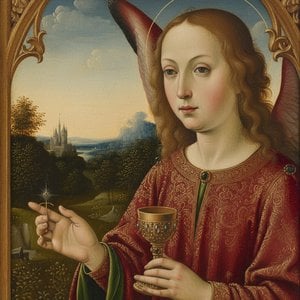
Embark on a journey through the luminous world of Early Netherlandish art. Discover the revolutionary oil techniques, microscopic realism, and sacred symbolism used by masters like Jan van Eyck to redefine Western art history in this expert-led guide.

 Visualizar na parede
 Compartilhar
 Compartilhar
 Detalhes

 Baixar imagem
 Semelhantes
 Raio X
 Slideshow
 Ler mais







 A opção de vidro está disponível apenas para tamanhos inferiores a 110 cm


