Visualizar na parede Visualizar em RA Comprar pintura feita à mão Alternar para Imagem Digital Compartilhar
Detalhes Guia Adicionar aos favoritos Baixar imagem Semelhantes Raio X Ver diaporama Estatísticas

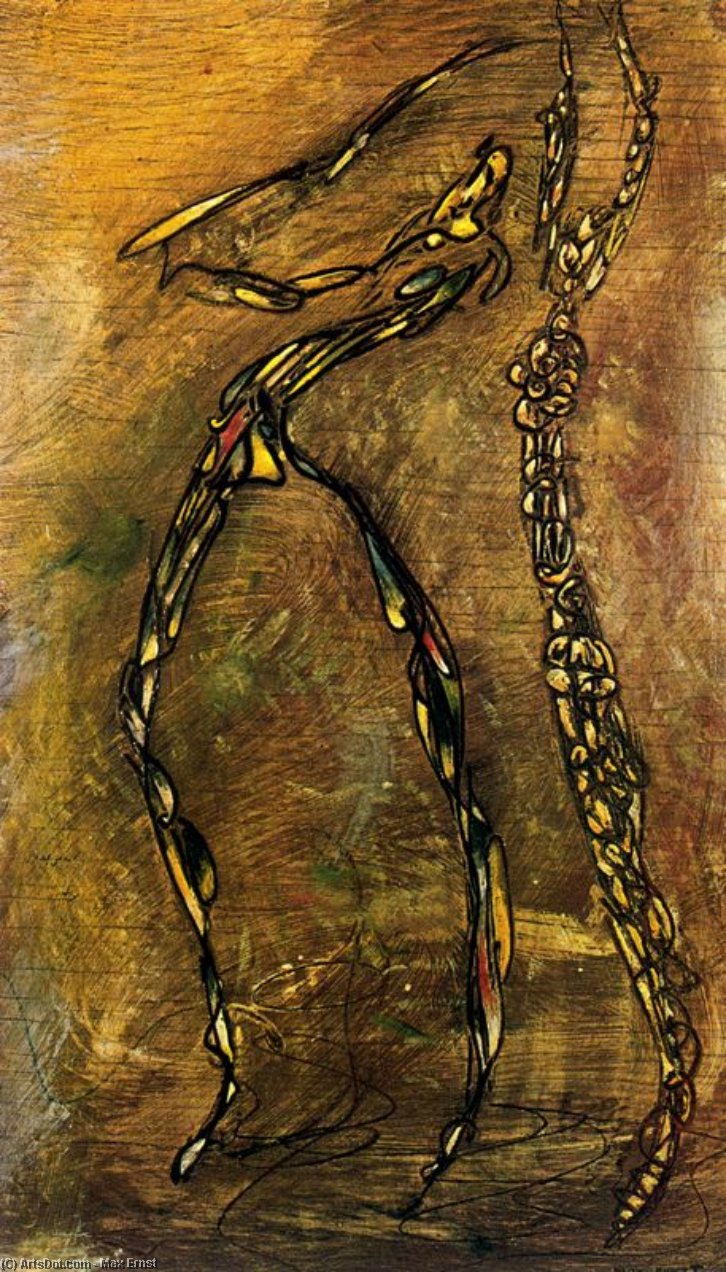
The dancers

Explore "The Dancers" by Max Ernst – an iconic expressionist masterpiece! Dynamic lines, textured gold background & elongated figures evoke movement & emotion. A unique piece for art collectors.

Explore o universo surreal de Max Ernst (1891-1976)! Pioneiro do Dada e Surrealismo, suas obras inovadoras usam frottage, colagens e paisagens oníricas com temas psicológicos. #MaxErnst #Surrealismo #Dada

A obra de arte exibida nesta página é protegida por leis de direitos autorais, o que significa que não podemos criar ou vender legalmente uma reprodução idêntica. Esta proteção é aplicada por meio de acordos internacionais, tais como a Convenção de Berna e pelas leis nacionais, incluindo as estabelecidas por Lei de Direitos Autorais dos EUA - Título 17.

Este método cumpre plenamente as regulamentações de direitos autorais, pois não envolve a cópia ou duplicação da obra protegida. Em vez disso, trata-se de uma reinterpretação criativa — uma nova pintura que é influenciada pela original, mas não idêntica a ela.

Giclée / Impressão de Arte

Impressão giclée ou em tela de qualidade de museu, com produção rápida e opções flexíveis de acabamento. ( Comprar pintura feita à mão Alternar para Imagem Digital)

Corner sample of the P118B picture frame: poliestireno moldado, 5 cm wide and 3 cm thick
P118B €10
Corner sample of the P118H picture frame: poliestireno moldado, 5 cm wide and 3 cm thick
P118H €10
Corner sample of the P118W picture frame: poliestireno moldado, 5 cm wide and 3 cm thick
P118W €10
Corner sample of the P438Z picture frame: poliestireno moldado, 5.5 cm wide and 3.5 cm thick
P438Z €10
Corner sample of the P508JH picture frame: poliestireno moldado, 7 cm wide and 3.5 cm thick
P508JH €12
Corner sample of the P508YH picture frame: poliestireno moldado, 7 cm wide and 3.5 cm thick
P508YH €12
Corner sample of the P805H picture frame: poliestireno moldado, 5 cm wide and 3.5 cm thick
P805H €10
Corner sample of the P805Z picture frame: poliestireno moldado, 5 cm wide and 3.5 cm thick
P805Z €10
Corner sample of the P919BZ picture frame: poliestireno moldado, 7 cm wide and 3.5 cm thick
P919BZ €10
Corner sample of the P919G picture frame: poliestireno moldado, 7 cm wide and 3.5 cm thick
P919G €10
Corner sample of the P919XJ picture frame: poliestireno moldado, 7 cm wide and 3.5 cm thick
P919XJ €10
Corner sample of the P959ZH picture frame: poliestireno moldado, 5 cm wide and 3 cm thick
P959ZH €10
Corner sample of the P968JZ picture frame: poliestireno moldado, 6 cm wide and 4 cm thick
P968JZ €12
Corner sample of the W106C picture frame: madeira maciça, 5 cm wide and 3 cm thick
W106C €8
Corner sample of the W218G picture frame: madeira maciça, 5 cm wide and 3 cm thick
W218G €10
Corner sample of the W218JH picture frame: madeira maciça, 5 cm wide and 3 cm thick
W218JH €8
Corner sample of the W218Y picture frame: madeira maciça, 5 cm wide and 3 cm thick
W218Y €10
Corner sample of the W307PJ picture frame: madeira maciça, 6 cm wide and 3 cm thick
W307PJ €10
Corner sample of the W316G picture frame: madeira maciça, 6 cm wide and 3 cm thick
W316G €10
Corner sample of the W316PJ picture frame: madeira maciça, 6 cm wide and 3 cm thick
W316PJ €8
Corner sample of the W316Y picture frame: madeira maciça, 6 cm wide and 3 cm thick
W316Y €10
Corner sample of the W398PJ picture frame: madeira maciça, 5 cm wide and 3 cm thick
W398PJ €8
Corner sample of the W4111J picture frame: madeira maciça, 6.5 cm wide and 3.5 cm thick
W4111J €10
Corner sample of the W500HY picture frame: madeira maciça, 7 cm wide and 5 cm thick
W500HY €15
Corner sample of the W500JH picture frame: madeira maciça, 7 cm wide and 5 cm thick
W500JH €15
Corner sample of the W692G picture frame: madeira maciça, 8 cm wide and 4 cm thick
W692G €12
Corner sample of the W849H picture frame: madeira maciça, 5 cm wide and 3 cm thick
W849H €8
Corner sample of the W940BG picture frame: madeira maciça, 7.5 cm wide and 4.5 cm thick
W940BG €15
Corner sample of the W953PJ picture frame: madeira maciça, 6 cm wide and 3.5 cm thick
W953PJ €8

Tamanho padrão
personalizado
CM
INCH

Escolha entre os nossos tamanhos pré-definidos que respeitam as proporções originais da obra de arte.

largura
altura

Insira a largura e a altura desejadas para se ajustarem à sua moldura ou parede. Uma impressão pode ser apenas cortada, nunca ampliada além da imagem original; portanto, um tamanho com proporções diferentes resultará na perda de parte da imagem. Enviamos uma maquete digital para sua aprovação antes de realizarmos a impressão. A imagem exibida nesta página não mostra o corte real — apenas a maquete o faz.

Entrega mundial () em 2 semanas, em vez das 4/5 semanas padrão. (26 Outubro)

Envio expresso gratuito para todo o mundo
Tela de Linho de Alta Qualidade
Seguro de transporte completo
Garantia de Reembolso de Impostos Alfandegários
Garantia de Fidelidade Cromática
Política de Devolução em 100 Dias (Apenas para Defeitos)
Garantia de reembolso de 100%
Oferta de desconto por quantidade

Preço Total

€ 60

The dancers

Giclée / Impressão de Arte

Tamanho da Reprodução

-

Preço Total

€ 60

Informações Rápidas

  • style: Abstract, Dynamic lines, Simplified forms
  • title: The dancers
  • artist: Max Ernst
  • medium: Drawing and painting (likely)

Quiz de Arte

Cada pergunta possui apenas uma resposta correta.

Pergunta 1:
Based on the description, which artistic movements is Max Ernst most closely associated with?
Pergunta 2:
The artwork 'The dancers' is characterized by what dominant visual element?
Pergunta 3:
What contributes to the sense of depth and texture in the background of 'The dancers'?
Pergunta 4:
How would you best describe the figure(s) in 'The Dancers'?

An Ethereal Dance: Exploring Max Ernst’s Abstract Expression

This captivating work by Max Ernst presents a mesmerizing study in abstract form and dynamic movement. Rendered in striking contrast – dark, fluid lines against a richly textured golden-brown ground – the piece evokes a sense of both energy and introspection. While titled “The Dancers,” the artwork transcends literal representation, offering instead an evocative interpretation of human motion, perhaps even spiritual yearning.

Style & Technique: A Bridge Between Worlds

Ernst’s style here leans heavily into Expressionism, yet it also foreshadows elements that would become central to his later Surrealist explorations. The elongated figure is not defined by precise detail, but rather suggested through sweeping curves and bold outlines. This deliberate simplification focuses attention on the *essence* of movement – its rhythm, flow, and emotional weight. The technique appears to be a compelling blend of drawing and painting; visible brushstrokes contribute significantly to the textured surface, creating depth and visual interest reminiscent of aged wood grain or canvas. The flattened perspective further enhances the abstract quality, removing traditional spatial cues and inviting viewers into a more immediate, visceral experience.

Historical Context: Ernst’s Early Innovations

Born in 1891, Max Ernst was a pivotal figure in the development of both Dadaism and Surrealism. His early artistic journey was marked by experimentation and a rejection of conventional artistic norms. While the exact date of this piece is unknown, it likely originates from a period where Ernst was actively breaking away from traditional representation, influenced by encounters with artists like Pablo Picasso. This work demonstrates his growing interest in exploring the subconscious and expressing inner states through abstract forms – themes that would define much of his later career. His background studying philosophy, art history, literature, psychology, and psychiatry deeply informed his artistic approach, leading him to explore the complexities of the human psyche within his artwork.

Symbolism & Interpretation: Beyond the Literal

The symbolism within “The Dancers” is deliberately open-ended. The elongated figure could represent a striving for growth, an expression of inner turmoil, or even a connection to something beyond the physical realm. The warm color palette – dominated by golds and browns – evokes feelings of warmth, earthiness, and perhaps nostalgia. The darker lines, punctuated with hints of red-brown, introduce a sense of drama and intensity. The repetition of lines and curves creates a strong rhythmic quality, mirroring the cyclical nature of dance itself or the ebb and flow of emotions.

Emotional Impact & Aesthetic Appeal

This artwork possesses a powerful emotional resonance. Its abstract form allows for personal interpretation, inviting viewers to project their own feelings and experiences onto the image. The dynamic composition and expressive lines create a sense of energy and movement that is both captivating and thought-provoking. Its warm color palette and textured surface make it an ideal piece for adding depth and sophistication to any interior space. Whether appreciated by seasoned art collectors or those seeking inspiration, “The Dancers” offers a compelling glimpse into the innovative mind of Max Ernst.

Considerations for Reproduction & Display

  • Due to the textured background, high-quality reproductions should prioritize capturing the nuances of the surface.
  • The artwork’s verticality makes it well-suited for hallways or spaces with ample wall height.
  • Its warm color palette complements a variety of interior design styles, from modern to bohemian.

Perguntas e Respostas

Como "The dancers" se posiciona entre os temas recorrentes de Max Ernst?

"The dancers" retrata abstract figures, dynamic movement, golden texture”, “vertical composition”, “expressive lines”, “geometric forms”, emotional art”, enquanto os temas recorrentes de Max Ernst são key expressionist work, central to ernst's style, recurring motif, expressionist lines, geometric abstraction, dynamic composition, human movement, spiritual aspiration. A comparação entre ambos revela como a obra se relaciona com os temas habituais do artista.

Como "The dancers" se insere na trajetória artística de Max Ernst?

"The dancers" compartilha com as outras obras de Max Ernst o seu estilo Expressionism e os temas recorrentes: key expressionist work, central to ernst's style, recurring motif, expressionist lines, geometric abstraction, dynamic composition, human movement, spiritual aspiration.

Para que tipo de uso se recomenda uma impressão de "The dancers"?

O uso sugerido para "The dancers", de Max Ernst é Accent, podendo também ser utilizado para outros fins.


Biografia do Artista

A Vida Imersa no Surreal

Max Ernst, nascido Maximilian Maria Ernst em 1º de abril de 1891, em Brühl, Alemanha, foi um espírito inquieto destinado a se tornar uma das figuras mais cruciais do século XX na arte. Sua jornada não foi de treinamento artístico convencional; ao invés disso, foi uma exploração autoguiada, impulsionada por questionamentos filosóficos, fascínio psicológico e uma profunda desilusão com as normas sociais. Seu pai, professor surdo e pintor amador, lhe transmitiu tanto sensibilidade para o mundo quanto uma rebeldia contra a autoridade estabelecida. Essa dualidade precoce se tornaria uma característica definidora de sua visão artística.

Os estudos acadêmicos de Ernst na Universidade de Bonn – abrangendo filosofia, história da arte, literatura, psicologia e psiquiatria – não foram meras distrações, mas elementos fundamentais que informaram profundamente seu trabalho posterior. Ele não estava simplesmente interessado em *como* pintar; ele estava se questionando *por que*. Essa curiosidade intelectual o levou a encontrar as obras inovadoras de Picasso, Van Gogh e Gauguin na exposição Sonderbund em Colónia em 1912, um momento que alterou irreversivelmente sua trajetória artística. As sementes do modernismo haviam sido plantadas.

A Disrupção Dadaísta e o Nascimento das Visões Surrealistas

A catástrofe da Primeira Guerra Mundial se mostrou um ponto de inflexão para Ernst. Suas experiências como soldado em ambos os fronts, oriental e ocidental, o deixaram profundamente abalado, fomentando um ceticismo profundo em relação à ordem estabelecida e uma ânsia por novas formas de expressão. Essa desilusão encontrou terreno fértil no movimento Dada, que ele abraçou com entusiasmo após retornar a Colónia em 1918. Ao lado de Hans Arp – um amigo e colaborador de longa data –, Ernst se tornou uma figura central no grupo Dada de Colónia, rejeitando as convenções artísticas tradicionais e abraçando o absurdo, o acaso e a anti-racionalidade.

No entanto, Dada foi apenas um trampolim. Nos primeiros anos dos anos 1920, Ernst migrou para Paris e juntou-se ao Círculo Surrealista, liderado por André Breton. Isso marcou uma mudança em direção à exploração do reino dos sonhos, da mente inconsciente e do irracional. Influenciado pelas teorias psicanalíticas de Sigmund Freud, Ernst buscou desbloquear as profundezas ocultas da experiência humana através de sua arte. Ele não estava interessado em representar a realidade como ela aparecia, mas sim em revelar as forças psicológicas subjacentes que a moldavam.

Técnicas Pioneiras: Frottage, Grattage e Colagem

A inovação artística de Ernst se estendeu além do assunto; ele era um experimentador incansável com técnicas. Ele não simplesmente adotou métodos existentes—ele inventou novos. Talvez sua contribuição mais famosa seja o frottage, um processo de esfregar lápis ou carvão sobre superfícies texturizadas para criar imagens inesperadas e evocativas. Essa técnica, nascida de um momento de tédio ao observar a textura da madeira, permitiu que Ernst acessasse o inconsciente e gerasse formas que desafiavam o controle consciente. Relacionada intimamente estava o grattage, onde a tinta é raspada sobre a tela, revelando camadas subjacentes.

Ele também empregou magistralmente a colagem, montando elementos díspares – imagens de revistas, ilustrações científicas, fotografias – em composições surreais que desafiaram as noções convencionais de representação. Essas técnicas não eram meras escolhas estilísticas; elas eram integrais à sua exploração do inconsciente e ao seu desejo de perturbar os limites artísticos tradicionais. Suas pinturas frequentemente apresentam imagens simbólicas recorrentes: pássaros (particularmente seu alter ego Loplop), paisagens desoladas, combinações perturbadoras e uma sensação persistente de mistério.

Um Legado de Inovação e Influência

O início da Segunda Guerra Mundial forçou Ernst a fugir da Europa, encontrando refúgio nos Estados Unidos. Ele continuou a pintar e experimentar novas técnicas ao longo de seu exílio, eventualmente retornando à França após a guerra onde permaneceu ativo até sua morte em 1º de abril de 1976, em Paris. Sua influência nas gerações posteriores de artistas é imensurável.

As contribuições de Ernst para o Dada e o Surrealismo foram nada menos que inovadoras. Ele desafiou as normas artísticas, mergulhou nas profundezas da mente inconsciente e inventou técnicas que continuam a inspirar artistas hoje. Ele não era apenas um pintor; ele era um explorador, um provocador e um visionário que expandiu os limites da arte em si.

  • Obras Notáveis: The Entire City, Euclides, Ofrenda funerária, The Angel of the Hearth
  • Influências: Pablo Picasso, Vincent van Gogh, Paul Gauguin, Sigmund Freud, Giorgio de Chirico
  • Movimentos: Dada, Surrealismo
Max Ernst

Max Ernst

1891 - 1976 , Alemanha

Dados Rápidos

  • Artistic Movement Or Style: Dada e Surrealismo
  • Artists Or Movements Influenced By This Artist:
    • Surrealismo
    • Dada
  • Artists Who Influenced This Artist:
    • Picasso
    • Van Gogh
    • Gauguin
  • Date Of Birth: 1 de abril de 1891
  • Date Of Death: 1 de abril de 1976
  • Full Name: Max Ernst
  • Nationality: Alemão-Americano, Francês
  • Notable Artworks:
    • Cidade Inteira
    • Euclides
    • Dove e Floresta
  • Place Of Birth: Brühl, Alemanha
Explore obras de arte organizadas por temas, estilos e características.