x
Visualizar na paredeVisualizar na parede Ver em RAVer em RA Comprar pintura feita à mão Comprar pintura feita à mãoComprar imagem Comprar imagem CompartilharCompartilhar
DetalhesDetalhes Adicionar aos favoritos Adicionar aos favoritos Baixar imagemBaixar imagem SemelhantesSemelhantes Raio XRaio X SlideshowSlideshow

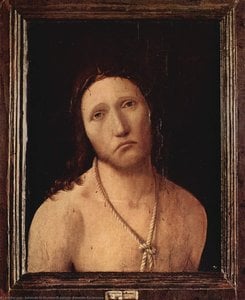
São Bartolomeu

São Bartolomeu: Uma obra-prima renascentista de Matteo di Giovanni que captura o simbolismo da fé e da penitência em Siena, Itália (c. 1485). Uma análise detalhada revela técnicas inovadoras e uma composição impactante.

Explore the art of Matteo di Giovanni (1435-1495), a leading Sienese Renaissance painter! Discover his blend of local tradition & Florentine influence in Madonna, Massacre of Innocents & more. #RenaissanceArt #SieneseSchool

Giclée / Impressão de Arte

Impressão giclée ou em tela de qualidade de museu, com produção rápida e opções flexíveis de acabamento. (Comprar pintura feita à mão Comprar pintura feita à mãoComprar imagem Comprar imagem)

P118B $10
P118H $10
P118W $10
P438Z $10
P508JH $12
P508YH $12
P805H $10
P805Z $10
P919BZ $10
P919G $10
P919XJ $10
P959ZH $10
P968JZ $12
W106C $8
W218G $10
W218JH $8
W218Y $10
W307PJ $10
W316G $10
W316PJ $8
W316Y $10
W398PJ $8
W4111J $10
W500HY $15
W500JH $15
W692G $12
W849H $8
W940BG $15
W953PJ $8

Tamanho padrão
personalizado
CM
INCH

Escolha entre os nossos tamanhos pré-definidos que respeitam as proporções originais da obra de arte.

largura
altura

Você pode inserir suas próprias dimensões para se ajustar a uma moldura ou espaço específico. Se o tamanho selecionado não corresponder às proporções da imagem original, iremos recortar a obra de arte ou estender a imagem com uma borda espelhada ou preenchimento sólido. Um mockup digital será enviado para sua aprovação antes do início da produção.
Por favor, observe que a visualização na tela não reflete o recorte ou a extensão real. Apenas o mockup mostrará com precisão a composição final.
Embora tamanhos personalizados estejam disponíveis, recomendamos selecionar uma dimensão da lista predefinida para preservar as proporções originais.

Entrega mundial () em 2 semanas, em vez das 4/5 semanas padrão. (4 Setembro)

why_choose_icon
Envio expresso gratuito para todo o mundo
why_choose_icon
Tela de Linho de Alta Qualidade
why_choose_icon
Seguro de transporte completo
why_choose_icon
Garantia de Reembolso de Impostos Alfandegários
why_choose_icon
Garantia de Fidelidade Cromática
why_choose_icon
Política de Devolução em 60 Dias (Apenas para Defeitos)
why_choose_icon
Garantia de reembolso de 100%
why_choose_icon
Oferta de desconto por quantidade

Preço Total

$ 68

reproduction

São Bartolomeu

Giclée / Impressão de Arte

Tamanho da Reprodução

-

Preço Total

$ 68

Informações Rápidas

  • Title: Saint Bartholomew
  • Year: 1485
  • Dimensions: 90 x 56 cm
  • Subject or theme: Religious Figure
  • Artistic style: Smooth skin tones
  • Location: Museum of Fine Arts Budapest
  • Influences: Antonio Pollaiolo

Saint Bartholomew: A Tuscan Renaissance Masterpiece

Matteo di Giovanni’s “Saint Bartholomew,” painted around 1485 in Siena, stands as a testament to the burgeoning artistic fervor of the Florentine Renaissance and its influence on Tuscan painting. More than just a depiction of biblical iconography—the saint’s halo and beard immediately identify him as a figure central to Christian faith—this panel painting embodies a profound understanding of human anatomy and an innovative approach to portraying suffering, characteristics that firmly establish Giovanni within the vanguard of his time.

  • Subject Matter & Symbolism: The artwork centers on Saint Bartholomew, martyred for refusing idolatry. His prominent position against a dark background underscores his importance as a symbol of sacrifice and divine righteousness. Crucially, Giovanni’s depiction incorporates the motif of “flayed skin,” representing mortality and sin—a technique borrowed from Umbrian iconographic tradition that elevates the saint beyond mere representation to embody spiritual contemplation.
  • Style & Technique: Giovanni adheres to the stylistic precepts of early Renaissance art, prioritizing smooth skin tones achieved through meticulous layering and glazing techniques. Geometric shapes – rectangles for drapery and circles for the halo – contribute to a sense of structural clarity, while precise linear lines delineate musculature and folds of clothing. The subtle matte surface texture hints at the artist’s mastery of oil paint on panel.
  • Historical Context: Siena during Giovanni's era was experiencing a revival of artistic patronage fueled by wealthy families like the Albizzi and Piccolomini, eager to commemorate religious events and honor saints. This painting reflects the broader humanist preoccupation with human form and emotion prevalent in Florence—a stylistic shift away from medieval conventions toward a more naturalistic representation of reality.
  • Emotional Impact: Giovanni’s masterful composition compels viewers to confront the saint's unwavering gaze, fostering introspection and prompting contemplation on themes of faith and suffering. The artist skillfully utilizes lighting – emanating from above – to sculpt the figure’s contours and imbue it with a palpable sense of presence.

The painting’s attribution to Antonio Pollaiolo initially sparked debate among art historians, highlighting Giovanni's commitment to stylistic innovation. However, subsequent research solidified his position as a pivotal figure in Tuscan Renaissance art, securing its place within the canon of Western artistic heritage. Its enduring appeal lies not only in its technical brilliance but also in its ability to resonate with audiences across centuries—a timeless masterpiece that continues to inspire awe and contemplation.

  • Provenance & Preservation: Currently housed in the Museo Nazionale di San Matteo, Pisa, “Saint Bartholomew” exemplifies the meticulous care taken to safeguard artistic treasures. Its history traces back to Alfonso II of Naples’s commission—a gesture intended to honor the relics of Saint Bartholomew brought into Siena following the Ottoman siege – demonstrating the painting's significance as a memorial to religious devotion.

Giovanni’s “Saint Bartholomew” remains an exemplar of Renaissance artistic excellence, embodying both anatomical precision and profound symbolic depth. It serves as a poignant reminder of the transformative power of art—capable of elevating visual representation into a vehicle for spiritual contemplation and conveying enduring themes of faith and sacrifice.


Biografia do Artista

The Sienese Master: The Life and Legacy of Matteo di Giovanni

In the heart of the Italian Renaissance, amidst the winding streets of Siena, the brushstrokes of Matteo di Giovanni helped define an era of profound spiritual and aesthetic transformation. Born around 1435 in Borgo San Sepolcro, Matteo’s journey was one of migration and metamorphosis. Though his origins lay elsewhere, his soul became inextricably linked to the Sienese school, a movement characterized by its lyrical grace, rich ornamentation, and deep devotion. His life was marked not only by artistic pursuit but by a remarkable personal stability; through two marriages to women of significant wealth, Matteo secured the financial freedom necessary to acquire real estate and establish a lasting presence in the San Salvatore neighborhood of Siena.

The early years of Matteo’s career remain shrouded in the soft mists of history, yet the traces of his development are etched into the very fabric of his canvases. While no formal apprenticeship is recorded, scholars often look toward the workshop of the renowned sculptor and painter Vecchietta as a potential cradle for his talent. His style emerged as a sophisticated tapestry woven from various threads of influence: the delicate precision of the miniaturist Girolamo da Cremona, the robust Florentine energy of Antonio del Pollaiolo, and the established Sienese traditions set by masters such as Sassetta and Domenico di Bartolo. This unique synthesis allowed him to bridge the gap between the decorative elegance of the late Gothic period and the burgeoning humanism of the Renaissance.

A Career Forged in Gold and Devotion

Matteo’s early professional life was defined by the collaborative spirit of the 15th-century workshop. In 1452, he entered into a significant partnership with Giovanni di Pietro, a period during which they shared living quarters and worked side-by-side on monumental tasks. One of the most illuminating glimpses into his early technical skill comes from 1453, when records show Matteo coloring and gilding a sculpture of the Archangel Gabriel by the celebrated Jacopo della Quercia. This task—applying precious gold leaf to sacred forms—demonstrates his mastery over the luminous, tactile surfaces that would become a hallmark of his later altarpieces.

His growing reputation led him to contribute to the most sacred spaces in Siena. His hands helped embellish the organ shutters within the Siena Cathedral and played a vital role in the decoration of the San Bernardino Chapel. These commissions were more than mere jobs; they were spiritual contributions to the city's liturgical life. As his skill matured, Matteo’s work began to exhibit a more complex narrative depth, moving beyond simple iconography toward a more dramatic and emotionally resonant style that captured the attention of the most prestigious patrons in Tuscany.

The Pinnacle of Achievement and Historical Significance

The true measure of Matteo di Giovanni’s stature is found in his selection for the urban renewal projects of Pienza. As one of only four Sienese painters chosen to furnish altarpieces for the newly erected chapels of the Pienza Cathedral, he stood at the forefront of the era's most ambitious architectural and artistic endeavors. His contributions to this project, particularly the three altarpieces dating from 1460-62, serve as a definitive window into his evolving technique, showcasing a mastery of light, form, and sacred storytelling.

Matteo’s legacy is defined by several key artistic pillars:

  • Synthesis of Styles: His ability to blend the local Sienese tradition with the emerging anatomical realism of Florence.
  • Technical Brilliance: A profound command over gilding and color, creating works that shimmered with divine light.
  • Narrative Power: The capacity to transform religious scenes, such as the Massacre of the Innocents or various Madonna and Child compositions, into gripping human dramas.
  • Civic Impact: His role in shaping the visual identity of Siena and Pienza through monumental ecclesiastical commissions.

Though he passed away in 1495, the echoes of Matteo di Giovanni’s artistry continue to resonate. He remains a pivotal figure who navigated the transition from the medieval mindset to the Renaissance dawn, leaving behind a body of work that continues to inspire awe through its delicate beauty and enduring spiritual strength.

matteo di giovanni

matteo di giovanni

1435 - 1495 , Italy

Dados Rápidos

  • Artistic Movement Or Style: Sienese School, Renaissance
  • Artists Who Influenced This Artist:
    • Sassetta
    • Domenico di Bartolo
    • Antonio del Pollaiolo
  • Date Of Birth: 1435
  • Date Of Death: 1495
  • Full Name: Matteo di Giovanni
  • Nationality: Italian
  • Notable Artworks:
    • Madonna and Child
    • Massacre of the Innocents
  • Place Of Birth: Borgo San Sepolcro, Italy
Explore obras de arte organizadas por temas, estilos e características.