

A obra de arte exibida nesta página é protegida por leis de direitos autorais, o que significa que não podemos criar ou vender legalmente uma reprodução idêntica. Esta proteção é aplicada por meio de acordos internacionais, tais como a Convenção de Berna e pelas leis nacionais, incluindo as estabelecidas por Lei de Direitos Autorais dos EUA - Título 17.
Este método cumpre plenamente as regulamentações de direitos autorais, pois não envolve a cópia ou duplicação da obra protegida. Em vez disso, trata-se de uma reinterpretação criativa — uma nova pintura que é influenciada pela original, mas não idêntica a ela.
Impressão giclée ou em tela de qualidade de museu, com produção rápida e opções flexíveis de acabamento. ( Comprar pintura feita à mão Alternar para Imagem Digital)





























Escolha entre os nossos tamanhos pré-definidos que respeitam as proporções originais da obra de arte.

Insira a largura e a altura desejadas para se ajustarem à sua moldura ou parede. Uma impressão pode ser apenas cortada, nunca ampliada além da imagem original; portanto, um tamanho com proporções diferentes resultará na perda de parte da imagem. Enviamos uma maquete digital para sua aprovação antes de realizarmos a impressão. A imagem exibida nesta página não mostra o corte real — apenas a maquete o faz.
Entrega mundial () em 2 semanas, em vez das 4/5 semanas padrão. (9 Novembro)
No.24
Tamanho da Reprodução
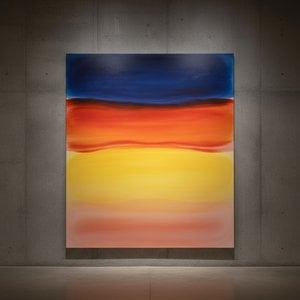
WahooArt.com presents an exquisite hand-painted reproduction of Mark Rothko's “No. 24,” a seminal work from 1949 that embodies the artist’s revolutionary approach to abstract expressionism. This piece, dominated by intense reds and greens, immediately draws the viewer into a realm of profound emotional resonance – a hallmark of Rothko’s mature style. The canvas itself is not merely a surface for paint; it's a textured landscape, built up in layers of thick impasto, creating a palpable physicality that invites tactile engagement. Subtle hints of orange peek through, adding to the complexity and dynamism within the seemingly simple color field composition.
Born in 1903 in Daugavpils, Latvia – then part of the Russian Empire – Mark Rothko's early life was profoundly shaped by displacement and a sensitivity to human suffering. His family’s experiences within the volatile political landscape of Eastern Europe instilled a deep awareness of mortality and existential questions, themes that would become central to his artistic vision. This biographical context is crucial to understanding “No. 24.” Rothko wasn't simply applying color; he was channeling deeply felt emotions, attempting to evoke a visceral response in the viewer. The layering technique, achieved through repeated applications of paint, builds up these emotional layers, creating an almost meditative effect.
Rothko’s use of color wasn't arbitrary. He meticulously studied color theory, particularly the work of Josef Albers, to understand how colors interact and influence each other. The juxtaposition of red and green in “No. 24” is particularly significant. These colors are often associated with primal emotions – red representing passion, anger, or danger, while green symbolizes nature, growth, and sometimes, decay. Rothko aimed to create a spiritual experience for the viewer, suggesting a connection between the individual’s inner world and the vastness of the universe. The thick application of paint, almost sculptural in its presence, further enhances this sense of depth and weight.
"No. 24" represents a pivotal moment in Rothko's career, solidifying his reputation as one of the foremost figures in abstract expressionism. This reproduction captures not just the visual elements of the original but also its emotional core – the profound sense of melancholy, contemplation, and perhaps even spiritual yearning that defines Rothko’s work. A hand-painted reproduction offers a unique opportunity to experience this artwork's power firsthand, bringing Rothko’s intensely personal vision into your space. This piece is more than just decoration; it’s an investment in art history and a gateway to exploring the depths of human emotion.
"No.24" possui uma atmosfera Calm.
"No.24", de Mark Rothko combina rothko, color field, red green, abstract art, emotional tone, canvas texture, mark rothko com uma atmosfera Calm.
Uma página de Ficha informativa está disponível para "No.24", de Mark Rothko: uma ficha informativa imprimível sobre a obra, projetada para estudantes e uso em sala de aula.

1903 - 1970 , Letónia

Descubra as 25 obras-primas de Mark Rothko, ícone do expressionismo abstrato. Explore a história, cores e emoção por trás de cada tela. Reproduções de arte exclusivas para sua casa em WahooArt.com.

Descubra as 10 obras-primas do Expressionismo Abstrato com Jackson Pollock, Mark Rothko e mais! Explore a história, técnica e emoção por trás de cada pintura. Encontre reproduções de arte exclusivas para decorar sua casa em WahooArt.com.

Descubra as 25 obras-primas de Wassily Kandinsky, pioneiro da arte abstrata! Explore a história, cores e significado por trás de cada pintura. Encontre reproduções de alta qualidade e inspire sua decoração em WahooArt.com.
Explore the profound emotional depth of Mark Rothko's abstract expressionism. Discover the history, techniques & lasting impact of this pivotal Color Field painter. Expert insights for collectors and art enthusiasts.

Explore the profound emotional depth of Color Field painting. Discover the history of mid-century abstraction, from Rothko to Newman, and learn how pure color transforms the viewer's experience through our expert art history guide.
 Visualizar na parede
 Compartilhar
 Compartilhar
 Detalhes
 Guia
Guia

 Baixar imagem
 Semelhantes
 Raio X
 Ver diaporama
 Perguntas e Respostas
 Estatísticas

 Ler mais









 A opção de vidro está disponível apenas para tamanhos inferiores a 110 cm


