

A obra de arte exibida nesta página é protegida por leis de direitos autorais, o que significa que não podemos criar ou vender legalmente uma reprodução idêntica. Esta proteção é aplicada por meio de acordos internacionais, tais como a Convenção de Berna e pelas leis nacionais, incluindo as estabelecidas por Lei de Direitos Autorais dos EUA - Título 17.
Este método cumpre plenamente as regulamentações de direitos autorais, pois não envolve a cópia ou duplicação da obra protegida. Em vez disso, trata-se de uma reinterpretação criativa — uma nova pintura que é influenciada pela original, mas não idêntica a ela.
Impressão giclée ou em tela de qualidade de museu, com produção rápida e opções flexíveis de acabamento. ( Comprar pintura feita à mão Alternar para Imagem Digital)





























Escolha entre os nossos tamanhos pré-definidos que respeitam as proporções originais da obra de arte.

Insira a largura e a altura desejadas para se ajustarem à sua moldura ou parede. Uma impressão pode ser apenas cortada, nunca ampliada além da imagem original; portanto, um tamanho com proporções diferentes resultará na perda de parte da imagem. Enviamos uma maquete digital para sua aprovação antes de realizarmos a impressão. A imagem exibida nesta página não mostra o corte real — apenas a maquete o faz.
Entrega mundial () em 2 semanas, em vez das 4/5 semanas padrão. (10 Novembro)
No.1 (Untitled)
Tamanho da Reprodução
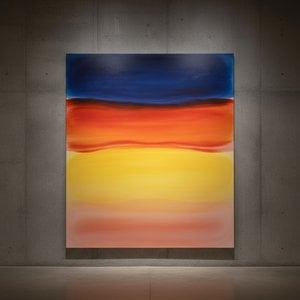
Mark Rothko's 1948 canvas, ‘No.1 (Untitled)’, is more than just a painting; it’s an immersion into the profound emotional landscape of one of 20th-century art’s most influential figures. This color field masterpiece, dominated by a luminous yellow expanse punctuated with deliberate blue accents and scattered red dots, immediately draws the viewer into a space of quiet contemplation. The sheer scale of the work – unknown but undoubtedly commanding – amplifies this effect, enveloping the observer in its chromatic depths.
Created in 1948, ‘No.1 (Untitled)’ emerged from a period of immense upheaval – the aftermath of World War II and the burgeoning anxieties of the Cold War. However, to fully appreciate Rothko’s work, it's essential to consider his personal history. Born Markus Yakovlevich Rothkowitz in Daugavpils, Latvia, in 1903, he carried within him a deep-seated sense of displacement stemming from his family’s experiences during the turbulent early 20th century. The pogroms and political unrest that plagued Eastern Europe instilled in him a profound sensitivity to human suffering – a theme that would become a recurring motif in his art. His immigration to Portland, Oregon, in 1913, marked not just a geographical shift but a cultural collision, further fueling his exploration of existential themes related to loss, trauma, and the search for meaning.
The deliberate use of color is paramount. The dominant yellow represents warmth, hope, and perhaps even a fragile optimism – qualities that Rothko often sought to convey despite his own struggles with depression. The strategically placed blue accents introduce an element of melancholy and introspection, acting as counterpoints to the yellow’s vibrancy. The black spots, seemingly random, are not accidental; they represent fragments of memory, moments of darkness, or perhaps even the scars of trauma – a visual echo of Rothko's own life experiences. The scattered red dots add another layer of complexity, suggesting fleeting emotions, sparks of passion, or the enduring presence of human connection amidst despair.
'No.1 (Untitled)' is not merely a decorative piece; it’s an invitation to engage in a deeply personal dialogue with art. Rothko's work possesses a remarkable ability to evoke powerful emotions – sorrow, hope, awe, and ultimately, a sense of shared humanity. A hand-painted reproduction of this artwork offers collectors the opportunity to bring this profound experience into their homes or offices, transforming spaces into contemplative sanctuaries. Its scale and color palette make it particularly well-suited for large rooms, acting as a focal point that commands attention and encourages quiet reflection. This piece is an investment not just in art, but in an enduring meditation on the human condition.
"No.1 (Untitled)" está associada a um sentimento Reflective. O tom emocional descreve a impressão que a obra transmite.
A recomendação de uso para uma impressão de "No.1 (Untitled)" é Reflective.
"No.1 (Untitled)" apresenta um brilho geral de brilliant, com uma luminância de Bright Balance.
Mark Rothko nasceu como Markus Yakovlevich Rothkowitz em 1903. Ele nasceu em Dvinsk, na Rússia, em um lugar hoje conhecido como Daugavpils, na Letônia. Sua família vivia dentro da "Pale of Settlement", uma região marcada pela agitação política e pela sombra constante dos pogroms. Essa atmosfera de instabilidade acompanhou a família quando emigraram para os Estados Unidos em 1913. Após passarem pela Ellis Island, estabeleceram-se em Portland, Oregon.
Seu pai, Jacob, trabalhava como farmacêutico. Era um homem intelectual, com inclinações socialistas, que cultivava um lar centrado no aprendizado e no debate. Esse ambiente de pensamento profundo foi interrompido por uma perda repentina. Pouco tempo depois de a família chegar à América, Jacob faleceu de câncer de cólon. Essa experiência precoce de luto e a luta da experiência do imigrante tornaram-se o alicerce silencioso do homem que ele viria a ser.
A mudança para a cidade de Nova York, em 1923, trouxe uma mudança fundamental em seu foco criativo. Após o período de estudos na Universidade Yale, o magnetismo vibrante da metrópole o afastou do rigor acadêmico formal. Em busca de refinar sua prática, ele recorreu à Art Students League. Durante esses anos formativos, sua pincelada dedicava-se ao tangível; ele pintava retratos e cenas urbanas, aplicando uma atenção meticulosa aos detalhes, desde a expressividade dos rostos humanos até a aspereza das ruas da cidade. Sua obra era profundamente enraizada no realismo, capturando a essência do mundo físico antes que a transição para a abstração tomasse conta de sua alma artística.
Por volta de 1940, ele tomou a decisão de adotar o nome de Mark Rothko. Este foi um período de transição profunda, um afastamento da representação estruturada que marcou sua juventude. O foco de sua arte começou a derivar dos objetos reconhecíveis da cidade em direção a algo menos definido e mais espiritual. Ele estava em uma busca incessante por uma forma de expressar o peso da experiência humana, sem depender das formas literais do mundo que o cercava.
À medida que os anos 40 avançavam, o realismo meticuloso de seus anos iniciais começou a recuar. O foco deslocou-se dos detalhes reconhecíveis de cenas urbanas e retratos para algo mais profundo. Em vez disso, ele voltou-se para a linguagem do Surrealismo e da mitologia, utilizando esses temas para encontrar uma forma de expressar o peso da emoção humana. As pinturas deste período frequentemente apresentavam formas biomórficas — formas que pareciam flutuar, presas em um estado de transição, não sendo totalmente figuras nem inteiramente abstratas.
Este período marcou sua associação com o movimento do expressionismo abstrato americano. Ele afastou-se do mundo estruturado dos objetos para explorar algo mais interno e visceral. As telas deixaram de tratar do que uma coisa parecia ser para focar no sentimento que ela carregava. Rothko buscava uma maneira de comunicar as complexidades da condição humana através da forma e do mito.
Ao final da década de 1940, a obra de Mark Rothko começou a transmutar-se. Ele afastou-se das formas figurativas e das narrativas mitológicas, despojando-se de qualquer imagem reconhecível em busca de algo mais direto e visceral. As telas ganharam uma escala monumental, ocupadas por grandes blocos retangulares de cor que pareciam flutuar no vazio. Estas formas não repousavam meramente sobre a superfície, mas pareciam existir dentro de um espaço raso e pulsante, como se estivessem em constante respiração. Esta mudança marcou o início de seu período de maturidade, uma era intrinsecamente ligada ao surgimento da pintura de campo de cor, o Color Field painting.
A aplicação da tinta era um processo lento e meticulosamente estratificado. Ele utilizava lavagens finas de pigmento para construir a superfície, criando transições sutis de tom e textura. Estas camadas permitiam que a luz parecesse emanar do interior da própria tela, e não apenas refletir-se nela. As bordas das formas coloridas nunca eram nítidas; pelo contrário, eram esfumaçadas e suaves, tornando as fronteiras entre as diferentes tonalidades permeáveis e fluidas. Este método transformou a tela em um lugar de presença silenciosa e densa, onde a cor se torna quase espiritual.
A obra de Mark Rothko baseia-se em um método de sobreposição específico e silencioso. Ele aplicava lavagens finas de tinta a óleo, construindo a superfície através de camadas meticulosas e translúcidas. Este processo cria uma textura aveludada que parece reter a luz dentro do próprio pigmento, em vez de apenas refleti-la da superfície. Em vez de linhas nítidas, as bordas de suas formas retangulares são esfumaçadas, permitindo que as cores se fundam e flutuem umas contra as outras. Esses grandes blocos de cor pretendem criar uma sensação de profundidade, fazendo com que a tela pareça respirar.
Ele despiu suas obras de títulos que pudessem sugerir um assunto ou narrativa específica. Muitas telas carregam apenas números simples, como No. 1 ou No. 6, deixando o espectador diante da cor sem qualquer ideia preconcebida. Essa escolha força um encontro direto com a tinta. Ele utilizou esses campos luminosos para buscar emoções humanas específicas e densas: tragédia, êxtase e desespero. A escala das obras tem o intuito de envolver a pessoa que está diante delas, transformando o ato de olhar em uma experiência silenciosa e imersiva.
A obra de Mark Rothko frequentemente transcendia os limites da tela individual para ocupar salas inteiras. Ele dedicou um tempo significativo aos murais Seagram, uma série de pinturas destinadas a um restaurante em Nova York. Eventualmente, ele decidiu que o ambiente não era adequado para o trabalho e os doou para a Tate Gallery, em Londres. Seu interesse em como a cor ocupa um espaço também o levou à série de murais de Harvard, criada para uma sala de jantar no Holyoke Center.
Em Houston, no Texas, ele deixou quatorze pinturas para a Rothko Chapel. Este espaço não denominacional abriga obras em vários tons de preto. As pinturas estão dispostas para se integrarem à arquitetura da capela, criando um ambiente específico para a reflexão silenciosa. A escala dessas obras é pensada para envolver o espectador onde quer que ele esteja, preenchendo a visão periférica com cor.
O peso de sua própria obra parecia, muitas vezes, pressioná-lo de forma avassaladora. Ao longo de sua vida, Mark Rothko lutou contra a depressão, uma sombra persistente que acompanhava sua busca incessante pela verdade emocional. Ele levou uma existência modesta, frequentemente retirando-se para os espaços silenciosos necessários para a criação de suas telas de grandes dimensões. A intensidade de seu foco na condição humana — a tragédia, o êxtase e o desespero — não era meramente um tema para o pincel, mas uma realidade que ele carregava dentro de si mesmo.
Ao chegar ao fim de sua vida, a luta tornou-se insuportável. Em 25 de fevereiro de 1970, Mark Rothko tirou a própria vida em seu estúdio, aos 66 anos. Sua morte deixou para trás uma vasta coleção de obras, incluindo muitas que permaneceram inacabadas ou que faziam parte do imenso espólio de pinturas que sua família e executores teriam de navegar através de complexas disputas legais.
O peso de sua presença permanece na maneira como suas telas ocupam um ambiente. Ele deixou um espólio contendo 798 pinturas, uma vasta coleção que continua a ancorar a história da arte moderna. Sua transição para grandes e luminosos retângulos de cor ajudou a definir o movimento do Expressionismo Abstrato e, posteriormente, influenciou o movimento Minimalista. Estas obras não dependem de formas reconhecíveis para prender a atenção do espectador; em vez disso, elas confiam na respiração lenta e rítmica da cor para criar uma sensação de profundidade.
Sua influência é sentida na forma como as gerações subsequentes abordaram a tela como um espaço para exploração psicológica e espiritual. Ao despojar a arte do ruído narrativo, ele mudou a maneira como as pessoas interagem com a realidade física da tinta. Suas pinturas são reconhecidas como algumas das obras mais significativas da arte do século XX, frequentemente encontradas nas coleções permanentes de grandes instituições como o Museum of Modern Art em Nova York e a Tate Modern em Londres. A escala de seu trabalho muitas vezes engole a visão periférica, forçando uma quietude silenciosa e meditativa.
Estar diante de suas telas é vivenciar o peso da cor em uma sala silenciosa. Em Nova York, o Museu de Arte Moderna abriga diversas de suas obras. Do outro lado do Atlântico, a Tate Modern, em Londres, oferece um espaço semelhante para contemplar suas formas de grande escala. Em Washington, D.C., a National Gallery of Art guarda uma coleção de suas pinturas, onde a luz incide sobre os pigmentos estratificados de uma maneira que revela a profundidade que ele buscava através de finas lavagens de óleo.
Existe uma quietude específica encontrada na Rothko Chapel, em Houston, Texas. É um espaço não denominacional que contém quatorze de suas pinturas em vários tons de preto. A arquitetura do edifício, um octógono inscrito em uma cruz grega, foi influenciada pelo próprio artista. O local permanece como um refúgio para a reflexão silenciosa, onde a escala das obras é pensada para envolver a pessoa que delas se depara.
Em Daugavpils, na Letônia, o Museu Rothko está instalado no histórico edifício do arsenal de artilharia da fortaleza de Daugavpils. Esta instituição é o único lugar na Europa que exibe permanentemente pinturas originais emprestadas de seu espólio. Os visitantes podem encontrar seu trabalho na Sala Rothko, um espaço projetado para acolher essas telas específicas em um ambiente que honra suas origens.

1903 - 1970 , Letónia

Descubra as 10 pinturas mais emblemáticas em tons de azul ardósia! Explore a história, artistas como Monet e Van Gogh, e o significado da cor na arte. Encontre reproduções de alta qualidade para decorar sua casa com WahooArt.com.

Explore the profound emotional depth of Color Field painting. Discover the history of mid-century abstraction, from Rothko to Newman, and learn how pure color transforms the viewer's experience through our expert art history guide.

Descubra as 25 obras-primas de Mark Rothko, ícone do expressionismo abstrato. Explore a história, cores e emoção por trás de cada tela. Reproduções de arte exclusivas para sua casa em WahooArt.com.
Explore the profound emotional depth of Mark Rothko's abstract expressionism. Discover the history, techniques & lasting impact of this pivotal Color Field painter. Expert insights for collectors and art enthusiasts.

Descubra as 25 obras-primas de Wassily Kandinsky, pioneiro da arte abstrata! Explore a história, cores e significado por trás de cada pintura. Encontre reproduções de alta qualidade e inspire sua decoração em WahooArt.com.
 Visualizar na parede
 Compartilhar
 Compartilhar
 Detalhes
 Guia
Guia

 Baixar imagem
 Semelhantes
 Raio X
 Ver diaporama
 Perguntas e Respostas
 Estatísticas

 Ler mais









 A opção de vidro está disponível apenas para tamanhos inferiores a 110 cm


