x
Comprar pintura feita à mão Comprar pintura feita à mãoComprar imagem Comprar imagem CompartilharCompartilhar
DetalhesDetalhes Adicionar aos favoritos Adicionar aos favoritos Baixar imagemBaixar imagem SemelhantesSemelhantes SlideshowSlideshow

Cape

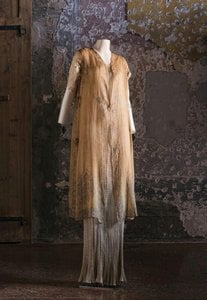
Mariano Fortuny’s ‘Cape,’ created in 1930, exemplifies his groundbreaking approach to fashion and stage lighting. This photograph captures a mannequin draped in a luxurious velvet coat adorned with delicate lace—a testament to Fortuny's revival of historical motifs and pioneering techniques.

Mariano Fortuny (1871-1949) foi um artista e designer espanhol renomado por seus têxteis inovadores, vestidos inspirados na história e iluminação cênica pioneira! Explore seu legado orientalista, invenções e influência duradoura na arte.

Giclée / Impressão de Arte

Impressão giclée ou em tela de qualidade de museu, com produção rápida e opções flexíveis de acabamento. (Comprar pintura feita à mão Comprar pintura feita à mãoComprar imagem Comprar imagem)

Tamanho padrão
personalizado
CM
INCH

Escolha entre os nossos tamanhos pré-definidos que respeitam as proporções originais da obra de arte.

largura
altura

Você pode inserir suas próprias dimensões para se ajustar a uma moldura ou espaço específico. Se o tamanho selecionado não corresponder às proporções da imagem original, iremos recortar a obra de arte ou estender a imagem com uma borda espelhada ou preenchimento sólido. Um mockup digital será enviado para sua aprovação antes do início da produção.
Por favor, observe que a visualização na tela não reflete o recorte ou a extensão real. Apenas o mockup mostrará com precisão a composição final.
Embora tamanhos personalizados estejam disponíveis, recomendamos selecionar uma dimensão da lista predefinida para preservar as proporções originais.

Entrega mundial () em 2 semanas, em vez das 4/5 semanas padrão. (4 Setembro)

why_choose_icon
Envio expresso gratuito para todo o mundo
why_choose_icon
Tela de Linho de Alta Qualidade
why_choose_icon
Seguro de transporte completo
why_choose_icon
Garantia de Reembolso de Impostos Alfandegários
why_choose_icon
Garantia de Fidelidade Cromática
why_choose_icon
Política de Devolução em 60 Dias (Apenas para Defeitos)
why_choose_icon
Garantia de reembolso de 100%
why_choose_icon
Oferta de desconto por quantidade

Preço Total

$ 68

reproduction

Cape

Giclée / Impressão de Arte

Tamanho da Reprodução

-

Preço Total

$ 68

Informações Rápidas

  • Title: Cape
  • Influences: Historical Sources"; "Non-Western Traditions
  • Medium: Textile
  • Artist: Mariano Fortuny
  • Location: Palazzo Fortuny, Venice
  • Subject or theme: Fashion Design; Artistic Presentation
  • Movement: Decorative Arts

Quiz de Arte

Cada pergunta possui apenas uma resposta correta.

Pergunta 1:
What is the primary subject matter of Mariano Fortuny’s ‘Cape’?
Pergunta 2:
The photograph showcases Fortuny’s ‘Cape’ within what type of setting?
Pergunta 3:
What technique is Fortuny credited with pioneering in theater design?
Pergunta 4:
The photograph highlights the textures of both the garment and its background. What is a prominent textural element in the image?
Pergunta 5:
Fortuny’s artistic inspiration drew heavily from historical and non-Western sources. What is a key characteristic of his creative approach?

A Vision of Elegance: The Timeless Allure of Mariano Fortuny’s ‘Cape’

In the realm of textile art, few pieces command the same reverence as Mariano Fortuny’s 1930 masterpiece, ‘Cape.’ This is not merely a garment; it is a profound reimagining of theatrical presentation and a masterful fusion of historical inspiration with avant-garde technique. To behold this work is to witness a moment where fashion transcends utility to become pure sculpture. The piece embodies a sophisticated dialogue between the weight of history and the lightness of innovation, making it an essential inspiration for collectors and designers who seek to infuse their spaces with a sense of storied grandeur.

The soul of the ‘Cape’ lies in its ability to reinterpret antiquity through a modern lens. Fortuny, a true polymath, drew deep inspiration from Greco-Roman mythology, specifically evoking the dramatic drapery associated with Zeus during the siege of Mount Olympus. By translating these epic narratives into fabric, he transformed a mannequin into a conduit for mythological grandeur. The garment serves as a visual spectacle where the heavy, luxurious velvet of the collar and hood meets the ethereal, delicate patterns of a lace-like overlay. This deliberate juxtaposition creates a captivating interplay of surfaces, inviting the eye to wander through layers of texture and light.

Mastery of Texture and the Art of Light

Technique is the heartbeat of this work. Fortuny was as much an inventor as he was a designer, and his mastery over material is evident in every fold of the ‘Cape.’ The way the dark, sumptuous velvet absorbs light stands in stark contrast to the translucent, patterned overlay that allows glimpses of the form beneath to emerge like a half-remembered dream. This interplay mirrors Fortuny’s revolutionary work with the cyclorama dome, where he used reflected light to create seamless, immersive environments in theater. In this piece, the fabric itself acts as a stage, performing a silent drama of shadow and brilliance.

For the interior designer or art enthusiast, the ‘Cape’ offers a rich palette of textures that can elevate any setting. The verticality of the pleated skirt provides a rhythmic stability, while the organic, flowing lines of the draped coat introduce a sense of movement. It is a study in balance—the heavy against the light, the structured against the fluid. This complexity makes a high-quality reproduction of such a work an extraordinary focal point, capable of anchoring a room with its profound sense of craftsmanship and historical weight.

An Emotional Legacy for the Modern Collector

Beyond its physical attributes, the ‘Cape’ carries an emotional resonance that speaks to the enduring human desire for beauty and transcendence. It evokes a sense of timelessness, bridging the gap between the ancient world and the modern era. There is a certain mystery held within its folds, a whisper of the aristocratic intrigue and theatrical magic that defined Fortuny’s life in Venice. To possess or display an homage to this work is to celebrate the spirit of the alchemist of aesthetics—an artist who refused to see boundaries between fashion, stagecraft, and fine art.

Whether integrated into a curated gallery collection or used as a sophisticated element in high-end decor, the ‘Cape’ remains a symbol of refined beauty. It invites viewers to contemplate the intersection of memory and innovation, making it a timeless investment for those who appreciate art that does not merely decorate a space, but breathes life and narrative into it.


Biografia do Artista

Early Life and Inspiration

Mariano Fortuny, a name synonymous with theatrical innovation and opulent textiles, was born on May 11, 1871, in Granada, Spain – a city steeped in history and artistic tradition. His early life was profoundly shaped by the sudden loss of his father, Mariano Fortuny y Marsal, a respected genre painter, when the young boy was just three years old. This tragic event propelled his family to Paris, France, where his mother, Cecilia de Madrazo, exposed him to the vibrant world of Parisian fashion and textiles. It was within this environment that Fortuny’s artistic sensibilities truly began to blossom, nurtured by a diverse collection of fabrics and materials – a legacy inherited from his father's own passion for collecting. From a remarkably young age, Fortuny demonstrated an extraordinary aptitude for various art forms: painting, photography, sculpting, architecture, etching, and even theatrical stage lighting design. His innate curiosity and inventive spirit quickly led him to experiment with new techniques and materials, foreshadowing the revolutionary contributions he would later make to the world of theatre. The influence of his mother’s textile collection proved particularly formative, sparking a lifelong fascination with patterns, textures, and the interplay of light and color – elements that would become central to his artistic vision.

Artistic Talents and Revolutionary Inventions

Fortuny's artistic talents weren’t confined to traditional painting; he was a true polymath, driven by an insatiable desire to innovate and push the boundaries of creative expression. He quickly established himself as a skilled craftsman and inventor, developing over twenty patented inventions between 1901 and 1934 – a testament to his remarkable ingenuity. Perhaps his most significant invention was the “fortuny cyclorama dome,” a quarter-dome structure constructed from plaster or cloth designed to create seamless transitions between scenes in theatrical productions. This ingenious device utilized indirect lighting, manipulating reflected light off various surfaces to dramatically alter color, intensity, and overall effect – a groundbreaking technique that fundamentally changed the way stage sets were illuminated. Fortuny’s treatise, “Eclairage Scenique” (1904), meticulously documented his discoveries regarding the properties of light, detailing how it could be harnessed and transformed to achieve unprecedented visual depth and realism on stage. This work established him as a pioneer in theatrical lighting design, earning him international recognition within the artistic community. Beyond the cyclorama dome, Fortuny’s inventive mind produced numerous other innovations, including specialized fabrics, lighting fixtures, and even a unique suction fan system for maintaining the tautness of his domes – demonstrating a relentless pursuit of technological advancement to serve his artistic goals.

Notable Collaborations and Artistic Influences

Fortuny's work quickly gained widespread acclaim in the 1920s, attracting the attention of influential figures across Europe and America. He forged significant collaborations with prominent artists and cultural icons, including Richard Wagner, the renowned German composer, whose operas deeply inspired Fortuny’s dramatic stage designs. His contributions to the premiere of Wagner's *Tristan und Isolde* at the Scala opera house in Milan were particularly noteworthy, as he adapted his dome system for the theater’s vast space and devised a clever suction fan mechanism to maintain its structural integrity – a testament to his engineering prowess. Fortuny also worked closely with the celebrated Italian opera singer Eleonora Duse, designing elaborate sets and costumes for her performances, further solidifying his reputation as a visionary artist. His designs were coveted by leading figures in the theatre world, including Isadora Duncan and Ellen Terry, demonstrating the broad appeal of his innovative aesthetic. The influence of Fortuny extended beyond the stage; he was deeply inspired by the art and culture of ancient civilizations, particularly those of Egypt, Greece, and Persia – a fascination that informed his use of rich colors, intricate patterns, and dramatic compositions.

Legacy and Lasting Influence

Mariano Fortuny passed away on May 3, 1949, in Venice, Italy, leaving behind a remarkable legacy that continues to resonate today. His work profoundly influenced the French novelist Marcel Proust, who drew inspiration from Fortuny’s artistic vision and his exploration of memory and sensory experience in *In Search of Lost Time*. Fortuny's life story was also depicted in Pere Gimferrer’s novel *Fortuny*, further cementing his place in literary history. Despite his untimely death, Fortuny’s impact on the world of theatrical design remains undeniable. His innovations revolutionized stage lighting and set construction, setting new standards for visual spectacle and immersive storytelling. Today, his designs continue to be studied and admired by artists, designers, and theatre professionals worldwide – a testament to the enduring power of his creative genius. Explore more about Mariano Fortuny's inventions and designs at WahooArt’s collection. Discover the impact of his work on theatrical lighting in the museum destroyed by fire (united states), a story of an unfortunate event that shaped american art history, available at WahooArt’s blog.

Mariano Fortuny

Mariano Fortuny

1871 - 1949 , Espanha

Dados Rápidos

  • Artistic Movement Or Style: Orientalismo art
  • Artists Or Movements Influenced By This Artist: ['Marcel Proust']
  • Artists Who Influenced This Artist: ['Richard Wagner']
  • Date Of Birth: 11 de junho de 1871
  • Date Of Death: 3 de maio de 1949
  • Full Name: Mariano Fortuny y Marsal
  • Nationality: Espanhol
  • Notable Artworks:
    • La vicaría
    • La batalla Tetuan
  • Place Of Birth: Granada, Espanha
Explore obras de arte organizadas por temas, estilos e características.