Visualizar em escala Visualizar em RA Alternar para Impressão Encomendar reprodução pintada à mão Enviar
Ver detalhes Guia de Obras do Aluno Adicionar aos favoritos Baixar imagem Semelhantes Raio X Apresentação de slides Estatísticas

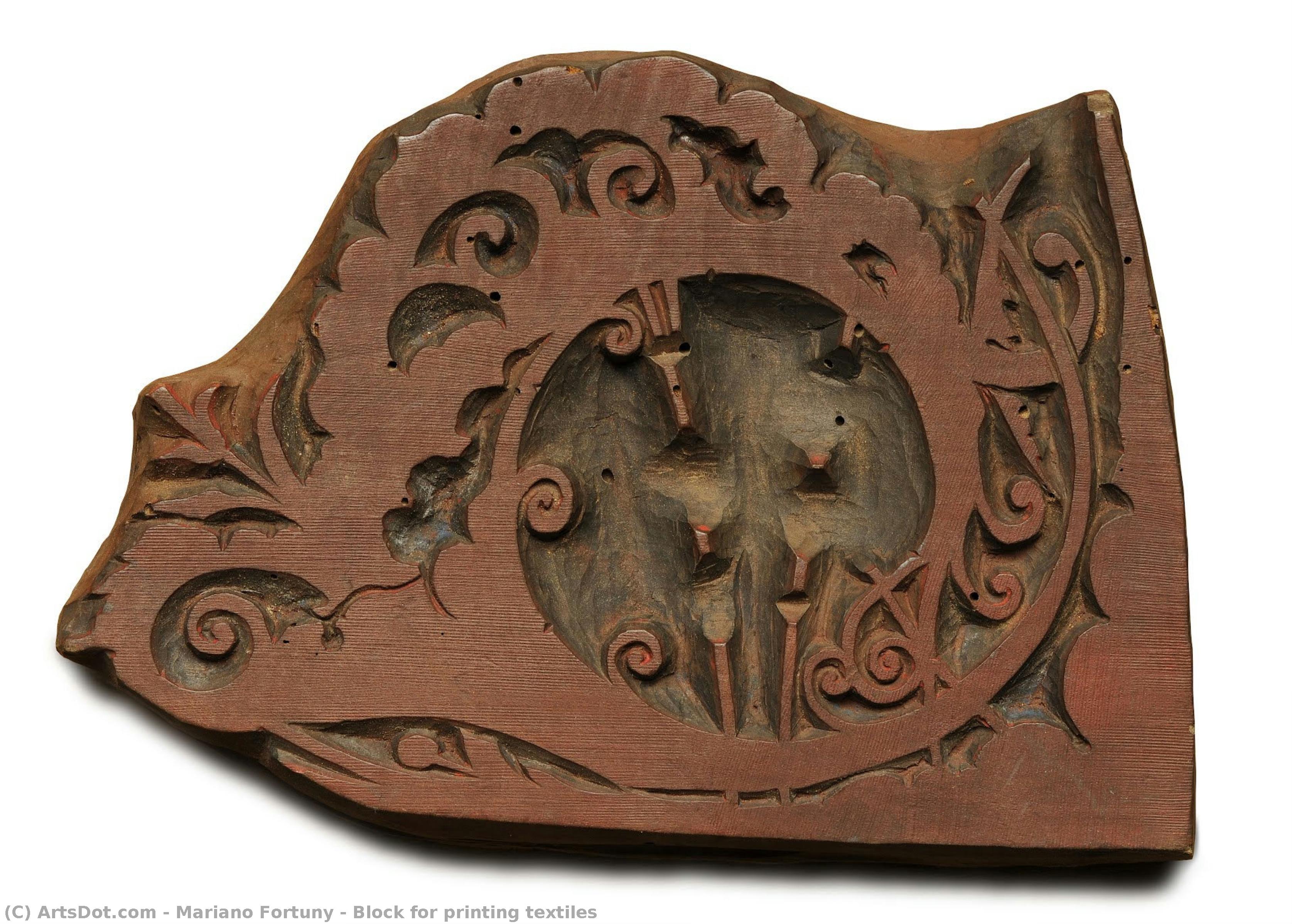
Block for printing textiles

Admire Mariano Fortuny’s ‘Block for Printing Textiles’ – a stunning 1905 wooden block showcasing intricate carvings & design. Hand-painted reproduction available.

Mariano Fortuny (1871-1949) foi um artista e designer espanhol renomado por seus têxteis inovadores, vestidos inspirados na história e iluminação cênica pioneira! Explore seu legado orientalista, invenções e influência duradoura na arte.

Adquira uma imagem digital de alta resolução e aprimorada, muito superior à prévia online.

Cada arquivo é meticulosamente preparado por nossos especialistas internos, utilizando ferramentas avançadas e retoques manuais de alta precisão. Garantimos que cada imagem apresente clareza excepcional, fidelidade de cores e detalhes minuciosos.

O arquivo final é entregue por e-mail em até 72 horas, otimizado para uso imediato em ambientes profissionais, editoriais e de impressão. Esta é a mesma qualidade utilizada por estúdios de design de alto nível, editoras e galerias.

Imagem Digital

Baixe um arquivo de alta resolução para exibição pessoal, impressão e projetos criativos. ( Alternar para Impressão Encomendar reprodução pintada à mão)

Preço Total

$ 24,90

Incluído em cada pedido de imagem digital

Entrega Digital Especializada e Garantida

Ao escolher o WahooArt.com, você não está apenas adquirindo uma imagem — você está recebendo uma obra de arte digital profissionalmente aprimorada, elaborada com precisão e com garantia de satisfação. Aqui está tudo o que acompanha seu pedido, automaticamente:

shipping_icon
Entrega rápida por e-mail

O seu arquivo de imagem digital em alta resolução será enviado por e-mail em até 72 horas após o pedido — pronto para uso imediato.

canvas_icon
Arquivo Digital com IA Otimizado

Sua obra de arte é otimizada profissionalmente por meio de ferramentas avançadas de IA e edição manual, garantindo o máximo de detalhes, clareza e precisão de cores.

insurance_icon
Reenvio gratuito vitalício

Apagou ou perdeu o seu ficheiro acidentalmente? Não se preocupe – nós reenviamos para si a qualquer momento, gratuitamente.

tax_icon
Sem Taxas de Importação - Sempre

Desfrute da sua obra de arte instantaneamente, sem taxas alfandegárias, impostos ou custos de entrega — downloads digitais são sempre isentos de taxas.

color_icon
Garantia de Precisão de Cores

Garantimos que sua imagem digital reflita as cores originais com a maior fidelidade possível, utilizando ferramentas profissionais e gerenciamento de cores.

return_icon
Garantia de satisfação de 100 dias

Se não estiver satisfeito com a sua imagem digital, nós a revisaremos ou reembolsaremos 100% dentro de 100 dias — sem perguntas.

guarantee_icon
Garantia de Reembolso 100%

Não está satisfeito? Receba o reembolso total em até 100 dias após o recebimento do seu arquivo digital — sem perguntas.

discount_icon
Descontos para pedidos em lote

Compre 3 imagens, economize 10% - Compre 5, economize 15% - Compre 10+, economize 20%. Ideal para projetos criativos, galerias e agências.

Detalhes Rápidos

  • Title: Block for printing textiles
  • Subject or theme: Textile art reproduction
  • Medium: Woodblock print
  • Year: 1905
  • Location: WahooArt.com
  • Artist: Mariano Fortuny

Teste de Conhecimentos Artísticos

Cada pergunta possui apenas uma resposta correta.

Questão 1:
What is the primary subject depicted in Mariano Fortuny’s ‘Block for printing textiles’?
Questão 2:
In what year was Mariano Fortuny’s ‘Block for printing textiles’ created?
Questão 3:
The carving on the wooden block features what type of design?
Questão 4:
Mariano Fortuny was primarily known for his work in which field?
Questão 5:
The image shows a close-up of a wooden block. What does this suggest about the artwork's creation process?

A Whisper of Geometry: Unveiling Mariano Fortuny’s ‘Block for Printing Textiles’

Mariano Fortuny y Madrazo, a name synonymous with the opulent elegance of 19th-century Spain and beyond, wasn't merely a painter; he was a revolutionary designer, a master craftsman, and an inventor who fundamentally reshaped the world of theatrical lighting and textile production. His ‘Block for Printing Textiles’ (1905), now meticulously reproduced by WahooArt.com, offers a rare glimpse into this multifaceted genius – a tangible embodiment of his fascination with geometry, Celtic motifs, and the interplay of light and shadow. This isn't simply a decorative block; it’s a concentrated distillation of Fortuny’s artistic vision, a testament to his meticulous hand, and a window into a period of intense experimentation and innovation.

Block for Printing Textiles by Mariano Fortuny

The Language of Form: Geometry and Celtic Echoes

At first glance, the block’s surface appears deceptively simple – a dense arrangement of swirling lines and geometric shapes rendered in shades of reddish-brown. However, closer inspection reveals a complex tapestry of interlocking patterns, echoing the intricate designs found in Celtic knotwork. Fortuny was deeply influenced by Orientalist art, particularly the decorative motifs of Morocco, but he also possessed a profound appreciation for ancient European traditions, evident in this subtle homage to the Celtic aesthetic. The precise execution suggests a deliberate attempt to capture not just visual form, but also the inherent dynamism and interconnectedness of these patterns – a concept central to Fortuny’s broader artistic philosophy.

A Legacy Forged in Light: Technique and Innovation

The creation of this block represents a pivotal moment in Fortuny's career. He was actively experimenting with new techniques for creating theatrical lighting, particularly his ‘cyclorama dome,’ a revolutionary device that utilized reflected light to create seamless transitions between scenes in grand opera houses. This block is believed to be a prototype or working model for these larger-scale installations – a miniature representation of the complex systems he devised to manipulate and control light. The meticulous carving demonstrates an extraordinary level of skill, requiring not only artistic vision but also a deep understanding of materials and their properties. Fortuny’s inventive spirit extended beyond lighting; his patents reveal a relentless pursuit of innovation in various fields, including textiles, ceramics, and even furniture design.

Beyond Decoration: Symbolism and the Fortuny Aesthetic

While undeniably beautiful, ‘Block for Printing Textiles’ transcends mere decorative function. It embodies Fortuny's broader aesthetic – one characterized by a harmonious blend of geometry, asymmetry, and a subtle sense of mystery. The swirling patterns evoke movement and dynamism, while the restrained color palette creates an atmosphere of sophisticated elegance. Fortuny sought to capture not just the appearance of reality but also its underlying essence—a pursuit reflected in his meticulous attention to detail and his innovative use of light and shadow. This block is a tangible manifestation of that quest – a miniature world brimming with artistic intention.

Collecting a Masterpiece: Reproduction and Preservation

WahooArt.com offers high-quality, hand-painted reproductions of this extraordinary work by Mariano Fortuny. Each reproduction meticulously recreates the original block’s intricate details, capturing its unique texture and color palette. Choosing a reproduction allows you to bring this captivating piece into your home or office, celebrating Fortuny's legacy while preserving the integrity of his artistic vision. Explore our selection today and experience the enduring beauty of ‘Block for Printing Textiles.’


Biografia do Artista

Early Life and Inspiration

Mariano Fortuny, a name synonymous with theatrical innovation and opulent textiles, was born on May 11, 1871, in Granada, Spain – a city steeped in history and artistic tradition. His early life was profoundly shaped by the sudden loss of his father, Mariano Fortuny y Marsal, a respected genre painter, when the young boy was just three years old. This tragic event propelled his family to Paris, France, where his mother, Cecilia de Madrazo, exposed him to the vibrant world of Parisian fashion and textiles. It was within this environment that Fortuny’s artistic sensibilities truly began to blossom, nurtured by a diverse collection of fabrics and materials – a legacy inherited from his father's own passion for collecting. From a remarkably young age, Fortuny demonstrated an extraordinary aptitude for various art forms: painting, photography, sculpting, architecture, etching, and even theatrical stage lighting design. His innate curiosity and inventive spirit quickly led him to experiment with new techniques and materials, foreshadowing the revolutionary contributions he would later make to the world of theatre. The influence of his mother’s textile collection proved particularly formative, sparking a lifelong fascination with patterns, textures, and the interplay of light and color – elements that would become central to his artistic vision.

Artistic Talents and Revolutionary Inventions

Fortuny's artistic talents weren’t confined to traditional painting; he was a true polymath, driven by an insatiable desire to innovate and push the boundaries of creative expression. He quickly established himself as a skilled craftsman and inventor, developing over twenty patented inventions between 1901 and 1934 – a testament to his remarkable ingenuity. Perhaps his most significant invention was the “fortuny cyclorama dome,” a quarter-dome structure constructed from plaster or cloth designed to create seamless transitions between scenes in theatrical productions. This ingenious device utilized indirect lighting, manipulating reflected light off various surfaces to dramatically alter color, intensity, and overall effect – a groundbreaking technique that fundamentally changed the way stage sets were illuminated. Fortuny’s treatise, “Eclairage Scenique” (1904), meticulously documented his discoveries regarding the properties of light, detailing how it could be harnessed and transformed to achieve unprecedented visual depth and realism on stage. This work established him as a pioneer in theatrical lighting design, earning him international recognition within the artistic community. Beyond the cyclorama dome, Fortuny’s inventive mind produced numerous other innovations, including specialized fabrics, lighting fixtures, and even a unique suction fan system for maintaining the tautness of his domes – demonstrating a relentless pursuit of technological advancement to serve his artistic goals.

Notable Collaborations and Artistic Influences

Fortuny's work quickly gained widespread acclaim in the 1920s, attracting the attention of influential figures across Europe and America. He forged significant collaborations with prominent artists and cultural icons, including Richard Wagner, the renowned German composer, whose operas deeply inspired Fortuny’s dramatic stage designs. His contributions to the premiere of Wagner's *Tristan und Isolde* at the Scala opera house in Milan were particularly noteworthy, as he adapted his dome system for the theater’s vast space and devised a clever suction fan mechanism to maintain its structural integrity – a testament to his engineering prowess. Fortuny also worked closely with the celebrated Italian opera singer Eleonora Duse, designing elaborate sets and costumes for her performances, further solidifying his reputation as a visionary artist. His designs were coveted by leading figures in the theatre world, including Isadora Duncan and Ellen Terry, demonstrating the broad appeal of his innovative aesthetic. The influence of Fortuny extended beyond the stage; he was deeply inspired by the art and culture of ancient civilizations, particularly those of Egypt, Greece, and Persia – a fascination that informed his use of rich colors, intricate patterns, and dramatic compositions.

Legacy and Lasting Influence

Mariano Fortuny passed away on May 3, 1949, in Venice, Italy, leaving behind a remarkable legacy that continues to resonate today. His work profoundly influenced the French novelist Marcel Proust, who drew inspiration from Fortuny’s artistic vision and his exploration of memory and sensory experience in *In Search of Lost Time*. Fortuny's life story was also depicted in Pere Gimferrer’s novel *Fortuny*, further cementing his place in literary history. Despite his untimely death, Fortuny’s impact on the world of theatrical design remains undeniable. His innovations revolutionized stage lighting and set construction, setting new standards for visual spectacle and immersive storytelling. Today, his designs continue to be studied and admired by artists, designers, and theatre professionals worldwide – a testament to the enduring power of his creative genius. Explore more about Mariano Fortuny's inventions and designs at WahooArt’s collection. Discover the impact of his work on theatrical lighting in the museum destroyed by fire (united states), a story of an unfortunate event that shaped american art history, available at WahooArt’s blog.

Mariano Fortuny

Mariano Fortuny

1871 - 1949 , Espanha

Informações Rápidas

  • Artistic Movement Or Style: Orientalismo art
  • Artists Or Movements Influenced By This Artist: ['Marcel Proust']
  • Artists Who Influenced This Artist: ['Richard Wagner']
  • Date Of Birth: 11 de junho de 1871
  • Date Of Death: 3 de maio de 1949
  • Full Name: Mariano Fortuny y Marsal
  • Nationality: Espanhol
  • Notable Artworks:
    • La vicaría
    • La batalla Tetuan
  • Place Of Birth: Granada, Espanha