x
Visualizar na paredeVisualizar na parede Ver em RAVer em RA Comprar pintura feita à mão Comprar pintura feita à mãoComprar imagem Comprar imagem CompartilharCompartilhar
DetalhesDetalhes Adicionar aos favoritos Adicionar aos favoritos Baixar imagemBaixar imagem SemelhantesSemelhantes Raio XRaio X SlideshowSlideshow

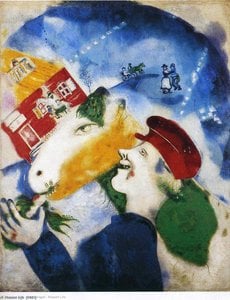
Study for the painting Rain

Marc Chagall’s evocative Study for Rain captures a lively rural scene brimming with fantastical elements—a man walking alongside a goat atop a thatched roof—reflecting the artist's signature dreamlike style and rooted in his Belarusian heritage. Explore this captivating masterpiece and bring its vibrant beauty into your home.

Explore o universo artístico de Marc Chagall (1887-1985), pintor russo-francês renomado por suas obras surrealistas, temas folclóricos judaicos e vitrais impressionantes! Descubra seu legado único.

Giclée / Impressão de Arte

Impressão giclée ou em tela de qualidade de museu, com produção rápida e opções flexíveis de acabamento. (Comprar pintura feita à mão Comprar pintura feita à mãoComprar imagem Comprar imagem)

P118B $10
P118H $10
P118W $10
P438Z $10
P508JH $12
P508YH $12
P805H $10
P805Z $10
P919BZ $10
P919G $10
P919XJ $10
P959ZH $10
P968JZ $12
W106C $8
W218G $10
W218JH $8
W218Y $10
W307PJ $10
W316G $10
W316PJ $8
W316Y $10
W398PJ $8
W4111J $10
W500HY $15
W500JH $15
W692G $12
W849H $8
W940BG $15
W953PJ $8

Tamanho padrão
personalizado
CM
INCH

Escolha entre os nossos tamanhos pré-definidos que respeitam as proporções originais da obra de arte.

largura
altura

Você pode inserir suas próprias dimensões para se ajustar a uma moldura ou espaço específico. Se o tamanho selecionado não corresponder às proporções da imagem original, iremos recortar a obra de arte ou estender a imagem com uma borda espelhada ou preenchimento sólido. Um mockup digital será enviado para sua aprovação antes do início da produção.
Por favor, observe que a visualização na tela não reflete o recorte ou a extensão real. Apenas o mockup mostrará com precisão a composição final.
Embora tamanhos personalizados estejam disponíveis, recomendamos selecionar uma dimensão da lista predefinida para preservar as proporções originais.

Entrega mundial () em 2 semanas, em vez das 4/5 semanas padrão. (2 Setembro)

why_choose_icon
Envio expresso gratuito para todo o mundo
why_choose_icon
Tela de Linho de Alta Qualidade
why_choose_icon
Seguro de transporte completo
why_choose_icon
Garantia de Reembolso de Impostos Alfandegários
why_choose_icon
Garantia de Fidelidade Cromática
why_choose_icon
Política de Devolução em 60 Dias (Apenas para Defeitos)
why_choose_icon
Garantia de reembolso de 100%
why_choose_icon
Oferta de desconto por quantidade

Preço Total

$ 68

reproduction

Study for the painting Rain

Giclée / Impressão de Arte

Tamanho da Reprodução

-

Preço Total

$ 68

Informações Rápidas

  • Year: 1911
  • Artistic style: Expressionism
  • Subject or theme: Rural life; Folklore
  • Artist: Marc Chagall
  • Influences: Russian Symbolism
  • Medium: Oil on canvas
  • Notable elements or techniques: Symbolic imagery; Surrealist influences

A Window Into Vitebsk’s Soul: Exploring Chagall's Study for Rain

Marc Chagall’s “Study for the Painting Rain,” created in 1911, is far more than a mere depiction of a passing storm; it is an exquisitely crafted distillation of memory and emotion—a testament to one of the most singular artistic visions of the twentieth century. Painted during his formative years amidst the vibrant cultural tapestry of Vitebsk, Belarus, this preparatory sketch anticipates the grandeur of his later monumental masterpieces. It offers an invaluable glimpse into the genesis of a style that would eventually redefine modern art. The artwork immediately captivates the viewer with its audacious palette—a riot of yellows, blues, reds, and greens—that represents a deliberate departure from academic conventions, signaling Chagall’s bold embrace of Fauvist principles.

The technique employed in this piece reflects a profound sense of immediacy and movement. Using oil on canvas, Chagall utilized a loose brushstroke technique that prioritizes expressive gesture over meticulous, photographic detail. This approach lends the painting an ethereal, almost translucent quality, mirroring the dreamlike atmosphere he sought to convey. The texture of the paint itself seems to dance across the surface, creating a sense of fluidity that mimics the very rain it describes. For collectors and interior designers, this piece offers a dynamic energy; its movement makes it a perfect focal point for spaces that require a touch of whimsy and intellectual depth.

Symbolism and the Tapestry of Memory

As the eye wanders through the composition, the scene unfolds with remarkable dynamism. A solitary man strides purposefully along a path leading towards a humble house adorned with a thatched roof—a poignant reference to Chagall’s childhood home and the tight-knit Jewish community of Vitebsk. The inclusion of a goat perched atop the roof is not merely a whimsical detail but an element laden with deep symbolic significance; in Hasidic folklore, goats often represent fertility and abundance, subtly reinforcing themes of renewal and resilience amidst the inclement weather. Scattered figures, including individuals clutching umbrellas, populate the landscape, creating a sense of communal experience that grounds the surreal elements in human reality.

Adding another layer of complexity to this dreamscape is the presence of a clock visible in the upper right corner. This subtle inclusion hints at the relentless passage of time and perhaps reflects Chagall’s lifelong preoccupation with Jewish tradition, ritual observance, and the cyclical nature of life. The painting functions as a bridge between the tangible world of the artist's upbringing and the limitless realm of his imagination. It is this tension between the grounded reality of a village scene and the soaring spirit of expressionism that gives the work its enduring emotional impact.

An Invitation to a Dreamlike Realm

To possess or display a reproduction of this study is to invite a piece of art history into one's personal sanctuary. The work does not merely sit upon a wall; it breathes with the rhythm of a dream, inviting the observer to abandon the constraints of gravity and enter a world where color speaks the language of the soul. For those seeking inspiration in their decor, "Study for the Painting Rain" provides a sophisticated balance of bold, modern color theory and profound, nostalgic storytelling. It is an ideal acquisition for anyone who appreciates art that transcends the visual to touch the spiritual, offering a permanent window into a universe where memory, folklore, and light dance in eternal motion.


Biografia do Artista

A Life Painted in Dreams: The World of Marc Chagall

Marc Chagall, born Moishe Shagal in 1887 in the small Belarussian town of Liozna near Vitebsk, wasn’t merely a painter; he was a poet of color, a weaver of dreams, and a chronicler of memory. His life, spanning nearly a century, mirrored the tumultuous currents of the 20th century, yet his art remained steadfastly rooted in a deeply personal vision—one infused with the folklore of his Hasidic Jewish upbringing and an unwavering belief in the power of imagination. Vitebsk itself was more than just a birthplace; it became the emotional core of his artistic universe, a recurring motif populated by flying figures, whimsical animals, and the vibrant hues of remembered landscapes. The town’s unique blend of cultures—Russian Orthodox churches alongside bustling Jewish marketplaces—forged an aesthetic sensibility that would defy easy categorization throughout his long career. Though he sought formal training first with a local sign painter and later in St. Petersburg under Léon Bakst, and then in Paris at the Académie de la Grande Chaumière, Chagall never fully embraced any single artistic movement. He absorbed elements of Cubism, Symbolism, and Fauvism, but always filtered them through his own intensely personal lens, creating a style that was uniquely, unmistakably Chagall.

Early Influences and Artistic Beginnings

Chagall’s formative years were marked by the traditions of Vitebsk’s Jewish community—a vibrant tapestry woven with religious rituals, folk tales, and ancestral memories. These influences profoundly shaped his artistic sensibility, informing his use of symbolism and his fascination with biblical narratives. His initial training encompassed practical skills honed in the craft of sign painting, followed by a more structured education at St. Petersburg Academy of Art under Léon Bakst, where he encountered the avant-garde spirit of Russian Symbolism. However, Chagall’s artistic path diverged from conventional academic pursuits. He prioritized experimentation and intuition over technical precision, rejecting rigid stylistic constraints in favor of expressive freedom. Paintings like I and the Village (1911) exemplify this approach—a deliberate departure from realistic representation that prioritizes emotional resonance and evocative imagery. The fragmented composition captures not just a landscape but also the artist’s subjective experience of place and time, foreshadowing his signature style.

The Symbolist Vision: Color and Emotion

Chagall's artistic language quickly developed into one characterized by bold color palettes and emotionally charged imagery. He eschewed naturalistic hues in favor of vibrant shades—deep blues, fiery reds, luminous yellows—that conveyed feeling rather than factual accuracy. Figures appear to float or dance across the canvas, defying gravity and logic, creating a dreamlike atmosphere that invites viewers into his inner world. This stylistic technique wasn’t merely decorative; it was integral to Chagall's artistic philosophy—a conviction that art should transcend mere imitation of reality and capture the essence of human experience. Recurring motifs—flying figures, musical instruments, animals—became emblems of Chagall’s worldview, reflecting his spiritual beliefs and his fascination with folklore. These symbols weren’t presented in a didactic manner but rather interwoven into complex compositions that demanded contemplation and interpretation.

The Revolution and Vitebsk Revisited

The Russian Revolution dramatically altered Chagall's life trajectory, returning him to Vitebsk—the town that had nurtured his artistic imagination since childhood. During this period, he actively participated in cultural initiatives aimed at revitalizing Jewish identity and fostering artistic creativity. He established an art school alongside Aleksandr Rodchenko, attracting young artists from across Russia who embraced the avant-garde spirit of the era. However, Chagall’s engagement with Soviet culture was fraught with tensions—a clash between his artistic vision and the ideological imperatives of the regime. Despite these challenges, he continued to produce groundbreaking works that explored themes of exile, faith, and human dignity.

International Recognition and Artistic Legacy

Chagall's reputation soared internationally after World War II, attracting commissions from prominent patrons and securing exhibitions in major museums around the globe. He relocated to Paris in 1940, where he remained until his death in 1985—a period marked by prolific artistic output and profound personal reflection. His monumental stained glass windows for the Hadassah Hebrew University Medical Center synagogue in Jerusalem stand as a testament to his enduring influence on Jewish culture and spirituality. Furthermore, his paintings like Over Vitebsk (1920-1922) and White Crucifixion (1938) continue to resonate with audiences worldwide—powerful expressions of emotion and imagination that transcend cultural boundaries. Chagall’s legacy extends beyond his artistic creations; it resides in the enduring power of his vision—a vision that celebrates love, memory, and the boundless possibilities of the human spirit. He left behind a body of work that is both deeply personal and universally accessible, inviting viewers to lose themselves in a world painted with dreams and illuminated by hope.
Marc Chagall

Marc Chagall

1887 - 1985 , Belarus

Dados Rápidos

  • Artistic Movement Or Style: Cubismo, Surrealismo
  • Artists Or Movements Influenced By This Artist:
    • Surrealismo
    • Modern artistas
  • Artists Who Influenced This Artist:
    • Bakst
    • Delaunay
    • Borovikovsky
  • Date Of Birth: 6 julho 1887
  • Date Of Death: 28 março 1985
  • Full Name: Marc Chagall
  • Nationality: Russo-Francês
  • Notable Artworks:
    • I e a Vila
    • Sobre Vitebsk
  • Place Of Birth: Liozna, Bielorrússia
Explore obras de arte organizadas por temas, estilos e características.