Óleo sobre tela pintado à mão no tamanho e moldura de sua escolha, feito sob encomenda pelos nossos artistas. ( Comprar impressão Comprar imagem)





























Escolha entre os nossos tamanhos pré-definidos que respeitam as proporções originais da obra de arte.

Pode inserir as suas próprias dimensões para se adequar a uma moldura ou espaço específico. Se o tamanho selecionado não corresponder às proporções da imagem original, iremos cortar a obra de arte ou estender a pintura com elementos adicionais pintados à mão. Um esboço digital será enviado para sua aprovação antes do início da produção.
Tenha em atenção que a pré-visualização no ecrã não reflete o corte ou extensão real. Apenas o esboço mostrará com precisão a composição final.
Embora tamanhos personalizados estejam disponíveis, recomendamos selecionar uma dimensão da lista predefinida para preservar as proporções originais.
Entrega mundial () em 3 a 4 semanas, em vez das 5 semanas padrão. (6 Setembro). Sem comprometer a qualidade.


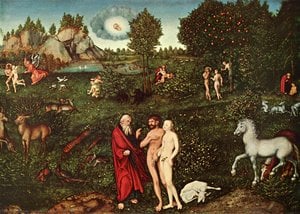
Adam and Eve
Tamanho da Reprodução
Lucas Cranach the Elder's “Adam and Eve,” painted in 1528, is more than just a depiction of a biblical narrative; it’s a profound meditation on human fallibility, temptation, and the very essence of our relationship with nature. Executed during a period of intense religious and social transformation – the early years of the Reformation – this oil painting embodies the spirit of the Northern Renaissance, showcasing Cranach's mastery of color, composition, and psychological realism. The scene unfolds with a quiet intensity: Adam and Eve stand before the Tree of Knowledge, their nakedness a deliberate statement against the imposed shame, while Eve holds the forbidden fruit, an emblem of both knowledge and transgression. The artist’s meticulous attention to detail – from the delicate rendering of the leaves adorning their bodies to the subtle expressions on their faces – creates a palpable sense of vulnerability and drama, drawing the viewer into this pivotal moment in human history.
Cranach's skill as a painter is immediately apparent in “Adam and Eve.” He employs a vibrant, almost jewel-toned palette – deep reds, rich greens, and earthy browns – to create a visually arresting image. The artist’s brushwork is remarkably precise, particularly evident in the rendering of the figures’ musculature and the intricate details of the tree itself. He utilizes sfumato, a technique perfected by Leonardo da Vinci, to soften edges and create an atmospheric haze, adding depth and realism to the composition. This meticulous approach, combined with his understanding of light and shadow, elevates the painting beyond a simple illustration; it becomes a carefully constructed exploration of human emotion and form. The use of oil paint allowed for layering and blending, creating textures and tones that were previously unattainable with tempera.
The symbolism within “Adam and Eve” is layered and complex. The Tree of Knowledge represents not just forbidden knowledge but also the potential for enlightenment and understanding – a concept central to the Reformation’s challenge to papal authority. Eve's act of taking the fruit symbolizes humanity’s inherent desire for autonomy, even in defiance of divine command. The leaves covering Adam and Eve’s bodies are more than mere decorative elements; they represent their initial state of innocence and modesty, tragically lost through temptation. The dark background further emphasizes the figures, creating a dramatic contrast that heightens the emotional impact of the scene.
"Adam and Eve" was created during a period of immense social and religious upheaval in Europe. Cranach’s work reflects this turmoil, engaging with themes of faith, doubt, and rebellion against established authority. The painting's enduring appeal lies not only in its artistic merit but also in its timeless exploration of fundamental human questions – questions that continue to resonate today. As a cornerstone of Northern Renaissance art, it offers a powerful window into the intellectual and spiritual landscape of 16th-century Germany, and its themes of temptation and consequence remain universally relevant. This artwork’s legacy extends far beyond its original context, solidifying its place as a masterpiece of Western art history.


1472 - 1553 , Alemanha

Discover the profound allure of oil on canvas. Explore the mastery of impasto textures, the science of pigment longevity, and expert guides to selecting museum-quality reproductions that elevate your collection with timeless elegance and tactile depth.

 Visualizar na parede
 Compartilhar
 Compartilhar
 Detalhes

 Baixar imagem
 Semelhantes
 Raio X
 Slideshow

 Ler mais







 A opção de vidro está disponível apenas para tamanhos inferiores a 110 cm