Obtenha um arquivo pronto para impressão que vai muito além da visualização na web. Cada imagem digital que vendemos provém de um arquivo mestre de alta resolução em nosso banco de dados — geralmente entre 5.000 e 15.000 pixels de largura — para que você possa imprimir em grandes formatos, realizar cortes precisos ou reproduzir detalhes minuciosos com total confiança.
Nenhum arquivo sai do nosso estúdio sem passar por um cuidadoso processo de revisão. Um especialista digital verifica as cores em relação à pintura original e as corrige se necessário, aumentando então a clareza e o detalhe com ferramentas profissionais de retoque — sempre mantendo a fidelidade às pinceladas e ao estilo do artista. O resultado é uma imagem que se assemelha à pintura, e não a um scan com filtros.
Aprovação antes da finalização: nosso especialista enviará a imagem por e-mail em até 72 horas para sua revisão. Não ficou satisfeito? Solicite melhorias ou correções, ou peça o reembolso caso a qualidade não atenda às suas expectativas.
Esta é a qualidade em que confiam editoras, estúdios de design, galerias e gráficas.
Baixe um arquivo de alta resolução para exibição pessoal, impressão e projetos criativos. ( Alternar para Impressão Comprar pintura feita à mão)
Ao escolher o WahooArt.com, você não está apenas adquirindo uma imagem — você está recebendo uma obra de arte digital profissionalmente aprimorada, elaborada com precisão e com garantia de satisfação. Aqui está tudo o que acompanha seu pedido, automaticamente:
O seu arquivo de imagem digital em alta resolução será enviado por e-mail em até 72 horas após o pedido — pronto para uso imediato.
Sua obra de arte é otimizada profissionalmente por meio de ferramentas avançadas de IA e edição manual, garantindo o máximo de detalhes, clareza e precisão de cores.
Apagou ou perdeu o seu ficheiro acidentalmente? Não se preocupe – nós reenviamos para si a qualquer momento, gratuitamente.
Desfrute da sua obra de arte instantaneamente, sem taxas alfandegárias, impostos ou custos de entrega — downloads digitais são sempre isentos de taxas.
Garantimos que sua imagem digital reflita as cores originais com a maior fidelidade possível, utilizando ferramentas profissionais e gerenciamento de cores.
Se não estiver satisfeito com a sua imagem digital, nós a revisaremos ou reembolsaremos 100% dentro de 100 dias — sem perguntas.
Não está satisfeito? Receba o reembolso total em até 100 dias após o recebimento do seu arquivo digital — sem perguntas.
Compre 3 imagens, economize 10% - Compre 5, economize 15% - Compre 10+, economize 20%. Ideal para projetos criativos, galerias e agências.
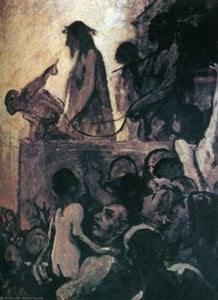
In the profound depths of 1925, a year that marked both a creative zenith and the final chapter for the German master Lovis Corinth, there emerged a work of staggering emotional intensity: Ecce Homo. This oil on canvas masterpiece, currently housed within the prestigious Kunstmuseum Basel, serves as a visceral window into one of history's most poignant moments. The painting captures the biblical moment of "Behold the Man," presenting a scene that transcends mere religious iconography to touch upon the universal essence of human vulnerability and resilience. Through his masterful command of the medium, Corinth invites the viewer into a space where the divine and the mortal collide under a heavy, atmospheric sky.
The composition is a masterclass in dramatic tension, centered around the figure of Jesus Christ, whose presence dominates the canvas with a quiet yet overwhelming gravity. Adorned with the crown of thorns, he stands flanked by two other figures, creating a triangular stability that is paradoxically disrupted by the raw, expressive energy of the brushwork. Corinth utilizes chiaroscuro—the dramatic interplay of light and shadow—to sculpt the forms of the men, lending them a sculptural weight that feels almost tangible. This technique does more than create depth; it directs the eye through a landscape of sorrow, where the stark highlights on the central figure’s face contrast sharply with the encroaching darkness, mirroring the spiritual struggle at the heart of the narrative.
Beyond the human drama, Corinth weaves subtle layers of symbolism into the periphery of the scene to enhance its dynamic movement. In the background, the presence of two horses and the delicate silhouettes of three birds drifting in the sky introduce a sense of life continuing amidst the tragedy. These elements provide a breath of naturalism that prevents the painting from becoming purely a study of grief, instead grounding the crucifixion in a living, breathing world. The artist’s ability to synthesize the structured traditions of Impressionism with the raw, emotive power of Expressionism allows the background to pulse with an almost restless energy, ensuring that every inch of the 190 x 150 cm canvas vibrates with life.
For the discerning collector or interior designer, a reproduction of Ecce Homo offers more than just a decorative element; it provides a profound focal point for any curated space. The painting’s rich textures and somber palette make it an ideal centerpiece for rooms designed to evoke contemplation, sophistication, and depth. Whether placed in a quiet study or a grand gallery-style living area, the work commands attention through its historical significance and its ability to stir the soul. Owning a high-quality hand-painted reproduction allows one to bring the heavy, transformative atmosphere of Corinth’s late period into the modern home, serving as a timeless reminder of the beauty found within the most profound human struggles.
"Ecce Homo" retrata crucifixion, jesus christ, crown of thorns, religious art, biblical scene, chiaroscuro, enquanto os temas recorrentes de Lovis Corinth são impressionism and expressionism, crucifixion of jesus christ, religious themes, late expressive style, synthesis of styles. A comparação entre ambos revela como a obra se relaciona com os temas habituais do artista.
"Ecce Homo", criado em 1925, pertence ao Late Period da carreira de Lovis Corinth.
"Ecce Homo" conecta o movimento Expressionism a Holanda por meio do local de nascimento de seu criador.


1858 - 1925 , Holanda
 Visualizar na parede
 Compartilhar
 Compartilhar
 Detalhes
 Guia
Guia

 Baixar imagem
 Semelhantes
 Raio X
 Ver diaporama
 Perguntas e Respostas
 Estatísticas

 Ler mais