Visualizar na parede Visualizar em RA Comprar pintura feita à mão Alternar para Imagem Digital Compartilhar
Detalhes Guia Adicionar aos favoritos Baixar imagem Semelhantes Raio X Ver diaporama Q&A Estatísticas

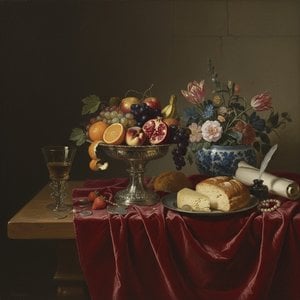
The Fruit and Vegetable Costermonger

Experience the vibrant beauty of Louise Moillon's 'The Fruit and Vegetable Costermonger'! This 1631 masterpiece showcases exquisite detail & rich colors, capturing a bustling Parisian market scene.

Descubra Louise Moillon: pintora de naturezas-mortas barrocas conhecida por detalhes requintados e arranjos de frutas luminosos. Explore suas composições elegantes da França do século XVII.

Giclée / Impressão de Arte

Impressão giclée ou em tela de qualidade de museu, com produção rápida e opções flexíveis de acabamento. ( Comprar pintura feita à mão Alternar para Imagem Digital)

Corner sample of the P118B picture frame: poliestireno moldado, 5 cm wide and 3 cm thick
P118B €10
Corner sample of the P118H picture frame: poliestireno moldado, 5 cm wide and 3 cm thick
P118H €10
Corner sample of the P118W picture frame: poliestireno moldado, 5 cm wide and 3 cm thick
P118W €10
Corner sample of the P438Z picture frame: poliestireno moldado, 5.5 cm wide and 3.5 cm thick
P438Z €10
Corner sample of the P508JH picture frame: poliestireno moldado, 7 cm wide and 3.5 cm thick
P508JH €12
Corner sample of the P508YH picture frame: poliestireno moldado, 7 cm wide and 3.5 cm thick
P508YH €12
Corner sample of the P805H picture frame: poliestireno moldado, 5 cm wide and 3.5 cm thick
P805H €10
Corner sample of the P805Z picture frame: poliestireno moldado, 5 cm wide and 3.5 cm thick
P805Z €10
Corner sample of the P919BZ picture frame: poliestireno moldado, 7 cm wide and 3.5 cm thick
P919BZ €10
Corner sample of the P919G picture frame: poliestireno moldado, 7 cm wide and 3.5 cm thick
P919G €10
Corner sample of the P919XJ picture frame: poliestireno moldado, 7 cm wide and 3.5 cm thick
P919XJ €10
Corner sample of the P959ZH picture frame: poliestireno moldado, 5 cm wide and 3 cm thick
P959ZH €10
Corner sample of the P968JZ picture frame: poliestireno moldado, 6 cm wide and 4 cm thick
P968JZ €12
Corner sample of the W106C picture frame: madeira maciça, 5 cm wide and 3 cm thick
W106C €8
Corner sample of the W218G picture frame: madeira maciça, 5 cm wide and 3 cm thick
W218G €10
Corner sample of the W218JH picture frame: madeira maciça, 5 cm wide and 3 cm thick
W218JH €8
Corner sample of the W218Y picture frame: madeira maciça, 5 cm wide and 3 cm thick
W218Y €10
Corner sample of the W307PJ picture frame: madeira maciça, 6 cm wide and 3 cm thick
W307PJ €10
Corner sample of the W316G picture frame: madeira maciça, 6 cm wide and 3 cm thick
W316G €10
Corner sample of the W316PJ picture frame: madeira maciça, 6 cm wide and 3 cm thick
W316PJ €8
Corner sample of the W316Y picture frame: madeira maciça, 6 cm wide and 3 cm thick
W316Y €10
Corner sample of the W398PJ picture frame: madeira maciça, 5 cm wide and 3 cm thick
W398PJ €8
Corner sample of the W4111J picture frame: madeira maciça, 6.5 cm wide and 3.5 cm thick
W4111J €10
Corner sample of the W500HY picture frame: madeira maciça, 7 cm wide and 5 cm thick
W500HY €15
Corner sample of the W500JH picture frame: madeira maciça, 7 cm wide and 5 cm thick
W500JH €15
Corner sample of the W692G picture frame: madeira maciça, 8 cm wide and 4 cm thick
W692G €12
Corner sample of the W849H picture frame: madeira maciça, 5 cm wide and 3 cm thick
W849H €8
Corner sample of the W940BG picture frame: madeira maciça, 7.5 cm wide and 4.5 cm thick
W940BG €15
Corner sample of the W953PJ picture frame: madeira maciça, 6 cm wide and 3.5 cm thick
W953PJ €8

Tamanho padrão
personalizado
CM
INCH

Escolha entre os nossos tamanhos pré-definidos que respeitam as proporções originais da obra de arte.

largura
altura

Insira a largura e a altura desejadas para se ajustarem à sua moldura ou parede. Uma impressão pode ser apenas cortada, nunca ampliada além da imagem original; portanto, um tamanho com proporções diferentes resultará na perda de parte da imagem. Enviamos uma maquete digital para sua aprovação antes de realizarmos a impressão. A imagem exibida nesta página não mostra o corte real — apenas a maquete o faz.

Entrega mundial () em 2 semanas, em vez das 4/5 semanas padrão. (30 Outubro)

Envio expresso gratuito para todo o mundo
Tela de Linho de Alta Qualidade
Seguro de transporte completo
Garantia de Reembolso de Impostos Alfandegários
Garantia de Fidelidade Cromática
Política de Devolução em 100 Dias (Apenas para Defeitos)
Garantia de reembolso de 100%
Oferta de desconto por quantidade

Preço Total

€ 60

The Fruit and Vegetable Costermonger

Giclée / Impressão de Arte

Tamanho da Reprodução

-

Preço Total

€ 60

Informações Rápidas

  • Subject or theme: Market scene, produce
  • Influences: Flemish painting
  • Location: Louvre, Paris
  • Year: 1631
  • Artist: Louise Moillon
  • Movement: Baroque

The Fruit and Vegetable Costermonger: A Window into 17th-Century Parisian Life

Louise Moillon’s “The Fruit and Vegetable Costermonger,” painted in 1631, is more than just a still life; it's a vibrant snapshot of daily life in 17th-century Paris. This remarkable work, now housed within the Louvre Museum, offers a captivating glimpse into the bustling markets and social dynamics of a city undergoing significant transformation. Moillon’s masterful technique and keen observation elevate this seemingly simple scene to a level of profound artistic merit, revealing layers of symbolism and historical context that continue to intrigue art historians today.

Born into a family steeped in artistic tradition – her father, Nicolas Moillon, was himself a respected painter – Louise Moillon benefited from an early exposure to the principles of observation and representation. Raised within the Huguenot community of Saint-Germain-des-Prés, she inherited a sensibility that valued naturalism and detail, qualities deeply rooted in the artistic heritage of the Netherlands, where many of her family members had sought refuge. This background profoundly shaped her style, imbuing her paintings with an understated elegance and a meticulous attention to the textures and colors of everyday objects.

A Symphony of Color and Light

Moillon’s skill lies not just in her ability to depict fruit and vegetables realistically, but in her masterful manipulation of light and shadow – a technique known as *chiaroscuro*. The painting is dominated by a warm, diffused light that seems to emanate from an unseen source, bathing the table and its contents in a golden glow. This careful use of light not only enhances the visual appeal of the scene but also creates a sense of depth and volume, drawing the viewer into the heart of the market stall. Notice how she uses highlights to emphasize the smooth skin of the peaches, the glossy sheen of the oranges, and the delicate veins in the leaves – each detail rendered with exquisite precision.

The composition itself is carefully balanced, creating a sense of harmony and order amidst the apparent chaos of the market scene. The arrangement of the fruits and vegetables—the abundance of apples, the vibrant hues of the oranges, the contrasting textures of the broccoli—is deliberately asymmetrical, adding to the painting’s dynamism and visual interest. The inclusion of the two women, seemingly engaged in a transaction, subtly introduces an element of human interaction into this otherwise still-life tableau, grounding the scene in the realities of daily life.

Symbolism and Social Commentary

Beyond its aesthetic qualities, “The Fruit and Vegetable Costermonger” is rich in symbolic meaning. The presence of the costermonger – a street vendor selling fruits and vegetables—reflects the growing commercial activity in Paris during the 17th century. The painting can be interpreted as a commentary on the social hierarchy of the time, with the wealthy women observing the proceedings from their elevated position while the costermonger provides sustenance for the masses. The abundance of fruit and vegetables also carries symbolic weight, representing prosperity, fertility, and the bounty of nature – themes that were particularly resonant during a period marked by both religious upheaval and economic growth.

Furthermore, Moillon’s decision to depict these fruits and vegetables at their peak ripeness—without any signs of decay or spoilage—is noteworthy. This deliberate choice challenges the traditional *memento mori* (remember you must die) motif prevalent in Dutch still-life paintings of the era, which often featured decaying fruit as a reminder of mortality. Instead, Moillon celebrates the beauty and vitality of life, capturing a fleeting moment of abundance and pleasure.

A Timeless Masterpiece

“The Fruit and Vegetable Costermonger” stands as a testament to Louise Moillon’s artistic genius and her ability to capture the essence of a particular time and place. Her meticulous attention to detail, masterful use of light and shadow, and subtle symbolic meanings combine to create a work that is both visually stunning and intellectually stimulating. Today, this painting continues to captivate viewers with its vibrant colors, dynamic composition, and profound insights into the social and cultural landscape of 17th-century Paris – a timeless masterpiece that offers a unique window into the past.

Perguntas e Respostas

Em que ano foi criado "The Fruit and Vegetable Costermonger"?

"The Fruit and Vegetable Costermonger", de Louise Moillon foi criado em 1631.

As cores de "The Fruit and Vegetable Costermonger" são vibrantes ou suaves?

As cores de "The Fruit and Vegetable Costermonger", de Louise Moillon apresentam uma saturação Muted com uma intensidade Monochromatic.

"The Fruit and Vegetable Costermonger", de Louise Moillon é uma pintura, um desenho ou uma gravura?

"The Fruit and Vegetable Costermonger", de Louise Moillon é classificado como WallArt. A categoria descreve o tipo de obra de arte que a peça original representa.


Biografia do Artista

O Brilho Sereno de Louise Moillon

Nas grandes e grandiosas narrativas da era Barroca, onde o drama e o movimento frequentemente dominam a tela, a obra de Louise Moillon oferece uma alternativa profunda e meditativa. Nascida em Paris em 1610, Moillon emergiu de um mundo moldado pelas intensas mudanças religiosas e culturais da França do século XVII. Sua própria linhagem conta uma história de resiliência e herança artística; como descendente de refugiados huguenotes da Holanda, ela estava imersa em uma tradição que valorizava a observação meticulosa do mundo natural. Esse histórico proporcionou mais do que apenas uma história familiar — ofereceu um vocabulário estilístico enraizado no domínio holandês da luz, da textura e do realismo simbólico.

A vida de Moillon foi marcada tanto pela perda quanto por uma profunda mentoria artística. A morte de seu pai, o pintor de paisagens e marchand Nicolas Moillon, quando ela tinha apenas dez anos, poderia ter alterado seu caminho, mas sua criação permaneceu profundamente inserida nas artes. Sob a orientação de seu padrasto, François Garnier, um habilidoso artista e marchand, ela refinou uma técnica que se tornaria sua marca registrada. Sua educação não consistia meramente na aplicação de pigmento à tela, mas em uma imersão nos valores humanistas de sua época, aprendendo a enxergar o divino nos detalhes minucios de uma fruta amadurecendo ou na curva delicada de uma pétala.

Um Domínio de Textura e Luz

O verdadeiro gênio de Moillon reside em sua capacidade de transformar o mundano em extraordinário. Suas composições são caracterizadas por uma quietude serena, um silêncio que convida o espectador a demorar-se e observar. Ela possuía uma habilidade quase sobrenatural de capturar as qualidades táteis de seus temas — a pele cerosa de um cidro, a penugem macia de um pêssego ou o suco translúcido de uma baga esmagada. Em obras como Natureza-Morta de Cidras e Laranjas de Curaçao em um Prato Branco Polilobado, é possível sentir a umidade fresca da fruta contra a superfície dura e vidrada da porcelana, criando uma experiência sensorial que transcende o plano bidimensional.

Sua técnica foi profundamente influenciada pelas tradições naturalistas dos círculos protestantes nos quais ela circulava. Essa abordagem favorecia a clareza e a precisão em vez das sombras teatrais dos mestres barrocos mais extravagantes. Em vez disso, Moillon utilizava a luz para esculpir seus temas, empregando gradações sutis de tom para criar volume e profundidade. Sua paleta, embora frequentemente focada nos tons vibrantes da natureza, era utilizada com tamanha contenção que cada cor parecia luminosa, como se iluminada por dentro. Esse domínio permitiu-lhe preencher a lacuna entre a mera ilustração botânica e a alta arte, imbuindo cada peça com um senso de vida e vitalidade.

Legado e Significância Histórica

Ao longo de sua longa vida, que abrangeu quase nove décadas, Moillon alcançou um nível de renome raro para as artistas mulheres de sua era. Sua capacidade de garantir encomendas de patronos prestigiados, incluindo membros da corte real, atesta a qualidade e a sofisticação inegáveis de sua obra. Embora seu trabalho focasse frequentemente na escala íntima da natureza-morta, seu impacto foi expansivo, contribuindo significativamente para o desenvolvimento da tradição francesa de naturezas-mortas.

A importância histórica de Louise Moillon estende-se além de sua habilidade técnica; ela representa um elo vital entre a tradição naturalista holandesa e a estética francesa emergente do século XVII. Suas pinturas servem como janelas para um mundo perdido de mercados parisienses e jardins privados, capturando uma sensação de abundância e beleza efêmera. Hoje, suas obras permanecem como tesouros preciosos em instituições como o Louvre, erguendo-se como testemunhos duradouros de uma vida dedicada a encontrar o extraordinário dentro do comum. Seu legado encontra-se em cada pincelada que celebra o esplendor silencioso e de tirar o fôlego do mundo natural.

Louise Moillon

Louise Moillon

1610 - 1696 , França

Dados Rápidos

  • Artistic Movement Or Style: Natureza-Morta Barroca
  • Artists Or Movements Influenced By This Artist:
    • Michelangelo
    • Rafael
    • Ticiano
  • Artists Who Influenced This Artist:
    • Isaac Moillon
    • François Garnier
  • Date Of Birth: Paris, França (1610)
  • Date Of Death: 1696
  • Full Name: Louise Moillon
  • Nationality: Francesa
  • Notable Artworks:
    • Cesta de Damascos
    • COUPE DE CERISES, PRUNES ET MELON
    • Cesta de Pêssegos, com Marmelos e Ameixas
  • Place Of Birth: Paris