Consultoria de arte gratuita

x
Encomendar pintura Encomendar pinturaComprar imagem em alta resolução Comprar imagem em alta resolução EnviarEnviar
Detalhes da obraDetalhes da obra Adicionar aos favoritos Adicionar aos favoritos BaixarBaixar SemelhantesSemelhantes Raio XRaio X SlideshowSlideshow

O Homem

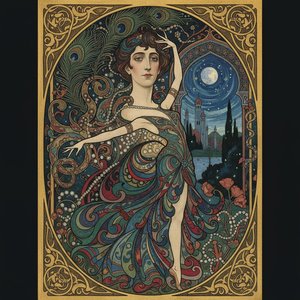
Uma obra-prima de Léon Bakst! Este retrato estilizado em tons terrosos captura a essência da arte cubista e apresenta uma composição dinâmica, evocando o teatro russo do início do século XX.

Léon Bakst (1866-1924) foi um pintor e cenógrafo russo revolucionário, conhecido por seus designs exuberantes para os Ballets Russes, que misturam Art Nouveau e influências orientais, transformando o design teatral e inspirando a estética Art Déco.

Giclê / Impressão de Arte

Impressão giclée ou em tela de qualidade de museu, com produção rápida e opções flexíveis de acabamento.

P118B $10
P118H $10
P118W $10
P438Z $10
P508JH $12
P508YH $12
P805H $10
P805Z $10
P919BZ $10
P919G $10
P919XJ $10
P959ZH $10
P968JZ $12
W106C $8
W218G $10
W218JH $8
W218Y $10
W307PJ $10
W316G $10
W316PJ $8
W316Y $10
W398PJ $8
W4111J $10
W500HY $15
W500JH $15
W692G $12
W849H $8
W940BG $15
W953PJ $8

Standard
custom
CM
INCH

Escolha entre os nossos tamanhos pré-definidos que respeitam as proporções originais da obra de arte.

largura
altura

Você pode inserir suas próprias dimensões para se ajustar a uma moldura ou espaço específico. Se o tamanho selecionado não corresponder às proporções da imagem original, iremos recortar a obra de arte ou estender a imagem com uma borda espelhada ou preenchimento sólido. Um mockup digital será enviado para sua aprovação antes do início da produção.
Por favor, observe que a visualização na tela não reflete o recorte ou a extensão real. Apenas o mockup mostrará com precisão a composição final.
Embora tamanhos personalizados estejam disponíveis, recomendamos selecionar uma dimensão da lista predefinida para preservar as proporções originais.

Entrega mundial () em 2 semanas, em vez das 4/5 semanas padrão. (7 Julho)

why_choose_icon
Envio Expresso Gratuito para todo o Mundo
why_choose_icon
Tela de Linho Premium
why_choose_icon
Seguro de envio completo
why_choose_icon
Garantia de Reembolso de Impostos Alfandegários
why_choose_icon
Garantia de Fidelidade de Cores
why_choose_icon
Política de Devolução de 60 Dias (Apenas para Defeitos)
why_choose_icon
Garantia de 100% de Reembolso
why_choose_icon
Desconto para múltiplas unidades

Preço Total

-

reproduction

O Homem

Giclê / Impressão de Arte

Dimensões da Reprodução

-

Preço Total Final

-

Dados Rápidos

  • Notable elements or techniques: Fragmented forms & dynamic composition
  • Subject or theme: Portrait
  • Year: 1910
  • Artistic style: Stylized portraiture
  • Movement: Cubism
  • Medium: Oil on canvas
  • Location: Private Collection

Teste de Arte

Cada pergunta possui apenas uma resposta correta.

Pergunta 1:
What artistic movement is Léon Bakst’s ‘Man’ primarily associated with?
Pergunta 2:
The photograph depicts a man wearing attire reminiscent of what historical period?
Pergunta 3:
Bakst created ‘Man’ for which influential theatrical company?
Pergunta 4:
What stylistic technique is evident in the depiction of the man’s clothing and background?
Pergunta 5:
Considering Bakst's artistic influences, where would one find similar stylistic approaches?

Descrição da Obra

Uma Visão Sobre o Trabalho de Léon Bakst: O Homem em Movimento

Léon Bakst, um nome que ressoa com força no universo da arte moderna russa e do teatro vanguardista, permanece uma figura fascinante para aqueles que apreciam a beleza da simplicidade estilizada e a capacidade da imagem para transmitir emoções profundas. Sua obra "O Homem" (1910), uma fotografia em preto e branco que captura um retrato masculino em roupas marrons sobrepostas por um vestuário verde, é mais do que apenas uma imagem congelada no tempo; ela representa um ponto de inflexão na estética artística da época e um testemunho da influência das ideias cubistas sobre o trabalho teatral. A imagem apresenta um homem em postura firme diante de uma parede ou fundo neutro, mãos atrás das costas – uma composição que convida à contemplação e à análise cuidadosa. Os detalhes do traje sugerem uma referência a estilos aristocráticos anteriores, evocando imagens de membros da corte imperial, o que adiciona uma camada adicional de significado histórico ao trabalho. Bakst não buscava apenas representar um indivíduo físico; ele queria comunicar uma sensação de presença, força e equilíbrio interno – valores que eram particularmente importantes para artistas da época que estavam desafiando as convenções tradicionais da pintura e escultura.

Estilo Cubista e Simplificação Formal

O estilo cubista, como Bakst o empregou, é caracterizado pela fragmentação das formas geométricas e pela apresentação de múltiplos pontos de vista simultaneamente. Essa abordagem radical rejeitou a perspectiva realista dominante na arte do século XIX e abraçou uma estética que buscava capturar a essência da realidade em vez de apenas reproduzi-la fielmente. Na fotografia "O Homem", essa influência é evidente na maneira como o rosto e o corpo são simplificados, reduzidos a elementos básicos que enfatizam os contornos e as áreas de sombra. Essa técnica deliberada não apenas demonstra o domínio técnico do artista, mas também reflete uma filosofia artística mais ampla que valoriza a abstração e a redução à sua forma essencial.

Contexto Histórico: O Teatro Vanguardista Russo

A criação da imagem ocorreu em um período crucial para o desenvolvimento do teatro russo – o início do século XX, marcado pela ascensão de movimentos como o Futurismo e pelo desejo de romper com as tradições teatrais estabelecidas. Léon Bakst era um membro ativo dessas iniciativas vanguardistas, colaborando intensamente com artistas como Sergei Eisenstein e Natalia Goncharova para criar obras inovadoras que exploravam novas formas de expressão artística. O trabalho teatral buscava desafiar os sentidos do público e estimular o pensamento crítico, utilizando elementos como movimentos rápidos, luzes dramáticas e cenários abstratos para criar experiências emocionais poderosas. "O Homem" pode ser visto como uma extensão dessa busca por inovação estética e uma celebração da beleza da simplicidade formal.

Simbolismo e Expressão Emocional

Embora aparentemente direto em sua composição, a imagem carrega consigo um simbolismo profundo que reflete os valores estéticos e filosóficos da época. A postura firme do homem transmite uma sensação de confiança e determinação, enquanto o uso de cores neutras – marrons e verdes – cria uma atmosfera calma e contemplativa. Essas escolhas estilísticas não são aleatórias; elas visam comunicar uma mensagem específica sobre a natureza humana e a busca pela beleza interior. Como resultado, "O Homem" permanece um trabalho que inspira reflexão e convida o espectador a considerar questões importantes sobre identidade, equilíbrio e expressão emocional – temas que continuam relevantes até hoje.

Biografia do Artista

Early Life and the Seeds of Artistic Rebellion

Born Leyb-Khaim Izrailevich Rosenberg in 1866, within the pale of settlement in Grodno—a city then part of the Russian Empire—Léon Bakst’s journey toward artistic renown was a compelling narrative woven with both innate talent and societal constraints. His family, though comfortably middle class, possessed connections to the imperial court through his grandfather, a celebrated tailor who enjoyed patronage from the Tsar. This background instilled in young Leyb a keen awareness of cultural nuances alongside an early passion for drawing, vividly demonstrated when he won a contest at just twelve years old. However, this burgeoning artistic inclination initially met with resistance from his parents, hesitant to embrace such an unconventional path. Despite their reservations, Bakst persevered, eventually studying at the prestigious St. Petersburg Academy of Arts as a non-credit student while supplementing his education by working as a book illustrator—a practical necessity that honed his skills and provided financial independence. It was in 1889 that he adopted the surname "Bakst," a pragmatic decision reportedly motivated by concerns that his birth name might hinder career advancement within a society often prejudiced against Jewish individuals, revealing the challenges faced by artists from marginalized communities during that era. The atmosphere of Grodno, with its complex social dynamics and burgeoning artistic circles, undoubtedly shaped Bakst’s early sensibilities—a blend of tradition and nascent modernity that would later inform his distinctive style.

The World of Art and Embracing Modernity

Bakst’s artistic development truly flourished with his involvement in the influential “World of Art” movement. He quickly became a pivotal figure alongside luminaries like Sergei Diaghilev and Alexandre Benois, contributing significantly to the group's eponymous periodical through his striking graphics. This association brought him widespread recognition and established him as a rising star within Russia’s artistic circles. His early works included compelling portraits of prominent figures such as Filipp Malyavin, Vasily Rozanov, Andrei Bely, and Zinaida Gippius, showcasing his ability to capture not only physical likeness but also the intellectual and emotional essence of his subjects. Bakst's style during this period was a fascinating blend of Russian artistic traditions with burgeoning European influences—particularly Orientalism and early Modernism. He embraced vibrant colors, exotic themes, and stylized forms, foreshadowing the revolutionary aesthetic he would later bring to the stage. This willingness to experiment and synthesize diverse influences marked him as an artist attuned to the changing currents of his time. The “World of Art” movement itself represented a deliberate challenge to the conservative artistic establishment—a celebration of beauty in all its forms, embracing popular culture alongside classical traditions. Bakst’s participation in this collective underscored his commitment to pushing boundaries and exploring new creative avenues. He was not merely an artist; he was a participant in a cultural revolution.

Revolutionizing Ballet with the Ballets Russes

The pivotal moment in Bakst’s career arrived in 1908 when he began designing sets and costumes for theatrical productions—a shift that would forever alter the landscape of stage design. His collaboration with Sergei Diaghilev's Ballets Russes proved transformative, revolutionizing theatrical aesthetics and catapulting both artists to international fame. Bakst’s designs were groundbreaking; they moved away from realistic depictions, embracing stylized forms, bold colors, and a sense of opulent fantasy. Productions like *Cleopatra*, *Scheherazade* (1910)—perhaps his most iconic work—*Carnaval* (1910), *Narcisse* (1911), and particularly *L’Après-midi d’un Faune* (1912) became legendary for their visual splendor. L’Après-midi d’un Faune, in particular, was a seminal work that profoundly influenced the development of ballet and stage design, establishing a new aesthetic language for the art form. He didn't merely create backdrops; he constructed immersive worlds that heightened the emotional impact of the choreography and music. The costumes were equally innovative, often incorporating exotic fabrics, shimmering embellishments, and daring silhouettes that challenged conventional notions of theatrical attire. Bakst’s approach to costume design was not simply decorative—it was integral to the narrative, reflecting the characters' inner lives and contributing to the overall atmosphere of the ballet. The Ballets Russes under Diaghilev became a crucible for artistic innovation, attracting some of the greatest talents of the era—composers like Igor Stravinsky, choreographers like Michel Fokine, and dancers like Vaslav Nijinsky—and Bakst’s work stood at the very heart of this creative explosion.

Legacy and Enduring Influence

Léon Bakst’s legacy extends far beyond his contributions to ballet. He is rightfully considered one of the most important figures in the history of theatrical design, significantly impacting both set and costume creation for generations to come. His designs also contributed to the development of the Art Deco style with their emphasis on stylized forms, rich colors, and exotic themes—a testament to his far-reaching influence on visual culture. Despite facing some criticism during his lifetime for perceived extravagance, Bakst’s work was widely celebrated, and his funeral in 1924 was attended by a remarkable gathering of prominent artists, poets, musicians, dancers, and critics—a poignant demonstration of the esteem in which he was held. Today, his artwork can be found in museums worldwide and continues to inspire through reproductions available on platforms like WahooArt.com, ensuring that his innovative spirit and artistic vision endure for audiences around the globe. Bakst’s ability to synthesize diverse influences, embrace experimentation, and create visually stunning worlds cemented his place as a true visionary of the 20th century.
  • A master of color and composition.
  • Pioneered new approaches to theatrical design.
  • Influenced Art Deco aesthetics.
Léon Bakst

Léon Bakst

1866 - 1924 , Belarus

Informações Rápidas

  • Artistic Movement Or Style: Modernismo, Orientalismo
  • Artists Or Movements Influenced By This Artist: ['Ballets Russes']
  • Date Of Birth: 27 de abril de 1866
  • Date Of Death: 27 de dezembro de 1924
  • Full Name: Léon Bakst
  • Nationality: Russo
  • Notable Artworks:
    • Scheherazade
    • Narcisse
    • Carnaval
  • Place Of Birth: Grodno, Belarus
Explore obras de arte organizadas por temas, estilos e características.