Visualizar na parede Visualizar em RA Alternar para Impressão Alternar para Imagem Digital Compartilhar
Detalhes Guia Adicionar aos favoritos Baixar imagem Semelhantes Raio X Ver diaporama Q&A Estatísticas

Snack

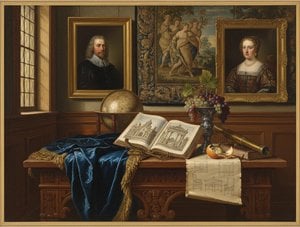
Jurriaen van Streeck's 'Snack' (1670) is a captivating still life brimming with symbolic detail, showcasing food and objects reflecting themes of abundance, mortality, and Dutch Golden Age aesthetics.

Juriaen van Streeck foi um mestre da pintura holandesa do século XVII, conhecido por suas cenas de *Vanitas* e naturezas-mortas ricas em simbolismo. Seus trabalhos evocam a transitoriedade da vida e refletem a cultura da época, com uma técnica detalhada e cores vibrantes.

Reprodução em Óleo Feita à Mão

Óleo sobre tela pintado à mão no tamanho e moldura de sua escolha, feito sob encomenda pelos nossos artistas. ( Alternar para Impressão Alternar para Imagem Digital)

Corner sample of the P118B picture frame: poliestireno moldado, 5 cm wide and 3 cm thick
P118B €10
Corner sample of the P118H picture frame: poliestireno moldado, 5 cm wide and 3 cm thick
P118H €10
Corner sample of the P118W picture frame: poliestireno moldado, 5 cm wide and 3 cm thick
P118W €10
Corner sample of the P438Z picture frame: poliestireno moldado, 5.5 cm wide and 3.5 cm thick
P438Z €10
Corner sample of the P508JH picture frame: poliestireno moldado, 7 cm wide and 3.5 cm thick
P508JH €12
Corner sample of the P508YH picture frame: poliestireno moldado, 7 cm wide and 3.5 cm thick
P508YH €12
Corner sample of the P805H picture frame: poliestireno moldado, 5 cm wide and 3.5 cm thick
P805H €10
Corner sample of the P805Z picture frame: poliestireno moldado, 5 cm wide and 3.5 cm thick
P805Z €10
Corner sample of the P919BZ picture frame: poliestireno moldado, 7 cm wide and 3.5 cm thick
P919BZ €10
Corner sample of the P919G picture frame: poliestireno moldado, 7 cm wide and 3.5 cm thick
P919G €10
Corner sample of the P919XJ picture frame: poliestireno moldado, 7 cm wide and 3.5 cm thick
P919XJ €10
Corner sample of the P959ZH picture frame: poliestireno moldado, 5 cm wide and 3 cm thick
P959ZH €10
Corner sample of the P968JZ picture frame: poliestireno moldado, 6 cm wide and 4 cm thick
P968JZ €12
Corner sample of the W106C picture frame: madeira maciça, 5 cm wide and 3 cm thick
W106C €8
Corner sample of the W218G picture frame: madeira maciça, 5 cm wide and 3 cm thick
W218G €10
Corner sample of the W218JH picture frame: madeira maciça, 5 cm wide and 3 cm thick
W218JH €8
Corner sample of the W218Y picture frame: madeira maciça, 5 cm wide and 3 cm thick
W218Y €10
Corner sample of the W307PJ picture frame: madeira maciça, 6 cm wide and 3 cm thick
W307PJ €10
Corner sample of the W316G picture frame: madeira maciça, 6 cm wide and 3 cm thick
W316G €10
Corner sample of the W316PJ picture frame: madeira maciça, 6 cm wide and 3 cm thick
W316PJ €8
Corner sample of the W316Y picture frame: madeira maciça, 6 cm wide and 3 cm thick
W316Y €10
Corner sample of the W398PJ picture frame: madeira maciça, 5 cm wide and 3 cm thick
W398PJ €8
Corner sample of the W4111J picture frame: madeira maciça, 6.5 cm wide and 3.5 cm thick
W4111J €10
Corner sample of the W500HY picture frame: madeira maciça, 7 cm wide and 5 cm thick
W500HY €15
Corner sample of the W500JH picture frame: madeira maciça, 7 cm wide and 5 cm thick
W500JH €15
Corner sample of the W692G picture frame: madeira maciça, 8 cm wide and 4 cm thick
W692G €12
Corner sample of the W849H picture frame: madeira maciça, 5 cm wide and 3 cm thick
W849H €8
Corner sample of the W940BG picture frame: madeira maciça, 7.5 cm wide and 4.5 cm thick
W940BG €15
Corner sample of the W953PJ picture frame: madeira maciça, 6 cm wide and 3.5 cm thick
W953PJ €8

Tamanho padrão
personalizado
CM
INCH

Escolha entre os nossos tamanhos pré-definidos que respeitam as proporções originais da obra de arte.

largura
altura

Insira a largura e a altura desejadas para se ajustarem à sua moldura ou parede. Como esta obra é pintada à mão, para um tamanho com proporções diferentes, o artista poderá pintar um pouco mais ao redor da imagem ou reduzir ligeiramente a composição — você escolhe. Enviamos uma maquete digital para sua aprovação antes de iniciar a pintura. A imagem exibida nesta página não representa o resultado real — apenas a maquete mostra o resultado final.

Exemplos do que pode ser personalizado: Substituir o rosto pela foto do cliente; Adicionar um animal de estimação (ex: substituir gato por cão); Incluir uma mensagem oculta no fundo; Alterar a paisagem ou elementos do fundo.
Após o pedido, a equipa WahooArt.com enviará um e-mail ao cliente para solicitar instruções e fornecer uma prévia do esboço.

Entrega mundial () em 3 a 4 semanas, em vez das 5 semanas padrão. (28 Outubro). Sem comprometer a qualidade.

Envio expresso gratuito para todo o mundo
Tela de Linho de Alta Qualidade
Seguro de transporte completo
Garantia de Reembolso de Impostos Alfandegários
Garantia de Fidelidade Cromática
Política de Devolução em 100 Dias (Apenas para Defeitos)
Garantia de reembolso de 100%
Oferta de desconto por quantidade

Preço Total

€ 240

Snack

Técnica de Reprodução

Tamanho da Reprodução

-

Preço Total

€ 240

Informações Rápidas

  • Artist: Juriaen van Streeck
  • Artistic style: Realism, Symbolism
  • Notable elements: Still life composition
  • Subject or theme: Food still life
  • Movement: Dutch Golden Age
  • Medium: Oil on canvas

Quiz de Arte

Cada pergunta possui apenas uma resposta correta.

Pergunta 1:
What is the primary subject matter of Juriaen van Streeck’s ‘Snack’?
Pergunta 2:
In what year was ‘Snack’ painted?
Pergunta 3:
The painting features a chair facing away from the viewer. What is the likely purpose of this compositional element?
Pergunta 4:
Juriaen van Streeck was a prominent figure in which artistic movement?
Pergunta 5:
Based on the description, what is the overall mood or atmosphere conveyed by ‘Snack’?

A Still Life of Transient Beauty: Unveiling the Essence of ‘Snack’

Juriaen van Streeck's “Snack,” painted in 1670, is more than a simple depiction of food; it’s a meticulously crafted meditation on mortality, abundance, and the fleeting nature of pleasure. Born into the vibrant artistic landscape of Amsterdam during the Dutch Golden Age, Van Streeck dedicated his life to the genre of still life, elevating it from mere representation to a profound exploration of human experience. This particular work, housed within the Hermitage Museum in St. Petersburg, exemplifies his signature style – a delicate balance between realism and symbolic depth, rendered with an almost unnerving precision.

The scene unfolds on a modestly sized table, bathed in soft light that emphasizes the textures of the objects arranged before us. A collection of oranges dominates the composition, their vibrant hues—ranging from pale yellow to deep crimson—suggesting both ripeness and decay. One orange is positioned prominently towards the right, its skin glistening as if recently peeled, while another sits slightly further left, hinting at a moment captured in time. Beneath this focal point rests a simple bowl, likely intended for fruit, and a vase holding what appears to be a single flower – a subtle nod to the beauty of nature’s ephemeral gifts. Two bottles flank the arrangement, one on the left and another on the right, their shapes adding verticality to the horizontal composition. A chair, its back facing the viewer, anchors the scene, creating an intimate space for contemplation. A cup and spoon are placed at the bottom center, further reinforcing the theme of everyday life and consumption.

The Language of Symbolism in a Dutch Masterpiece

Van Streeck’s still lifes were not simply exercises in observation; they were laden with symbolic meaning. The oranges themselves are rich with associations – representing wealth, fertility, and the bounty of the harvest, but also hinting at mortality due to their inevitable decay. The inclusion of a single flower within the bowl speaks to the transient beauty of life, a poignant reminder that all things eventually fade. The arrangement as a whole can be interpreted as an allegory for the pleasures of earthly existence, juxtaposed with the inevitability of death and the importance of savoring each moment.

The choice of objects – fruits, bottles, utensils – reflects the economic realities of 17th-century Dutch society. The Netherlands was a major trading hub during this period, and Van Streeck’s paintings often incorporated symbols related to commerce and prosperity. However, he skillfully layered these material references with deeper philosophical considerations, elevating his work beyond mere documentation of everyday life.

Technique and Artistic Influence

Van Streeck's mastery lies in his meticulous attention to detail and his ability to capture the subtle nuances of light and texture. Executed in oil on canvas, “Snack” showcases a remarkable level of realism achieved through careful layering of glazes and precise brushwork. His use of chiaroscuro – the dramatic contrast between light and shadow – adds depth and volume to the objects, making them appear almost tangible. The painting’s subdued palette—dominated by warm oranges, browns, and greens—creates a sense of intimacy and tranquility.

Van Streeck was influenced by earlier still life painters like Willem Kalf, known for his innovative use of perspective and his ability to create illusions of depth within small canvases. However, Van Streeck’s work possesses a greater emotional resonance and a more profound engagement with philosophical themes. He stands as a key figure in the development of Dutch Baroque painting, demonstrating a remarkable sensitivity to both the material world and the complexities of human existence.

Bringing ‘Snack’ Home: A High-Quality Reproduction

WahooArt offers meticulously hand-painted reproductions of “Snack” that capture the essence of Van Streeck's original masterpiece. Each reproduction is created by skilled artists using archival-quality materials, ensuring its longevity and preserving the painting’s rich colors and intricate details. Whether you are an art collector, a design enthusiast, or simply someone seeking to add a touch of timeless beauty to your home, a WahooArt reproduction of “Snack” provides a stunning and authentic representation of this iconic work.

Perguntas e Respostas

Posso ver uma imagem de raio-X de "Snack", de Juriaen van Streeck?

A página Raio X de "Snack", de Juriaen van Streeck é um visualizador interativo que permite percorrer onze camadas ópticas da imagem da obra, incluindo uma visualização em estilo raio-X.

De que forma o tema de "Snack" se relaciona com os temas habituais de Juriaen van Streeck?

Entre os temas recorrentes de Juriaen van Streeck — dutch still life, symbolism, mortality, wealth, observation — "Snack" traz seu próprio foco em food, table setting, oranges, bowl, vase, chair, spoon.

Qual é a paleta de cores de "Snack"?

A paleta de "Snack", de Juriaen van Streeck é descrita como Earthy. Trata-se de uma descrição concisa das cores da obra.


Biografia do Artista

A Life in Stillness: Unveiling the World of Juriaen van Streeck

Juriaen van Streeck, a name that whispers softly within the rich tapestry of Dutch Golden Age painting, invites us into a world meticulously rendered and profoundly imbued with symbolic contemplation. Born in Amsterdam in 1632, during an era of unprecedented artistic flourishing—a time when wealth, trade, and a nascent awareness of mortality intertwined to shape the cultural landscape—Van Streeck dedicated his life not to grand narratives or dramatic scenes, but to the quiet observation and exquisite depiction of still life. This seemingly modest genre, in the hands of a master like himself, transcended mere representation to become a poignant meditation on existence itself, a visual exploration of beauty’s fleeting nature and the inherent value of earthly possessions. While details of his early years remain shrouded in the mists of time—records are scarce, offering only glimpses into a life lived within the bustling heart of Amsterdam—we know he emerged as a young artist, absorbing the influences of his contemporaries and forging his own distinctive artistic voice. He married Grietje Claes in 1653, establishing a family life within the vibrant Jordaan district before eventually relocating to Prinsengracht; their household grew to encompass nine children, a testament to his domestic role alongside his creative pursuits—a poignant reminder of the realities faced by artists during that era. Tragically, three of his children succumbed to illness in infancy, casting a shadow over his family life and perhaps contributing to a sense of melancholy that subtly permeates some of his later works. Later in life, Van Streeck supplemented his income by operating an inn on Kerkstraat, suggesting a pragmatic adaptation to the economic realities of 17th-century Amsterdam—a shift from artistic creation to providing sustenance for travelers and locals alike.

The Language of Objects: Style and Influences

Van Streeck’s artistry blossomed within the established tradition of Dutch still life painting, a genre that had evolved significantly over centuries, characterized by its remarkable detail, meticulous observation, and often, profound symbolic depth. He was deeply influenced by Willem Kalf, another celebrated master of this particular style, particularly in his masterful use of rich color palettes—deep reds, vibrant blues, and earthy browns—and his ability to create dramatic compositions that drew the viewer’s eye into the heart of the scene. However, Van Streeck wasn't merely a mimic; he possessed an exceptional sensitivity to texture and light, imbuing his paintings with a unique atmosphere of quiet contemplation. He excelled at capturing the subtle nuances of materials—the cool sheen of polished silver, the velvety softness of ripe fruit, the delicate fragility of porcelain—transforming everyday objects into subjects of exquisite beauty. His compositions often featured an array of carefully arranged items: gleaming helmets and swords, leather-bound books and scrolls, delicate letters and seals, resonant musical instruments like lutes and harps, luscious fruits in their prime, and, crucially, *memento mori*—symbols of mortality such as skulls, decaying game, and wilting flowers. These elements weren’t simply decorative; they served as a deliberate reminder of life's transience and the ultimate futility of worldly possessions – a core tenet of the Vanitas tradition, which was gaining prominence during his time. The influence of Barend van der Meer is also evident in Van Streeck’s work, particularly in his penchant for depicting luxurious objects and creating scenes that evoke a sense of opulent abundance.

Vanitas and Beyond: Themes in Van Streeck’s Work

At the heart of Van Streeck's oeuvre lies a profound meditation on mortality, loss, and the ephemeral nature of beauty—themes inextricably linked to the Vanitas tradition. The inclusion of *memento mori* wasn’t merely an aesthetic choice; it was a deliberate attempt to engage viewers in a dialogue about life, death, and the pursuit of meaning amidst the distractions of earthly pleasures. A skull resting amongst opulent objects served as a stark reminder that all worldly possessions are ultimately fleeting, while decaying fruit symbolized the inevitable decline of beauty and vitality. However, Van Streeck’s work transcends the purely didactic function of Vanitas paintings; he imbues his scenes with a subtle sense of melancholy and introspection, inviting viewers to contemplate their own mortality and the value of time well spent. Beyond this overarching theme of transience, his paintings also showcase an extraordinary attention to detail and realism—a hallmark of Dutch artistry during the Golden Age. He wasn’t merely interested in depicting objects; he sought to capture their essence, their weight, their texture, and their symbolic resonance. This meticulous approach reflects a broader cultural fascination with observation and scientific inquiry that characterized the era – a desire to understand the world through careful study and precise representation. Notable works like “Snack”, “Still-Life With Peaches And A Lemon” and "A Still Life With Oysters, Peoches And Lemon On A Marble Table With A Fringed Carpet And Glasses" exemplify this delicate balance between aesthetic beauty and symbolic weight, creating scenes that are both visually arresting and intellectually stimulating.

Major Achievements and Historical Significance

Juriaen van Streeck’s contribution to the Dutch still life tradition is significant not for grand scale or revolutionary innovation, but for his quiet mastery of a demanding genre and his ability to infuse it with profound symbolic depth. He was recognized during his lifetime by art historian Arnold Houbraken, who praised his versatility in depicting a wide range of still life subjects—from opulent feasts to humble domestic scenes. While he may not have achieved the widespread fame of some of his contemporaries – Willem Kalf or Johannes Vermeer, for example – Van Streeck’s work holds a unique place within the artistic landscape of the Dutch Golden Age. His paintings offer invaluable insights into the cultural and philosophical concerns of 17th-century Dutch society—its preoccupation with wealth, its awareness of mortality, and its search for meaning in a rapidly changing world. He contributed to the evolution of still life painting as a genre capable of conveying both aesthetic pleasure and profound intellectual depth, solidifying his legacy as a subtle yet influential figure in the history of art. His family’s continued artistic involvement—his son, Hendrick van Streeck, also pursued a career as a painter—further underscores the enduring power of artistic talent within the Van Streeck lineage.

Exploring Van Streeck’s World Today

  • Museum Collections: While not extensively represented in major museum collections, examples of Van Streeck’s work can occasionally be found in institutions like the Museum Smidt van Gelder and the Museum Mayer van den Bergh.
  • Online Resources: Websites such as the Web Gallery of Art (WGA) and Wikipedia offer biographical information and images of his paintings, providing valuable resources for researchers and art enthusiasts alike. Princeton University Art Museum also provides detailed analysis of a still life formerly attributed to him, highlighting ongoing scholarly debate surrounding his work.
  • Reproductions: Platforms like WahooArt.com provide high-quality, hand-painted reproductions of Van Streeck’s masterpieces, allowing art lovers to bring the beauty and symbolism of his paintings into their own homes.

Juriaen van Streeck

Juriaen van Streeck

1632 - 1687 , Países Baixos

Dados Rápidos

  • Artistic Movement Or Style: Barroco e Vida em Silêncio
  • Artists Or Movements Influenced By This Artist: ['Barend van der Meer']
  • Artists Who Influenced This Artist: ['Willem Kalf']
  • Date Of Birth: 1632
  • Date Of Death: 1687
  • Full Name: Juriaen van Streeck
  • Nationality: Holandês
  • Notable Artworks:
    • Schouburg Plate K
    • Snack
    • Still-Life
  • Place Of Birth: Amsterdam, Holanda