x
Visualizar na paredeVisualizar na parede Ver em RAVer em RA Comprar pintura feita à mão Comprar pintura feita à mãoComprar imagem Comprar imagem CompartilharCompartilhar
DetalhesDetalhes Adicionar aos favoritos Adicionar aos favoritos Baixar imagemBaixar imagem SemelhantesSemelhantes Raio XRaio X SlideshowSlideshow

Mujer desnuda reclinada

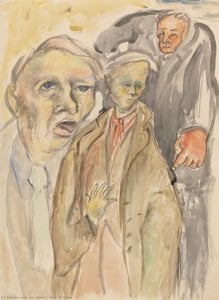
Joy Hester's 'Mujer desnuda reclinada' (1955) is an emotionally charged Expressionist ink drawing capturing vulnerability and introspection through fluid lines & earthy tones, reflecting her unique vision.

Joy St Clair Hester (1920-1960), artista, foi nascida em 21 agosto de 1920 em Elwood, Melbourne, segundo filho de Robert Ferdinand Hester, um oficial bancário de origem australiana. Quando Joy tinha doce anos, seu pai faleceu por ataque cardíaco.

Giclée / Impressão de Arte

Impressão giclée ou em tela de qualidade de museu, com produção rápida e opções flexíveis de acabamento. (Comprar pintura feita à mão Comprar pintura feita à mãoComprar imagem Comprar imagem)

P118B $10
P118H $10
P118W $10
P438Z $10
P508JH $12
P508YH $12
P805H $10
P805Z $10
P919BZ $10
P919G $10
P919XJ $10
P959ZH $10
P968JZ $12
W106C $8
W218G $10
W218JH $8
W218Y $10
W307PJ $10
W316G $10
W316PJ $8
W316Y $10
W398PJ $8
W4111J $10
W500HY $15
W500JH $15
W692G $12
W849H $8
W940BG $15
W953PJ $8

Tamanho padrão
personalizado
CM
INCH

Escolha entre os nossos tamanhos pré-definidos que respeitam as proporções originais da obra de arte.

largura
altura

Você pode inserir suas próprias dimensões para se ajustar a uma moldura ou espaço específico. Se o tamanho selecionado não corresponder às proporções da imagem original, iremos recortar a obra de arte ou estender a imagem com uma borda espelhada ou preenchimento sólido. Um mockup digital será enviado para sua aprovação antes do início da produção.
Por favor, observe que a visualização na tela não reflete o recorte ou a extensão real. Apenas o mockup mostrará com precisão a composição final.
Embora tamanhos personalizados estejam disponíveis, recomendamos selecionar uma dimensão da lista predefinida para preservar as proporções originais.

Entrega mundial () em 2 semanas, em vez das 4/5 semanas padrão. (3 Setembro)

why_choose_icon
Envio expresso gratuito para todo o mundo
why_choose_icon
Tela de Linho de Alta Qualidade
why_choose_icon
Seguro de transporte completo
why_choose_icon
Garantia de Reembolso de Impostos Alfandegários
why_choose_icon
Garantia de Fidelidade Cromática
why_choose_icon
Política de Devolução em 60 Dias (Apenas para Defeitos)
why_choose_icon
Garantia de reembolso de 100%
why_choose_icon
Oferta de desconto por quantidade

Preço Total

$ 68

reproduction

Mujer desnuda reclinada

Giclée / Impressão de Arte

Tamanho da Reprodução

-

Preço Total

$ 68

Informações Rápidas

  • Artist: Joy St Clair Hester
  • Influences:
    • Hester
    • O'Connor
  • Location: Art Gallery NSW
  • Movement: Expressionism
  • Medium: Ink wash/Watercolor
  • Artistic style: Modernist
  • Year: 1955

Quiz de Arte

Cada pergunta possui apenas uma resposta correta.

Pergunta 1:
What is the primary medium used in Joy St Clair Hester’s ‘Mujer desnuda reclinada’?
Pergunta 2:
The artwork primarily focuses on:
Pergunta 3:
Joy St Clair Hester was associated with which artistic movement?
Pergunta 4:
What is the dominant color palette of ‘Mujer desnuda reclinada’?
Pergunta 5:
According to the provided information, what influenced Joy Hester’s artistic style?

A Portrait of Introspection: Joy St Clair Hester’s *Mujer Desnuda Reclinada*

Joy St Clair Hester's *Mujer Desnuda Reclinada*, painted in 1955, is not merely a depiction of the human form; it’s an intimate exploration of vulnerability, loss, and the quiet power of observation. This arresting work, rendered primarily in shades of white, cream, and charcoal against a profound dark background, embodies the core tenets of Hester's distinctive Expressionist style – a language born from personal experience and imbued with a haunting emotional resonance.

The subject, a reclining nude female figure, is presented with an arresting directness. Her pose, relaxed yet subtly alert, suggests both vulnerability and a quiet strength. The artist’s masterful use of fluid, almost hesitant lines defines the contours of her body, avoiding any overtly sensual portrayal. Instead, Hester focuses on capturing the essence of the form – its curves, its weight, its inherent dignity – through a deliberate restraint that amplifies the emotional impact. The simplicity of the palette and the emphasis on line create an atmosphere of profound introspection, inviting the viewer to contemplate the figure’s inner world.

Echoes of the Heide Circle and Australian Modernism

To fully appreciate *Mujer Desnuda Reclinada*, it's crucial to understand its context within the vibrant artistic circles of 1950s Australia. Hester was a key member of both the Heide Circle, centered around the Reed family’s home, and the Angry Penguins group – movements that challenged traditional art practices and sought to forge a distinctly Australian modern identity. The influence of these groups is evident in Hester's willingness to break free from academic constraints and embrace a more personal, emotionally charged approach to her work.

Her early life, marked by the loss of her father at a young age, profoundly shaped her artistic vision. This experience, coupled with the anxieties surrounding World War II and her own battle with Hodgkin’s disease, fueled a deep exploration of mortality and the human psyche – themes that resonate powerfully in *Mujer Desnuda Reclinada*. The painting can be seen as a meditation on fragility, resilience, and the enduring beauty found within moments of quiet contemplation.

The Language of Line: Technique and Style

Hester’s technique is characterized by a remarkable economy of line. She eschews detailed rendering in favor of bold, expressive strokes that define form and convey emotion with exceptional subtlety. The varying weights of the lines – thick for outlining major contours, thinner for suggesting texture and shadow – create a dynamic interplay of visual elements. The predominantly monochromatic palette further emphasizes this linear approach, allowing the lines themselves to carry the weight of meaning.

The painting’s flatness—a deliberate choice by Hester—contributes to its immediate impact. There's no illusion of depth or spatial perspective; instead, the viewer is drawn into a close encounter with the subject, invited to engage with her presence on an emotional level. The dark background serves not as a mere backdrop but as a crucial element in defining the figure’s luminosity and emphasizing her vulnerability.

Symbolism and Emotional Resonance

*Mujer Desnuda Reclinada* transcends a simple depiction of a nude form; it's a potent symbol of introspection, resilience, and the quiet dignity of the human spirit. The reclining pose itself suggests surrender, acceptance, and a willingness to confront one’s own vulnerabilities. The figure’s averted gaze invites the viewer to share in her silent contemplation, fostering a sense of empathy and connection.

Ultimately, this painting is a testament to Hester's extraordinary ability to distill complex emotions into simple, yet profoundly moving forms. It remains a powerful example of Australian Modernism—a poignant exploration of the human condition rendered with remarkable grace and emotional depth.


Biografia do Artista

Joy St Clair Hester - Australian Dictionary of Biography

Joy St Clair Hester (1920–1960), artist, was born on August 21, 1920 at Elsternwick, Melbourne, second child of Robert Ferdinand Hester, a bank officer from England. Louise Hester, née MacGillivray, was a teacher and daughter of Scottish immigrants. Her father died from a heart attack when Joy was twelve years old, an event that would subtly yet profoundly influence the emotional depth of her later work. She attended St Michael’s Grammar School from 1933 to 1937 and Brighton Technical School in 1938. At 17, she studied Commercial Art for a year at Brighton Technical School before enrolling at the National Gallery School in Melbourne in 1938 where she won the Drawing Head from Life prize—a prestigious accolade recognizing her exceptional talent for capturing human form with remarkable accuracy and sensitivity. This early success signaled not just technical skill but an emerging ability to convey profound emotion through visual representation—a characteristic that would become her signature style. It was also during this period that Hester began to break free from traditional artistic conventions, seeking a more expressive and personal visual language.

Early Life and Artistic Training

Joy’s formative years instilled in her a deep appreciation for observation and detail, shaping her approach to artmaking. Her father’s untimely death instilled a quiet resilience and fueled her determination to pursue her passions despite adversity. The National Gallery School provided invaluable training in draughtsmanship and composition, equipping her with the foundational skills necessary for developing her distinctive artistic vision. Notably, she excelled in life drawing classes, honing her ability to translate three-dimensional forms onto two-dimensional surfaces—a skill that would prove crucial to her later explorations of human psychology. Her fascination with capturing the essence of human experience—particularly its vulnerability and complexity—would become a defining element of her oeuvre.

The Heide Circle and Angry Penguins

Joy’s artistic trajectory took a decisive turn in 1938 with her meeting Albert Tucker, initiating both a significant romantic relationship and an important artistic partnership. This connection blossomed into a profound friendship and collaboration that would shape their lives and careers. Together they moved to East Melbourne where they established a home filled with art and intellectual curiosity. Their association with Sunday Reed—a champion of Australian avant-garde art—further enriched their creative environment, fostering dialogue and inspiring experimentation. They joined the Heide Circle alongside Sidney Nolan, Arthur Boyd, Charles Blackman, and John Perceval—artists united by a shared commitment to challenging artistic norms and forging new paths. The Heide Circle’s ethos encouraged artists to confront societal conventions and explore unconventional perspectives—a spirit that resonated deeply with Hester's own artistic sensibilities. Simultaneously, she became a founding member of the Contemporary Art Society (CAS) and, crucially, the sole female participant in the groundbreaking Angry Penguins movement. This association wasn’t merely circumstantial; Hester’s work embodied the group’s rebellious ethos and unwavering dedication to Modernism—a stance that directly confronted the conservative artistic climate of Australia at the time. Her inclusion challenged prevailing prejudices against women in art and cemented her place as a pioneer of Australian Expressionism.

A Distinctive Style: From Observation to Emotion

Hester’s artistic style was characterized by a remarkable fusion of technical precision and emotional intensity—a hallmark of her oeuvre. Initially influenced by traditional draughtsmanship techniques, she swiftly embraced bolder forms and expressive lines, rejecting academic constraints in favor of a more visceral approach. Her mastery of watercolor and ink allowed her to convey profound psychological states with unparalleled subtlety and nuance. Recurring motifs—faces rendered with haunting detail—served as visual anchors for her explorations of human emotion and experience. Hester’s distinctive style was informed by the writings of Danila Vassilieff, who championed the integration of art and life—a philosophy that profoundly shaped her artistic vision. Her meticulous attention to observation combined with a willingness to confront difficult themes—mortality, loss, and vulnerability—created images that were both intellectually stimulating and emotionally resonant.

Major Achievements and Legacy

Joy St Clair Hester’s contribution to Australian Modernism is undeniable. Her series *Face*, *Sleep,* and *Love* (1948–49)—amongst many others—remain iconic representations of human emotion and psychological complexity. These works exemplify her ability to transform personal experience into universal statements about the human condition—a feat achieved through masterful draughtsmanship and evocative imagery. Hester’s unwavering commitment to artistic integrity—coupled with her courageous exploration of challenging themes—established her as a pivotal figure in Australian art history. Her legacy continues to inspire artists today, demonstrating that profound emotion can be conveyed through deceptively simple forms. Despite facing personal hardships—including Hodgkin's lymphoma and the dissolution of her marriage—Hester persevered in her artistic pursuits until her untimely death in December 1960 at the age of 40—leaving behind a body of work that stands as a testament to the enduring power of human expression. Her influence extends beyond her own creations, shaping the trajectory of Australian art and fostering a dialogue about vulnerability, emotion, and the complexities of human experience.
Joy St Clair Hester

Joy St Clair Hester

1920 - 1960 , Austrália

Dados Rápidos

  • Artistic Movement Or Style: Expressionismo Modernista
  • Artists Or Movements Influenced By This Artist: ['Australian Modernism']
  • Artists Who Influenced This Artist:
    • Ailsa O'Connor
    • Danila Vassilieff
  • Date Of Birth: August 21, 1920
  • Date Of Death: December 4, 1960
  • Full Name: Joy St Clair Hester
  • Nationality: Australiana
  • Notable Artworks:
    • Face série
    • Love série
    • The Lovers
  • Place Of Birth: Elsternwick, Austrália