


Obtenha um arquivo pronto para impressão que vai muito além da visualização na web. Cada imagem digital que vendemos provém de um arquivo mestre de alta resolução em nosso banco de dados — geralmente entre 5.000 e 15.000 pixels de largura — para que você possa imprimir em grandes formatos, realizar cortes precisos ou reproduzir detalhes minuciosos com total confiança.
Nenhum arquivo sai do nosso estúdio sem passar por um cuidadoso processo de revisão. Um especialista digital verifica as cores em relação à pintura original e as corrige se necessário, aumentando então a clareza e o detalhe com ferramentas profissionais de retoque — sempre mantendo a fidelidade às pinceladas e ao estilo do artista. O resultado é uma imagem que se assemelha à pintura, e não a um scan com filtros.
Aprovação antes da finalização: nosso especialista enviará a imagem por e-mail em até 72 horas para sua revisão. Não ficou satisfeito? Solicite melhorias ou correções, ou peça o reembolso caso a qualidade não atenda às suas expectativas.
Esta é a qualidade em que confiam editoras, estúdios de design, galerias e gráficas.
Baixe um arquivo de alta resolução para exibição pessoal, impressão e projetos criativos. ( Alternar para Impressão Comprar pintura feita à mão)
Ao escolher o WahooArt.com, você não está apenas adquirindo uma imagem — você está recebendo uma obra de arte digital profissionalmente aprimorada, elaborada com precisão e com garantia de satisfação. Aqui está tudo o que acompanha seu pedido, automaticamente:
O seu arquivo de imagem digital em alta resolução será enviado por e-mail em até 72 horas após o pedido — pronto para uso imediato.
Sua obra de arte é otimizada profissionalmente por meio de ferramentas avançadas de IA e edição manual, garantindo o máximo de detalhes, clareza e precisão de cores.
Apagou ou perdeu o seu ficheiro acidentalmente? Não se preocupe – nós reenviamos para si a qualquer momento, gratuitamente.
Desfrute da sua obra de arte instantaneamente, sem taxas alfandegárias, impostos ou custos de entrega — downloads digitais são sempre isentos de taxas.
Garantimos que sua imagem digital reflita as cores originais com a maior fidelidade possível, utilizando ferramentas profissionais e gerenciamento de cores.
Se não estiver satisfeito com a sua imagem digital, nós a revisaremos ou reembolsaremos 100% dentro de 100 dias — sem perguntas.
Não está satisfeito? Receba o reembolso total em até 100 dias após o recebimento do seu arquivo digital — sem perguntas.
Compre 3 imagens, economize 10% - Compre 5, economize 15% - Compre 10+, economize 20%. Ideal para projetos criativos, galerias e agências.
Behold this evocative vision of Rainbow Falls at Manitou, a scene rendered through the delicate yet powerful lens of 19th-century photography. This image transports the viewer directly to a moment where raw geological power meets ethereal beauty. The composition is utterly dominated by the cascading waterfall, which seems less like mere water and more like liquid silk unraveling over ancient stone. One cannot help but feel the cool mist rising from the plunge pool, an almost palpable sensation that speaks of untouched wilderness. The artist, or rather, the pioneering photographer who captured this moment in 1874, possessed a remarkable ability to freeze not just light, but the very dynamism of nature itself.
Technically speaking, this piece is a superb example of the albumen print process, a medium that allowed photographers of the era to achieve incredible tonal depth. Observe how the diffused daylight has treated the surrounding rock face; every jutting edge, every patch of clinging vegetation, is rendered with painstaking detail. The contrast between the smooth, almost milky flow of the water and the jagged, imposing texture of the cliffside creates a visual rhythm that is deeply satisfying to the eye. The palette itself—a restrained symphony of browns, greys, and muted earth tones—lends the work an undeniable patina of history. It is a monochromatic meditation on form, where light and shadow become the primary subjects.
While this photograph captures a natural spectacle, its aesthetic resonance connects it to the grand tradition of landscape art championed by masters like Joseph John Collier. Though Collier was a painter, his dedication to meticulously documenting the dramatic vistas of the British countryside mirrors the spirit found here. This print speaks to the Victorian fascination with exploration and the sublime—that feeling of awe mixed with slight terror when confronted by nature's overwhelming scale. It serves as a tangible link to an era when capturing such grand scenes required immense technical skill, turning scientific documentation into high art.
For the discerning collector or designer, this reproduction offers more than just wall decor; it offers an emotional anchor. Imagine placing this piece where natural light can graze its surface, allowing the viewer to contemplate the relentless, beautiful cycle of water over stone. It introduces a sense of depth and quiet drama into any interior space, whether it be a study needing intellectual gravitas or a living area yearning for a touch of untamed romance. It is an enduring reminder that even in our most structured lives, the wild heart of the world continues to flow.
CLASSIFICATION: LandscapeJoseph John Collier criou "Rainbow Falls, Manitou" aos 59 anos. O artista nasceu em 1815 e a obra data de 1874.
Uma imagem digital de "Rainbow Falls, Manitou", de Joseph John Collier pode ser adquirida em sua página de Imagem Digital de Alta Resolução: download de imagem digital em alta resolução.
"Rainbow Falls, Manitou" retrata waterfall landscape, mountain scenery”, “natural beauty”, “19th century nature”, “detailed photography”, “american wilderness”, “dramatic terrain”, enquanto os temas recorrentes de Joseph John Collier são romantic landscape influence, victorian naturalism focus, american frontier imagery", detailed observation, documenting nature's power", early photographic style". A comparação entre ambos revela como a obra se relaciona com os temas habituais do artista.

Born in London in 1815, Joseph John Collier emerged as a significant figure within the British art scene during the mid-19th century. His life and career were inextricably linked to his family’s prominent standing – his grandfather was a Quaker merchant and member of Parliament, and his father followed in that tradition. This lineage undoubtedly provided him with opportunities and connections, yet Collier forged his own distinct path as a landscape painter, renowned for his meticulous detail and evocative depictions of the natural world, particularly the dramatic vistas of Scotland and the Lake District.
Collier’s early life was marked by both artistic training and practical experience. He began his formal education at the Royal Academy in London, honing his skills in traditional techniques. However, he quickly distinguished himself as a drawing master, instructing students at several schools throughout the city – a role that undoubtedly sharpened his observational abilities and understanding of form. This dual existence—artist and educator—shaped his approach to painting, fostering a deep appreciation for technique alongside a commitment to sharing his knowledge.
Collier’s artistic style is often categorized within the broader context of the Pre-Raphaelite movement, though he never formally identified with its manifestos. The influence of this influential group—known for their reverence for medieval art and a rejection of academic conventions—is evident in Collier's meticulous rendering of detail, his use of rich color palettes, and his tendency to explore themes of mythology and legend. Like his Pre-Raphaelite contemporaries, Collier sought to capture the beauty and drama of nature with an almost photographic realism, prioritizing observation and emotional response over purely representational accuracy.
However, Collier’s work possesses a unique character that sets it apart from the more overtly romanticized depictions often associated with the Pre-Raphaelites. His landscapes are imbued with a quiet dignity and a sense of timelessness, reflecting a deep connection to the land itself. He was particularly drawn to the rugged beauty of the Scottish Highlands and the serene majesty of the Lake District, capturing their atmospheric qualities with remarkable skill.
Collier’s most celebrated works include “Rainbow Falls, Manitou,” a stunning albumen print showcasing the power and beauty of a cascading waterfall – now housed in the J. Paul Getty Museum in Los Angeles. This image exemplifies his mastery of tonal range and his ability to convey both the grandeur and the delicate intricacies of natural phenomena. Other significant paintings depict dramatic mountainscapes, dense forests, and serene lakes, each rendered with painstaking detail and a keen eye for light and shadow.
His technique involved extensive sketching in situ – directly observing and documenting the landscapes he intended to paint. This commitment to direct observation is reflected in the remarkable realism of his work, particularly in the depiction of foliage, water surfaces, and geological formations. Collier’s use of color was equally deliberate, employing a rich palette of hues to create atmospheric effects and evoke specific moods.
During his lifetime, Joseph John Collier enjoyed considerable recognition within the British art world. He exhibited his work at prestigious institutions such as the Royal Academy, the British Institution, and the Society of British Artists, solidifying his reputation as a leading landscape painter. His paintings are now held in prominent collections worldwide, including the Tate Gallery in London and the Metropolitan Museum of Art in New York – testament to the enduring appeal of his art.
Collier’s legacy extends beyond his individual works; he represents a pivotal moment in British landscape painting, bridging the gap between traditional academic training and the emerging aesthetic sensibilities of the Victorian era. His meticulous technique, coupled with his deep appreciation for the beauty of the natural world, continues to inspire artists and captivate viewers today. Further exploration can be found on WahooArt.com and through resources like Wikipedia and the Victorian Web.
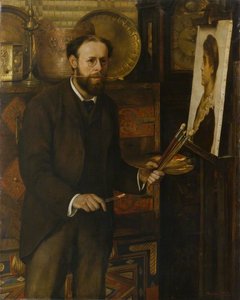
1815 - 1896
 Compartilhar
 Compartilhar
 Detalhes
 Guia
Guia

 Baixar imagem
 Semelhantes
 Ver diaporama
 Perguntas e Respostas
 Estatísticas


 Ler mais


