Consultoria de arte gratuita

x
Comprar impressão Comprar impressãoComprar imagem em alta resolução Comprar imagem em alta resolução EnviarEnviar
DetalhesDetalhes Adicionar aos favoritos Adicionar aos favoritos BaixarBaixar SemelhantesSemelhantes Raio XRaio X SlideshowSlideshow

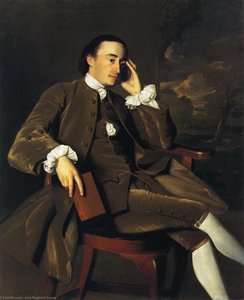
John A. Sidell

Experience Neoclassical elegance with John Vanderlyn's 1830 portrait of John A. Sidell, showcasing masterful detail and classical form; discover this American art masterpiece today.

John Vanderlyn (1775-1852): pintor neoclássico pioneiro, conhecido por retratos e obras históricas como "A Chegada de Colombo". Explore sua rica herança artística!

Reprodução em Óleo Feita à Mão

Óleo sobre tela pintado à mão no seu tamanho e moldura, feito sob encomenda pelos nossos artistas.

P118B $10
P118H $10
P118W $10
P438Z $10
P508JH $12
P508YH $12
P805H $10
P805Z $10
P919BZ $10
P919G $10
P919XJ $10
P959ZH $10
P968JZ $12
W106C $8
W218G $10
W218JH $8
W218Y $10
W307PJ $10
W316G $10
W316PJ $8
W316Y $10
W398PJ $8
W4111J $10
W500HY $15
W500JH $15
W692G $12
W849H $8
W940BG $15
W953PJ $8

Standard
custom
CM
INCH

Escolha entre os nossos tamanhos pré-definidos que respeitam as proporções originais da obra de arte.

largura
altura

Pode inserir as suas próprias dimensões para se adequar a uma moldura ou espaço específico. Se o tamanho selecionado não corresponder às proporções da imagem original, iremos cortar a obra de arte ou estender a pintura com elementos adicionais pintados à mão. Um esboço digital será enviado para sua aprovação antes do início da produção.
Tenha em atenção que a pré-visualização no ecrã não reflete o corte ou extensão real. Apenas o esboço mostrará com precisão a composição final.
Embora tamanhos personalizados estejam disponíveis, recomendamos selecionar uma dimensão da lista predefinida para preservar as proporções originais.

Exemplos do que pode ser alterado: Substituir o rosto pela foto do cliente; Adicionar um animal de estimação (ex: substituir gato por cão); Incluir uma mensagem oculta no fundo; Alterar a paisagem ou elementos do fundo.
Após o pedido, a equipa WahooArt.com enviará um e-mail ao cliente para solicitar instruções e fornecer uma prévia do esboço.

Entrega Mundial () em 3 a 4 semanas, em vez das 5 semanas padrão. (2 Julho). Sem comprometer a qualidade.

why_choose_icon
Envio Expresso Gratuito para todo o Mundo
why_choose_icon
Tela de Linho Premium
why_choose_icon
Seguro de envio completo
why_choose_icon
Garantia de Reembolso de Impostos Alfandegários
why_choose_icon
Garantia de Fidelidade de Cores
why_choose_icon
Política de Devolução de 60 Dias (Apenas para Defeitos)
why_choose_icon
Garantia de 100% de Reembolso
why_choose_icon
Desconto para múltiplas unidades

Preço Total

-

reproduction

John A. Sidell

Técnica de Reprodução

Dimensões da Reprodução

-

Preço Total Final

-

Dados Rápidos

  • Movement: Neoclassicism
  • Dimensions: 76 x 61 cm
  • Location: The Metropolitan Museum of Art
  • Medium: Oil on Canvas
  • Artist: John Vanderlyn
  • Subject or theme: Portrait
  • Artistic style: Formal, Balanced Composition

Teste de Arte

Cada pergunta possui apenas uma resposta correta.

Pergunta 1:
What artistic movement is John Vanderlyn’s ‘John A. Sidell’ primarily associated with?
Pergunta 2:
The painting features a prominent red curtain, which serves what purpose in the composition?
Pergunta 3:
What notable element can be found near the bottom right corner of the painting?
Pergunta 4:
John Vanderlyn’s background influenced his artistic approach by emphasizing training in European styles, specifically...
Pergunta 5:
Based on the image description, what can you infer about John Vanderlyn’s artistic skill?

Descrição da Obra

A Pioneer Bridging Worlds: The Life and Art of John Vanderlyn

John Vanderlyn’s “John A. Sidell,” painted circa 1830, stands as a testament to the burgeoning Neoclassical movement's influence on American artistic sensibilities during its formative years. Born in Kingston upon Thames, England, in 1775, Vanderlyn wasn’t merely an artist; he was instrumental in establishing a precedent for American painters to pursue formal training abroad—specifically in Paris—rejecting the prevailing stylistic norms of London’s established academies.

His lineage provided him with an inherent understanding of artistic principles. As grandson to Pieter Vanderlyn, a respected colonial portraitist known for his meticulous attention to detail and masterful rendering of likenesses, John inherited not only a name but also a foundational skillset crucial for mastering the neoclassical style. Early employment with a New York print seller honed his observational abilities and exposed him to the broader artistic landscape, preparing him for his subsequent studies under Archiba Duffrin in Paris.

Style and Technique: Embracing Classical Idealism

“John A. Sidell” exemplifies Vanderlyn’s commitment to Neoclassical ideals—clarity of form, balanced composition, and idealized representation—characteristics deeply rooted in the artistic traditions of antiquity. The painting utilizes oil paint on canvas with a smooth, polished surface, demonstrating Vanderlyn's meticulous brushwork and skillful blending techniques. Careful attention is paid to anatomical accuracy and drapery folds, reflecting the influence of Greek sculpture and Roman portraiture.

Historical Context: Shaping American Artistic Identity

Painted during a period of significant cultural exchange between Britain and America, “John A. Sidell” reflects the broader trend toward adopting European artistic conventions. The neoclassical style gained traction in New York City as artists sought to elevate their craft beyond the more sentimental Romantic tendencies prevalent at the time. Vanderlyn’s work contributed to establishing American painting as a serious pursuit of aesthetic excellence alongside its European counterparts.

Symbolism and Emotional Impact: Dignity and Reflection

The portrait depicts John A. Sidell seated with an air of quiet contemplation, gazing intently at something unseen—perhaps a book or a document—suggesting intellectual engagement and inner reflection. Vanderlyn’s masterful depiction captures not only Sidell's physical appearance but also conveys a sense of dignified composure. The inclusion of the red curtain serves as a visual anchor, adding depth to the scene and subtly emphasizing the formality of the setting.

Decorative Potential: Bringing Classical Elegance Home

A high-quality reproduction of “John A. Sidell” would undoubtedly infuse any interior space with an aura of refined taste and intellectual curiosity. Its balanced composition, muted color palette dominated by reds and browns, and meticulous detailing align perfectly with contemporary design sensibilities seeking inspiration from timeless artistic traditions.

Obras Relacionadas


Biografia do Artista

A Pioneer Bridging Worlds: The Life and Art of John Vanderlyn

John Vanderlyn, born in Kingston, New York, on October 15, 1775, occupies a unique position in the narrative of American art. He wasn’t merely a painter; he was a cultural bridge, forging a path for American artists to embrace European training—specifically, the burgeoning Neoclassical style emanating from Paris—rather than defaulting to the established artistic centers of London. His story is one of ambition, talent, and ultimately, a poignant struggle against financial hardship, yet his contributions remain significant in shaping the early landscape of American painting. Vanderlyn’s lineage itself hinted at an artistic destiny; he was the grandson of Pieter Vanderlyn, a respected colonial portraitist, inheriting not just a name but also a foundational understanding of form and representation. Early employment with a New York print seller provided practical exposure to the art world, while initial instruction under Archibald Robinson honed his fundamental skills. However, it was through copying portraits by Gilbert Stuart—and crucially, spending time within Stuart’s studio—that Vanderlyn truly began to cultivate his own portraiture abilities, absorbing the techniques of a master already renowned for capturing likeness and character.

Early Life and Artistic Foundations

Born into a family with roots in Dutch colonial artistry, John Vanderlyn's early life was steeped in an appreciation for visual representation. His grandfather, Pieter Vanderlyn, was a well-regarded portraitist in New York, providing the young John with an inherent understanding of artistic principles. This familial legacy, combined with his father’s profession as a glazier-painter, exposed him to the practical aspects of art creation from a young age. At sixteen, he moved to New York City and secured employment with a print seller, a role that offered valuable insight into the commercial side of the art world and provided opportunities to observe artists at work. Crucially, his time spent assisting Gilbert Stuart—a leading portraitist of the era—proved transformative. He meticulously copied Stuart’s works, including the iconic Lansdowne portrait of George Washington, absorbing not only the technical skills but also Stuart's approach to capturing personality and conveying a sense of dignified presence. This apprenticeship laid the groundwork for Vanderlyn’s own artistic development, establishing his understanding of composition, technique, and the importance of accurately representing human form.

A Revolutionary Decision: Journeying to Paris

In 1796, a pivotal moment arrived in John Vanderlyn's life—Aaron Burr, recognizing his potential and ambition, arranged for him to travel to Paris to study art. This decision was revolutionary; it marked a deliberate shift away from the traditional British artistic influence that had long dominated American training. Rather than pursuing a path within the established institutions of London, Vanderlyn embraced the opportunity to immerse himself in the vibrant and intellectually stimulating art scene of France. For five years, he dedicated himself to mastering the principles of Neoclassicism—an aesthetic movement characterized by its reverence for classical antiquity, emphasis on order and balance, and focus on historical and mythological subjects. He studied at the *École des Beaux-Arts*, absorbing the techniques of renowned French artists and developing his own distinctive style rooted in this influential tradition. This exposure profoundly shaped his artistic vision, instilling a sense of clarity, precision, and idealized beauty into his work.

The Embrace of Neoclassicism and Major Achievements

Parisian refinement dramatically altered Vanderlyn’s artistic trajectory. He quickly demonstrated an aptitude for historical painting—a genre considered more prestigious than portraiture at the time—and began to emulate the works of artists like Jacques-Louis David, whose dramatic compositions and idealized figures served as a model for Vanderlyn's own style. In 1801, he returned to America, bringing with him not only his refined skills but also a renewed sense of purpose. He briefly resided with Aaron Burr and his daughter, continuing to paint portraits while grappling with how best to translate his Parisian training into a distinctly American artistic voice. However, Vanderlyn’s ambitions extended beyond portraiture. In 1802, he created two striking views of Niagara Falls, which were subsequently engraved and published in London, bringing the majesty of the American landscape to a European audience. His ambition reached new heights with *Caius Marius Amid the Ruins of Carthage*, exhibited at the Paris Salon of 1808, where it earned him a coveted gold medal—a testament to his mastery of Neoclassical technique and composition. Later, he experimented with panoramic paintings, including “Panoramic View of the Palace and Gardens of Versailles” (1818-19), demonstrating an innovative approach to immersive art experiences.

A Complex Legacy: Portraits, Panoramic Views, and Financial Struggles

Despite his artistic successes, Vanderlyn’s career was marked by a degree of complexity and ultimately, financial hardship. He secured commissions from prominent figures—James Monroe, John C. Calhoun, and Andrew Jackson all sat for his portraits—and skillfully replicated Gilbert Stuart's iconic Lansdowne portrait of George Washington for the House of Representatives. However, he also sought to establish himself as a historical painter, culminating in his monumental *The Landing of Columbus*, commissioned by Congress in 1842 for the U.S. Capitol rotunda. Though controversial—Vanderlyn employed a French artist to assist with its execution—the painting achieved widespread recognition and became one of his most enduring works. Despite these achievements, Vanderlyn struggled financially throughout much of his life, exacerbated by personal debts and a lack of consistent patronage. He died in relative obscurity on September 23, 1852, in Kingston, New York, and is buried at Wiltwyck Rural Cemetery. Nevertheless, John Vanderlyn’s contributions to the development of American painting remain undeniable. He was an artist who dared to look beyond established conventions, embracing innovation and leaving an indelible mark on the cultural landscape of his time. His pioneering spirit paved the way for future generations of American artists seeking to forge their own unique artistic identities.
John Vanderlyn

John Vanderlyn

1775 - 1852 , Estados Unidos

Informações Rápidas

  • Artistic Movement Or Style: Neoclassicismo
  • Artists Or Movements Influenced By This Artist: ['Americano Neoclassicismo']
  • Artists Who Influenced This Artist: ['Gilbert Stuart']
  • Date Of Birth: 15 Out 1775
  • Date Of Death: 23 Set 1852
  • Full Name: John Vanderlyn
  • Nationality: Americano
  • Notable Artworks:
    • Aterrissagem de Colombo
    • Vistas de Niagara
    • Caius Marius
  • Place Of Birth: Kingston, Nova York