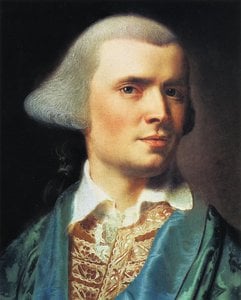
A Pioneer Bridging Worlds: The Life and Art of John Singleton Copley
John Singleton Copley, born in Boston in 1738, occupies a unique and pivotal position in the history of American art. He wasn’t merely a painter; he was a cultural bridge, forging a distinctly Anglo-American aesthetic during a period of immense political and social upheaval. His story is one of self-taught brilliance, relentless ambition, and an uncanny ability to capture not just likenesses, but the very essence of his subjects within the context of their time. Copley’s early life was steeped in the bustling maritime world of colonial Boston, a city brimming with merchants, shipbuilders, and burgeoning wealth. His father, Richard Copley, though absent shortly after John's birth, was a tobacco merchant, while his mother, Mary Singleton Copley, ran a shop on Long Wharf. This environment instilled in young John an acute awareness of the material world – the textures of fabrics, the gleam of silver, the subtle nuances of social standing – all elements that would later define his artistic style. His stepfather, Peter Pelham, an engraver and limner (an artist who created portraits on vellum or parchment), provided some initial guidance, but Copley’s talent was largely self-cultivated through diligent study and practice. He devoured any available engravings, meticulously copying them to master technique, and quickly surpassed his stepfather's abilities.
The Rise of a Colonial Portraitist
By the 1760s, Copley had established himself as Boston’s premier portraitist, catering to the city’s elite. His success wasn’t simply due to technical skill; it was his ability to imbue his portraits with a psychological depth rarely seen in colonial American art. He moved beyond mere representation, striving to capture the character and social standing of his sitters. This involved meticulous attention to detail – the precise rendering of fabrics, jewelry, and furnishings – but also a keen understanding of posture, expression, and gesture. Copley’s portraits weren't just images; they were statements about wealth, power, and social aspiration. He skillfully incorporated symbolic objects into his compositions, subtly hinting at his subjects’ professions or interests. A merchant might be depicted with imported goods in the background, a lawyer with legal texts, or a naval officer with nautical instruments. This attention to detail and symbolism elevated his work beyond simple portraiture, transforming it into a form of social commentary. His portraits of prominent figures like *Mrs. Ezekiel Gondthwait (Elizabeth Lewis)* exemplify this approach – the elegant pose, luxurious fabrics, and subtle details all convey a sense of refinement and status.
Ambition and the Call of Europe
Despite his success in Boston, Copley harbored ambitions that extended beyond the colonial art world. He yearned for recognition from the established artistic circles of London and Rome, and sought to test his skills against the masters of European painting. In 1766, he sent his *Boy with a Flying Squirrel* to the Society of Artists in London, where it received considerable praise from Joshua Reynolds and Benjamin West – two leading figures in the British art scene. This encouragement fueled Copley’s desire for further training and exposure. However, family obligations and a thriving practice kept him rooted in Boston for another decade. Finally, in 1774, with his wife Susanna Farnsworth Clarke and their children, he embarked on a journey to Europe, intending to study the Old Masters and establish himself as a historical painter. The outbreak of the American Revolution shortly after his arrival complicated matters, forcing Copley to navigate a politically charged environment while pursuing his artistic goals.
Historical Narratives and Lasting Legacy
In London, Copley found both opportunities and challenges. He continued to paint portraits, securing commissions from prominent British figures, but he also turned his attention to historical painting – a genre considered more prestigious than portraiture at the time. His most ambitious work in this vein was *The Death of Major Peirson*, depicting a scene from the Battle of Jersey during the American Revolutionary War. While technically impressive, it received mixed reviews, with some critics questioning its composition and dramatic impact. Copley’s later historical paintings, such as *The Colapse of the Earl of Chatham in the House of Lords*, were more successful, demonstrating his ability to capture complex emotions and dramatic moments. Though he never fully achieved the level of acclaim he sought in Europe, John Singleton Copley left an indelible mark on both American and British art history. He pioneered a uniquely Anglo-American style, blending European techniques with a distinctly colonial sensibility. His portraits remain invaluable historical documents, offering glimpses into the lives and values of a bygone era.
He is remembered not only for his artistic skill but also for his role in shaping a national identity through his art. He died in London in 1815, leaving behind a legacy that continues to inspire artists and captivate audiences today.
Influences and Artistic Development
- Early Influences: Copley’s early artistic development was heavily influenced by the engravings he meticulously copied, particularly those of European masters like Rembrandt van Rijn and Antoine Watteau.
- Peter Pelham's Guidance: His stepfather, Peter Pelham, provided initial training in portraiture and engraving techniques, laying the foundation for his future success.
- Joshua Reynolds & Benjamin West: The encouragement and feedback from these prominent British artists during Copley’s early submissions to London exhibitions were crucial in shaping his ambitions and artistic direction.
- Rococo Style: Copley initially embraced the Rococo style, evident in his use of delicate colors, graceful poses, and ornate details. However, he gradually moved towards a more realistic and restrained approach.
- Historical Painting Inspiration: His exposure to historical paintings by artists like Benjamin West inspired him to explore this genre, though he often struggled to fully reconcile it with his natural talent for portraiture.



 Visualizar em escala
 Alternar para Impressão
 Enviar
 Compartilhar
 Ver detalhes
 Guia de Obras do Aluno

 Baixar imagem
 Semelhantes
 Raio X
 Apresentação de slides
 Estatísticas


 Ver mais






































 A opção de vidro está disponível apenas para tamanhos inferiores a 110 cm