Visualizar em escala Visualizar em RA Alternar para Impressão Ver Imagem Digital Enviar
Ver detalhes Guia de Obras do Aluno Adicionar aos favoritos Baixar imagem Semelhantes Raio X Apresentação de slides Estatísticas

Untitled (D2X2SL)

Discover John Mix Stanley’s "Untitled (D2X2SL)", a captivating portrait of the Williamson family from 1841, showcasing formal attire and domestic life amidst Western landscapes. A rare glimpse into 19th-century American society.

John Mix Stanley (1814-1872) foi um pintor pioneiro do Oeste americano, conhecido por seus vibrantes retratos de vida nativa americana e paisagens da fronteira. Explore sua obra como registro histórico e testemunho de uma época transformadora.

Reprodução em Óleo Feita à Mão

Óleo sobre tela pintado à mão no tamanho e moldura de sua escolha, feito sob encomenda pelos nossos artistas. ( Alternar para Impressão Ver Imagem Digital)

Corner sample of the P118B picture frame: poliestireno moldado, 5 cm wide and 3 cm thick
P118B €10
Corner sample of the P118H picture frame: poliestireno moldado, 5 cm wide and 3 cm thick
P118H €10
Corner sample of the P118W picture frame: poliestireno moldado, 5 cm wide and 3 cm thick
P118W €10
Corner sample of the P438Z picture frame: poliestireno moldado, 5.5 cm wide and 3.5 cm thick
P438Z €10
Corner sample of the P508JH picture frame: poliestireno moldado, 7 cm wide and 3.5 cm thick
P508JH €12
Corner sample of the P508YH picture frame: poliestireno moldado, 7 cm wide and 3.5 cm thick
P508YH €12
Corner sample of the P805H picture frame: poliestireno moldado, 5 cm wide and 3.5 cm thick
P805H €10
Corner sample of the P805Z picture frame: poliestireno moldado, 5 cm wide and 3.5 cm thick
P805Z €10
Corner sample of the P919BZ picture frame: poliestireno moldado, 7 cm wide and 3.5 cm thick
P919BZ €10
Corner sample of the P919G picture frame: poliestireno moldado, 7 cm wide and 3.5 cm thick
P919G €10
Corner sample of the P919XJ picture frame: poliestireno moldado, 7 cm wide and 3.5 cm thick
P919XJ €10
Corner sample of the P959ZH picture frame: poliestireno moldado, 5 cm wide and 3 cm thick
P959ZH €10
Corner sample of the P968JZ picture frame: poliestireno moldado, 6 cm wide and 4 cm thick
P968JZ €12
Corner sample of the W106C picture frame: madeira maciça, 5 cm wide and 3 cm thick
W106C €8
Corner sample of the W218G picture frame: madeira maciça, 5 cm wide and 3 cm thick
W218G €10
Corner sample of the W218JH picture frame: madeira maciça, 5 cm wide and 3 cm thick
W218JH €8
Corner sample of the W218Y picture frame: madeira maciça, 5 cm wide and 3 cm thick
W218Y €10
Corner sample of the W307PJ picture frame: madeira maciça, 6 cm wide and 3 cm thick
W307PJ €10
Corner sample of the W316G picture frame: madeira maciça, 6 cm wide and 3 cm thick
W316G €10
Corner sample of the W316PJ picture frame: madeira maciça, 6 cm wide and 3 cm thick
W316PJ €8
Corner sample of the W316Y picture frame: madeira maciça, 6 cm wide and 3 cm thick
W316Y €10
Corner sample of the W398PJ picture frame: madeira maciça, 5 cm wide and 3 cm thick
W398PJ €8
Corner sample of the W4111J picture frame: madeira maciça, 6.5 cm wide and 3.5 cm thick
W4111J €10
Corner sample of the W500HY picture frame: madeira maciça, 7 cm wide and 5 cm thick
W500HY €15
Corner sample of the W500JH picture frame: madeira maciça, 7 cm wide and 5 cm thick
W500JH €15
Corner sample of the W692G picture frame: madeira maciça, 8 cm wide and 4 cm thick
W692G €12
Corner sample of the W849H picture frame: madeira maciça, 5 cm wide and 3 cm thick
W849H €8
Corner sample of the W940BG picture frame: madeira maciça, 7.5 cm wide and 4.5 cm thick
W940BG €15
Corner sample of the W953PJ picture frame: madeira maciça, 6 cm wide and 3.5 cm thick
W953PJ €8

Padrão
sob medida
CM
INCH

Escolha entre os nossos tamanhos pré-definidos que respeitam as proporções originais da obra de arte.

largura
altura

Digite a largura e a altura de que necessita, para se ajustar à sua moldura ou à sua parede. Esta obra é pintada à mão, por isso, para um tamanho com uma proporção diferente, o artista pode pintar um pouco mais ao redor da imagem ou cortar um pouco — você escolhe. Enviamos-lhe uma maquete digital para aprovação antes de a pintura começar. A imagem exibida nesta página não mostra o resultado real — apenas a maquete mostra.

Exemplos do que pode ser personalizado: Substituir o rosto pela foto do cliente; Adicionar um animal de estimação (ex: substituir gato por cão); Incluir uma mensagem oculta no fundo; Alterar a paisagem ou elementos do fundo.
Após o pedido, a equipa WahooArt.com enviará um e-mail ao cliente para solicitar instruções e fornecer uma prévia do esboço.

Entrega mundial () em 3 a 4 semanas, em vez das 5 semanas padrão. (23 Outubro). Sem comprometer a qualidade.

Envio expresso gratuito para todo o mundo
Tela de Linho Premium
Seguro de transporte total
Garantia de Reembolso de Impostos Alfandegários
Garantia de Fidelidade de Cor
Política de Devolução em 100 Dias (Apenas para Defeitos)
Garantia de reembolso de 100%
Desconto para múltiplas unidades

Preço Total

€ 239

Untitled (D2X2SL)

Técnica de Reprodução

Dimensões da Reprodução

-

Preço Total

€ 239

Detalhes Rápidos

  • Title: Untitled (D2X2SL)
  • Notable elements: Family portrait, dining table
  • Dimensions: 69 x 56 cm
  • Artistic style: Realism, American West art
  • Influences:
    • Catlin
    • Stanley

Teste de Conhecimentos Artísticos

Cada pergunta possui apenas uma resposta correta.

Questão 1:
What is the primary subject of John Mix Stanley’s ‘Untitled (D2X2SL)’?
Questão 2:
According to the description, what formal attire is worn by the figures in the painting?
Questão 3:
What object is prominently displayed on the dining table in the painting?
Questão 4:
In what year was ‘Untitled (D2X2SL)’ painted?
Questão 5:
John Mix Stanley is best known for his depictions of which group of people?

A Window into Victorian Domesticity: John Mix Stanley’s “Untitled (D2X2SL)”

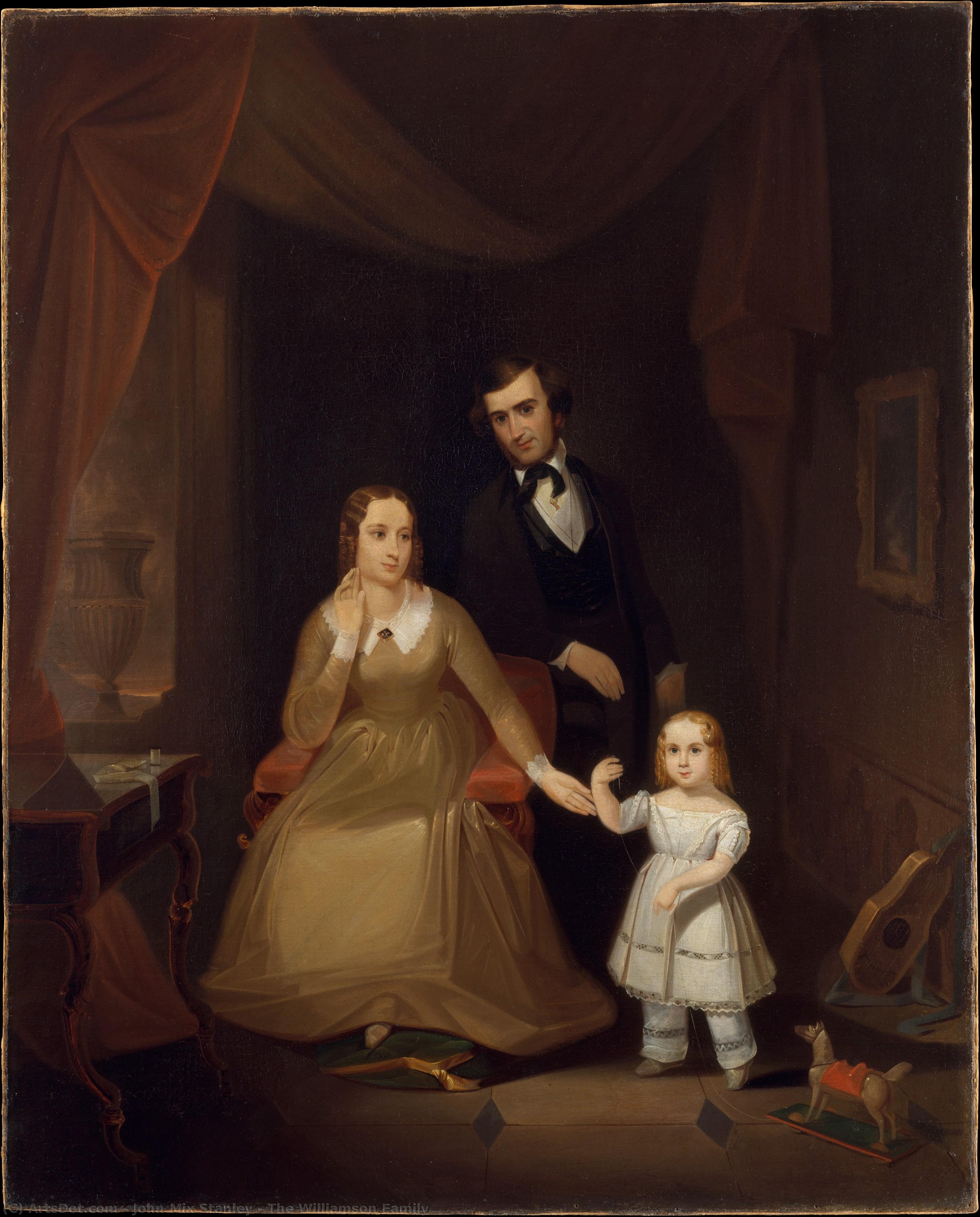
John Mix Stanley's "Untitled (D2X2SL)" offers a remarkably intimate glimpse into the life of an American family during the mid-19th century. Painted in 1841, this portrait transcends mere documentation; it’s a carefully constructed tableau of Victorian domesticity, imbued with a quiet dignity and understated elegance. The scene unfolds within a modestly furnished room – a dining table bearing a vase of flowers, two chairs strategically placed, and the subtle suggestion of a life lived comfortably within these walls. The composition is remarkably balanced, drawing the eye to the central figures: a man, a woman, and their young child, united in a gesture of tender affection—their hands clasped together, a visual anchor for the entire scene.

Stanley’s skill lies not just in his ability to capture likenesses, but in his nuanced understanding of light and shadow. He employs a soft, diffused lighting that washes over the figures, creating an atmosphere of warmth and intimacy. Notice how he subtly models the fabric of their clothing – the folds of the man's tie, the gentle curve of the woman’s dress—revealing textures with remarkable detail. The muted color palette—earth tones punctuated by touches of crimson and gold—contributes to the painting’s overall sense of quiet refinement. This restrained approach was characteristic of Stanley’s style, prioritizing observation and emotional resonance over flamboyant display.

The Williamson Family: A Portrait of Early American Life

The subject of the portrait is the Williamson family – James Abeel Williamson, his wife, and their son. Research through The Metropolitan Museum of Art reveals that this particular painting was commissioned to document a prominent New York family during a period of significant westward expansion. Williamson’s lineage extends into Wyoming, New Jersey, and beyond, highlighting the interconnectedness of American society at the time. Stanley's decision to portray them in formal attire speaks volumes about their social standing and the importance placed on appearances within Victorian culture. The inclusion of the dog further reinforces this sense of domesticity – a loyal companion integrated seamlessly into family life.

Further research, accessed through the Smithsonian Institution Archives, reveals that Stanley’s collection was tragically lost in the 1865 fire at the Smithsonian. This loss is a poignant reminder of the fragility of artistic legacy and underscores the importance of reproductions like this one. The archival materials detail Stanley's meticulous process – his extensive travels throughout the American West, his dedication to accurately depicting Native American life alongside portraits of settlers, and his ambition to create a comprehensive visual record of the era.

Symbolism and Context: A Window into Victorian Values

Beyond its straightforward depiction of a family gathering, “Untitled (D2X2SL)” is rich in symbolic meaning. The formal attire represents respectability and adherence to social norms—a key value within 19th-century America. The act of holding hands signifies familial love and unity, while the child’s presence embodies hope for the future. The dining table, with its vase of flowers, suggests prosperity and a celebration of domestic harmony. Stanley's inclusion of Native Americans in the background subtly acknowledges the complex relationship between settlers and indigenous populations – a theme prevalent throughout his work.

Considering the context of John Mix Stanley’s life as a pioneer documenting the American West, this painting is more than just a portrait; it’s a testament to his commitment to capturing the realities of frontier life. His meticulous observations and artistic skill offer a valuable window into the social customs, values, and aspirations of a rapidly changing nation. The reproduction offered by WahooArt.com allows you to experience the beauty and emotional depth of this remarkable work firsthand.

Bringing “Untitled (D2X2SL)” Home: A Reproduction for Your Space

WahooArt.com’s hand-painted reproductions faithfully recreate Stanley's original techniques, capturing the subtle nuances of light, color, and texture. This ensures that you receive a piece of art that not only honors the legacy of John Mix Stanley but also seamlessly integrates into your own home décor. The size (69 x 56 cm) is ideal for adding a touch of Victorian elegance to living rooms, studies, or hallways.

Whether you are an art enthusiast, a collector seeking authentic reproductions, or simply someone looking to infuse their space with timeless beauty, “Untitled (D2X2SL)” offers a captivating glimpse into the past—a testament to family, tradition, and the enduring power of American artistry.

Perguntas e Respostas

Sobre o que trata "Untitled (D2X2SL)" e qual é a sua atmosfera?

"Untitled (D2X2SL)" de John Mix Stanley combina family portrait, 19th century, american west, native americans, formal attire, dining scene, dog, williamson family com uma atmosfera Elegant.

Quão saturada é a paleta de "Untitled (D2X2SL)"?

A paleta de "Untitled (D2X2SL)" possui uma saturação Subtle Color.

Como o contraste e a harmonia se combinam em "Untitled (D2X2SL)"?

A composição cromática de "Untitled (D2X2SL)" de John Mix Stanley combina um contraste Gentle com uma harmonia Strong Color Unity.


Biografia do Artista

A Pioneer of the American West: The Life and Art of John Mix Stanley

John Mix Stanley, born in Canandaigua, New York, on January 17, 1814, wasn’t merely a painter; he was an explorer, a documentarian, and a vital witness to a rapidly transforming America. His life story is one woven with threads of resilience, artistic passion, and a profound connection to the landscapes and peoples of the American West – a region he relentlessly sought to capture on canvas. Orphaned at the tender age of twelve, Stanley’s early years instilled within him an unwavering self-reliance that would shape his adventurous spirit and inform his approach to art. He began his journey not with formal training, but through diligent self-teaching, absorbing the techniques of sign painting and portraiture from a coach maker – a practical apprenticeship that laid the foundation for his later artistic explorations.

From Detroit’s Streets to the Southwest’s Trails

Stanley's artistic trajectory took its first significant turn in 1832 when he migrated to Detroit, Michigan, a bustling frontier town brimming with opportunity and a burgeoning art scene. Here, he honed his skills as an itinerant painter, capturing portraits of local residents and adorning storefronts with vibrant signs. This period wasn’t simply about mastering technical proficiency; it was a crucial phase of observation – learning to discern the nuances of light, form, and human expression, skills that would later become hallmarks of his distinctive style. However, Stanley's ambition extended beyond the confines of Detroit. Inspired by the work of George Catlin, who sought to document Native American life with empathy and respect, he embarked on a transformative journey westward in 1842, accompanied by Sumner Dickerman.

Documenting Cultures: The Indian Territory Expeditions

This expedition to the American Southwest marked a pivotal moment in Stanley’s career. He wasn't merely seeking scenic vistas; he was driven by a genuine desire to record the lives and customs of Native American tribes – a mission that resonated deeply with his own sense of adventure and his growing appreciation for diverse cultures. Establishing himself at Fort Gibson in Indian Territory (present-day Oklahoma), Stanley immersed himself within tribal communities, attending significant councils like the one between Cherokee and Texas representatives at Tahlequah. He meticulously documented these encounters through portraits – intimate studies that captured not just physical likenesses but also a sense of personality and dignity – alongside scenes of daily life, offering an invaluable visual record of a world on the cusp of profound change. His commitment to this documentation continued throughout the Mexican-American War in 1846, where he served as a draftsman for Colonel Stephen Watts Kearney’s expedition to California and the Oregon Territory, producing detailed sketches that captured the scale and drama of the military campaign.

Hawaii's Royal Portraits and Beyond

Stanley’s explorations didn’t end with the American West. In 1847, he traveled to Hawaii, where he spent nearly twelve months painting portraits of King Kamehameha III, his wife, and members of the royal family – a testament to his versatility and willingness to embrace new cultural experiences. This period showcased his ability to adapt his artistic style to suit diverse subjects and settings, further solidifying his reputation as a skilled and adaptable artist. He continued his travels throughout the 1850s, undertaking expeditions to various locations across the American West, documenting landscapes and Native American tribes with unwavering dedication.

Style, Influences, and Historical Significance

Stanley’s artistic style was rooted in academic principles – he meticulously studied anatomy and perspective – yet infused with the immediacy of on-site observation. His paintings weren't simply representations; they were carefully composed narratives that captured the essence of a particular moment or subject. While he drew inspiration from George Catlin, whose empathetic depictions of Native Americans profoundly influenced him, Stanley’s approach often lacked the same level of emotional depth. Nevertheless, his work remains invaluable as historical documentation, providing unique insights into 19th-century encounters between European Americans and Native American tribes – a period defined by both conflict and cultural exchange. The tragic loss of much of his artwork in the 1865 Smithsonian Institution fire—along with subsequent losses in other fires—significantly impacted his legacy, obscuring his contributions for decades. However, recent years have witnessed a renewed appreciation for Stanley’s work, recognizing its significance as both art and historical record.

A Legacy Rediscovered

Despite the devastating loss of many of his paintings, John Mix Stanley's legacy endures through the surviving works held by museums across the nation. These paintings serve as poignant reminders of a pioneering artist who dedicated his life to documenting the landscapes and peoples of the American West – a region forever shaped by exploration, conflict, and cultural exchange. Stanley wasn’t just an artist; he was a visual chronicler, a witness to a vanishing world, and a vital link to a pivotal chapter in American history. His paintings offer invaluable insights into the lives and cultures of those who inhabited this vast and dynamic landscape, reminding us of the importance of preserving and understanding our shared past.
John Mix Stanley

John Mix Stanley

1814 - 1872 , Estados Unidos da América

Informações Rápidas

  • Artistic Movement Or Style: Realismo Romântico
  • Artists Who Influenced This Artist: ['George Catlin']
  • Date Of Birth: 17 Jan 1814
  • Date Of Death: 10 Abr 1872
  • Full Name: John Mix Stanley
  • Nationality: Americano
  • Notable Artworks:
    • Ko rak koo kiss
    • Passagem de um obstáculo
  • Place Of Birth: Canandaigua, EUA
Explore obras de arte organizadas por temas, estilos e características.



































