
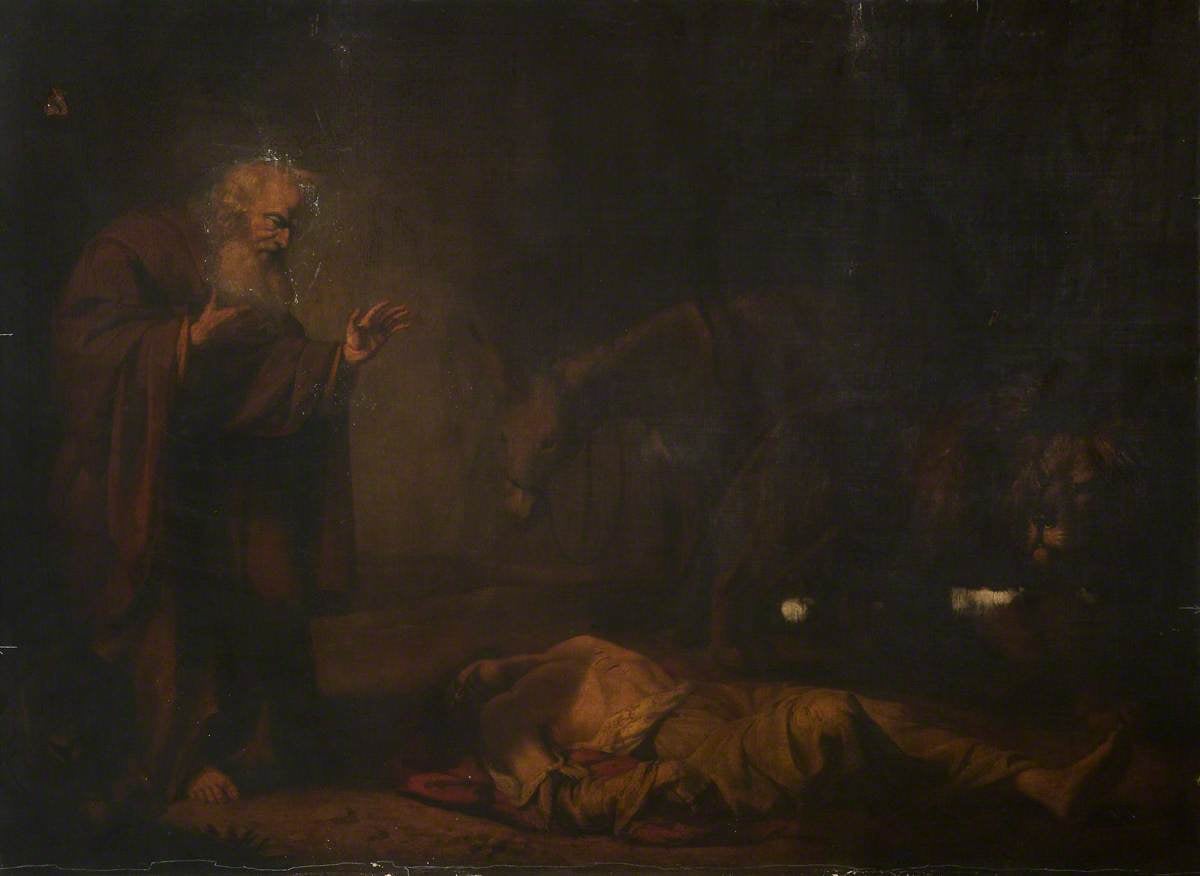
O Profeta Desobediente (1790) por John Graham, reprodução em pintura a óleo feita à mão por um mestre artista
Visualizar na parede Visualizar em RA Alternar para Impressão Alternar para Imagem Digital Compartilhar
Detalhes Guia Adicionar aos favoritos Baixar imagem Semelhantes Raio X Ver diaporama Perguntas e Respostas Baixar apresentação Estatísticas

O Profeta Desobediente Reprodução de pintura a óleo feita à mão

Dimensões
243.0 x 332.0 cm

"{ \"meta_description\": \"Explore uma obra-prima barroca de John Graham! O Profeta Desobediente captura o drama religioso e emoções intensas em uma pintura impressionante da Escócia, agora disponível como reprodução artística.\"" }

John D. Graham (1886-1961) was a Ukrainian-born American modernist painter, collector & pivotal mentor to Abstract Expressionists like Pollock & de Kooning. Known for figurative work, system theory of art & bridging European avant-garde with the NY S

A obra de arte exibida nesta página é protegida por leis de direitos autorais, o que significa que não podemos criar ou vender legalmente uma reprodução idêntica. Esta proteção é aplicada por meio de acordos internacionais, tais como a Convenção de Berna e pelas leis nacionais, incluindo as estabelecidas por Lei de Direitos Autorais dos EUA - Título 17.

Como uma alternativa respeitosa e legal, oferecemos obras de arte personalizadas e pintadas à mão, inspiradas na obra original. Nossos artistas profissionais e experientes estudam cuidadosamente o estilo, a atmosfera e a essência artística da obra original para criar uma peça nova e única que evoque a mesma sensação — permanecendo como uma criação original por direito próprio.

Este método cumpre plenamente as regulamentações de direitos autorais, pois não envolve a cópia ou duplicação da obra protegida. Em vez disso, trata-se de uma reinterpretação criativa — uma nova pintura que é influenciada pela original, mas não idêntica a ela.

Reprodução em Óleo Feita à Mão

Óleo sobre tela pintado à mão no tamanho e moldura de sua escolha, feito sob encomenda pelos nossos artistas. ( Alternar para Impressão Alternar para Imagem Digital)

Corner sample of the P118B picture frame: poliestireno moldado, 5 cm wide and 3 cm thick
P118B €10
Corner sample of the P118H picture frame: poliestireno moldado, 5 cm wide and 3 cm thick
P118H €10
Corner sample of the P118W picture frame: poliestireno moldado, 5 cm wide and 3 cm thick
P118W €10
Corner sample of the P438Z picture frame: poliestireno moldado, 5.5 cm wide and 3.5 cm thick
P438Z €10
Corner sample of the P508JH picture frame: poliestireno moldado, 7 cm wide and 3.5 cm thick
P508JH €12
Corner sample of the P508YH picture frame: poliestireno moldado, 7 cm wide and 3.5 cm thick
P508YH €12
Corner sample of the P805H picture frame: poliestireno moldado, 5 cm wide and 3.5 cm thick
P805H €10
Corner sample of the P805Z picture frame: poliestireno moldado, 5 cm wide and 3.5 cm thick
P805Z €10
Corner sample of the P919BZ picture frame: poliestireno moldado, 7 cm wide and 3.5 cm thick
P919BZ €10
Corner sample of the P919G picture frame: poliestireno moldado, 7 cm wide and 3.5 cm thick
P919G €10
Corner sample of the P919XJ picture frame: poliestireno moldado, 7 cm wide and 3.5 cm thick
P919XJ €10
Corner sample of the P959ZH picture frame: poliestireno moldado, 5 cm wide and 3 cm thick
P959ZH €10
Corner sample of the P968JZ picture frame: poliestireno moldado, 6 cm wide and 4 cm thick
P968JZ €12
Corner sample of the W106C picture frame: madeira maciça, 5 cm wide and 3 cm thick
W106C €8
Corner sample of the W218G picture frame: madeira maciça, 5 cm wide and 3 cm thick
W218G €10
Corner sample of the W218JH picture frame: madeira maciça, 5 cm wide and 3 cm thick
W218JH €8
Corner sample of the W218Y picture frame: madeira maciça, 5 cm wide and 3 cm thick
W218Y €10
Corner sample of the W307PJ picture frame: madeira maciça, 6 cm wide and 3 cm thick
W307PJ €10
Corner sample of the W316G picture frame: madeira maciça, 6 cm wide and 3 cm thick
W316G €10
Corner sample of the W316PJ picture frame: madeira maciça, 6 cm wide and 3 cm thick
W316PJ €8
Corner sample of the W316Y picture frame: madeira maciça, 6 cm wide and 3 cm thick
W316Y €10
Corner sample of the W398PJ picture frame: madeira maciça, 5 cm wide and 3 cm thick
W398PJ €8
Corner sample of the W4111J picture frame: madeira maciça, 6.5 cm wide and 3.5 cm thick
W4111J €10
Corner sample of the W500HY picture frame: madeira maciça, 7 cm wide and 5 cm thick
W500HY €15
Corner sample of the W500JH picture frame: madeira maciça, 7 cm wide and 5 cm thick
W500JH €15
Corner sample of the W692G picture frame: madeira maciça, 8 cm wide and 4 cm thick
W692G €12
Corner sample of the W849H picture frame: madeira maciça, 5 cm wide and 3 cm thick
W849H €8
Corner sample of the W940BG picture frame: madeira maciça, 7.5 cm wide and 4.5 cm thick
W940BG €15
Corner sample of the W953PJ picture frame: madeira maciça, 6 cm wide and 3.5 cm thick
W953PJ €8

Tamanho padrão
personalizado
CM
INCH

Escolha entre os nossos tamanhos pré-definidos que respeitam as proporções originais da obra de arte.

largura
altura

Insira a largura e a altura desejadas para se ajustarem à sua moldura ou parede. Como esta obra é pintada à mão, para um tamanho com proporções diferentes, o artista poderá pintar um pouco mais ao redor da imagem ou reduzir ligeiramente a composição — você escolhe. Enviamos uma maquete digital para sua aprovação antes de iniciar a pintura. A imagem exibida nesta página não representa o resultado real — apenas a maquete mostra o resultado final.

Exemplos do que pode ser personalizado: Substituir o rosto pela foto do cliente; Adicionar um animal de estimação (ex: substituir gato por cão); Incluir uma mensagem oculta no fundo; Alterar a paisagem ou elementos do fundo.
Após o pedido, a equipa WahooArt.com enviará um e-mail ao cliente para solicitar instruções e fornecer uma prévia do esboço.

Entrega mundial () em 3 a 4 semanas, em vez das 5 semanas padrão. (8 Novembro). Sem comprometer a qualidade.

Envio expresso gratuito para todo o mundo
Tela de Linho de Alta Qualidade
Seguro de transporte completo
Garantia de Reembolso de Impostos Alfandegários
Garantia de Fidelidade Cromática
Política de Devolução em 100 Dias (Apenas para Defeitos)
Garantia de reembolso de 100%
Oferta de desconto por quantidade

Preço Total

€ 332

O Profeta Desobediente

Técnica de Reprodução

Tamanho da Reprodução

-

Preço Total

€ 332

Informações Rápidas

  • Movement: Barroco
  • Artist: John Graham
  • Influences: Correggio
  • Artistic style: Drama barroco
  • Title: O Profeta Desobediente
  • Dimensions: 243 x 332 cm

A Voz Rebelde do Profeta: Uma Jornada pela Pintura Barroca Escocesa

John Graham (1886 – 1961) representa uma figura singular na história da arte – um pintor ucraniano-americano modernista que desafiou caminhos convencionais e influenciou profundamente o movimento Expressionismo Abstrato. Sua trajetória cruzou continentes, marcada por curiosidade intelectual, experimentação artística e uma dedicação inabalável à exploração das complexidades da representação visual. Nascido Ivan Gratianovitch Dombrowsky em Kyiv, Rússia, sua vida inicial foi moldada pela linhagem aristocrática e por uma educação formal que despertou um profundo apreço pelas tradições artísticas clássicas. No entanto, seu serviço militar durante a Primeira Guerra Mundial – ganhando o Cruz de São Jorge – rapidamente o impulsionou para uma época turbulenta de agitação política e revolução. A prisão como resultado de uma reação contrarrevolucionária após a tomada bolchevique do poder em 1918 serviu como crisálida para suas convicções artísticas. Forçado a fugir da Rússia, Graham encontrou refúgio na Inglaterra, onde estabeleceu uma carreira artística promissora e desenvolveu um estilo único que combinava elementos barrocos com ideias vanguardistas. Sua obra mais famosa, “O Profeta Rebelde”, é uma pintura monumental de 243 x 332 cm criada em 1790 e atualmente alojada na Royal Scottish Academy of Art - Arquitetura em Edimburgo, Reino Unido. Esta obra poderosa captura um momento dramático da história religiosa cristã, provavelmente referenciando o milagre da ressurreição de Lázaro.

Estilo e Composição: Uma Sinfonia de Luz e Sombra

A composição de “O Profeta Rebelde” demonstra a maestria de John Graham na utilização da luz e sombra, criando uma sensação de profundidade e tensão palpável. O fundo escuro enfatiza o tema religioso, enquanto o emprego da pintura a óleo traz uma riqueza e textura excepcionais à tela. Para amantes da arte interessados em obras semelhantes, este retrato é um ponto de referência essencial. Graham incorporou técnicas barrocas como o uso intenso do contraste entre luz e sombra para criar uma atmosfera dramática e emocionalmente carregada – características que podem ser observadas também em outras pinturas importantes da época.

Técnica e Materiais: Impasto e Expressão

A técnica utilizada por Graham é marcada pelo impasto, uma aplicação espessa de tinta sobre tela que permite construir formas volumétricas e transmitir uma sensação de movimento e energia. Os artistas barrocos frequentemente empregavam essa abordagem para criar obras que transmitiam emoções intensas e capturavam a beleza fugaz da natureza ou da experiência humana. Além disso, Graham dominou o uso de cores vibrantes e harmoniosas, buscando criar imagens que fossem tanto esteticamente atraentes quanto emocionalmente significativas. Os materiais utilizados eram cuidadosamente selecionados para garantir resultados superiores – óleo puro sobre tela fina – uma prática comum na época que ainda hoje é admirada por artistas contemporâneos.

Simbolismo Religioso: Uma Alegoria da Fé e da Esperança

“O Profeta Rebelde” está repleta de simbolismos religiosos que refletem os valores espirituais da época barroca. A figura central do profeta, representando Jesus Cristo ou outro personagem religioso importante, é colocada em posição dominante sobre uma pessoa caída no chão – um símbolo da humildade humana diante da grandeza divina e da luta entre o pecado e a redenção. Os dois cavalos presentes na pintura podem ser interpretados como representantes da força espiritual e da vitória sobre as adversidades. O uso de vermelho, cor associada ao sangue e à paixão cristã, reforça o impacto emocional da obra e convida o espectador à reflexão sobre questões existenciais fundamentais. Uma análise cuidadosa desses elementos simbólicos revela a profundidade intelectual e artística da criação de Graham.

Uma Herança Duradoura: Reproduções em Óleo para Colecionadores e Amantes da Arte

Reproduções em óleo meticulosamente feitas de “O Profeta Rebelde” estão disponíveis para compra na WahooArt, permitindo que entusiastas da arte possuam uma obra-prima da história artística escocesa. Além disso, o Museu Réattu em Arles, França, apresenta uma coleção impressionante de pinturas francesas que incluem obras significativas por Jacques Réattu – um artista contemporâneo que admirava profundamente o estilo barroco e a capacidade de expressão dos grandes mestres do passado. Explore também outros artistas importantes da época para enriquecer seu conhecimento sobre o mundo da arte!

Perguntas e Respostas

De que forma o tema de "O Profeta Desobediente" se relaciona com os temas habituais de John Graham?

Entre os temas recorrentes de John Graham — baroque drama influence, faith compassion narrative, revolution artistic vision, graham legacy masterpiece — "O Profeta Desobediente" traz seu próprio foco em biblical scene, religious symbolism, dramatic composition, oil painting technique, light shadow contrast, prophet lazarus, scottish academy art.

Qual paleta de cores é utilizada em "O Profeta Desobediente", de John Graham?

A paleta de "O Profeta Desobediente", de John Graham é descrita como Monocromático. Trata-se de uma descrição concisa das cores da obra.

John Graham, criador(a) de "O Profeta Desobediente", é conhecido(a) por outros nomes?

John Graham também é conhecido como Ivan Gratianovitch Dombrowsky, Ivan Gratianovich Dombrowski.


Biografia do Artista

A Life Forged in Revolution and Renaissance

The story of John Graham is one of profound transformation, a narrative that begins far from the bustling studios of New York, amidst the aristocratic elegance and subsequent political turbulence of Kyiv. Born Ivan Gratianovitch Dombrowsky in 1886, his early years were defined by a classical education and a lineage of privilege that seemed destined for a life of law or diplomacy. Yet, the winds of history had other plans. The seismic shifts of the Russian Revolution and the subsequent Bolshevik seizure of power thrust him into a crucible of conflict, leading to his imprisonment as a counterrevolutionary. This period of upheaval served as a spiritual and artistic catalyst; fleeing the chaos of his homeland, he eventually found refuge in the United States in 1920. It was during this migration that he shed his old identity, adopting the name John Graham—a moniker that would come to represent a bridge between the Old World's traditions and the New World's avant-garde energy.

Graham’s arrival in New York City marked the beginning of an extraordinary artistic awakening. Though he did not begin his formal studies in painting until his thirties, his late start was compensated by a voracious intellectual hunger. He immersed himself in the vibrant, gritty reality of the Ashcan School through the mentorship of John F. Sloan, yet his gaze was perpetually fixed on the horizon of modernism. His journey was not merely one of personal discovery but of cultural synthesis, as he navigated the complexities of Cubism, Surrealism, and Abstract Expressionism, weaving these disparate threads into a cohesive visual language that honored classical structure while embracing modern fragmentation.

The Architect of Modernist Dialogue

Beyond his own canvas, Graham functioned as a vital conduit for the burgeoning New York art scene. He was far more than a solitary painter; he was a collector, a writer, and a philosopher of form. His deep engagement with System Theory and dialectics allowed him to view art not just as an aesthetic pursuit, but as a structured argument—a belief encapsulated in his famous assertion that “an abstract painting is an argument drawn to conclusion.” This intellectual rigor made him a central figure in the development of the New York School. As a mentor and advocate, he provided the scaffolding upon which legends like Jackson Pollock and Willem de Kooning could build their revolutionary styles. He possessed the rare ability to champion the radical unknown while maintaining a profound respect for the masters of the past.

His artistic development was characterized by a fascinating tension between the figurative and the abstract. While he was deeply moved by the expressive potential of modern abstraction, his later works returned to a highly sophisticated figurative style. This period saw him drawing inspiration from classical masters to depict subjects such as Russian soldiers with an intensity that felt both ancient and immediate. His brushwork often carried a palpable emotional weight, utilizing vibrant color palettes and a sense of Baroque drama to navigate the tensions of a modern age. Through his work, the heavy shadows of history met the bright, fractured light of the twentieth century.

Legacy of a Cultural Conduit

The historical significance of John Graham lies in his role as a stabilizer and a provocateur within the whirlwind of mid-century modernism. He did not merely witness the birth of Abstract Expressionism; he helped cultivate the environment that made it possible. His legacy is found in several key areas:

  • The Synthesis of Traditions: He successfully bridged the gap between European avant-garde movements and the emerging American identity, ensuring that the lessons of the Old World informed the innovations of the New.
  • Mentorship and Community: Through his involvement with groups like the "Modernists" in Baltimore and his presence in the New York art circles, he fostered a collaborative spirit that defined an era.
  • Intellectual Framework: By applying philosophical and systemic thinking to the act of painting, he elevated the discourse surrounding abstract art from mere intuition to a structured, intellectual discipline.

Though he passed away in London in 1961, the echoes of Graham's influence remain embedded in the DNA of modern art. He remains a figure of immense mystery and brilliance—a man who survived revolution only to help orchestrate an artistic revolution of his own.

John Graham

John Graham

1886 - 1961 , Russia

Dados Rápidos

  • Artistic Movement Or Style: Modernist / Figurative Painting
  • Artists Or Movements Influenced By This Artist: ['New York School']
  • Artists Who Influenced This Artist: ['Ashcan School painters']
  • Date Of Birth: 1886
  • Date Of Death: 1961
  • Full Name: Ivan Gratianovitch Dombrowsky / John D. Graham
  • Nationality: Russian / American
  • Notable Artworks:
    • The Disobedient Prophet
    • Mrs John Jarvie
  • Place Of Birth: Kyiv, Russia
Explore obras de arte organizadas por temas, estilos e características.


































