Biografia do Artista
A Life Rooted in the English Landscape
John Constable, nascido em 1776 na idílica vila de East Bergholt, no condado de Suffolk, não foi meramente um pintor de paisagens; ele foi um poeta da terra, traduzindo suas sutis nuances e beleza duradoura para a tela com uma profundidade emocional sem precedentes. Seu pai, um próspero comerciante de grãos que possuía tanto Dedham Vale quanto moinhos ao longo do Rio Stour, não apenas forneceu segurança financeira, mas também o próprio assunto que definiria a vida artística de Constable. Essa imersão precoce no mundo rural – o ritmo lento da vida agrícola, a luz mutável sobre campos e água, os detalhes íntimos da natureza – ficaram gravados em sua sensibilidade. Embora inicialmente destinado a seguir seu pai nos negócios, uma paixão crescente pela arte, nutrida por mecenas locais como George Beaumont, que o apresentou às obras de Claude Lorrain, acabou direcionando-o para um caminho diferente. A jornada artística de Constable não foi imediata; foi um desdobramento gradual, moldado por observação cuidadosa e um desejo persistente de capturar não apenas *o que* ele via, mas *como* era estar presente dentro da paisagem.
Quebrando com a Convenção: Uma Nova Visão da Natureza
O desenvolvimento artístico de Constable foi marcado por uma rejeição deliberada das convenções acadêmicas prevalecentes. Insatisfeito com as paisagens idealizadas e frequentemente teatrais favorecidas pela Academia Real, ele buscou em vez disso uma representação fiel da natureza, imbuída de sentimento pessoal. Ele não estava interessado em narrativas históricas grandiosas ou cenas mitológicas; seu foco permaneceu firmemente na paisagem familiar ao seu redor. Esse compromisso em retratar assuntos ordinários – esteiras de feno, edifícios rurais, vida da vila – foi inicialmente recebido com resistência dos críticos, que consideraram sua obra muito comum e carente de ambição. No entanto, Constable perseverou, impulsionado por uma convicção de que a beleza residia no cotidiano. Ele pioneirizou uma técnica de pintura *en plein air*, aventurando-se para fora para observar diretamente e capturar os efeitos fugazes da luz e do clima. Essa interação direta com a natureza permitiu que ele infundisse suas telas com imediatismo e vitalidade antes não vistos na arte de paisagem britânica. Seu pincel se tornou cada vez mais solto e expressivo, empregando *impasto* – camadas espessas de tinta – para criar textura e transmitir uma sensação de movimento e atmosfera. Ele não estava simplesmente registrando o que via; ele estava traduzindo sua resposta emocional à terra em forma visual.
Obras Icônicas e um Legado Duradouro
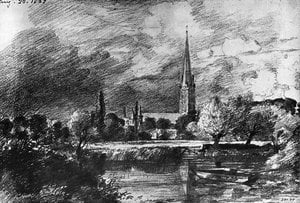
As obras mais célebres de Constable são testemunhos de sua visão única. The Hay Wain (1821), talvez sua obra mais reconhecível, retrata uma cena rural essencial no Rio Stour, capturando a tranquilidade e a harmonia da vida agrícola. Hadleigh Castle (1829) demonstra seu uso dramático da luz e dos efeitos atmosféricos, transformando um ruído em ruínas em um poderoso símbolo do passar do tempo. A série de pinturas representando Salisbury Cathedral from the Meadows (1831) demonstra sua capacidade de evocar diferentes estados de espírito e momentos do dia, revelando a catedral como parte integrante da paisagem natural. Netley Abbey (1824), com sua representação evocativa da grandiosidade arquitetônica em meio à natureza selvagem, exemplifica sua habilidade em combinar a criação humana com a beleza selvagem da paisagem rural. Apesar das dificuldades iniciais de reconhecimento na Inglaterra, Constable alcançou grande aclamação na França, onde sua técnica inovadora e profundidade emocional ressoaram profundamente com os artistas que buscavam uma representação mais naturalista da pintura de paisagens. Ele influenciou profundamente a Escola de Barbizon, um grupo de pintores franceses que compartilhavam seu compromisso com a pintura *en plein air* e a observação direta da natureza.
Vida Pessoal & Últimos Anos
A vida pessoal de Constable foi marcada por alegria e tristeza. Casou-se com Maria Bicknell em 1816, e eles tiveram sete filhos, embora muitos deles não sobrevivessem à infância. Seu casamento lhe forneceu apoio emocional, mas também estresse financeiro. Foi eleito acadêmico real em 1829, mas continuou a enfrentar críticas de alguns setores, particularmente em relação às suas técnicas incomuns. Seus últimos anos foram obscurecidos pela saúde decrescente de Maria e sua eventual morte em 1828, um evento que o afetou profundamente. Apesar dessas dificuldades, Constable permaneceu dedicado à sua arte, continuando a pintar até sua própria morte em 31 de março de 1837. Deixou para trás uma rica herança artística – um testemunho de seu compromisso inabalável em capturar a beleza e a ressonância emocional da paisagem inglesa. Suas pinturas permanecem evocações poderosas de uma era passada, convidando os espectadores a experimentar a paisagem através de seus olhos únicos e sensíveis.
Influências
Constable foi influenciado por vários artistas e movimentos. Claude Lorrain, com sua ênfase na beleza idealizada da natureza e o uso dramático da luz, forneceu um modelo para Constable em seus primeiros anos. Jacob Ruysdael, um mestre holandês do século XVII conhecido por suas paisagens atmosféricas e pinceladas soltas, também exerceu uma influência significativa sobre Constable. Além disso, a obra de artistas como Rubens, com sua atenção ao detalhe e à cor vibrante, inspirou Constable a desenvolver seu próprio estilo distintivo. A Escola Barbizon, um grupo de pintores franceses que compartilhavam o compromisso de Constable com a pintura *en plein air* e a observação direta da natureza, também desempenhou um papel importante na formação do trabalho de Constable.
Histórico Significância
A importância histórica de Constable reside não apenas em suas inovações artísticas, mas também em seu impacto profundo no desenvolvimento da pintura de paisagem. Ele desafiou as convenções acadêmicas, elevou o status dos assuntos ordinários e abriu caminho para uma abordagem mais pessoal e emocionalmente expressiva da arte. Sua ênfase na observação direta, nos efeitos atmosféricos e na representação fiel da natureza antecipou muitas das preocupações dos pintores impressionistas posteriores. Ele demonstrou que a paisagem poderia ser um veículo para uma expressão emocional profunda, capaz de evocar sentimentos de nostalgia, tranquilidade e admiração. Embora tenha enfrentado dificuldades financeiras ao longo de grande parte de sua carreira e tenha morrido relativamente jovem em 1837, seu legado perdura. Hoje, Constable é celebrado como um dos maiores artistas da Grã-Bretanha, cujas pinturas continuam a cativar o público com sua beleza, sinceridade e poder duradouro. Sua obra serve como um lembrete pungente da conexão profunda entre a humanidade e o mundo natural e do potencial transformador da arte para capturar sua essência.



 Visualizar na parede
 Comprar pintura feita à mão
 Compartilhar
 Compartilhar
 Detalhes

 Baixar imagem
 Semelhantes
 Raio X
 Slideshow
 Estatísticas


 Ler mais






































 A opção de vidro está disponível apenas para tamanhos inferiores a 110 cm