Impressão giclée ou em tela de qualidade de museu, com produção rápida e opções flexíveis de acabamento. ( Comprar pintura feita à mão Alternar para Imagem Digital)





























Escolha entre os nossos tamanhos pré-definidos que respeitam as proporções originais da obra de arte.

Insira a largura e a altura desejadas para se ajustarem à sua moldura ou parede. Uma impressão pode ser apenas cortada, nunca ampliada além da imagem original; portanto, um tamanho com proporções diferentes resultará na perda de parte da imagem. Enviamos uma maquete digital para sua aprovação antes de realizarmos a impressão. A imagem exibida nesta página não mostra o corte real — apenas a maquete o faz.
Entrega mundial () em 2 semanas, em vez das 4/5 semanas padrão. (12 Novembro)
Moorish Bath
Tamanho da Reprodução
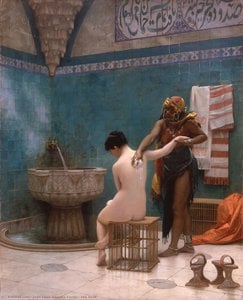
In the heart of the nineteenth century, few artists possessed the ability to transport a Parisian salon to the sun-drenched, tile-clad sanctuaries of the Middle East as masterfully as Jean-Léon Gérôme. His 1870 masterpiece, Moorish Bath, serves as more than a mere painting; it is a meticulously crafted window into a world of exotic luxury and quiet intimacy. As a cornerstone of the Orientalist movement, this work captures a profound moment within a Hammam, where the boundaries between reality and romanticized fantasy blur. The scene unfolds with a breathtaking sense of stillness, inviting the viewer to step past the threshold of the everyday and into a space defined by cool shadows, shimmering water, and the rhythmic beauty of ancient rituals.
The composition is anchored by a delicate tension between the figures within the frame. A seated lady, often identified as Circassian, rests amidst the splendor of her surroundings, while an attendant prepares for the ritual of cleansing. This interaction is not merely a depiction of hygiene but a choreographed dance of service and grace. Gér erne’s ability to capture the soft textures of skin against the hard, glazed surfaces of the architecture creates a sensory experience that is almost tactile. For the discerning collector or interior designer, this piece offers an unparalleled depth, providing a focal point that commands attention through its narrative complexity and serene atmosphere.
Technically, Moorish Bath represents the pinnacle of French Academicism. Gérôme was renowned for his photographic precision, a skill honed through rigorous training and fueled by his firsthand observations during travels to North Africa and Egypt. Every element in the painting—from the intricate Arabic calligraphy etched into the blue wall tiles to the subtle reflections dancing upon the surface of the stone basin—is rendered with an almost scientific accuracy. His use of color is particularly evocative; a palette dominated by tranquil blues and earthy tones creates a cooling effect, mirroring the literal temperature of the bathhouse itself.
The artist employs light not just to illuminate, but to sculpt. Light filters into the space as if through high, unseen apertures, catching the glint of gold jewelry and the moisture on the skin, lending the scene a luminous, ethereal quality. This mastery of chiaroscuro—the play between light and shadow—adds a layer of psychological depth to the work. The shadows are not merely dark voids but are filled with the suggestion of heat, humidity, and the heavy, fragrant air of an enclosed sanctuary. Such technical brilliance ensures that a high-quality reproduction of this work retains its ability to transform any room, adding a sense of historical weight and sophisticated texture to a modern interior.
To look upon Moorish Bath is to engage with the complex cultural dialogues of the Victorian era. While Gérôme’s work was deeply rooted in the Orientalist fascination with the "Exotic East," his approach transcends simple caricature. Through his meticulous attention to architectural detail and ethnographic observation, he provides a scholarly, albeit idealized, tribute to Ottoman aesthetics. The bathhouse itself symbolizes a sanctuary of privacy and ritual, a space where the social hierarchies of the era are momentarily suspended in favor of personal rejuvenation.
For those seeking to decorate with art that tells a story, this painting offers a rich tapestry of symbolism. It speaks of the intersection between the domestic and the divine, the private and the public, and the enduring allure of the unknown. Whether placed in a grand library or a contemporary living space, the emotional impact of Gérôme’s work remains potent. It evokes a sense of wanderlust and a deep appreciation for the craftsmanship of a bygone era, making it an essential acquisition for anyone looking to infuse their environment with culture, history, and an everlasting sense of wonder.
"Moorish Bath", de Jean-Léon Gérôme é recomendado para Accent, idealmente em um(a) Living Room. O uso e o espaço juntos orientam onde uma reprodução se encaixa.
"Moorish Bath" integra a produção Academic Realism de Jean-Léon Gérôme, cujos temas recorrentes incluem historical accuracy, exotic setting, racial dynamics, decorative style, narrative detail.
Jean-Léon Gérôme tinha 46 anos quando criou "Moorish Bath" em 1870. A idade é calculada a partir do ano de nascimento do artista, 1824.

A história de Jean-Léon Gérôme começa em Vesoul, na região de Haute-Saône, onde nasceu em 11 de maio de 1824. Seus primeiros anos foram marcados por uma inclinação natural para o lápis e o pincel, cultivada sob a orientação de um professor local, Claude-Basile Cariage. Este ensino inicial forneceu a base necessária para um jovem cujas ambições logo o afastariam da quietude de sua terra natal em direção ao coração pulsante da França.
Aos dezesseis anos, em 1840, ele chegou a Paris em busca de maiores conquistas. Entrou no estúdio de Paul Delaroche, um mestre cujas habilidades em cenas históricas deixariam uma impressão duradoura no jovem estudante. Em 1843, Jean-Léon Gérôme acompanhou seu mentor em uma viagem à Itália, uma jornada que alteraria fundamentalmente sua percepção de forma e história. Enquanto viajavam por Florença e Roma, ele percorreu os corredores do Vaticano e vagou pelas antigas ruínas de Pompeia. Esses encontros com os remanescentes da antiguidade proporcionaram um vocabulário visual que ele utilizaria pelo resto de sua vida.
Ao retornar a Paris, buscou maior refinamento no atelier de Charles Gleyre em 1844 e, eventualmente, ingressou na École des Beaux-Arts. Seu caminho não foi isento de provações. Em 1846, enfrentou um revés significativo ao não conseguir ingressar no Prix de Rome, uma rejeição causada por desenhos de figura insuficientes. Esse momento de luta, em vez de desencorajá-lo, pareceu aguçar sua determinação em dominar justamente os rigores técnicos que antes lhe escapavam.
Jean-Léon Gérôme transitava pelo mundo da arte com uma convicção que beirava o militante. Ele era um fervoroso defensor das tradições da pintura acadêmica, um homem que buscava preservar os padrões rigorosos do passado contra a maré crescente da mudança. Esse compromisso não era meramente profissional, mas profundamente pessoal; ele declarou uma guerra contra os movimentos modernos de sua época, como o Impressionismo, que via como um desvio da disciplina que tanto prezava. Seu sucesso era inegável, tornando-se um dos três artistas mais celebrados do Segundo Império, alcançando um nível de fama que fez com que suas imagens fossem reproduzidas por todo o globo.
Sua mão era guiada por uma devoção ao detalhe meticuloso e um talento nato para o drama. Ele não apenas pintava uma cena; ele a construía com uma precisão que parecia quase científica. Este era um homem que acreditava que a arte deveria estar aliada à razão, exigindo uma precisão matemática em cada linha e sombra. Em seu ateliê, ele instilava essa mesma severidade em seus alunos, insistindo em uma abordagem centrada no desenho. Ele acreditava que era necessário primeiro dominar a forma estática de um molde de gesso antes de tentar capturar as complexidades de um modelo vivo e pulsante. Para Jean-Léon Gérôme, a verdade de uma obra repousava sobre esse alicerce de um desenho correto e disciplinado.
Jean-Léon Gérôme possuía uma curiosidade inquieta que o impulsionava para longe dos estúdios de Paris, em direção às paisagens banhadas pelo sol da Turquia, do Egito e do Norte da África. Essas viagens serviram de combustível para suas visões orientalistas, nas quais buscava reconstruir a atmosfera de terras distantes através de uma lente de realismo intenso. Seu fascínio pelo exótico não era apenas uma questão de cenário; era um envolvimento profundo com as texturas e os costumes do Oriente. Essa preocupação tornou-se tão central para sua reputação que sua pintura O Encantador de Serpentes foi posteriormente escolhida para ilustrar a capa de um livro significativo que analisava as percepções ocidentais sobre o Oriente. Ele não se limitava a observar essas culturas; ele as reconstruía, frequentemente fundindo suas observações diretas com um senso altamente disciplinado de narrativa histórica.
Esse impulso de recriar o passado estendeu-se ao seu fascínio pela antiguidade clássica e pela mitologia grega. Ele sentia-se particularmente atraído pelas pequenas e delicadas estatuetas da antiga Tanagra, um tema que ocupou grande parte de seu pensamento criativo. Jean-Léon Gérôme produziu versões em bronze dourado dessas figuras e chegou a criar duas pinturas que retratavam um imaginário ateliê de Tanagra da antiguidade. Sua conexão com essas formas clássicas era tão íntima que ele pintou dois autorretratos em seu ateliê de Paris, capturando a si mesmo no ato de esculpir uma figura de Tanagra. Ele também produziu versões em miniatura do Dançarino do Aro, demonstrando uma versatilidade que estreitava a distância entre a escala grandiosa da pintura histórica e a precisão íntima da escultura.
A ascensão de Jean-Léon Gérôme começou com um súbito surto de reconhecimento em 1847, quando sua obra The Cock Fight cativou pela primeira vez o olhar do público parisiense. Este sucesso precoce pavimentou o caminho para uma carreira definida por uma curiosidade inquieta pelo passado e pelas terras distantes do Oriente. Por volta de 1872, ele já havia produzido Pollice Verso, uma pintura que capturou um momento de tensão no Coliseu Romano, onde o destino de um gladiador pende por um único gesto. Ele deu continuidade a esse legado com The Gray Cardinal em 1873, uma obra que demonstrou sua habilidade em renderizar a solenidade do poder através de vestes pesadas e uma dignidade silenciosa. Seu pincel transitou do político e do grandioso para o visceral e o humano, como se vê na representação de 1884 de um Slave Market in Rome.
Conforme os anos avançavam, Jean-Léon Gérôme continuou a explorar a intersecção entre o mito e a realidade. No verão de 1890, ele voltou sua atenção para a lenda de Pygmalion and Galatea, buscando capturar o exato momento em que uma estátua começa a respirar. Seu interesse pelo exótico também permaneceu como uma força constante; ele pintou Harem Women Feeding Pigeons in a Courtyard por volta de 1894 e, mais tarde, em 1895, retratou a intensidade serena de Tigress and Her Cubs. Estas obras revelam um artista que se sentia tão confortável com a quietude de um pátio quanto com o drama da história antiga.
A influência de Jean-Léon Gérôme estendeu-se muito além das paredes de seu próprio ateliê, alcançando os fundamentos da educação artística moderna. Como uma figura proeminente no movimento do Academicismo, ele estabeleceu um campo de treinamento rigoroso na École des Beaux-Arts, que atraía almas ambiciosas de toda a Europa e das Américas. Seu método era exigente, enraizado na crença de que a arte deve estar aliada à ciência. Ele exigia que seus alunos dominassem a forma estática através de moldes de gesso de esculturas antigas antes que lhes fosse permitido enfrentar um modelo vivo. Essa disciplina era uma investigação contínua de luz e sombra, exigindo frequentemente uma semana de estudo intenso para compreender verdadeiramente uma única pose.
Em seu ateliê, ele era conhecido como um mestre severo que exigia precisão matemática em cada linha. Ele percorria as salas lotadas duas vezes por semana, corrigindo falhas com uma franqueza que poderia levar os alunos às lágrimas ou desfigurar um desenho para enfatizar um ponto. No entanto, essa severidade tinha o intuito de construir uma base de disciplina capaz de sustentar qualquer tema. Através desses métodos, ele guiou as mãos de outros 2.000 artistas, moldando as capacidades técnicas de uma geração inteira. Seus ensinamentos garantiram que, mesmo com a mudança dos estilos, a importância do desenho correto permanecesse como um pilar central para aqueles que estudaram sob sua tutela.
Muitos de seus pupilos seguiram caminhos para encontrar suas próprias vozes, levando sua ênfase na habilidade técnica para novos territórios. Entre aqueles que passaram por suas portas estavam Thomas Eakins, John Singer Sargent e Mary Cassatt. Outros alunos notáveis incluíram Shinn, que aprendeu o peso do treinamento formal dentro do sistema parisiense. Embora suas próprias obras fossem amplamente distribuídas e comercializadas através da Galeria Goupil, seu verdadeiro legado era frequentemente encontrado na precisão e no domínio do desenho dos artistas que ele ajudou a moldar.
Por volta do ano de 1880, o nome de Jean-Léon Gérôme já havia viajado muito além dos estúdios de Paris, alcançando uma escala de fama que o tornava, indiscutivelmente, o artista vivo mais célebre de sua era. Sua habilidade de renderizar detalhes com tamanha precisão significava que suas imagens eram amplamente reproduzidas, espalhando sua visão por lares e galerias em todo o globo. Essa circulação massiva garantiu que sua reputação não ficasse confinada aos círculos de elite da França, tornando-se, em vez disso, um objeto de fascínio público. Suas obras alcançaram um nível de reconhecimento que poucos de seus contemporâneos poderiam reivindicar, à medida que suas pinturas se tornavam visões familiares para públicos distantes de seu próprio atelier.
Esse alcance internacional era particularmente evidente nos Estados Unidos, onde suas pinturas encontraram um lugar de destaque nas principais coleções. A presença de seu trabalho nessas instituições americanas ajudou a consolidar seu status como uma figura de importância significativa na história da arte. Mesmo com o passar das décadas, suas telas continuaram a provocar reflexão e a inspirar reverência naqueles que as encontravam. Suas representações do passado e do Oriente distante permanecem poderosas o suficiente para comandar a atenção, convidando os espectadores a contemplar as formas complexas pelas quais a história e a cultura são representadas.
Para testemunhar a precisão de seu traço, é necessário viajar até os grandes repositórios da história. Em Paris, o Musée d'Orsay preserva suas pinturas, oferecendo uma conexão direta com o rigor acadêmico que ele tanto defendeu. Do outro lado do Atlântico, o Metropolitan Museum of Art, em Nova York, abriga diversas de suas obras, permitindo que os espectadores encontrem suas narrativas detalhadas dentro de uma vasta coleção internacional. Esses salões proporcionam um espaço de quietude para observar a maestria técnica que, outrora, comandou tamanha e imensa atenção do público.
O alcance de sua visão estende-se muito além das fronteiras da França. Nos Estados Unidos, o Art Institute of Chicago apresenta sua representação do Circus Maximus, enquanto o Phoenix Art Museum, no Arizona, guarda o famoso Pollice Verso. Para aqueles que buscam seus temas mais sombrios ou espirituais, o Joslyn Art Museum, em Omaha, contém The Muezzin. Mesmo nas grandiosas galerias do Hermitage Museum, em São Petersburgo, é possível encontrar Slave Market in Rome, uma obra que demonstra sua habilidade em recriar a atmosfera da antiguidade através do jogo de luz e sombra.

1824 - 1904 , França

Explore the captivating allure of Orientalism through 19th-century masterpieces. Discover the academic brilliance of Gérôme and Boulanger, and bring the exotic elegance of the East into your home with our museum-quality, hand-painted oil reproductions and bespoke art commissions.

Immerse yourself in the tranquil beauty of Jean-Baptiste-Camille Corot. Explore 25 iconic landscapes that defined the Barbizon school through light and atmosphere. Find inspiration for museum-quality art reproductions and decor. Discover all masterpieces on WahooArt.com.

Step into the dreamlike world of Gustave Moreau. Explore 25 iconic Symbolist masterpieces, from mythic tales to opulent textures. Find inspiration for museum-quality art reproductions and curated decor. Discover all masterpieces on WahooArt.com.

Explore iconic Orientalism masterpieces by Gérôme and Decamps. Discover timeless art and curated decor at WahooArt.com.
 Visualizar na parede
 Compartilhar
 Compartilhar
 Detalhes
 Guia
Guia

 Baixar imagem
 Semelhantes
 Raio X
 Ver diaporama
 Perguntas e Respostas
 Estatísticas


 Ler mais









 A opção de vidro está disponível apenas para tamanhos inferiores a 110 cm