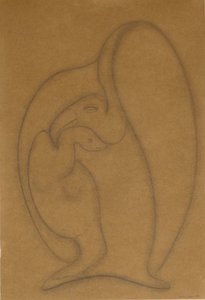
Jean-Ferdinand Monchablon: A Painter of the Vosges
Born in Châtillon-sur-Seine in 1855, Jean-Ferdinand Monchablon dedicated his artistic life to capturing the serene beauty of his native region – the rolling hills and picturesque landscapes of the Vosges mountains. While often categorized within the broader framework of French Academic painting, Monchablon’s work possessed a unique sensitivity and an intimate understanding of light and atmosphere that set him apart. His career spanned several decades, marked by consistent dedication to his subject matter and a quiet yet persistent presence in the Parisian art world.
Monchablon's early artistic education began at the Collège Notre-Dame in Nantes, followed by studies as a private tutor. He then entered the prestigious École des Beaux-Arts in Paris, where he honed his skills under the tutelage of influential figures like Jean-Paul Laurens and Alexandre Cabanel. This formal training provided him with a solid foundation in classical techniques, but it was Monchablon’s decision to relocate to his hometown – a deliberate choice reflecting a growing desire to immerse himself within the landscapes he so admired – that truly shaped his artistic identity. He sought inspiration not in grand vistas or exotic locales, but in the familiar beauty of his immediate surroundings.
The Landscape Painter of the Vosges
Monchablon’s oeuvre is overwhelmingly defined by his depictions of the Vosges region. He wasn't merely recording scenery; he was striving to convey a sense of place – the quiet dignity of rural life, the subtle shifts in light across fields and forests, the comforting solidity of stone farmhouses nestled amongst the hills. His paintings frequently feature shepherds tending their flocks, farmers working the land, and scenes of everyday village life, all rendered with remarkable detail and an understated elegance. His compositions often emphasize atmospheric perspective, creating a sense of depth and distance that draws the viewer into the heart of the landscape.
A key element of Monchablon’s style was his masterful handling of light. He possessed a keen eye for capturing the nuances of sunlight – the dappled shade beneath trees, the golden glow on distant hillsides, the soft illumination of twilight. His use of color was restrained and harmonious, prioritizing tonal gradations over bold contrasts. This approach contributed to the luminous quality of his paintings, evoking a sense of tranquility and serenity.
Influences and Artistic Development
While firmly rooted in French Academic tradition, Monchablon’s work reveals subtle influences from Flemish masters – particularly their emphasis on light and atmospheric perspective. His decision to spend time studying the Netherlands in 1886 undoubtedly broadened his artistic horizons. He adopted the name “Jan” at this point, a stylistic shift that suggests a desire for greater independence and a connection to his regional identity.
Throughout his career, Monchablon exhibited regularly at the Salon, Paris’s official art exhibition, and received prestigious awards, including silver medals at the Expositions Universelles in 1889 and 1900. His work gained recognition both within France and internationally, with exhibitions held in Pittsburgh, Pennsylvania, as part of the Carnegie International Exhibitions. Notably, he was posthumously named a Chevalier of the Legion of Honor in 1905, a testament to his contributions to French art.
Notable Works and Legacy
Among Monchablon’s most celebrated paintings are “Le Petit Moulin Pres Jonvelle,” a serene depiction of a mill by a river, and "Lady In A Pink Interior," which showcases his ability to capture the delicate interplay of light and shadow. “Harvesters In An Extensive Landscape” exemplifies his skill in rendering the textures of rural life – the rough fabric of clothing, the plowed earth, the weathered faces of farmers. These works, along with many others, are now held in museums across France and America, offering a glimpse into the world of a dedicated landscape painter who remained true to his artistic vision.
Monchablon’s legacy lies not only in his beautiful paintings but also in his unwavering commitment to capturing the essence of his native region. He demonstrated that profound beauty could be found in the simplest of landscapes, and his work continues to resonate with viewers who appreciate the quiet dignity and timeless charm of rural France.



 Visualizar em escala
 Alternar para Impressão
 Enviar
 Compartilhar
 Ver detalhes
 Guia de Obras do Aluno

 Baixar imagem
 Semelhantes
 Raio X
 Apresentação de slides
 Estatísticas
 Ver mais